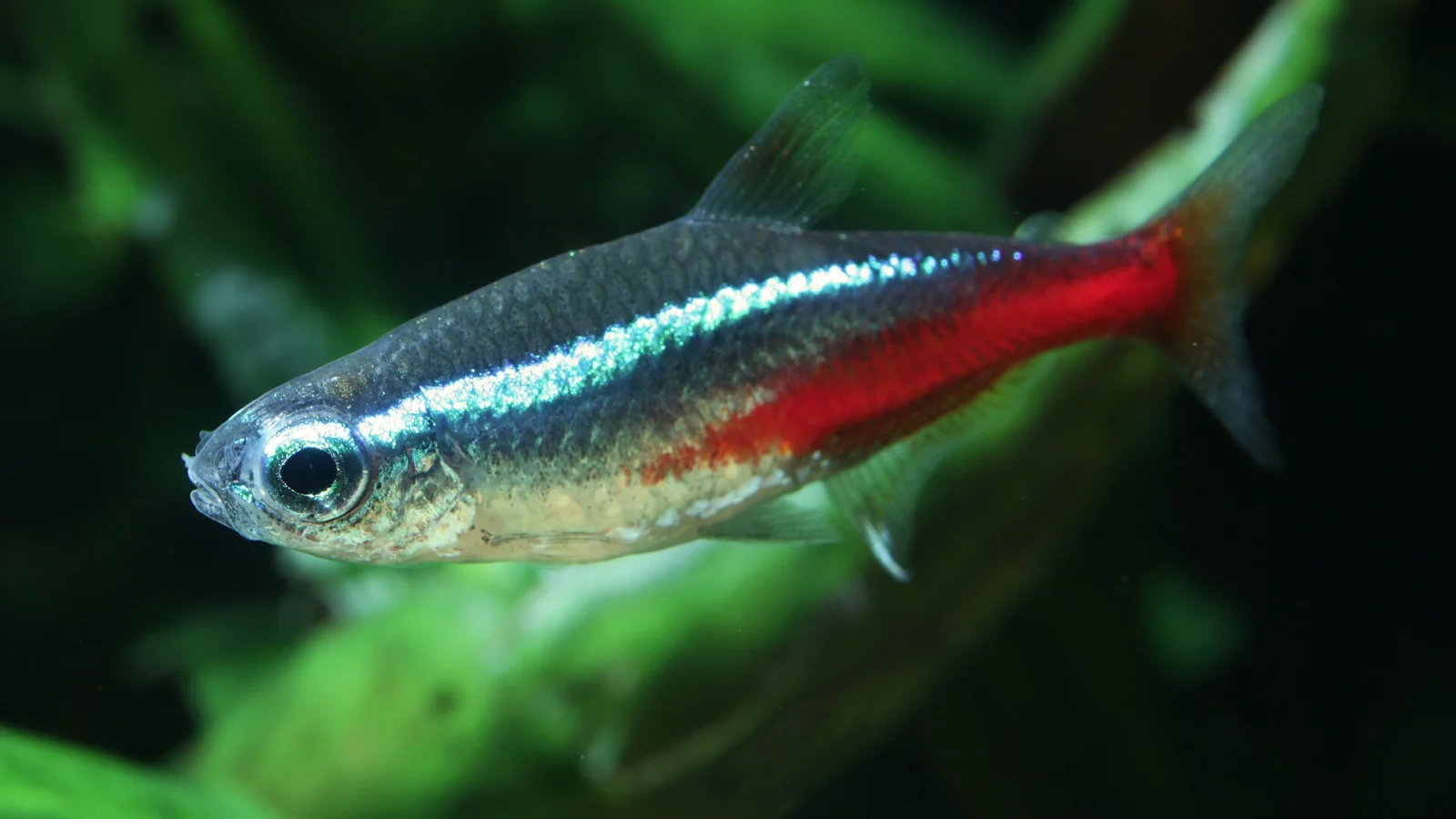
Neon Tetra Care: Tank Setup, Tank Mates and Diet
Paracheirodon innesiNeon tetra care is simple once the basics are in place: keep a school of at least 8 to 10 fish in a cycled, heated tank of 20 gallons or more, hold the water at 72 to 77°F with a pH of about 6.0 to 7.0, and feed small portions of quality flakes and frozen foods once or twice a day. Pick calm, small tank mates and change 20 to 25% of the water every week.
Neon tetra care starts with one idea: these are small, shy schooling fish from soft, slow Amazon streams, so they do best in a calm, stable, planted tank with plenty of their own kind. Get the water steady and the group large enough, and neons reward you with that famous electric blue and red glow for years.
This guide covers tank size, water parameters, tank setup, diet, tank mates, breeding and the health problems to watch for. It also explains how to tell a neon from a cardinal tetra, since the two are often mixed up in stores.
Neon Tetra Basics: Origin, Size and Lifespan
The neon tetra, Paracheirodon innesi, is a small characin native to the upper Amazon basin in Brazil, Colombia and Peru. In the wild it lives in shaded forest streams with soft, acidic, tea-colored water. Almost all neons sold in the US today are farm bred, which makes them hardier than wild fish, but they still prefer the same calm conditions.
How Big Do Neon Tetras Get?
Adults reach about 1.2 inches in body length, or roughly 1.5 inches including the tail. Females are slightly larger and rounder through the belly, while males look slimmer and their blue stripe often appears straighter.
How Long Do Neon Tetras Live?
With clean water and a good diet, neon tetras often live around 5 years, and well kept fish can go longer. Many die within weeks of purchase, though, usually because they were added to an uncycled tank or stressed by a sudden change in water. Careful setup and slow acclimation solve most of that.
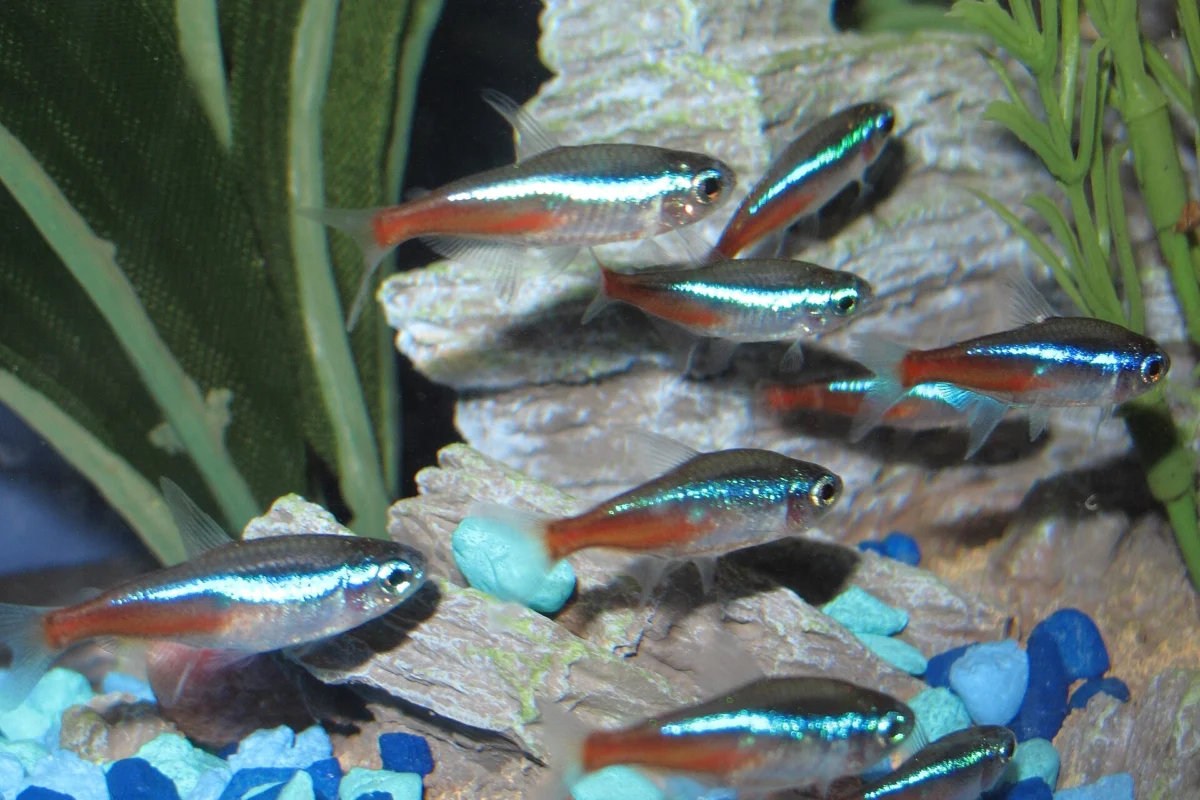
Neon Tetra Tank Size and Setup
Neons are tiny, but they are active swimmers that need room to move as a group. A 20 gallon long tank is a comfortable home for a school of 10 plus a few tank mates. A 10 gallon tank can hold a small group of 6 to 8 neons on its own, but it gives you less room for error and fewer stocking options. If you are still choosing a tank, our guide to nano fish for small tanks shows what fits in smaller setups.
Cycle the Tank First
Never add neons to a brand new tank. They are sensitive to ammonia and nitrite, and an uncycled tank is the most common reason new neons die. Follow the steps in how to cycle a fish tank and wait until ammonia and nitrite both read zero before buying fish.
Heater, Filter and Lighting
Neon tetras are tropical fish, so most homes need an adjustable heater to hold the water steady. Use our aquarium heater size guide to match the wattage to your tank. A sponge filter or a hang on back filter with an adjustable flow works well, as neons dislike strong currents. Moderate or dimmed lighting brings out their color better than harsh, bright light.
Plants, Hardscape and Substrate
Recreate their home stream with live plants, driftwood and a dark substrate. Plants such as java fern, anubias, cryptocorynes and floating plants give shade and hiding spots. Driftwood and Indian almond leaves release tannins that soften the water slightly and tint it a natural amber. Leave an open area in the middle and front of the tank so the school has space to swim together.
Water Parameters for Neon Tetras
Farm bred neons adapt to a range of water, but stability matters more than hitting one exact number. Sudden swings in temperature or pH stress them far more than a steady reading at the edge of their range.
| Parameter | Ideal Range | Notes |
|---|---|---|
| Temperature | 72 to 77°F | Keep it steady with a heater and thermometer |
| pH | 6.0 to 7.0 | Wild fish live in water as low as 4.0 to 5.0 |
| General hardness (GH) | 1 to 12 dGH | Softer water is closer to their natural habitat |
| Ammonia | 0 ppm | Any reading means a problem |
| Nitrite | 0 ppm | Shows the tank is not fully cycled |
| Nitrate | Under 20 ppm | Keep it low with weekly water changes |
The species data on Seriously Fish lists a temperature range of about 70 to 77°F and a pH range of roughly 4.0 to 7.5 for this species, which shows how adaptable captive bred neons can be. For a full breakdown of each test, see our guide to aquarium water parameters.
Weekly Maintenance Routine
Change 20 to 25% of the water once a week, vacuum the substrate lightly and treat new tap water with a conditioner that removes chlorine and chloramine. Test ammonia, nitrite and nitrate weekly for the first few months, then every two weeks once the tank is stable.
How Many Neon Tetras Should You Keep Together?
Neon tetras are true schooling fish. Kept alone or in pairs they hide, lose color and stress easily. A group of at least 8 to 10 is a good minimum, and larger schools of 15 or more look more natural and show tighter schooling behavior.
Signs Your Neons Feel Safe
A relaxed school swims together in the middle of the tank, shows bright color during the day and comes out to eat without hesitation. Faded colors, constant hiding or fish hanging near the surface are signs of stress, poor water or bullying tank mates.
What Do Neon Tetras Eat?
Neons are omnivores with very small mouths. In the wild they pick tiny insects, larvae and plant matter from the water column. In the aquarium they accept most small foods.
Best Foods for Neon Tetras
- A quality micro pellet or crushed flake as the staple diet
- Frozen or live daphnia, brine shrimp and bloodworms two or three times a week
- Small amounts of blanched vegetables or spirulina based food for variety
How Often to Feed
Feed once or twice a day, offering only what the school eats in about two minutes. Remove leftover food so it does not break down into ammonia. Our guide to what fish eat explains how wild diets compare with aquarium foods.
Best Tank Mates for Neon Tetras
The ideal neon tank mate is peaceful, similar in size and not large enough to swallow a 1.5 inch fish. Neons do best in community tanks built around small, calm species.
Good Tank Mates
- Other small tetras such as ember, rummy nose and black neon tetras
- Corydoras catfish and otocinclus for the lower levels
- Harlequin rasboras, chili rasboras and pygmy corydoras
- Guppies, endlers and platies in water at the lower end of their range (see our guppy care guide)
- Dwarf gouramis and peaceful honey gouramis
- Cherry shrimp and nerite snails
Tank Mates to Avoid
Avoid any fish big enough to eat a neon. Adult angelfish, larger cichlids and most barbs are common mistakes. Our angelfish care guide explains which tank mates are safe with this larger cichlid. Bettas sometimes live with neons in tanks of 10 gallons or more, but results depend on the individual betta, so read what fish can live with bettas before you try it. For more ideas, browse our list of tropical freshwater fish.
Neon Tetra vs Cardinal Tetra
Cardinal tetras look very similar and are often sold side by side. The easy way to tell them apart is the red stripe. On a neon tetra the red covers only the lower half of the body, from the middle to the tail. On a cardinal tetra the red runs the full length of the body, from the head to the tail.
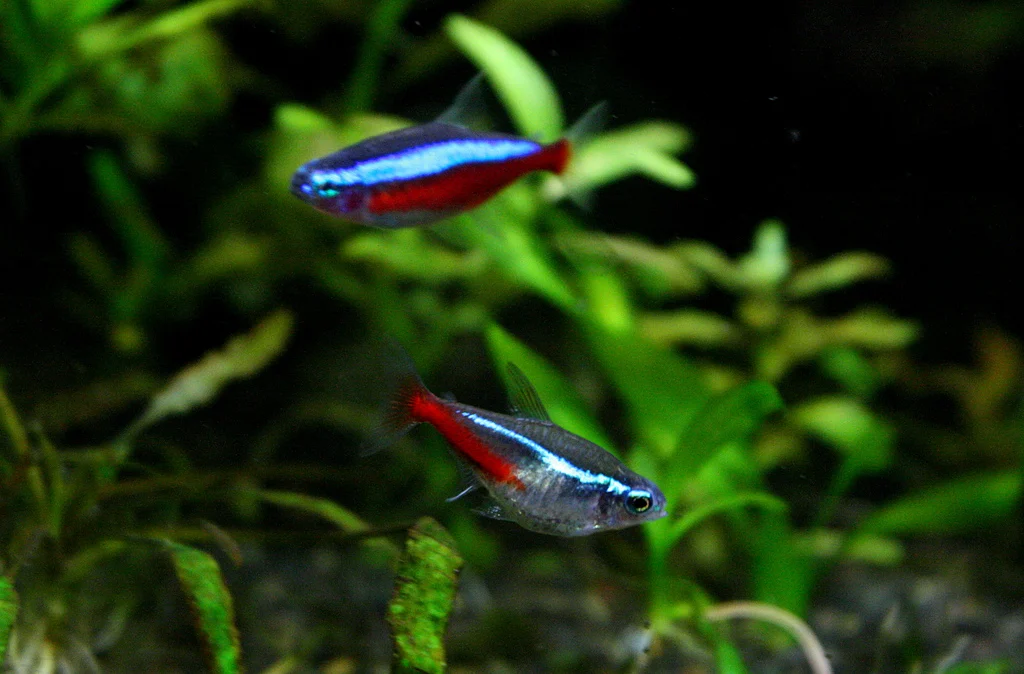
Care Differences
Cardinals grow slightly larger and prefer warmer, softer water, so they are not the best match for the cooler end of the neon range. Both species school well together if the water suits both. If you love blue fish, our list of blue freshwater fish covers more options.
Breeding Neon Tetras
Neons are harder to breed than livebearers, but it is possible in a separate tank. Breeding success depends on very soft, acidic water and low light.
Simple Breeding Steps
- Set up a small breeding tank with a sponge filter, fine leaved plants or a mesh over the bottom.
- Use very soft water with a pH of about 5.5 to 6.5 and keep the tank dim.
- Condition a healthy pair or small group with live and frozen foods for one to two weeks.
- Move the fish in at night and check for eggs in the morning.
- Remove the adults as soon as eggs appear, since they will eat them.
- Feed the fry infusoria first, then baby brine shrimp once they are swimming freely.
The eggs and fry are sensitive to light, so keep the tank covered or shaded for the first several days.
Common Neon Tetra Health Problems
Most neon losses come from poor water quality, sudden changes or disease brought in with new fish. Quarantine new arrivals for two to four weeks in a separate tank whenever you can.
Neon Tetra Disease
Neon tetra disease is caused by a microsporidian parasite, Pleistophora hyphessobryconis. Infected fish lose color, develop pale or white patches in the muscles, swim restlessly and leave the school. There is no reliable cure once it is advanced, so the standard advice is to remove affected fish quickly to protect the rest. A bacterial infection called columnaris can look similar but often responds to treatment, so isolate any sick fish and check the symptoms carefully.
Ich and Other Common Issues
Ich, fin rot and stress from ammonia are also common in neon tanks. Our guide to common fish diseases covers the signs and treatments. Acclimating new fish slowly, as shown in how to acclimate fish, prevents many problems from the start.
Neon Tetra Care Checklist
- Tank of 20 gallons or more, fully cycled before fish go in
- Heater set between 72 and 77°F with a thermometer to check it
- Gentle filter, live plants and dim to moderate lighting
- A school of 8 to 10 or more neons
- Small, varied meals once or twice a day
- 20 to 25% water change every week
- Peaceful tank mates that are too small to eat neons
Neon tetras are one of the best starter fish when you give them a stable, mature tank. For more beginner friendly species, see our guide to the best freshwater fish for fish tanks or browse all our aquarium fish care guides.
Frequently Asked Questions
How many neon tetras should be kept together?
Keep at least 8 to 10 neon tetras together. Larger groups of 15 or more school more tightly, show better color and feel more secure.
What size tank do neon tetras need?
A 20 gallon long tank is ideal for a school of 10 with tank mates. A 10 gallon tank can hold a small group of 6 to 8 neons on their own if it is cycled and well maintained.
Do neon tetras need a heater?
Yes, in most homes. Neons need steady water between 72 and 77°F, and an adjustable heater keeps the temperature stable through the day and night.
Why do my neon tetras keep dying?
The most common causes are an uncycled tank, sudden changes in temperature or pH, and disease brought in with new fish. Test the water, cycle the tank fully and acclimate new fish slowly.
Can neon tetras live with bettas?
Sometimes. In a planted tank of 10 gallons or more, some bettas ignore neons, but others chase them. Watch closely and have a backup tank ready if the betta becomes aggressive.
Keep exploring
 Aquarium Fish
Cherry Shrimp Care: Tank Setup, Water Parameters and Breeding
Cherry shrimp care made easy: tank setup, ideal water parameters, feeding, molting, breeding and safe tank mates for a thriving colony.
 Aquarium Fish
Cheap Freshwater Fish: 15 Hardy Species That Cost Under $5
Cheap freshwater fish that stay hardy: 15 species under $5, with sizes, tank needs and a sample budget stocking plan for a…
 Aquarium Fish
Types of Freshwater Fish: 40 Species by Family, With Facts
Types of freshwater fish explained: 40 species across trout, bass, catfish, carp, cichlid, perch and more, with quick facts and where each…