How to Acclimate New Fish to Your Aquarium
How to Acclimate New Fish to Your Aquarium
The float and drip methods explained step by step, with acclimation times, quarantine tips and what to watch for after new fish go in.
By Fish Explain Editorial TeamUpdated November 19, 20268 min read
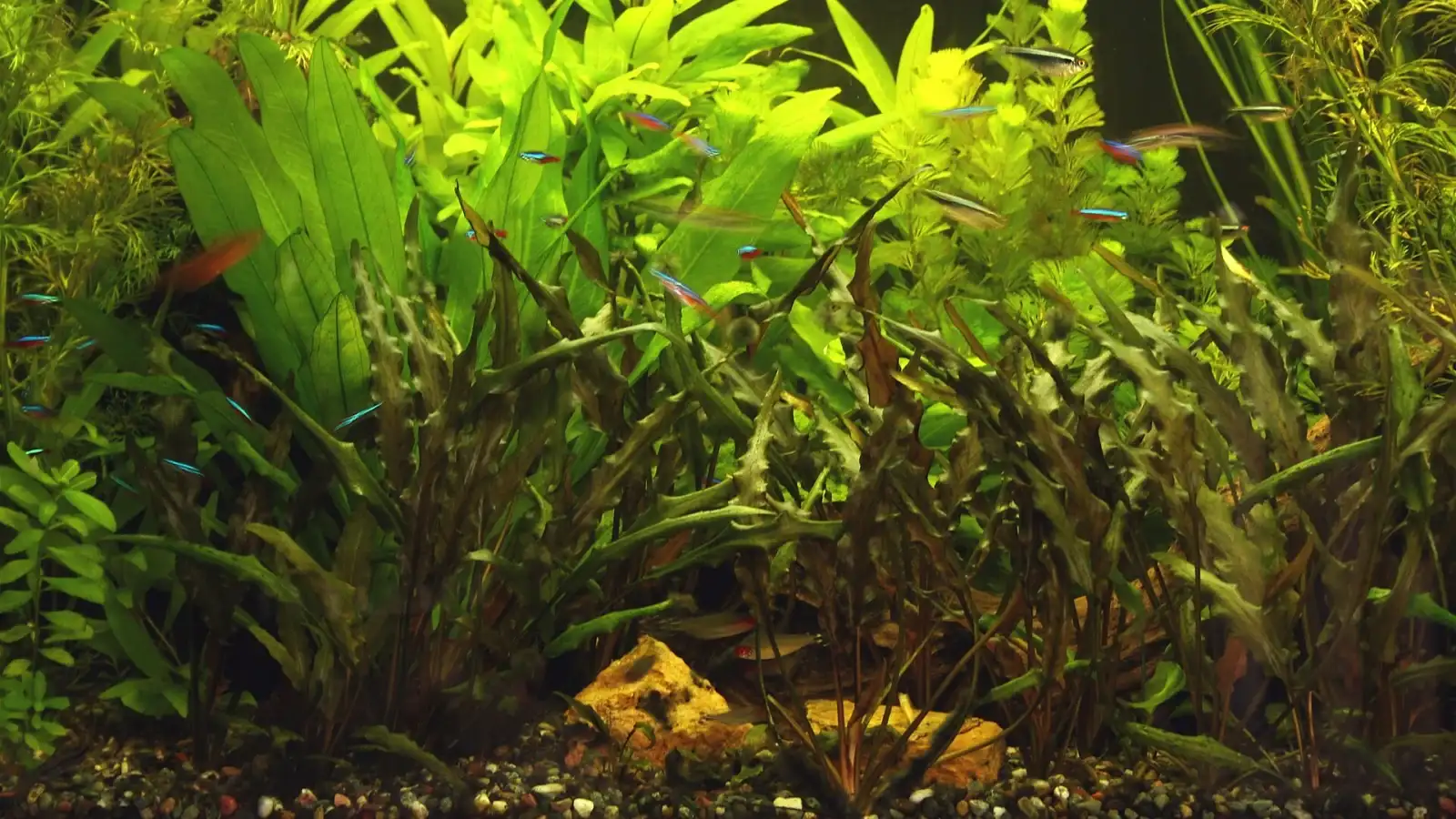
Photo: The Wandering Angel (CC BY 2.0), via Wikimedia Commons (cropped)
To acclimate fish, turn off the tank lights and float the sealed bag for 15 to 20 minutes to match temperature. Then open it, add an ammonia binding conditioner and add a little tank water every 4 to 5 minutes until the volume doubles. Net the fish into the tank and throw the bag water away. Use slower drip acclimation for sensitive fish, shrimp and snails.
On this page
- Why You Need to Acclimate New Fish
- Before You Start: What You Need
- How to Acclimate Fish With the Float Method
- How to Drip Acclimate Fish
- Acclimation Times by Type of Animal
- What to Do After Adding New Fish
- Should You Quarantine New Fish?
- Acclimation Tips for Popular Fish
- Common Acclimation Mistakes
- How to Acclimate Fish FAQs
- Final Thoughts
Why You Need to Acclimate New Fish
Knowing how to acclimate fish is one of the most useful skills in the hobby. Fish from a store or an online seller arrive in water that can differ from your tank in temperature, pH, hardness and dissolved waste. Dropping a fish straight into very different water can cause shock, a weakened immune system and, in sensitive species, sudden death. Acclimating fish simply means changing their conditions slowly enough that their bodies can adjust.
Good acclimation starts before you buy. Your tank should be fully cycled, with ammonia and nitrite at zero. If you are still setting up, read our guide on how to set up a fish tank first.
What changes between the bag and your tank
- Temperature: bag water warms or cools on the trip home.
- pH: the fish breathe out carbon dioxide in the sealed bag, which pushes the pH down.
- Hardness: store water and your tap water can have very different mineral levels.
- Waste: ammonia from the fish builds up in the bag during transport.
The hidden ammonia problem
Ammonia is less toxic at a low pH. Inside a sealed bag, the falling pH keeps most of it in the safer ammonium form. As soon as you open the bag and carbon dioxide escapes, or you start adding tank water with a higher pH, more of that waste turns into toxic free ammonia. That is why long, slow acclimation is not always better, and why many keepers add an ammonia binding water conditioner to the bag before mixing water. Our guide to ammonia in a fish tank explains the pH link in more detail.
Before You Start: What You Need

Basic equipment
- A clean fish net used only for aquarium work
- A clean bucket or container that has never held soap or chemicals
- A cup or small jug for adding tank water
- A water conditioner that binds ammonia
- Airline tubing and a clip or valve if you plan to drip acclimate
- A test kit, so you can compare bag water with tank water
Check your tank water first
Test temperature, pH, ammonia, nitrite and nitrate before the fish arrive. If the numbers are far off, fix the tank before adding anything. Our chart of aquarium water parameters shows the ranges most freshwater fish need.
Dim the lights
Turn off the aquarium lights and keep the room dim. Darkness lowers stress during the move and helps new fish settle without being chased by residents.
How to Acclimate Fish With the Float Method
The float method suits most hardy freshwater fish, such as guppies, platies, mollies, danios and many tetras. It takes about 30 to 45 minutes in total.
Step by step
- Float the sealed bag on the tank surface for 15 to 20 minutes so the temperatures match. Keep the bag out of direct light.
- Open the bag and roll the top down to make a collar so it floats upright. Add an ammonia binding conditioner to the bag water.
- Add tank water slowly. Pour in about half a cup of tank water every 4 to 5 minutes until the volume in the bag has roughly doubled.
- Net the fish out of the bag and release it into the tank.
- Throw away the bag water. Never pour store water into your aquarium, because it can carry disease, parasites and waste.
Float method mistakes to avoid
Do not leave the bag floating for hours under a hot light, and do not tip the whole bag into the tank. If the bag water looks cloudy or smells bad, skip the slow mixing and move the fish into clean, temperature matched water quickly.
How to Drip Acclimate Fish
Drip acclimation is slower and gentler. It is the better choice for sensitive fish, fish shipped long distances, shrimp, snails and anything going into water that differs a lot from the store water.
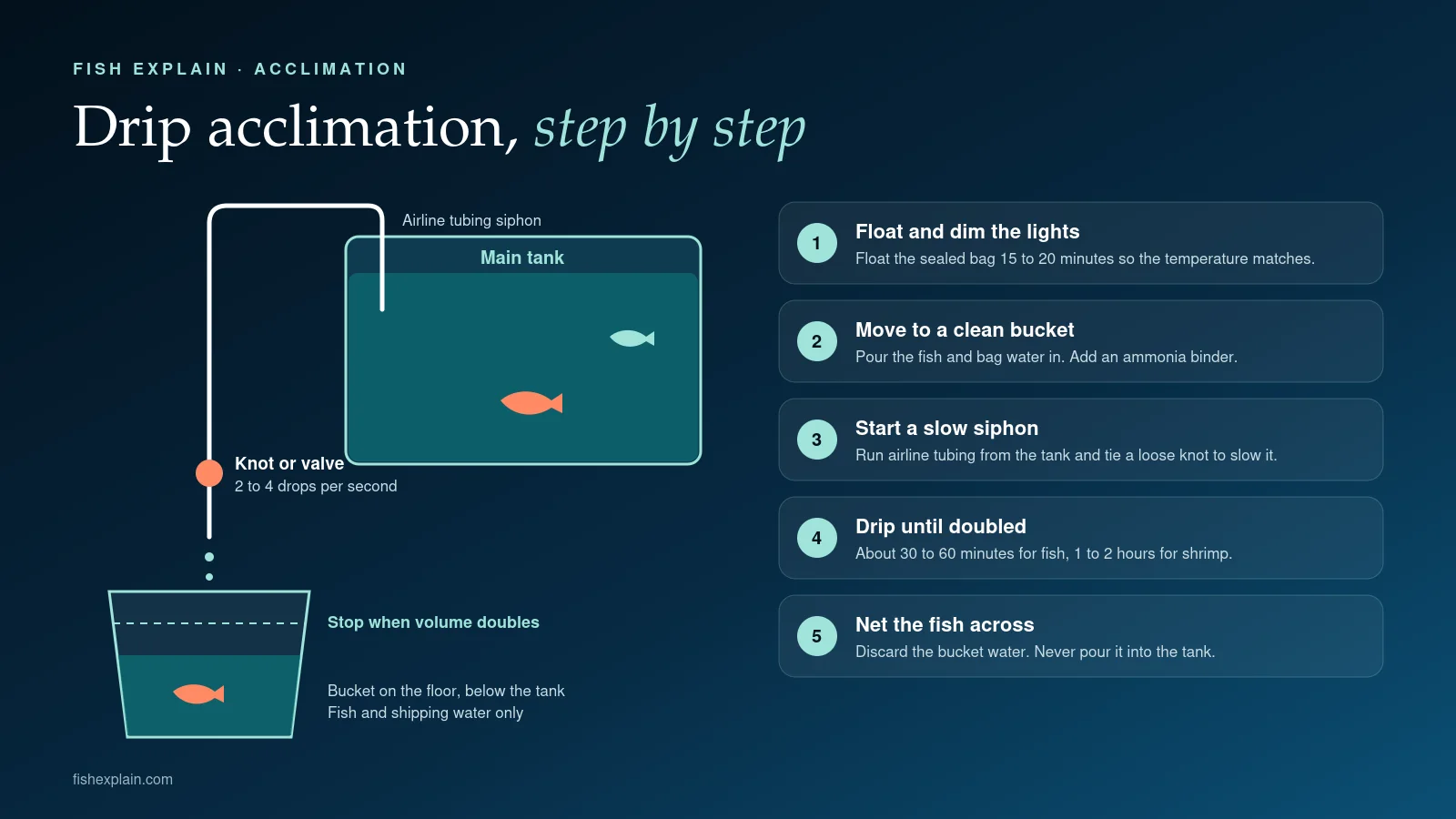
How to set up a drip line
- Float the sealed bag for 15 to 20 minutes to match temperature.
- Gently pour the fish and their water into a clean bucket on the floor. Tilt the bucket if needed so the fish stay covered.
- Add an ammonia binding conditioner to the bucket.
- Start a siphon from the tank with airline tubing, then tie a loose knot or use a valve so it drips at about 2 to 4 drops per second.
- When the water volume has doubled, pour out half and let it double again if the fish are very sensitive.
- Net the fish into the tank and discard the bucket water.
How long drip acclimation takes
Most fish need 30 to 60 minutes of dripping. Shrimp and other invertebrates are more sensitive to changes in hardness and do better with 1 to 2 hours.
Acclimation Times by Type of Animal
Use these times as a starting point. Fish that look stressed or bag water that looks dirty are reasons to move faster, not slower.
| Animal | Best method | Typical time |
|---|---|---|
| Hardy freshwater fish | Float method | 30 to 45 minutes |
| Sensitive freshwater fish | Drip method | 30 to 60 minutes |
| Shrimp and snails | Slow drip | 1 to 2 hours |
| Saltwater fish | Drip method | 45 to 90 minutes |
| Fish in dirty or smelly bag water | Quick temperature match | 15 to 20 minutes |
What to Do After Adding New Fish
The first 24 hours
Leave the lights off for the rest of the day. Many fish hide at first, lose some color or refuse food, and this is normal. Offer a small meal the next day rather than straight away.
The first two weeks
Watch for clamped fins, rubbing on decor, heavy breathing or white spots. White salt like spots often mean ich on fish, which is common after a stressful move. Test water every few days, because new fish add to the bioload and can cause a small ammonia rise.
Add fish in small groups
Add only a few fish at a time and wait about two weeks before the next batch. This gives your filter bacteria time to catch up. A brand new tank should still be cycled first, as our guide to cycling a fish tank explains.
Should You Quarantine New Fish?
A quarantine tank is the safest way to add new fish to an established aquarium. It is a small, separate tank where new arrivals live for two to four weeks before they join the main display.
Why quarantine helps
Many diseases and parasites do not show right away. Quarantine lets you spot and treat problems in a small tank instead of exposing every fish you own. It also gives new fish time to recover from shipping without competition.
A simple quarantine setup
A 5 to 10 gallon tank with a heater, a sponge filter that has been seeded in your main tank and a few hiding spots is enough. Acclimate fish into quarantine with the float or drip method, then acclimate them again when you move them to the display.
Acclimation Tips for Popular Fish
Guppies and other livebearers
These fish are hardy and do well with the float method. They prefer harder, alkaline water, so a slower drip helps if your tank water is soft. Our guppy care guide covers their ideal setup.
Bettas
Bettas usually come in small cups. Float the cup to match temperature, add tank water in small amounts for 20 to 30 minutes, then net the fish in. See our betta fish care guide for tank needs.
Shrimp and snails
Invertebrates react badly to sudden changes in hardness and pH. Always drip acclimate them slowly, and never expose them to air longer than needed.
Common Acclimation Mistakes
Most problems with new fish come from a few avoidable errors. Knowing them makes the whole process of how to acclimate fish much safer.
Taking too long with dirty bag water
Fish that spent many hours in a bag sit in their own waste. Slowly adding tank water raises the pH and turns more of that waste into toxic ammonia. In this case, match the temperature, then move the fish into clean, conditioned water quickly.
Adding too many fish at once
A sudden jump in fish numbers can overwhelm the filter bacteria and cause an ammonia spike. Stock in small groups and test the water a few days after each addition.
Feeding right away
New fish rarely eat on day one, and uneaten food rots. Wait until the next day and offer a small amount.
Skipping the lid
Stressed fish sometimes jump in the first hours. Keep the lid closed and the lights off while new fish settle.
How to Acclimate Fish FAQs
How long should you float a bag of fish?
Float the sealed bag for about 15 to 20 minutes. That is long enough for the bag water to reach the same temperature as the tank in most cases.
Can I put fish straight into a new tank?
Only if the tank is fully cycled with ammonia and nitrite at zero. Even then, match the temperature and mix the water gradually rather than dropping the fish straight in.
Should I add the bag water to my aquarium?
No. Store water can carry waste, medication, parasites and disease. Always net the fish out and throw the bag water away.
Is drip acclimation better than floating?
Drip acclimation is gentler and better for sensitive fish, shrimp and snails. Hardy fish such as guppies and platies usually do fine with the float method.
Why did my new fish die after acclimation?
Common causes are an uncycled tank, a large difference in water chemistry, ammonia in the bag, or a fish that was already weak or sick. Test your water and review the acclimation steps before adding more fish.
Final Thoughts
Slow, clean and calm
Learning how to acclimate fish properly protects every animal in your tank. Match the temperature first, mix water gradually with the float or drip method, keep store water out of your aquarium and give new fish a dark, quiet start. Add a short quarantine when you can, and your new fish will settle in with far less stress.
Keep exploring
More fish guides
Keep exploring
 Aquarium Care
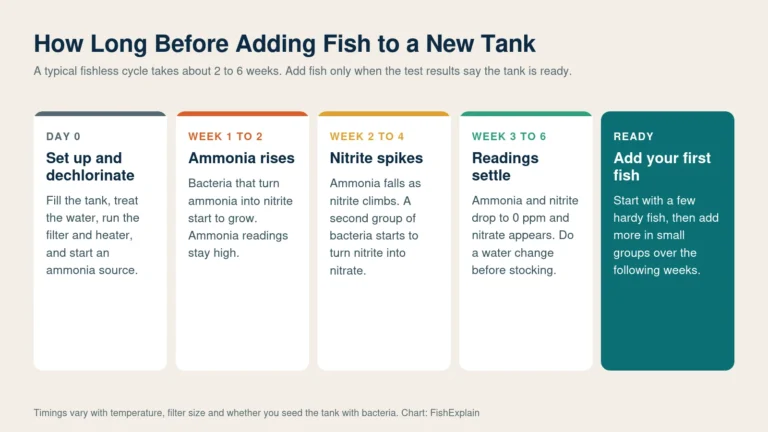
How Long to Wait Before Adding Fish to a New Tank
How long before adding fish to a new tank? Usually 2 to 6 weeks. Learn the water test results that mean it…
 Aquarium Care
Aquarium pH: How to Raise or Lower pH Safely
Aquarium pH guide: ideal ranges for freshwater fish, how KH keeps pH stable, and safe ways to raise or lower pH without…
 Aquarium Care
New Tank Syndrome: Signs, Causes and How to Prevent It
New tank syndrome kills fish in uncycled tanks. Learn the warning signs, what causes ammonia and nitrite spikes, and how to fix…