Why Choose Blue Freshwater Fish?
Blue freshwater fish stand out against green plants and dark wood like no other color. Some, such as neon tetras and cardinal tetras, carry a glowing blue stripe. Others, such as the electric blue acara and cobalt blue zebra cichlid, are blue from head to tail. This list covers 15 of the best blue aquarium fish, from tiny schooling tetras to showpiece cichlids, with the adult size, minimum tank and care level for each.
All of these are tropical species that need a heated tank. If you are new to the hobby, start with our guide to the best freshwater fish for fish tanks, then come back here to add color.
Where the blue comes from
Most fish cannot make true blue pigment. Their blue shine comes from tiny reflective crystals in the skin called iridophores, which scatter light. That is why many blue fish look brighter under good lighting and from certain angles, and why stressed or sick fish often look dull.
Natural species and bred color forms
Some fish on this list are naturally blue, while others are color forms bred in captivity, such as the electric blue acara and powder blue dwarf gourami. Bred forms can be a little less hardy than the wild type, so buy from a seller who keeps healthy stock.
Blue Freshwater Fish at a Glance
Sizes are typical adult lengths in home aquariums, and tank sizes are minimums for an adult group or pair.
| Species | Adult size | Minimum tank | Care level |
|---|---|---|---|
| Neon tetra | 1.5 in | 20 gal | Easy |
| Cardinal tetra | 2 in | 20 gal | Moderate |
| Blue emperor tetra | 1.75 in | 20 gal | Easy |
| Betta fish (blue forms) | 2.5 in | 5 gal | Easy |
| Blue platy | 2.5 in | 20 gal | Easy |
| German blue ram | 2.5 in | 20 gal | Moderate |
| Powder blue dwarf gourami | 3.5 in | 20 gal | Moderate |
| Neon dwarf rainbowfish | 2.5 in | 30 gal | Easy |
| Blue gourami | 5 in | 30 gal | Easy |
| Boeseman’s rainbowfish | 4 in | 40 gal | Easy |
| Electric blue acara | 6 in | 40 gal | Easy |
| Cobalt blue zebra cichlid | 5 in | 55 gal | Moderate |
| Electric blue Jack Dempsey | 8 in | 55 gal | Moderate |
| Electric blue hap | 7 in | 75 gal | Moderate |
| Blue discus | 6 in | 75 gal | Advanced |
Small Blue Aquarium Fish for Community Tanks
These five species stay small and peaceful, so they fit planted community tanks of 20 gallons or less.
1. Neon tetra (Paracheirodon innesi)
The neon tetra is the most popular blue fish in the hobby. A bright electric blue line runs from eye to tail above a red stripe on the rear half. Keep a group of at least six, ideally ten or more, in a planted tank at about 72 to 78 °F. They are peaceful and suit almost any calm community.
2. Cardinal tetra (Paracheirodon axelrodi)
Cardinals look like neons, but the red stripe runs the full length of the body. They grow slightly larger and prefer warmer, softer water around 76 to 84 °F. Because of that warmth, they pair well with discus and rams. Keep them in groups of eight or more.
3. Blue emperor tetra (Inpaichthys kerri)
Male blue emperor tetras show a violet blue body with a dark side stripe, while females are browner. They are hardy, peaceful and less common in stores than neons, which makes them a nice change. Keep six or more in a tank with plants and open swimming space.
4. Betta fish (blue color forms)
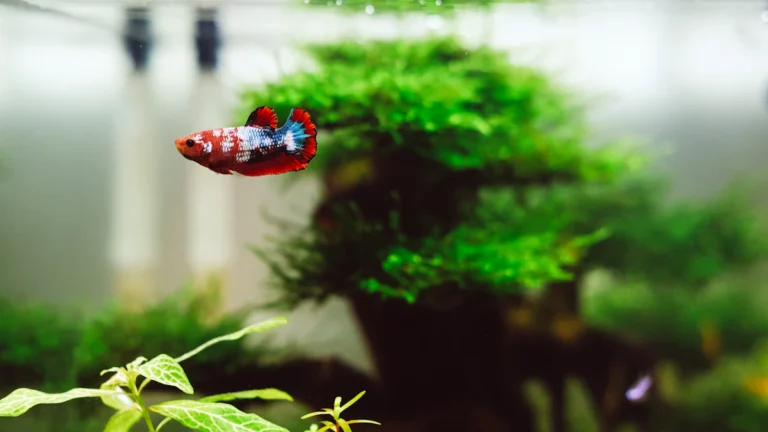
Bettas come in royal blue, steel blue, turquoise and many blue and white patterns. A single male needs at least 5 gallons, a heater, gentle flow and a lid, since bettas can jump. Our betta fish care guide covers water, food and daily routine.
5. Blue platy (Xiphophorus maculatus)
Platies are hardy livebearers bred in many colors, including blue forms with a black tail spot often called blue mickey mouse platies. They are easy to feed, peaceful and breed readily, so expect fry unless you keep only males.
Blue Fish for Medium Tanks
These five species need 20 to 40 gallons. They make strong centerpiece fish for a planted community.
6. German blue ram (Mikrogeophagus ramirezi)
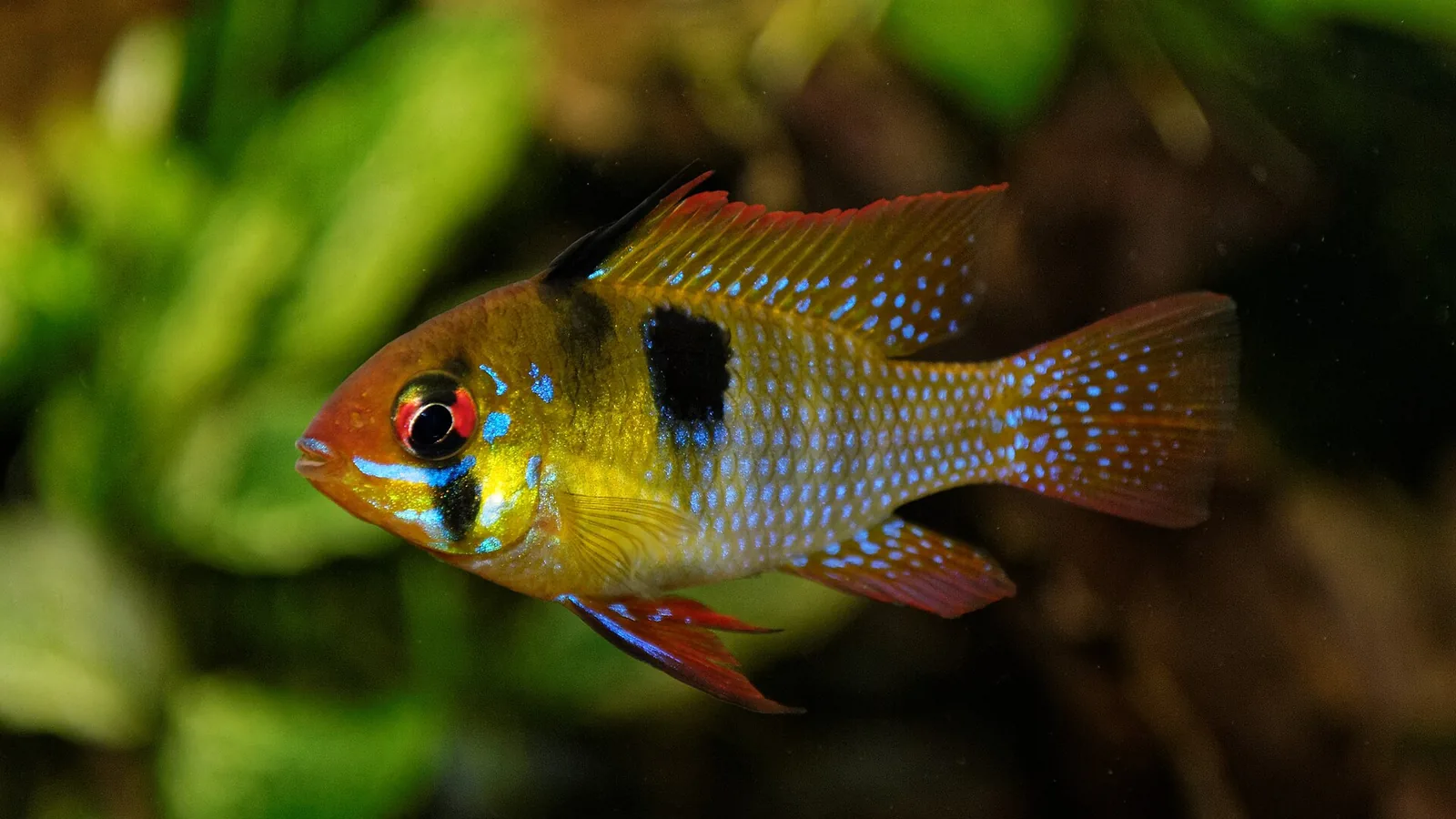
The German blue ram is a dwarf cichlid with a gold body, red eye and rows of shining blue spangles, while bred forms such as the electric blue ram are blue all over. Rams need very warm, clean, soft water, about 78 to 85 °F, and do best in a mature tank. Keep a pair and avoid fin nipping tank mates.
7. Powder blue dwarf gourami (Trichogaster lalius)
This color form of the dwarf gourami is almost solid sky blue. It is peaceful but shy, so give it floating plants and calm neighbors. Dwarf gouramis are prone to a viral disease called dwarf gourami iridovirus, so buy from a trusted seller and quarantine new fish.
8. Neon dwarf rainbowfish (Melanotaenia praecox)
Praecox rainbowfish have a metallic blue body and red or yellow fins in males. They are active schoolers that look best in groups of six or more. Give them a longer tank with swimming room and a tight lid, since rainbowfish can jump.
9. Blue gourami (Trichopodus trichopterus)
Also called the three spot gourami, this hardy fish has a powder blue body with two dark spots on each side. It grows to about 5 inches and males can be territorial with each other, so keep one male per tank.
10. Boeseman’s rainbowfish (Melanotaenia boesemani)
Adult males are blue on the front half and orange on the back, a striking two tone look that develops as they mature. They are peaceful and hardy but need a group and a tank of about 40 gallons or more.
Large Blue Freshwater Fish for Bigger Tanks
These five blue tropical freshwater fish grow larger or need special water. They suit keepers ready for a bigger setup.

11. Electric blue acara (Andinoacara pulcher)
This bred form of the blue acara glows bright blue from head to tail. It is one of the calmer cichlids and can live with similar sized peaceful fish. Give it a tank of 40 gallons or more with sand, rocks and wood.
12. Cobalt blue zebra cichlid (Maylandia callainos)
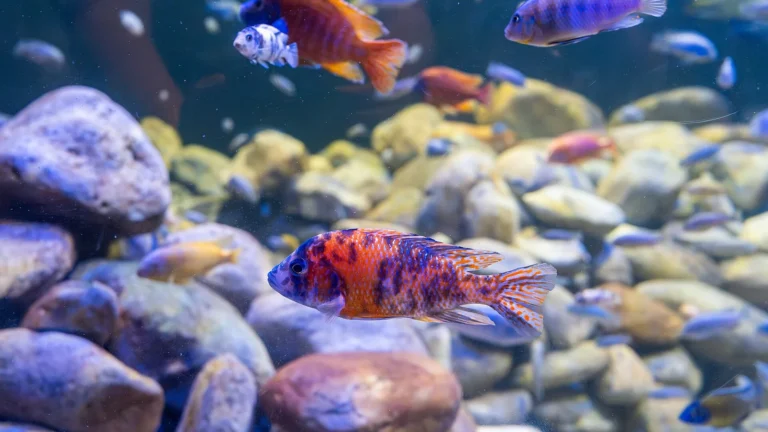
This mbuna from Lake Malawi is blue in both sexes. Like other mbuna, it needs hard, alkaline water and lots of rock caves, and it can be aggressive. Our African cichlids guide explains how to stock a Malawi tank.
13. Electric blue Jack Dempsey (Rocio octofasciata)
This color form of the Jack Dempsey is covered in bright blue scales. It often stays smaller and calmer than the standard form, but it is still a cichlid that needs space, caves and tank mates of similar size.
14. Electric blue hap (Sciaenochromis fryeri)
Mature males are a deep, even blue with a white edge on the dorsal fin. This Lake Malawi hap is a predator of small fish in the wild, so keep it with fish too large to swallow. Profiles such as Seriously Fish’s species page give more detail on its natural habitat.
15. Blue discus (Symphysodon spp.)
Blue discus forms such as cobalt and blue diamond are among the most striking freshwater fish. They need warm water around 82 to 86 °F, frequent water changes and a group in a large tank. See our discus fish tank setup guide before you buy.
How to Keep Blue Fish Colorful
Blue color depends on health, water and light. These steps help your fish show their best shades.
Keep water clean and stable
Ammonia, nitrite and sudden temperature swings make fish pale. A cycled tank, weekly partial water changes and a reliable aquarium heater keep stress low and color strong.
Use a dark background and good light
A dark background, dark substrate and live plants make blue fish look brighter. A quality LED light helps show the shine of iridophores. Keep the light on for a steady 8 to 10 hours a day.
Feed a varied diet
Mix a good flake or pellet with frozen foods such as brine shrimp and bloodworms. A varied diet supports health, which is the base of good color.
Choose compatible tank mates
Fish that are chased or nipped lose color fast. Match species by size, temperament and water needs, and give each fish places to hide. Our list of tropical freshwater fish can help you plan a mixed tank.
Blue Freshwater Fish FAQs
What is the easiest blue freshwater fish for beginners?
Neon tetras, blue platies and blue bettas are the easiest. They are small, hardy and widely available, and they do well in a heated, cycled tank of 5 to 20 gallons.
What is the bluest freshwater fish?
The electric blue acara, cobalt blue zebra cichlid and electric blue hap are among the bluest, with color over the whole body. Blue discus forms are also almost entirely blue.
Can blue freshwater fish live together?
Many can. Neon tetras, blue emperor tetras, rainbowfish and gouramis mix well in a community. Malawi cichlids such as cobalt zebras and electric blue haps need their own hard water tank.
Why is my blue fish losing its color?
Stress, poor water quality, illness, a bright bare tank or bullying tank mates can all fade color. Test the water, check temperature and watch for chasing or signs of disease.
Do blue fish need special lighting?
No special light is needed, but a good LED light, a dark background and live plants make blue fish look brighter because their color comes from reflected light.
Final Thoughts
Pick a blue fish that fits your setup
For a small planted tank, neon tetras, cardinal tetras and a blue betta are easy ways to add blue. For a 30 to 40 gallon community, rainbowfish, gouramis and an electric blue acara bring bold color. Save cobalt zebras, electric blue haps and discus for larger, dedicated setups. Browse our aquarium fish section for full care guides.