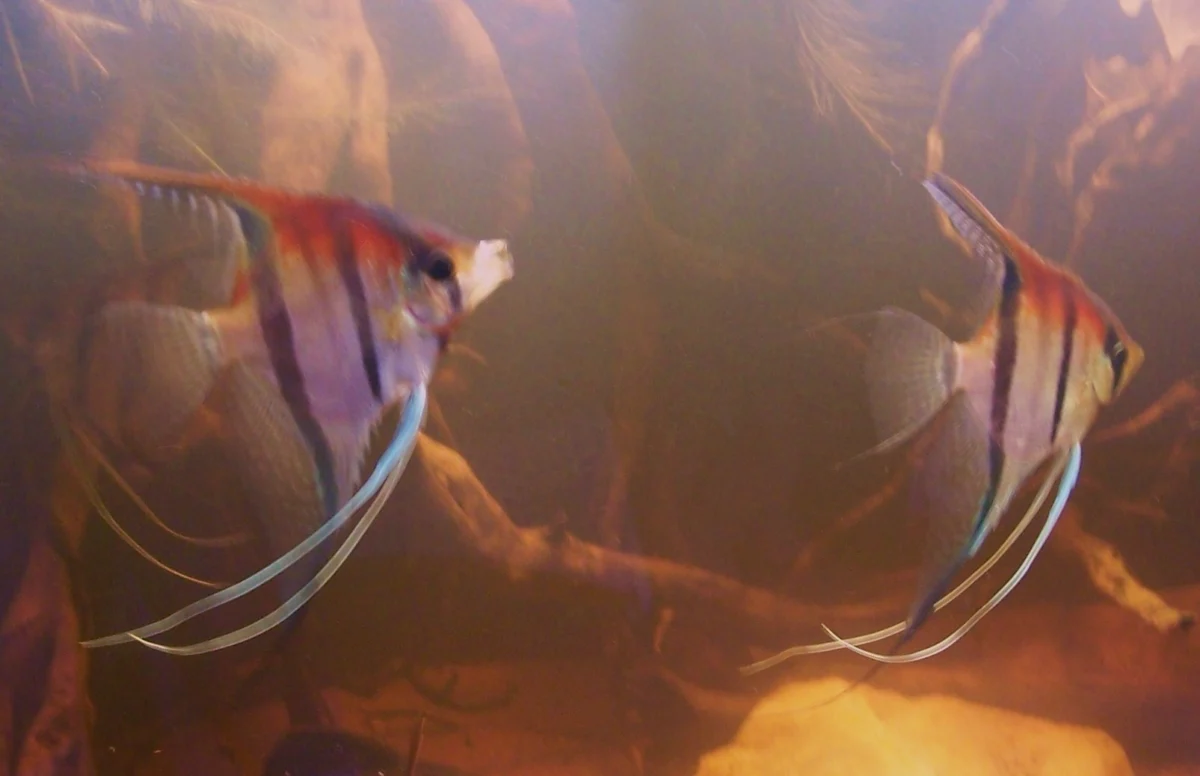
Angelfish Care Guide: Tank Size, Tank Mates and Breeding
Pterophyllum scalareAngelfish care comes down to a tall, cycled tank (at least 29 gallons for a pair and 55 gallons or more for a group), stable water at about 76 to 82°F with a pH of 6.0 to 7.4, a varied diet of flakes, pellets and frozen foods, and calm tank mates that are too big to be eaten and too gentle to nip fins. Change 20 to 25% of the water every week.
Angelfish care is easier than many beginners expect, as long as you plan for the adult fish from day one. Freshwater angelfish, Pterophyllum scalare, are cichlids from the Amazon basin. They are sold as coin sized juveniles, but adults grow tall, sweeping fins and need a tank built around that height.
This guide covers tank size and setup, water parameters, feeding, tank mates, breeding and common health problems, with simple checklists you can follow at home.
Freshwater Angelfish at a Glance
Angelfish belong to the cichlid family, the same group that includes oscars and African cichlids. Our guide to cichlid fish types shows how varied the family is. Unlike many of their relatives, angelfish are generally calm community fish, but they keep the cichlid habit of claiming territory and eating anything small enough to fit in their mouths.
| Trait | Details |
|---|---|
| Scientific name | Pterophyllum scalare |
| Origin | Amazon basin, South America |
| Adult size | About 6 inches long and up to 8 inches tall |
| Temperature | 76 to 82°F |
| pH | 6.0 to 7.4 |
| Temperament | Mostly peaceful, territorial when breeding |
| Lifespan | Often 10 years or more with good care |
How Big Do Angelfish Get?
Adults reach about 6 inches in body length, and the long dorsal and anal fins can make them 8 inches or more from fin tip to fin tip. The species profile on Seriously Fish lists a body length of about 15 cm and a height of 20 cm or more. That height is the reason tank shape matters so much for this fish.
Popular Angelfish Varieties
Decades of captive breeding have produced many colors and fin types. All of them share the same care needs.
- Silver: the wild type look, with three or four black vertical bars
- Zebra: extra vertical bars across the body
- Marble and koi: blotched patterns of black, white and orange
- Black and black lace: dark bodies that stand out in planted tanks
- Gold, platinum and leopard: lighter or spotted forms
- Veil: very long, flowing fins that need calm tank mates
The altum angelfish, Pterophyllum altum, is a separate and even taller species from the Orinoco basin. It needs softer, warmer water and is better suited to experienced fishkeepers.
Angelfish Tank Size and Setup
Height matters as much as gallons. A standard 20 gallon tank is too short for adult fins, while a tall tank lets angelfish swim with their natural upright posture. Our guide to tall fish tanks explains which shapes suit this fish best.
| Number of Angelfish | Minimum Tank | Notes |
|---|---|---|
| 1 adult | 29 gallons, tall | Works as a centerpiece in a community tank |
| 1 pair | 29 to 40 gallons, tall | Extra space helps during breeding |
| Group of 4 to 6 | 55 gallons or more | Lets the fish settle a pecking order |
| Group plus community fish | 75 gallons or more | Room for schools of tank mates |
Buying 5 or 6 young angelfish and letting them grow up together is the classic way to get a natural pair. Plan to rehome extras once a pair forms, because a breeding pair can turn on the rest of the group. If you are sizing up, our notes on large fish tanks cover stands, weight and costs.
Cycle the Tank Before Adding Fish
Angelfish are sensitive to ammonia and nitrite, so the tank must be cycled first. Follow the steps in how to cycle a fish tank and wait until both read zero before you bring fish home.
Filter, Heater and Lighting
Use a filter rated for your tank size, but keep the outflow gentle. Angelfish are slow, tall bodied swimmers and struggle in strong currents. A canister filter with a spray bar or a hang on back filter with adjustable flow works well. An adjustable heater keeps the temperature stable, and our aquarium heater size guide shows the right wattage for your tank. Moderate lighting is enough, and floating plants help soften it.
Plants and Decor
In the wild, angelfish hover among submerged roots and branches in slow, quiet water. Tall plants such as Amazon swords, vallisneria and java fern give them cover, and upright driftwood mimics their natural home. Broad leaves and smooth slate also give breeding pairs a place to lay eggs. Leave open swimming space in the middle of the tank.
Water Parameters for Angelfish
Captive bred angelfish adapt well to most tap water once it is treated with a dechlorinator. Stability is more important than chasing one exact number, so avoid large, sudden changes.
| Parameter | Ideal Range | Notes |
|---|---|---|
| Temperature | 76 to 82°F | Raise slowly toward 80°F for breeding |
| pH | 6.0 to 7.4 | Keep it steady from week to week |
| General hardness (GH) | Up to about 15 dGH | Softer water suits wild type fish |
| Ammonia | 0 ppm | Any reading means a problem |
| Nitrite | 0 ppm | Shows the tank is not fully cycled |
| Nitrate | Under 20 ppm | Keep it low with weekly water changes |
For a full explanation of each test, read our guide to aquarium water parameters.
Weekly Maintenance
Change 20 to 25% of the water once a week, vacuum waste from the substrate and match the temperature of the new water to the tank. Angelfish produce more waste than small tetras, so regular water changes keep nitrate low and fins in good condition.
What Do Angelfish Eat?
Angelfish are omnivores. In the wild they pick small insects, larvae and crustaceans from the water and from plant leaves. In the aquarium they accept most prepared foods.
Best Foods for Angelfish
- A quality cichlid flake or slow sinking pellet as the staple diet
- Frozen bloodworms, brine shrimp and mysis shrimp two or three times a week
- Daphnia or spirulina based foods for variety and digestion
How Often to Feed
Feed adults once or twice a day, giving only what they eat in about two minutes. Juveniles grow quickly and do best with two or three small meals a day. Overfeeding is a common cause of bloating and poor water quality, so remove leftovers after each meal. Our guide to what fish eat compares wild and aquarium diets.
Best Tank Mates for Angelfish
The right tank mates are peaceful, too large to fit in an adult angelfish’s mouth and not known for nipping fins. Many community fish meet those rules, and our list of tropical freshwater fish is a good place to start.
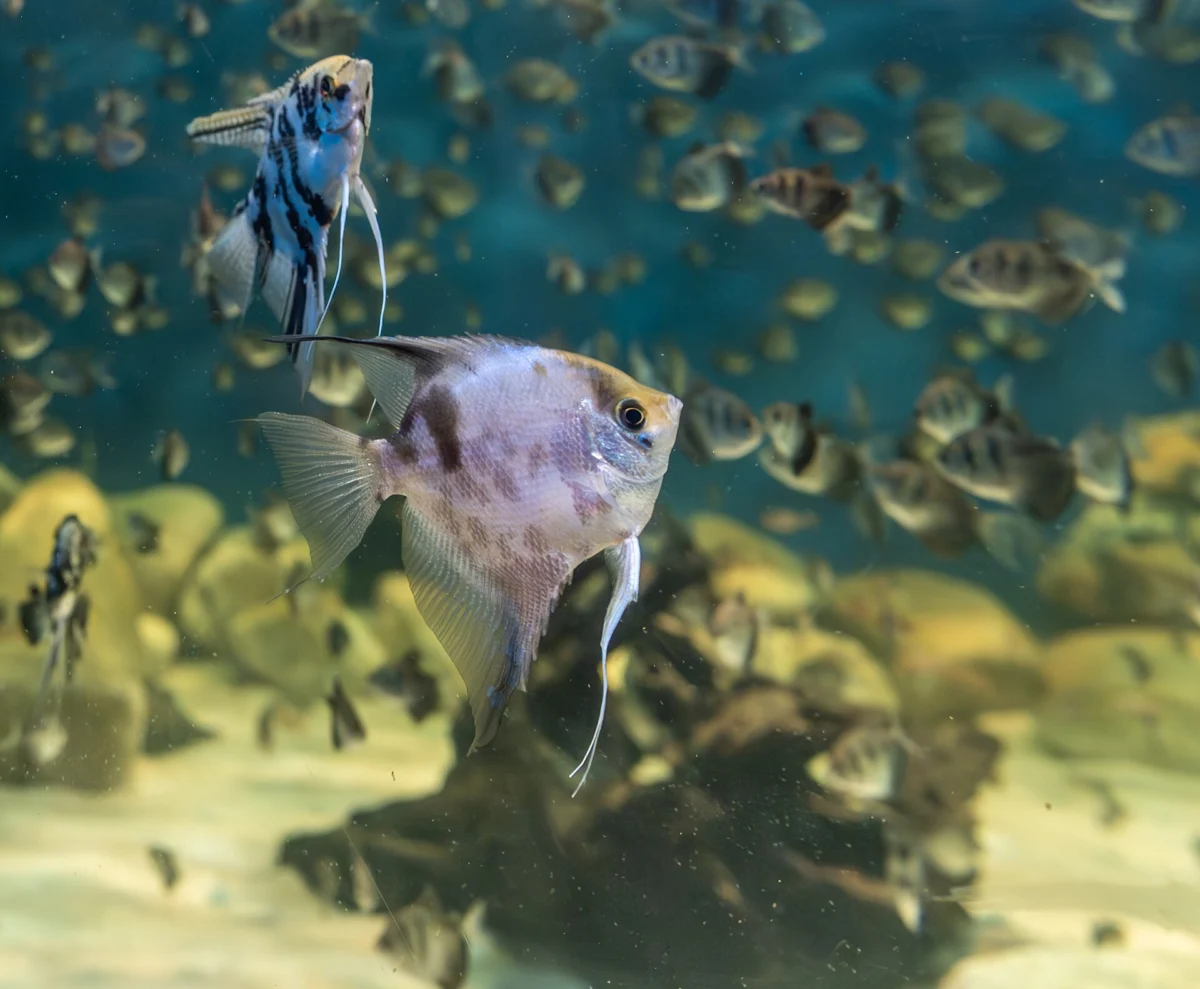
Good Tank Mates
- Corydoras catfish and bristlenose plecos for the bottom of the tank
- Larger peaceful tetras, such as black phantom and diamond tetras
- Pearl and honey gouramis
- Mollies and platies, which enjoy similar temperatures
- Kuhli loaches and other gentle bottom dwellers
- Peaceful dwarf cichlids, such as keyhole cichlids, in larger tanks
Fish to Avoid
Avoid fin nippers such as tiger barbs and serpae tetras, which shred long angelfish fins. Small fish are at risk too. Adult angelfish often eat neon tetras, so read the tank mate notes in our neon tetra care guide before mixing them. Large, aggressive cichlids bully angelfish, and bettas are a poor match because both fish have long fins and may fight.
Angelfish Behavior and Temperament
Angelfish are usually calm, but a group forms a loose pecking order. You may see mild chasing or lip locking while fish settle their rank. This is normal as long as no fish is cornered, injured or kept from food.
Signs of Stress
Watch for clamped fins, dark coloring, long periods of hiding, gasping at the surface or a fish that stops eating. These signs usually point to poor water quality, bullying or a tank that is too small for the group.
Breeding Angelfish
Angelfish breed readily in home aquariums once a compatible pair forms. A pair will stay close together, chase other fish away and start cleaning a flat surface, which is the clearest sign that spawning is near.
How to Tell Males From Females
Sexing angelfish is difficult outside of spawning. Shortly before spawning, both fish show a small breeding tube near the vent. The female’s tube is broader and blunt, while the male’s is smaller and pointed. Behavior is often a better guide than body shape.
Spawning Steps
- Condition the pair with frozen bloodworms and brine shrimp for one to two weeks.
- Raise the temperature slowly toward 80°F and keep up regular water changes.
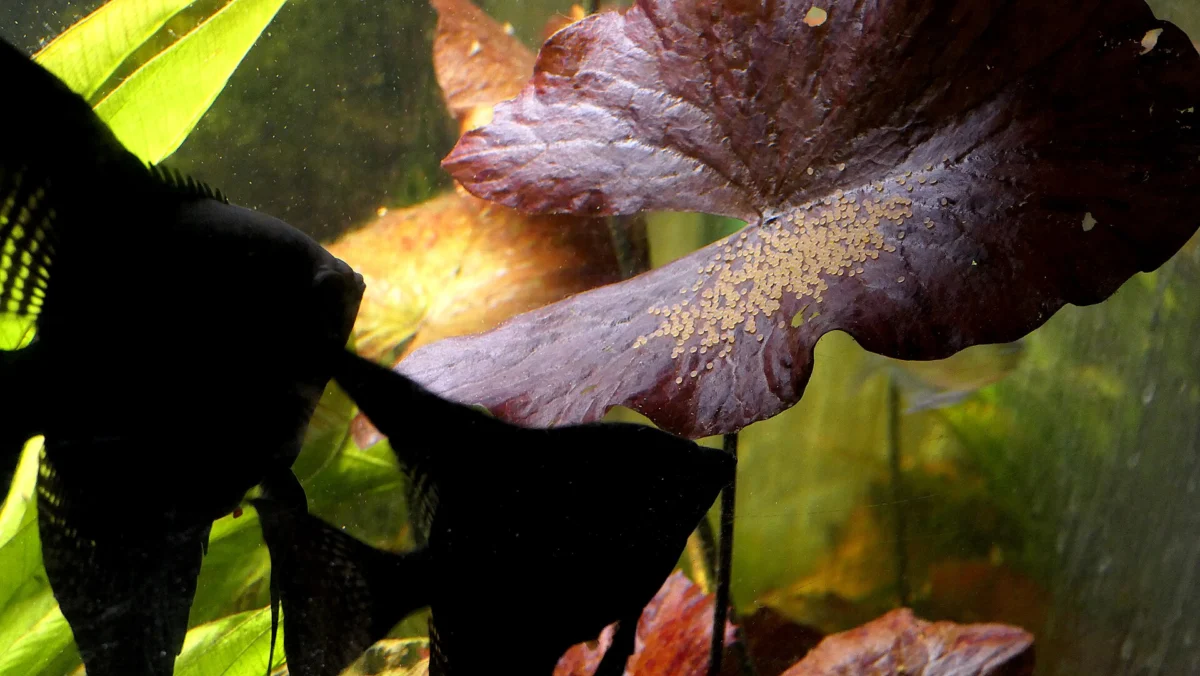
- Offer a vertical surface, such as a slate tile, a broad leaf or a breeding cone.
- The female lays neat rows of eggs, and the male follows to fertilize them.
- Both parents fan and guard the eggs. Young pairs often eat their first few batches, which usually improves with practice.
- Once the fry have used up their yolk sacs and swim freely, feed newly hatched baby brine shrimp several times a day.
Raising the Fry
Some keepers move the eggs to a separate tank with a gentle sponge filter, while others let the parents raise the fry. Either way, keep the water clean with small, frequent water changes and feed little and often.
Common Angelfish Health Problems
Most health problems in angelfish start with stress from poor water, sudden changes or new fish that bring in disease.
Ich and Fin Rot
Ich shows up as tiny white spots on the body and fins, often after a temperature drop or the arrival of new fish. See our guide to ich on fish for treatment steps. Fin rot causes ragged, fraying fins and is usually linked to poor water quality or fin nipping tank mates.
How to Prevent Problems
Quarantine new fish for two to four weeks, acclimate them slowly as shown in how to acclimate fish, and keep up weekly water changes. The common fish diseases guide covers other symptoms to watch for.
Angelfish Care Checklist
- A tall tank of 29 gallons or more, fully cycled before fish go in
- Water at 76 to 82°F with a pH between 6.0 and 7.4
- Gentle filtration plus tall plants or driftwood
- A varied diet of flakes, pellets and frozen foods
- Peaceful tank mates that are too big to be eaten
- A 20 to 25% water change every week
With the right tank, angelfish are one of the most rewarding fish you can keep. For more species ideas, see the best freshwater fish for fish tanks or browse all our aquarium fish care guides.
Frequently Asked Questions
What size tank does an angelfish need?
A single adult or a pair needs a tall tank of at least 29 gallons. A group of 4 to 6 angelfish needs 55 gallons or more, with enough height for their long fins.
How many angelfish should be kept together?
Keep one angelfish, one pair or a group of 5 to 6. Small groups of two or three unpaired fish often end with one fish being bullied.
Can angelfish live with neon tetras?
It is risky. Young angelfish may ignore neons, but adults often eat them. Larger tetras are a safer choice.
How long do angelfish live?
With clean water and a good diet, freshwater angelfish often live 10 years or more.
Do angelfish need a heater?
Yes. Angelfish are tropical fish and need stable water between about 76 and 82°F, which most homes cannot hold without a heater.
Keep exploring
 Aquarium Fish
Cherry Shrimp Care: Tank Setup, Water Parameters and Breeding
Cherry shrimp care made easy: tank setup, ideal water parameters, feeding, molting, breeding and safe tank mates for a thriving colony.
 Aquarium Fish
Cheap Freshwater Fish: 15 Hardy Species That Cost Under $5
Cheap freshwater fish that stay hardy: 15 species under $5, with sizes, tank needs and a sample budget stocking plan for a…
 Aquarium Fish
Types of Freshwater Fish: 40 Species by Family, With Facts
Types of freshwater fish explained: 40 species across trout, bass, catfish, carp, cichlid, perch and more, with quick facts and where each…