Freshwater Fish for Fish Tanks: The Short Answer
The best freshwater fish for fish tanks are hardy, peaceful species that stay a sensible size and match your tank and water. Neon tetras, harlequin rasboras, guppies, platies, corydoras, bristlenose plecos and a single betta are proven starting points. Larger tanks open the door to angelfish, gouramis and dwarf cichlids.
Below you will find 30 freshwater aquarium fish species grouped by the kind of setup they suit, with their adult size, minimum tank and temperature. Use it to plan a community that gets along and thrives for years.
- Nano tanks (5 to 10 gallons): betta, ember tetra, Endler’s livebearer, white cloud minnow.
- Community tanks (20 to 40 gallons): tetras, rasboras, livebearers, corydoras, dwarf gourami.
- Larger tanks (55 gallons and up): angelfish, discus, severum, African cichlids.
How we chose these species
Every fish on this list is widely bred for the aquarium trade in the US, easy to find in stores and suited to a home tank when its basic needs are met. We left out fish that outgrow normal tanks, such as common plecos and silver arowanas.
How to Choose Freshwater Pet Fish for Your Tank
Before you fall for a fish in the store, check four things.
Tank size and adult size
Store fish are often juveniles. Look up the adult size and choose fish that will still have room to swim when grown. If you have not bought a tank yet, our aquarium fish tank buying guide explains which sizes suit which fish.
Temperature
Tropical fish usually need 74 to 80°F, which means a heater. A few species, such as white cloud minnows, prefer cooler water. Only mix fish whose temperature ranges overlap. For 25 colorful heated-tank species with their temperature ranges, see our guide to tropical freshwater fish.
Temperament
Some fish are peaceful, some nip fins and some defend territory. Keep fin nippers away from slow fish with long fins, and give territorial fish enough space and hiding places.
Schooling needs
Tetras, rasboras, danios and corydoras feel safe only in groups. Plan for at least six of each schooling species. A lone schooling fish is stressed, pale and prone to disease.
Best Fish for Nano Tanks (5 to 10 Gallons)
Small tanks need small, calm fish and light stocking. For a deeper list, see our guide to the best nano fish for small tanks.
1. Betta fish
The betta is the classic single-fish choice for a heated 5 gallon tank. Males must be kept alone or with carefully chosen companions. Our betta fish care guide covers the full setup.
2. Ember tetra
Ember tetras reach under an inch and glow orange in a planted tank. Keep a group of eight or more in at least 10 gallons.
3. Endler’s livebearer
Endlers are tiny, colorful relatives of the guppy. They breed readily, so a male-only group is a smart choice for a small tank.
4. White Cloud Mountain minnow
This hardy little fish prefers cooler water around 60 to 72°F, so it can live without a heater in a mild room. Keep a group of six or more.
Best Community Fish for 20 to 40 Gallon Tanks
This is where most freshwater fish aquarium setups live. These species mix well when temperatures and temperaments match.

5. Neon tetra
Neon tetras are the most famous schooling fish. They stay about 1.5 inches long and look their best in groups of ten or more over dark substrate.
6. Cardinal tetra
Cardinals look like neons with a full red stripe. They prefer slightly warmer, soft water and do best in a mature tank.
7. Rummynose tetra
Rummynose tetras swim in tight schools and have bright red faces. Their color fades when water quality slips, which makes them a handy early warning.
8. Black skirt tetra
Black skirts are tough and cheap but can nip long fins. Keep them in a busy group with other fast fish.
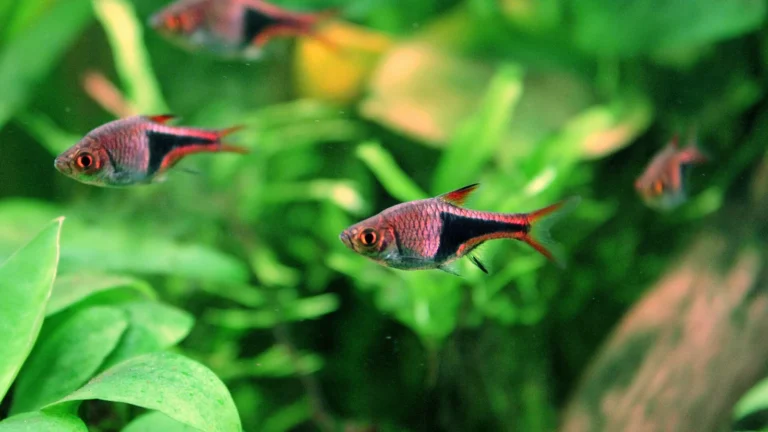
9. Harlequin rasbora
Harlequins are peaceful, copper-colored fish with a black triangle patch. A group of eight makes a calm, eye-catching school.
10. Zebra danio
Zebra danios are fast, hardy and almost impossible to kill. They need swimming length, so a 20 gallon long suits them better than a tall tank.
11. Cherry barb
Cherry barbs are a peaceful barb. Males turn deep red, especially in a planted tank with a few females.
12. Tiger barb
Tiger barbs are bold and active but nip fins. Keep a group of six or more in at least 30 gallons, and avoid slow, long-finned tank mates.
13. Guppy
Guppies come in endless colors and breed easily. Keep two or three females per male, or a male-only group, to limit chasing.
14. Platy
Platies are hardy, friendly livebearers that tolerate a range of water conditions. They are one of the best fish for a first tank.
15. Molly
Mollies grow to about 4 inches and prefer harder, alkaline water. Give them at least 20 to 30 gallons.
16. Swordtail
Males carry a long, sword-shaped tail extension. Swordtails are active and need a 30 gallon tank or larger.
17. Dwarf gourami
Dwarf gouramis are colorful, slow-moving centerpiece fish. Keep one male per tank, as males fight each other.
18. Honey gourami
Honey gouramis are gentler and smaller than dwarfs. They suit a quiet planted tank with calm tank mates.
19. Pearl gourami
Pearl gouramis grow to about 4.5 inches and are covered in pearly spots. They need at least 30 gallons and are peaceful for their size.
Best Bottom Dwellers and Algae Eaters
Bottom dwellers fill the lower part of the tank and clean up leftover food. They still need proper meals of sinking pellets or wafers.

20. Bronze corydoras
Bronze corys are tough, peaceful catfish that root through sand in groups. Keep at least six on soft sand or smooth gravel to protect their barbels.
21. Panda corydoras
Panda corys are small, black and white and prefer cooler tropical water. They are a charming choice for a 20 gallon long.
22. Bristlenose pleco
The bristlenose stays around 4 to 5 inches, far smaller than the common pleco. Give it driftwood to rasp on and algae wafers.
23. Otocinclus
Otos are tiny algae grazers for mature, planted tanks. They need a group and steady algae or vegetable food.
24. Kuhli loach
Kuhli loaches are eel-like and shy. Give a group soft sand and plenty of hiding places, and you will see them most at night.
Best Fish for Larger Tanks (30 to 75+ Gallons)
Bigger tanks let you keep cichlids and other centerpiece fish. Our overview of cichlid fish types covers many more options.
25. Angelfish
Angelfish are tall cichlids that need a tank at least 18 inches deep. They can eat very small fish such as adult neons once grown.
26. German blue ram
Rams are small, brilliant dwarf cichlids that need warm, clean, soft water. They suit keepers with some experience.
27. Kribensis
Kribs are hardy dwarf cichlids that pair up and guard their fry. Give them caves and a 30 gallon tank or larger.
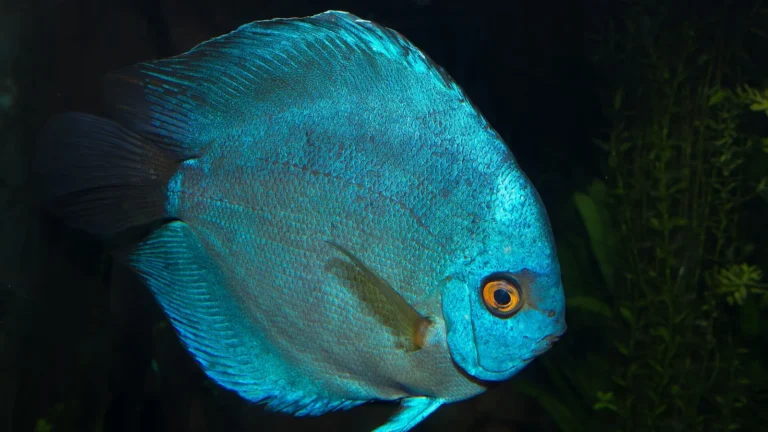
28. Discus
Discus are the kings of the freshwater aquarium but need very warm, stable water and frequent water changes. See our discus fish tank setup guide first.
29. Severum
Severums are calm, intelligent South American cichlids that grow to about 8 inches. Learn more in our severum fish care guide.
30. Yellow lab cichlid
The yellow lab is one of the calmer African cichlids from Lake Malawi. Keep it in a group of mbuna with hard, alkaline water. Our guide to African cichlids explains how to stock these tanks.
Freshwater Aquarium Fish Species Chart
Use this chart as a quick reference. Sizes and ranges are typical for captive fish and can vary by strain.
| Fish | Adult size | Min. tank | Temp (°F) | Temperament |
|---|---|---|---|---|
| Betta | 2.5 in | 5 gal | 76 to 82 | Males solitary |
| Ember tetra | 0.8 in | 10 gal | 72 to 82 | Peaceful |
| Endler’s livebearer | 1 in | 5 gal | 72 to 82 | Peaceful |
| White cloud minnow | 1.5 in | 10 gal | 60 to 72 | Peaceful |
| Neon tetra | 1.5 in | 10 gal | 72 to 78 | Peaceful |
| Cardinal tetra | 2 in | 20 gal | 75 to 82 | Peaceful |
| Rummynose tetra | 2 in | 20 gal | 75 to 82 | Peaceful |
| Black skirt tetra | 2.5 in | 20 gal | 72 to 80 | May nip fins |
| Harlequin rasbora | 2 in | 10 gal | 72 to 80 | Peaceful |
| Zebra danio | 2 in | 20 gal long | 65 to 77 | Active |
| Cherry barb | 2 in | 20 gal | 73 to 81 | Peaceful |
| Tiger barb | 3 in | 30 gal | 72 to 80 | Fin nipper |
| Guppy | 1.5 to 2.5 in | 10 gal | 72 to 82 | Peaceful |
| Platy | 2.5 in | 10 gal | 70 to 80 | Peaceful |
| Molly | 4 in | 20 gal | 72 to 82 | Peaceful |
| Swordtail | 5 in | 30 gal | 72 to 80 | Mostly peaceful |
| Dwarf gourami | 3.5 in | 10 gal | 74 to 82 | One male per tank |
| Honey gourami | 2 in | 10 gal | 72 to 82 | Peaceful |
| Pearl gourami | 4.5 in | 30 gal | 77 to 82 | Peaceful |
| Bronze corydoras | 2.5 in | 20 gal | 72 to 79 | Peaceful |
| Panda corydoras | 2 in | 20 gal | 68 to 77 | Peaceful |
| Bristlenose pleco | 5 in | 30 gal | 72 to 80 | Peaceful |
| Otocinclus | 1.5 in | 20 gal | 72 to 79 | Peaceful |
| Kuhli loach | 3.5 in | 20 gal | 75 to 82 | Peaceful, shy |
| Angelfish | 6 in | 30 gal tall | 76 to 82 | Eats tiny fish |
| German blue ram | 2.5 in | 20 gal | 78 to 85 | Peaceful |
| Kribensis | 4 in | 30 gal | 75 to 80 | Territorial when breeding |
| Discus | 6 to 8 in | 55 gal | 82 to 86 | Peaceful |
| Severum | 8 in | 55 gal | 76 to 82 | Semi-aggressive |
| Yellow lab cichlid | 4 in | 55 gal | 75 to 82 | Mbuna tanks only |
Fresh Water Fish for Aquariums That Beginners Should Skip
Some fish sold in stores are poor choices for a first tank.
Fish that outgrow home tanks
Common plecos, iridescent sharks, red-tail catfish and arowanas can reach a foot or more and need very large aquariums. Never release an unwanted aquarium fish into the wild. The US Fish and Wildlife Service warns that released pets can become invasive.
Specialist fish
Fish with special diets or water needs, such as discus or puffers, are best kept once you have some experience. Our guide to freshwater puffer fish explains why they need a species tank. If you want something truly different once you have that experience, our list of cool freshwater fish covers 20 unusual species with their adult size and tank needs.
Planning tank mates
If you keep a betta, choose companions carefully. Our list of what fish can live with bettas sorts safe tank mates by tank size. Browse every species profile in our aquarium fish section.
Freshwater Fish FAQs
What is the easiest freshwater fish to keep?
Platies, guppies, zebra danios and bronze corydoras are among the easiest freshwater fish to keep. They tolerate a range of water conditions, eat common flake and pellet foods and stay a manageable size. Even hardy fish need a cycled, heated tank and regular water changes.
How many fish can I put in a new tank?
Add only a few small, hardy fish at first, then build up slowly over several weeks. This gives the beneficial bacteria in the filter time to grow and handle the extra waste. Stock based on adult size, swimming space and filtration rather than a strict inch per gallon rule.
Can I mix different freshwater fish species?
Yes, as long as they share similar temperature and water needs, are not aggressive and will not eat each other. Peaceful tetras, rasboras, livebearers and corydoras mix well. Avoid pairing fin nippers such as tiger barbs with slow, long-finned fish like bettas and angelfish.
Do freshwater aquarium fish need a heater?
Most popular freshwater aquarium fish are tropical and need steady water around 74 to 80 degrees Fahrenheit, so a heater is usually needed. A few species, such as white cloud minnows and goldfish, prefer cooler water and can live without a heater in a mild room.
What freshwater fish can live alone?
A betta is the best known freshwater fish that can live alone and is usually happier that way. Most other aquarium fish are social. Schooling species such as tetras, rasboras and corydoras should be kept in groups of six or more to feel secure.
Final Thoughts
Start simple and build a community
The best freshwater fish for fish tanks are the ones that fit your tank, your water and each other. Start with a few hardy species such as platies, harlequin rasboras and corydoras, add fish slowly to a cycled tank and keep schooling fish in proper groups. Once your tank is stable, the species chart above gives you plenty of room to grow.