What Are Tropical Freshwater Fish?
Tropical freshwater fish are species that come from warm rivers, streams and lakes in places such as the Amazon basin, West Africa and Southeast Asia. In the wild, their water stays warm all year, so in an aquarium they need a heater to keep the temperature steady. Most of the colorful fish sold in US fish stores are freshwater tropical fish.
This guide lists 25 popular species, grouped by family, with their adult size, minimum tank size and preferred temperature. Use it to pick fish that share the same needs.
- Typical temperature: 76 to 80°F suits most community species.
- Heater: needed in almost every US home, since room temperature drops at night and in winter.
- Schooling fish: keep tetras, rasboras and barbs in groups of six or more.
- Best for beginners: hardy livebearers, rasboras and small tetras.
Tropical vs coldwater fish
Coldwater fish such as goldfish prefer cooler water and do not need a heater in most homes. Fresh water tropical fish do. Keeping them too cold slows their metabolism, weakens their immune system and makes diseases such as ich more likely. That is why tropical and coldwater species should not share a tank.
25 Tropical Freshwater Fish at a Glance
The table below compares all 25 species. Temperatures are typical ranges used by keepers, so aim for the middle of the range where species overlap.
| Species | Adult size | Min. tank | Temp (°F) | Temperament |
|---|---|---|---|---|
| Neon tetra | 1.5 in | 10 gal | 72 to 78 | Peaceful |
| Cardinal tetra | 2 in | 20 gal | 76 to 84 | Peaceful |
| Ember tetra | 0.8 in | 10 gal | 73 to 84 | Peaceful |
| Rummy-nose tetra | 2 in | 20 gal long | 75 to 82 | Peaceful |
| Glowlight tetra | 1.5 in | 10 gal | 74 to 82 | Peaceful |
| Harlequin rasbora | 2 in | 10 gal | 72 to 80 | Peaceful |
| Chili rasbora | 0.8 in | 5 gal | 72 to 82 | Peaceful |
| Tiger barb | 3 in | 30 gal | 74 to 80 | Semi-aggressive |
| Cherry barb | 2 in | 20 gal | 73 to 81 | Peaceful |
| Guppy | 1.5 to 2.5 in | 10 gal | 74 to 82 | Peaceful |
| Platy | 2.5 in | 10 gal | 70 to 80 | Peaceful |
| Molly | 3 to 4.5 in | 20 gal | 75 to 82 | Peaceful |
| Swordtail | 4 to 5.5 in | 30 gal | 72 to 79 | Peaceful |
| Endler’s livebearer | 1 in | 5 gal | 72 to 82 | Peaceful |
| Betta | 2.5 to 3 in | 5 gal | 76 to 82 | Males fight |
| Dwarf gourami | 3 in | 10 gal | 72 to 82 | Peaceful |
| Honey gourami | 2 in | 10 gal | 72 to 82 | Peaceful |
| Pearl gourami | 4.5 in | 30 gal | 77 to 82 | Peaceful |
| Freshwater angelfish | 6 in long | 30 gal tall | 76 to 82 | Semi-aggressive |
| Discus | 6 to 8 in | 55 gal | 82 to 86 | Peaceful, shy |
| German blue ram | 2 to 3 in | 20 gal | 78 to 85 | Peaceful |
| Bolivian ram | 3 in | 20 gal | 72 to 79 | Peaceful |
| Kribensis | 4 in | 30 gal | 75 to 80 | Territorial |
| Bristlenose pleco | 4 to 5 in | 30 gal | 73 to 81 | Peaceful |
| Kuhli loach | 4 in | 20 gal | 75 to 82 | Peaceful |

Tetras and Rasboras
Small schooling fish are the backbone of most tropical community tanks. They are peaceful, colorful and look best in a group of six to ten or more.
1 to 5: Neon, cardinal, ember, rummy-nose and glowlight tetras
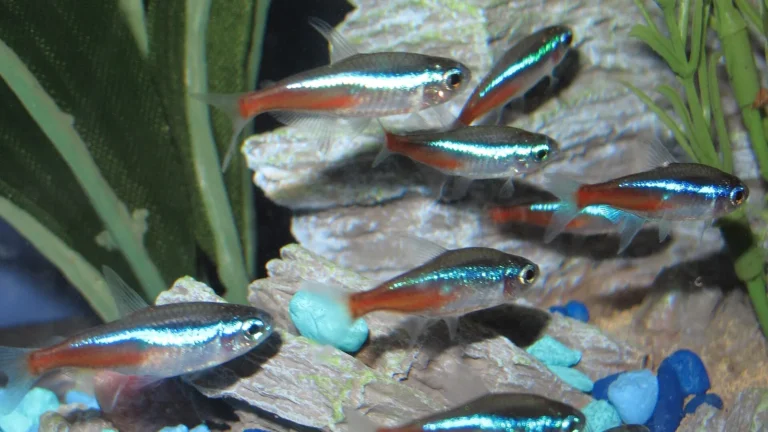
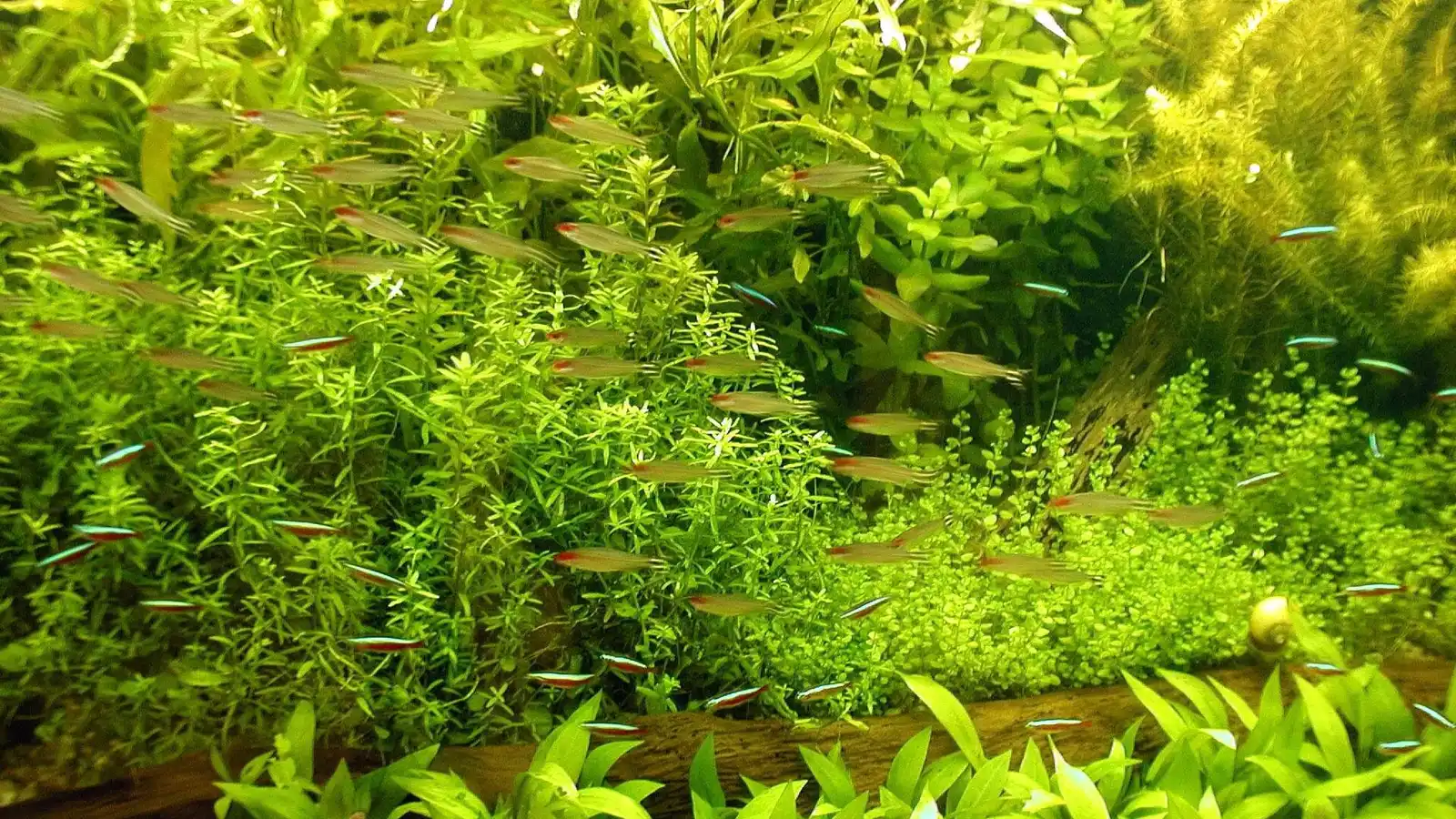
Neon tetras have an electric blue stripe and red tail, and do best in a cycled, planted tank. Cardinal tetras look similar, but the red runs the full length of the body and they prefer warmer water, which makes them a common choice with discus. Ember tetras are tiny orange fish that suit nano tanks. Rummy-nose tetras have a bright red nose and school tightly, but need very clean water. Glowlight tetras are hardy and show a glowing orange line along the body. For more color ideas, see our list of blue freshwater fish.
6 and 7: Harlequin and chili rasboras
Harlequin rasboras are copper-orange with a black triangle near the tail, and are among the hardiest schooling fish for beginners. Chili rasboras are deep red and under an inch long, so they suit planted nano tanks. Our list of the best nano fish for small tanks covers more tiny species.
Barbs and Livebearers
Barbs bring energy to a tank, while livebearers are some of the easiest tropical fish to keep and breed.
8 and 9: Tiger and cherry barbs
Tiger barbs have bold black stripes on a gold body. They are active fin nippers, so keep them in a group of at least six and avoid slow fish with long fins such as bettas and angelfish. Cherry barbs are much calmer. Males turn deep red, and they mix well with most peaceful community fish.
10 to 14: Guppies, platies, mollies, swordtails and Endlers
Guppies come in almost every color and tail shape. Platies are hardy, round-bodied and tolerate a slightly cooler tank. Mollies grow larger and do well in harder water. Swordtails are named for the long lower tail extension on males. Endler’s livebearers are tiny, bright relatives of the guppy. All five give birth to live young, so expect fry unless you keep only males or only females.
Gouramis and Bettas
Gouramis and bettas are labyrinth fish. They can breathe air from the surface, so leave a little open space between the water and the lid.
15: Betta
Bettas are the classic single showpiece fish, with long flowing fins in many colors. Keep only one male per tank, give him at least 5 gallons with a heater, and choose calm tank mates. Our betta fish care guide covers setup and feeding, and our list of fish that can live with bettas helps you pick safe companions.
16 to 18: Dwarf, honey and pearl gouramis
Dwarf gouramis are striped in red and blue and make a colorful centerpiece for a small community tank. Honey gouramis are gentle and golden, and suit beginners. Pearl gouramis grow larger and are covered in white spots, with males showing an orange throat. Keep one male gourami per tank unless the tank is large and well planted.
Cichlids and Bottom Dwellers
Cichlids add personality and parenting behavior, while bottom dwellers fill the lower level of the tank and clean up leftover food.

19 and 20: Angelfish and discus
Freshwater angelfish are tall, graceful cichlids that need a tall tank. They may eat very small fish such as adult neon tetras once fully grown, so choose larger tank mates. Discus are round, vivid and demanding. They need warm, very clean water, frequent water changes and a large tank, so they are best for experienced keepers. Our discus fish tank setup guide explains their needs.
21 to 23: German blue ram, Bolivian ram and kribensis
German blue rams are small, bright dwarf cichlids that need warm, soft water. Bolivian rams are hardier and prefer slightly cooler water. Kribensis are West African dwarf cichlids that dig caves and guard their young. If you prefer larger, more active cichlids, our guide to African cichlids explains how they need their own hard-water tank rather than a soft-water community.
24 and 25: Bristlenose pleco and kuhli loach
Bristlenose plecos stay around 4 to 5 inches, far smaller than the common pleco, and graze on algae and driftwood. Kuhli loaches are eel-like, nocturnal fish that burrow in sand and feel safest in groups.
Setting Up a Heated Tropical Tank
A stable, warm and cycled tank keeps tropical fish healthy and shows off their colors.
Heater and temperature
Choose an adjustable heater sized for your tank, place it where the filter flow spreads the warmth, and check a separate thermometer every day. Set it to the middle of the range your species share, often around 77 or 78°F. Our fish tank heater guide explains types, wattage and placement.
Choosing tank mates
- Pick species with overlapping temperature ranges.
- Check adult size, not shop size.
- Keep schooling fish in groups of six or more.
- Avoid fin nippers with long-finned fish.
- Add fish slowly, a few at a time, to a cycled tank.
For a wider list that includes coldwater and larger species, see our pillar guide to the best freshwater fish for fish tanks.
Tropical Freshwater Fish FAQs
What temperature do tropical freshwater fish need?
Most tropical freshwater fish do well between 76 and 80°F. Some species, such as discus and German blue rams, prefer warmer water in the low to mid 80s. Use a heater and a separate thermometer to keep the temperature steady.
Do all tropical fish need a heater?
In almost all US homes, yes. Room temperature often falls below 76°F at night and in winter, which is too cool for most tropical species. A heater keeps the water warm and, just as important, stable.
What are the easiest tropical freshwater fish for beginners?
Platies, guppies, harlequin rasboras, cherry barbs, honey gouramis and bristlenose plecos are hardy and forgiving. Add them to a fully cycled tank, a few at a time, and keep the water clean with weekly partial water changes.
How many tropical fish can I keep in a 20 gallon tank?
It depends on adult size and activity. A 20 gallon tank can suit a school of small tetras or rasboras plus a centerpiece fish such as a honey gourami. Stock slowly and test the water as you add fish.
Can tropical fish live with goldfish?
It is not recommended. Goldfish prefer cooler water and produce a lot of waste, while tropical fish need warm water. Keeping them together forces one group outside its comfortable range, which stresses the fish.
Final Thoughts
Build around shared needs
The best tropical freshwater fish for your tank are the ones that share its temperature, size and water type. Start with hardy schooling fish and livebearers, add a centerpiece fish later, and keep the heater steady. For more species guides, browse our aquarium fish section.