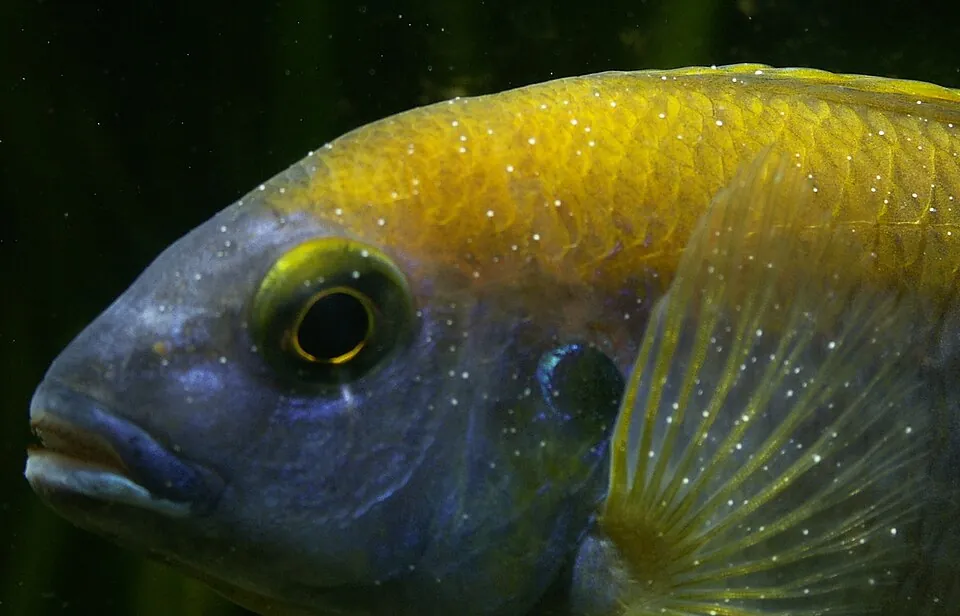
Common Fish Diseases: The Short Answer
Fish hide illness well, so by the time you notice white spots or frayed fins, the problem has usually been building for days. The wrong medicine wastes time and can wipe out the bacteria in your filter.
This guide is built around one idea: water first, diagnosis second, medicine third. Below you will find target water values, a symptom map, a treatment chart covering 13 conditions, and the steps for quarantine, safe dosing and humane euthanasia.
Check Water Quality Before You Medicate
Most fish diseases are opportunists. The bacteria and molds behind fin rot, columnaris and fungus live in many healthy aquariums and take hold when ammonia, nitrite, a temperature swing or crowding weakens the fish’s slime coat and immune response.
Before you buy any medication, test the water with a liquid test kit and compare your results with these targets:
| Parameter | Target in a cycled tank | Act now if |
|---|---|---|
| Ammonia | 0 ppm | Any reading above 0, and urgently above 0.25 ppm |
| Nitrite | 0 ppm | Any reading above 0 |
| Nitrate | Under 20 ppm, and no higher than 40 ppm | Above 40 ppm, or climbing fast between water changes |
| Temperature | Stable and within the species’ range | Swings of more than a few degrees in a day |
| pH | Stable within the species’ range | A sudden shift of more than about 0.3 to 0.5 |
Ammonia is more toxic in warm, alkaline water, so the same reading is more dangerous at pH 8 than at pH 6.5. If any reading is off, fix it first with a 25 to 50 percent water change using dechlorinated water at the same temperature. Cloudy water often travels with these problems, and our guide to why a fish tank turns cloudy helps you sort a harmless bloom from a real water quality issue.
If ammonia or nitrate keeps creeping back, the tank may hold more fish than it can support. Our guide to how many fish fit in a 20 gallon tank explains how bioload works. Many sick fish recover on clean water alone. If symptoms keep spreading after the water is right, move on to diagnosis.
Where Symptoms Show Up on a Sick Fish
Check your fish in good light, head to tail. Where a symptom appears narrows the suspects quickly:
- Eyes: bulging or cloudy eyes point to popeye, water quality problems or an internal infection.
- Head and lateral line: small pits or eroded holes suggest hole in the head.
- Gills: fast breathing, flared or pale gills and gasping suggest gill flukes, velvet, columnaris or ammonia burn.
- Mouth and lips: gray-white fuzz or erosion around the mouth is classic columnaris.
- Skin and body: white grains mean ich, gold dust means velvet, cotton tufts mean fungus, and open sores can mean bacterial infection or fish TB.
- Fins: ragged or shrinking edges mean fin rot. Fins held flat against the body (clamped) are a general stress sign.
- Scales and belly: raised, pinecone-like scales mean dropsy. A sunken belly with good appetite suggests internal parasites.
- Swimming: floating, sinking or swimming sideways points to swim bladder disorder.

Fish Disease Symptoms and Treatment Chart
Match the signs you see with the most likely cause. Treatments list the generic active ingredient, so you can find it under any brand. Severity reflects how fast the condition can kill if left alone.
| Disease | Main signs | Cause | Treatment | Severity |
|---|---|---|---|---|
| Ich (white spot) | White spots like salt grains on body and fins, flashing, clamped fins | Protozoan parasite Ichthyophthirius multifiliis | Raise heat a few degrees for tropical fish, plus salt or a formalin and malachite green product, dosed repeatedly | Moderate, serious if gills are heavily infected |
| Velvet | Fine gold or rust-colored dust, best seen with a flashlight, fast breathing | Parasitic dinoflagellates such as Piscinoodinium | Dim the lights, copper-based treatment in a hospital tank, salt for tolerant species | Serious |
| Fin rot | Ragged, shrinking fins with white, black or red edges | Opportunistic bacteria such as Aeromonas and Pseudomonas | Clean water first, then kanamycin or nitrofurazone if fin loss keeps spreading | Mild to moderate |
| Columnaris | Gray-white patches on mouth, back or gills, often a pale “saddle” behind the dorsal fin | Gram-negative bacterium Flavobacterium columnare | Hospital tank with kanamycin plus nitrofurazone, salt for tolerant species | Serious, can kill within days |
| Dropsy | Swollen belly, scales raised like a pinecone, bulging eyes | Fluid buildup from organ failure, often linked to bacterial infection or kidney damage | Isolate, Epsom salt bath, antibiotic in food under vet guidance | Critical, outlook is poor |
| Swim bladder disorder | Floating, sinking, swimming sideways or upside down | Overfeeding, constipation, swallowed air, body shape, sometimes infection | Fast for 2 to 3 days, then small portions of daphnia or skinned peas, lower the water level | Mild to moderate |
| Popeye | One or both eyes bulging, sometimes cloudy | One eye: usually injury. Both eyes: water quality or infection | Water changes, Epsom salt, antibiotic only if infection is likely | Moderate |
| Fungal infection (Saprolegnia) | White to gray cotton-wool tufts, often on wounds | Water molds invading damaged skin | Treat the wound and water, then methylene blue or malachite green, salt | Moderate |
| Hole in the head | Pits or erosions on the head and lateral line, white stringy feces | Linked to Spironucleus (Hexamita) flagellates, poor water and diet | Metronidazole, best in food, plus larger water changes and a varied diet | Moderate |
| Gill flukes | Fast gill movement, flared or pale gills, gasping, flashing | Monogenean flatworms such as Dactylogyrus | Praziquantel, with formalin as an alternative | Moderate to serious |
| Internal parasites | Weight loss despite eating, sunken belly, white stringy feces, red worms at the vent | Flagellates, tapeworms, or nematodes such as Camallanus | Metronidazole for flagellates, praziquantel for tapeworms, levamisole or fenbendazole for nematodes | Moderate |
| Ammonia or nitrite poisoning | Gasping at the surface, red or brown gills, lethargy | Uncycled or overstocked tank, overfeeding, filter failure | Large daily water changes, ammonia-binding dechlorinator, pause feeding, salt against nitrite | Critical, an emergency |
| Fish tuberculosis | Slow wasting, ulcers, bent spine, popeye, scale loss over weeks | Mycobacterium species such as M. marinum | No reliable cure, isolate or euthanize, disinfect gear, wear gloves | Critical, and it can infect people |
Several conditions share symptoms. Flashing, clamped fins and fast breathing can come from ich, velvet, flukes or plain ammonia, which is why the water test always comes first.
Parasites: Ich, Velvet, Flukes and Worms
Ich (White Spot Disease)
Ich is the disease most aquarists meet first. Each white spot is a parasite under the skin, out of reach of medication. Only the free-swimming stage that hatches after it drops off is vulnerable, so treatment must continue across several life cycles.
The University of Florida IFAS Extension notes in its guide to white spot infections that the life cycle takes about 3 to 6 days at 75 to 79°F and that salt at 4 to 5 grams per liter for 7 to 10 days can work in smaller systems. Corydoras, loaches and soft-water tetras tolerate far less salt, so check your species first. For tropical fish, raising the temperature slowly to around 82°F shortens the cycle so treatments hit the parasite sooner. Add aeration, because warm water holds less oxygen. Keep treating until every spot is gone and the fish stop dying, then continue a few more days.

Velvet
Velvet looks like ich in miniature: a fine gold or rusty sheen that is easiest to spot with a flashlight in a dark room. It moves faster than ich and often hits the gills first. The parasite relies partly on light, so keeping the tank dark helps. Copper-based treatments work well but are deadly to shrimp and snails, so use them only in a hospital tank.
Gill Flukes
Flukes are tiny flatworms you will not see without a microscope. The fish show it instead: fast breathing, flared or pale gills, rubbing against decor and hanging near the surface. Praziquantel is the usual first choice for ornamental fish and is gentle on most tank mates and filter bacteria. A second dose about a week later catches flukes that hatch from eggs.
Internal Parasites
A fish that eats well but keeps losing weight likely has internal parasites. Red threadlike worms poking from the vent are Camallanus nematodes. Medicated food works best because the drug reaches the gut directly. Fenbendazole can kill snails and shrimp, so keep it out of tanks that hold invertebrates.
Bacterial and Fungal Infections
Fin Rot
Fin rot nearly always follows poor water or fin nipping. Mild cases often heal with clean water alone. If the rot reaches the base of the fins or the edges turn red and bloody, move the fish to a hospital tank for antibiotic treatment. Long-finned bettas are especially prone, and our guide to sick betta fish covers fin rot in that species in more detail.

Columnaris
Columnaris is often called cotton mouth and mistaken for fungus. The difference is speed: a lesion can spread across a fish within a day. Act immediately with a hospital tank and an antibiotic aimed at gram-negative bacteria. For tropical fish, keeping the temperature at the cooler end of their range, rather than raising it, helps slow this bacterium.
Fungal Infections
True fungus, usually the water mold Saprolegnia, forms soft white to gray tufts that look like wet cotton wool. It rarely attacks healthy skin and grows on wounds and dead tissue instead, so find the cause of the injury. Treat with methylene blue or malachite green in a separate tank, since methylene blue harms filter bacteria and stains silicone.
Dropsy, Swim Bladder Disorder and Hole in the Head
Dropsy
Dropsy is a symptom, not a single disease. Fluid builds up because organs, often the kidneys, are failing. By the time the scales stand out like a pinecone, recovery is uncommon. Isolate the fish and try an Epsom salt bath alongside an antibiotic in food if your vet agrees. If the fish stops eating and struggles to breathe, euthanasia may be the kindest choice.
Swim Bladder Disorder
Most swim bladder trouble comes from the gut, not the bladder itself. Overfeeding and dry food that swells in the stomach press on the bladder. Fast the fish for 2 to 3 days, then offer small portions of daphnia or a skinned, cooked pea. Lowering the water level makes it easier for the fish to reach the surface. Round-bodied fancy goldfish and balloon mollies are prone because of their compressed body shape. If you keep bettas, our guide on how often to feed a betta fish sets portions that prevent most cases.
Hole in the Head
Hole in the head shows up as small pits that slowly enlarge on the head and along the lateral line, most often in cichlids such as discus and oscars. It is linked with flagellate parasites, high nitrate and poor nutrition. Metronidazole in food treats the parasites, and bigger water changes plus a varied diet tackle the rest.
Fish Tuberculosis and Your Own Health
Fish tuberculosis (mycobacteriosis) is slow and stubborn. Affected fish waste away over weeks, develop ulcers or a curved spine and stop eating, often one at a time. There is no reliable cure, so most keepers remove affected fish, break down the tank and disinfect everything before restarting.
This disease can infect people. Mycobacterium marinum enters through cuts and scrapes on the hands and causes a skin infection often called fish tank granuloma. Washington State University’s guidance on zoonoses associated with fish recommends wearing gloves, covering any wounds and washing your hands after tank work. If a red bump or sore on your hand will not heal after tank maintenance, see a doctor and mention the aquarium.
How to Set Up a Quarantine or Hospital Tank
A quarantine tank holds new fish before they join your display, and a hospital tank holds sick fish during treatment. The same setup does both jobs.
- Tank: 5 to 10 gallons for small fish, 20 gallons for larger species.
- Filter: a sponge filter that has lived in your main tank so it already carries beneficial bacteria. Our guide to the best fish tank filters explains why sponge filters suit gentle, low-flow setups.
- Heater and thermometer: stable temperature matters even more during treatment.
- Bare bottom: easy to siphon, with no gravel to hide parasites.
- Hiding place: a PVC pipe or clay pot that is easy to sterilize.
- Separate tools: a dedicated net, bucket and siphon so you never carry disease back to the main tank.
Quarantine new fish for at least four weeks, which covers the life cycles of ich and most flukes. During treatment, test ammonia daily. Medication can slow the bacteria in a small filter, and a hospital tank can turn toxic quickly.

How to Dose Fish Medication Safely
- Work out the real water volume. Substrate and decor mean a 20 gallon tank often holds closer to 16 or 17 gallons. Dose for the water, not the label.
- Remove activated carbon. Carbon and resin media absorb many medications and leave the fish untreated. Turn off UV sterilizers too, since UV breaks down some drugs.
- Protect invertebrates. Copper, many antiparasitics and some dyes kill shrimp and snails. Move them out or treat fish in a hospital tank.
- Adjust for sensitive fish. Scaleless fish such as loaches and many catfish, plus some tetras, react badly to full doses of malachite green, formalin and copper. Many labels recommend a half dose for them.
- Add aeration. Formalin and warm water both reduce dissolved oxygen.
- Use one treatment at a time. Mixing products can be toxic.
- Finish the full course. Stopping early lets ich, flukes and bacteria bounce back.
After treatment, do a large water change and add fresh carbon for a few days to pull out leftover medicine.
A vet who treats fish can confirm a diagnosis under a microscope, which removes the guesswork from flukes and internal parasites, and can prescribe antibiotics that are not sold over the counter.
When to Euthanize a Sick Fish Humanely
Sometimes treatment only prolongs suffering. Advanced dropsy, confirmed fish TB, a fish that cannot stay upright or eat for many days, and wounds that keep spreading despite treatment are reasons to consider a humane end. Our guide to betta fish behavior before death describes the signs that a fish is nearing the end.
Veterinary guidelines for fish describe deep anesthesia with an anesthetic such as clove oil (eugenol), followed by a second step to make sure death is certain. With clove oil, the fish should stay in the solution for at least 10 minutes after the gills stop moving. If you are unsure about any part of this, an aquatic vet can do it for you, and some fish stores can help.
Avoid methods that cause suffering: flushing a live fish, putting a conscious fish in the freezer, leaving it out of water or using boiling water. These are not humane, and a flushed fish that survives can introduce disease into local waterways.
Fish Disease FAQs
What is the most common fish disease in aquariums?
Ich, also called white spot disease, is the most common aquarium fish disease. It shows as small white spots like salt grains on the body and fins. It often arrives with new fish that were not quarantined and spreads fast in stressed or crowded tanks.
How do I know if my fish is sick?
Common early signs are clamped fins, loss of appetite, hiding, flashing against decor, fast breathing and gasping at the surface. Visible signs include white spots, cotton-like tufts, ragged fins, bulging eyes and raised scales. Test your water as soon as you notice any of these.
Can I treat sick fish in the main tank?
You can treat ich and some parasites in the main tank if every fish is affected and no invertebrates are present. Antibiotics, copper and dyes are safer in a separate hospital tank because they can harm filter bacteria, shrimp, snails and plants.
Can fish diseases spread to humans?
A few can. Fish tuberculosis caused by Mycobacterium marinum can cause a skin infection in people through cuts on the hands. Wear gloves, cover wounds and wash your hands after tank work, and see a doctor about any sore that does not heal.
How long should I quarantine new fish?
Quarantine new fish for at least four weeks in a separate tank with its own filter and tools. That covers the life cycles of ich, velvet and most flukes, so any hidden disease shows up before the fish meet your main stock.
Should I add aquarium salt for every fish disease?
No. Salt helps with ich, nitrite poisoning and some external parasites, but many fish, including corydoras, loaches and soft-water tetras, tolerate only low levels. Salt also harms many live plants. Use it as a targeted treatment, not a general cure.


