Guppy Care Guide: Tank Setup, Diet, Breeding and Lifespan
Guppy Care Guide: Tank Setup, Diet, Breeding and Lifespan
Everything you need to keep guppies healthy and colorful, from tank size and water to feeding, tank mates and raising fry.
By Fish Explain Editorial TeamUpdated November 19, 20268 min read
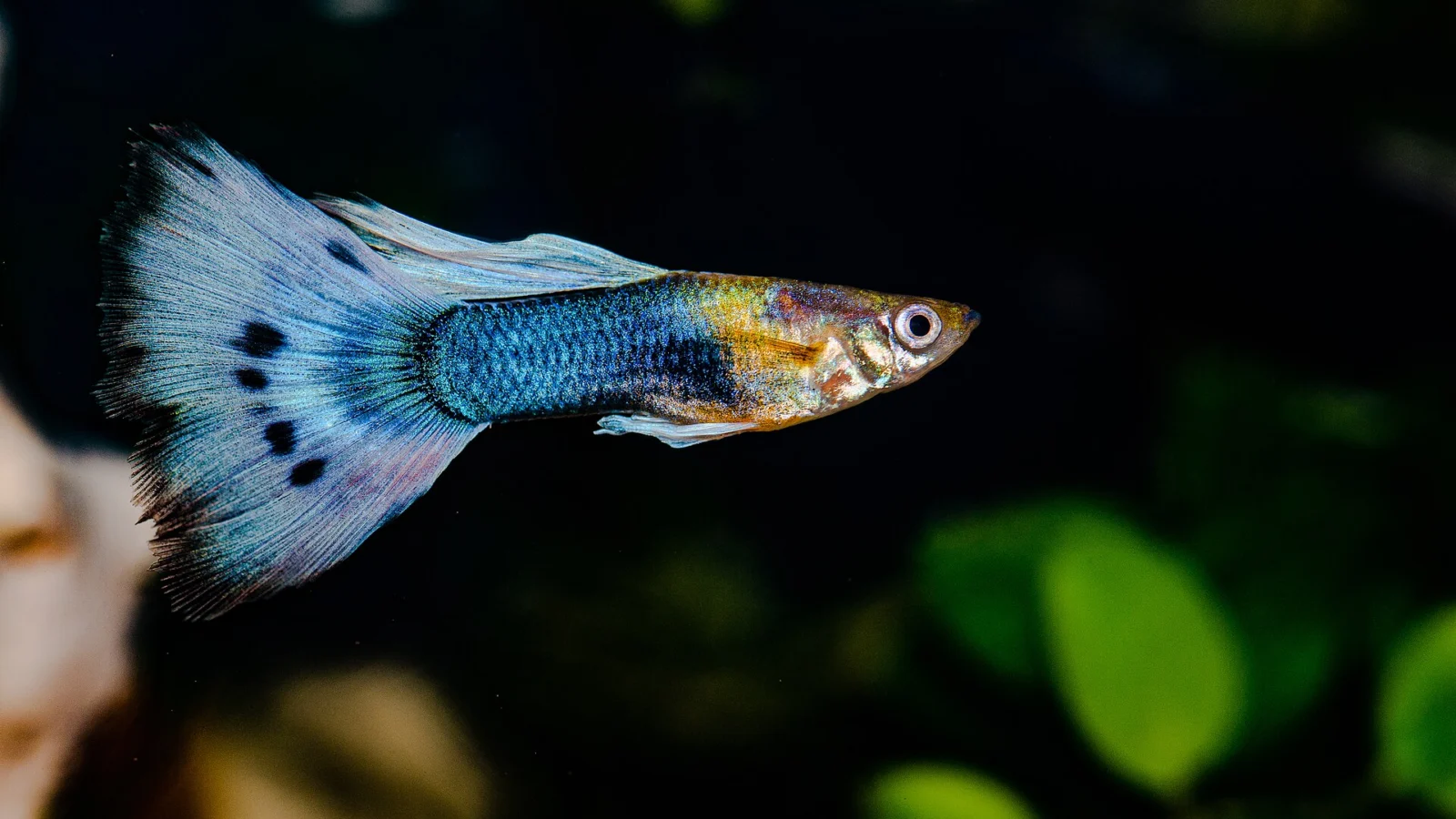
Photo: Carlos Eduardo Joos (CC BY 2.0), via Wikimedia Commons (cropped)
Guppy care is easy for beginners. Keep guppies in a cycled, heated tank of at least 10 gallons at 74 to 80 °F with a pH of 7.0 to 8.0. Feed small amounts of flake or micro pellets once or twice a day, add frozen treats a few times a week, change 25 percent of the water weekly and keep two or three females per male. Guppies live about 2 to 3 years and breed every few weeks.
On this page
What Is a Guppy?
The guppy (Poecilia reticulata) is a small, hardy livebearer from the warm streams and ponds of northeastern South America and nearby Caribbean islands such as Trinidad. Good guppy care is simple once you know the basics: a heated, cycled tank, hard and slightly alkaline water, small meals and a plan for the babies, because guppies breed fast. They are one of the best tropical freshwater fish for beginners, and you can browse more beginner species in our list of the best freshwater fish for fish tanks.
Wild guppies are fairly plain, but decades of selective breeding have produced the fancy guppy fish you see in stores, with huge tails and bold patterns such as cobra, tuxedo, mosaic and solid colors. The Animal Diversity Web species account covers their wild biology in more detail.
Size and lifespan
Male guppies usually reach about 1.5 inches, and females grow larger, often close to 2 to 2.5 inches. In a stable tank most guppies live around 2 to 3 years. Warmer water speeds up their metabolism, so guppies kept at the very top of their range tend to have shorter lives than those kept in the mid 70s °F.
Males versus females
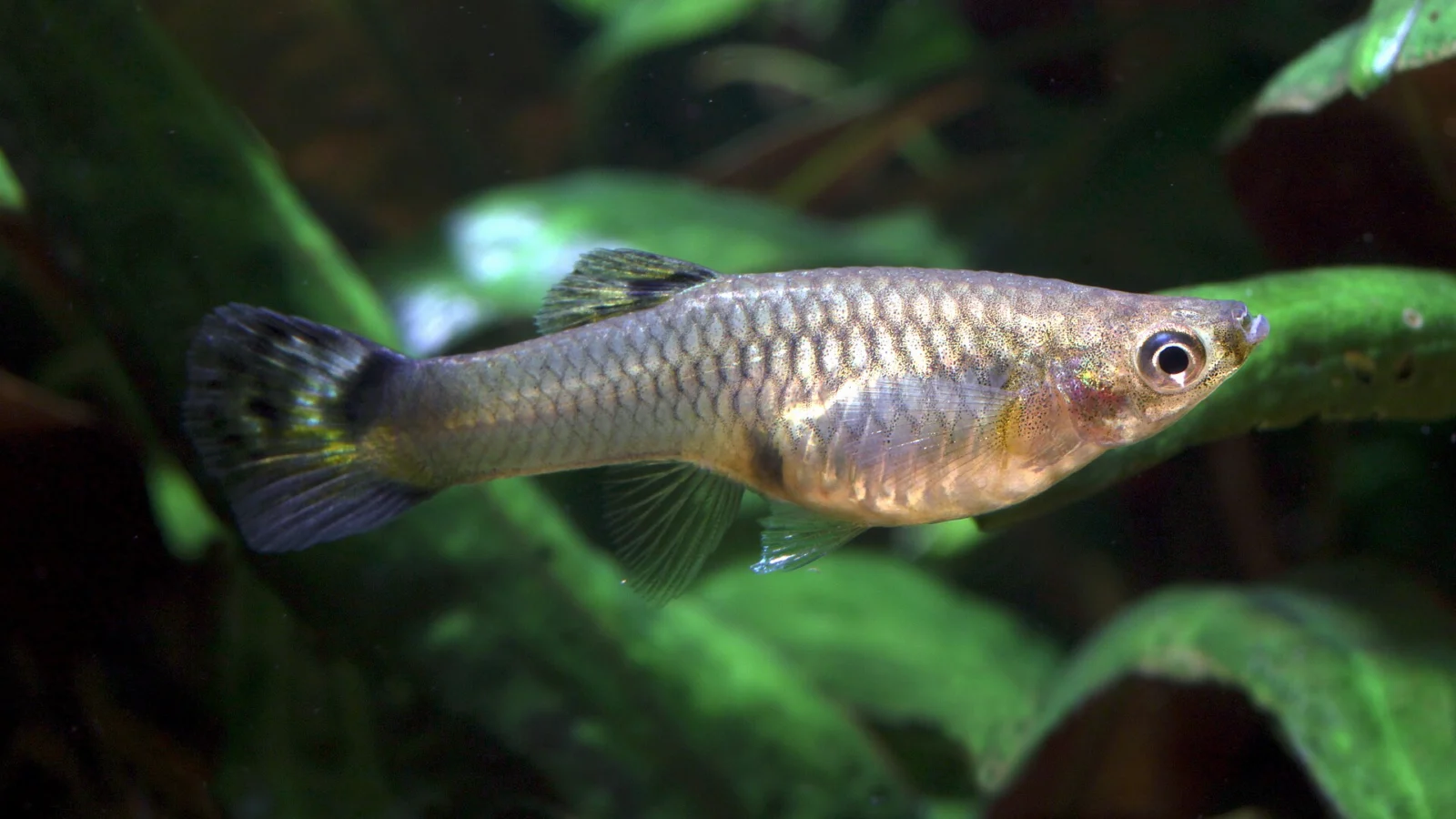
Males are slimmer and far more colorful, with long flowing tails and a pointed anal fin called a gonopodium that they use for mating. Females are bigger, rounder and mostly silver or gray, with a fan shaped anal fin and a dark gravid spot near the vent that grows when they are pregnant.
Guppy Tank Size and Setup
Guppies are small, but they are active swimmers and prolific breeders. A tank that looks big enough for three fish can hold thirty within a few months.
What size tank do guppies need?
A 5 gallon tank is the absolute minimum for a trio, but a 10 gallon tank is a better starting point and a 20 gallon tank gives you room for fry and tank mates. Larger volumes also hold water quality and temperature more steadily, which makes guppy care easier. Our guide to setting up a fish tank walks through the full process.
| Tank size | Suggested guppy group | Notes |
|---|---|---|
| 5 gallons | 3 males, or 1 male and 2 females | Tight; plan to rehome fry |
| 10 gallons | 5 to 6 guppies | Good beginner setup |
| 20 gallons | 8 to 10 guppies plus small tank mates | Room for fry and plants |
| 29 gallons or more | 12 or more guppies in a community | Most stable option |
Filter, heater and lid
Use a gentle filter such as a sponge filter or a hang on back filter with a sponge over the intake, because strong suction can trap fry and long tailed males. Guppies are tropical fish, so a reliable fish tank heater is part of the basic kit. A lid helps keep the heat in and stops the odd fish from jumping out.
Plants and decor
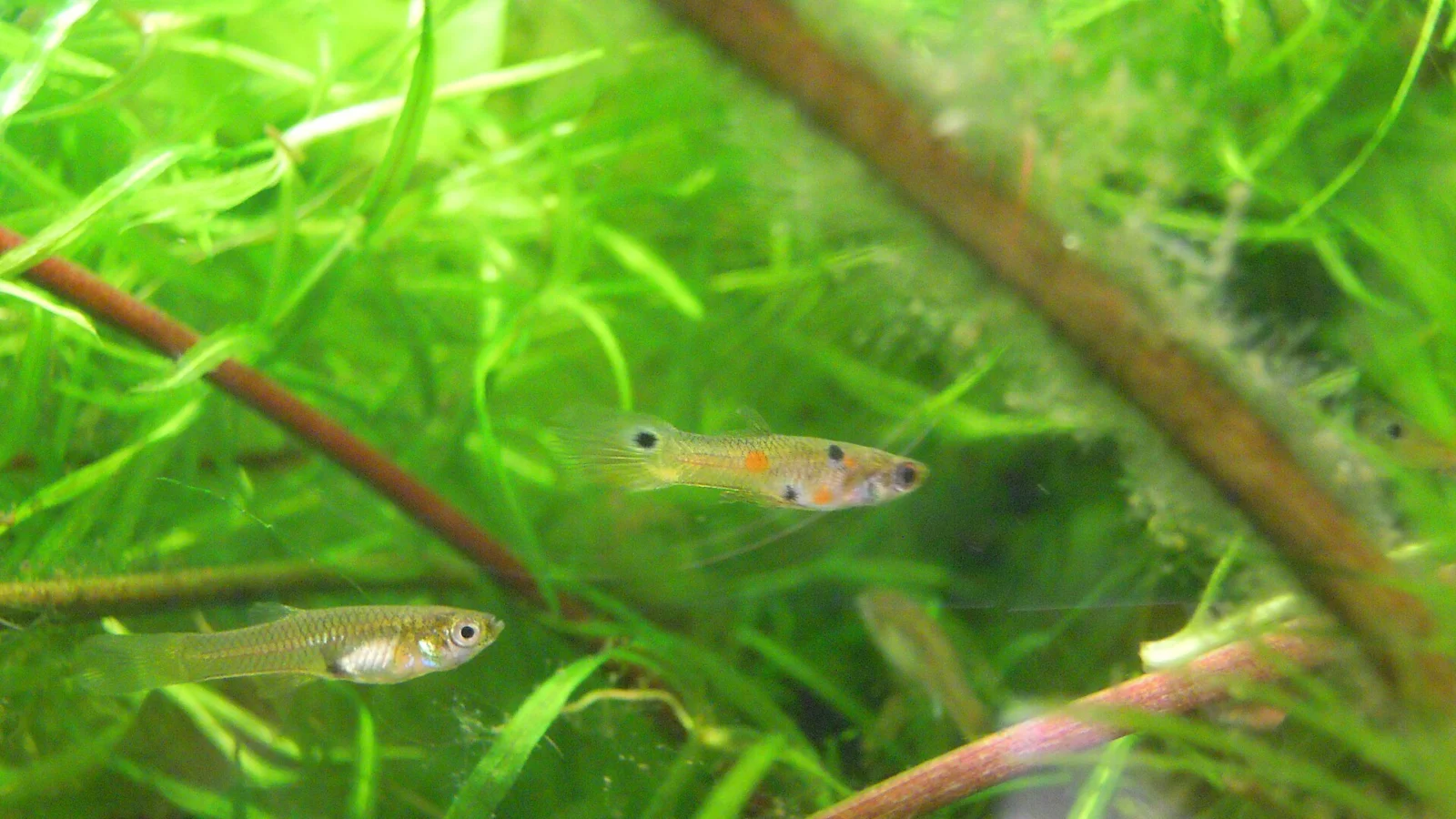
Dense plants such as java moss, hornwort, guppy grass and floating plants give females a break from persistent males and give fry places to hide. Smooth decor is best, since fancy tails tear easily on sharp ornaments.
Cycle the tank first
Guppies are hardy, but they still suffer in an uncycled tank. Let beneficial bacteria grow before you add fish by following our guide on how to cycle a fish tank.
Water Parameters for Guppies
Guppies come from naturally hard water and do best in a stable, slightly alkaline tank. Stability matters more than chasing perfect numbers.
| Parameter | Target range |
|---|---|
| Temperature | 74 to 80 °F (76 to 78 °F is a good middle) |
| pH | 7.0 to 8.0 |
| General hardness (GH) | Moderate to hard water |
| Ammonia and nitrite | 0 ppm |
| Nitrate | Under 20 to 40 ppm |
Hard water and minerals
Very soft, acidic water can leave guppies weak and prone to disease. If your tap water is soft, crushed coral in the filter or a mineral supplement can raise hardness and buffer the pH. Check your numbers against our chart of aquarium water parameters.
Water changes
A weekly 25 percent water change with dechlorinated tap water keeps nitrate down and replaces minerals. Guppy tanks often carry a heavy bioload once fry start growing, so test more often as the population rises.
What Do Guppies Eat?
Guppies are omnivores. In the wild they eat algae, small insects, insect larvae and plant matter, so a varied diet keeps them colorful and healthy. Our guide to what fish eat explains the main food types.
A simple feeding plan
- Staple: a quality small flake or micro pellet once or twice a day.
- Protein treats: frozen or live brine shrimp, daphnia or bloodworms two or three times a week.
- Greens: a spirulina based flake a few times a week.
How much to feed
Feed only what your guppies finish in about one minute. Overfeeding is the most common mistake in guppy care, because leftover food rots and raises ammonia. Fry need smaller and more frequent meals, roughly three to five tiny feedings a day of crushed flake, baby brine shrimp or a dedicated fry food.
Best Guppy Tank Mates
Guppies are peaceful, but their slow, flowing tails attract fin nippers. Pick calm fish that like similar warm, hard water.
Good tank mates
- Other livebearers such as platies, mollies and endlers
- Corydoras catfish and bristlenose plecos for the bottom
- Calm schooling fish such as harlequin rasboras and many small tetras
- Cherry shrimp and nerite snails, with the note that adult guppies eat baby shrimp
Fish to avoid
Avoid known fin nippers such as tiger barbs and serpae tetras, and any fish big enough to swallow a guppy, such as large cichlids. Male bettas are risky because they may see a colorful male guppy as a rival. Goldfish are also a poor match, because they prefer cooler water and grow much larger; our goldfish care guide explains their needs.
Guppy Breeding and Fry Care
Guppies are livebearers, which means the female gives birth to free swimming fry instead of laying eggs. If you keep males and females together, you will have babies.
Male to female ratio
Keep at least two or three females for every male. Males chase females almost constantly, and a better ratio spreads that attention so no single female gets worn out. An all male tank is a good choice if you want color without fry.
Pregnancy and birth
Gestation usually takes about 21 to 30 days, depending on temperature. A pregnant female becomes boxy and her gravid spot darkens. Females can store sperm and give birth several times from a single mating, so a female bought alone can still surprise you. A brood can range from a few fry to more than 50 in a large female.
Saving the fry
Adult guppies eat their own young. To raise more fry, give them thick plants and floating cover, or move them into a separate grow out tank. Breeding boxes work but can stress the mother if she is moved too late. Fry start to show color at around 2 to 3 months.
Common Guppy Health Problems
Most guppy illness starts with poor water, sudden temperature swings or new fish added without quarantine.
Signs to watch for
- White salt like spots, often ich
- Ragged or rotting fins, often fin rot
- Clamped fins, gasping or hiding, usually a water quality problem
- A bent spine or wasting body in some fancy strains
How to prevent problems
Quarantine new guppies for two to four weeks, test water weekly and keep the temperature steady. When a fish looks sick, test ammonia, nitrite and nitrate first, then compare the symptoms with our chart of common fish diseases.
A Weekly Guppy Care Routine
Daily
Feed once or twice, check that every fish is eating and swimming normally, and confirm the heater is holding temperature.
Weekly
Change about 25 percent of the water, vacuum the gravel lightly, trim plants and test the water. Rinse filter sponges in old tank water only when flow slows down.
Monthly
Count your fish and plan for extra fry. Many local fish stores take healthy young guppies, which keeps your tank from becoming overcrowded.
How to Choose Healthy Guppies
Good guppy care starts at the store. A healthy fish settles in faster and is far less likely to bring disease into your tank.
Signs of a healthy guppy
- Active swimming with fins held open, not clamped against the body
- Bright, even color with no white spots, fuzz or torn fins
- A rounded belly that is not sunken or swollen
- Interest in food when the staff feed the tank
Look at the whole tank, not just the fish you want. If several guppies in the same tank look sick or dead fish are present, buy elsewhere.
Fancy strains versus hardy strains
Heavily bred fancy guppies with huge tails can be more delicate than simpler strains or locally bred fish. If you are a beginner, guppies from a local breeder or a store that raises its own fish are often hardier because they are already used to local tap water. When you bring them home, follow our guide on how to acclimate fish.
Guppy Care FAQs
Do guppies need a heater?
Yes, in most homes. Guppies are tropical fish that do best at 74 to 80 °F, so a heater keeps the water warm and steady, especially overnight and in winter.
How many guppies should be kept together?
Keep guppies in groups of at least three. In a mixed group, aim for two or three females for every male so the females are not chased too much.
How long do guppies live?
Most guppies live around 2 to 3 years with good care. Stable water and a temperature in the mid 70s °F help them reach the upper end of that range.
Can guppies live in a bowl without a filter?
It is not recommended. Bowls are too small to keep ammonia and temperature stable, so a filtered and heated tank of at least 5 to 10 gallons is a much better home.
How often do guppies give birth?
A healthy female can give birth roughly every 4 weeks, and she can keep producing broods for months from one mating because she stores sperm.
Final Thoughts
Keep it simple and stable
Guppy care comes down to a few habits: a cycled and heated tank of at least 10 gallons, hard and slightly alkaline water, small varied meals and a plan for fry. Get those right and guppies reward you with constant color and activity. When you are ready for more species, browse our aquarium fish guides.
Keep exploring
More fish guides

Keep exploring
 Aquarium Fish
Cherry Shrimp Care: Tank Setup, Water Parameters and Breeding
Cherry shrimp care made easy: tank setup, ideal water parameters, feeding, molting, breeding and safe tank mates for a thriving colony.
 Aquarium Fish
Cheap Freshwater Fish: 15 Hardy Species That Cost Under $5
Cheap freshwater fish that stay hardy: 15 species under $5, with sizes, tank needs and a sample budget stocking plan for a…
 Aquarium Fish
Types of Freshwater Fish: 40 Species by Family, With Facts
Types of freshwater fish explained: 40 species across trout, bass, catfish, carp, cichlid, perch and more, with quick facts and where each…