Best Nano Fish: The Short Answer
Nano fish are tiny, but they are not a small commitment. A nano tank holds little water, so waste builds up and temperature shifts faster than in a big tank. This guide compares 20 tiny species by adult size, minimum tank, temperature, pH, temperament, group size and care level. It also shows what honestly fits in 5, 10 and 20 gallons, and how to cycle and care for a small tank.
What Makes a Good Nano Fish?
A nano fish is a species that stays around 1.5 inches or less as an adult. A few slightly larger, very calm fish, such as harlequin rasboras and honey gouramis, also suit nano tanks of 15 to 20 gallons. Size is only the start, though. A good nano fish also has a low bioload, a calm temperament and needs that a small tank can meet.
- Adult size, not store size. Many fish are sold at an inch and grow far larger. Always check the adult size before you buy.
- Activity level. Some small fish, such as zebra danios, are fast swimmers that need length. They feel cramped in a short tank.
- Social needs. A lone schooling fish hides and stresses. Plan for the full group, not one or two fish.
- Water needs. Some nano species want soft, acidic water. Others prefer hard, alkaline water. Match the species to your tap water when you can.
- Temperament. Several tiny fish are territorial. Male scarlet badis, for example, fight their own kind in tight spaces.
Footprint matters more than height. A long, low tank gives more swimming room and more surface for gas exchange than a tall tank of the same volume.
20 Nano Fish Compared
The table lists each species with its adult size, a practical minimum tank, temperature, pH, temperament, group size and care level. Sizes are standard length, measured from the snout to the base of the tail, so the fish look a little longer in the tank. Norman’s lampeye is shown as total length (TL). Figures follow published species profiles, with very low wild pH values trimmed to practical aquarium targets.
| Species | Adult size (in) | Min. tank (gal) | Temp (°F) | pH | Temperament | Group size | Care |
|---|---|---|---|---|---|---|---|
| 1. Chili rasbora Boraras brigittae | 0.8 | 10 | 68 to 82 | 5.0 to 7.0 | Peaceful | 8 to 10+ | Moderate |
| 2. Exclamation point rasbora Boraras urophthalmoides | 0.6 | 10 | 68 to 82 | 6.0 to 7.0 | Peaceful, timid | 8 to 10+ | Moderate |
| 3. Celestial pearl danio Danio margaritatus | 0.8 | 10 | 68 to 79 | 6.5 to 7.5 | Peaceful, males spar | 10+ | Easy |
| 4. Kubotai rasbora Microdevario kubotai | 0.8 | 15 | 68 to 81 | 6.0 to 7.0 | Peaceful | 8 to 10+ | Moderate |
| 5. Harlequin rasbora Trigonostigma heteromorpha | 1.8 | 15 | 70 to 82 | 5.0 to 7.5 | Peaceful | 8 to 10+ | Easy |
| 6. White cloud mountain minnow Tanichthys albonubes | 1.6 | 15 | 57 to 72 | 6.0 to 8.5 | Peaceful | 10+ | Easy |
| 7. Ember tetra Hyphessobrycon amandae | 0.8 | 10 | 68 to 82 | 5.0 to 7.0 | Peaceful | 8 to 10+ | Easy |
| 8. Green neon tetra Paracheirodon simulans | 1.0 | 10 | 75 to 81 | 5.0 to 6.5 | Peaceful | 8 to 10+ | Moderate |
| 9. Neon tetra Paracheirodon innesi | 1.2 | 15 | 70 to 77 | 5.0 to 7.5 | Peaceful | 8 to 10+ | Easy |
| 10. Endler’s livebearer Poecilia wingei | 1.0 | 10 | 75 to 86 | 7.0 to 8.5 | Peaceful | Several females per male | Easy |
| 11. Least killifish Heterandria formosa | 0.8 | 5 | 68 to 79 | 7.0 to 8.0 | Peaceful | Small colony | Easy |
| 12. Clown killifish Epiplatys annulatus | 1.4 | 10 | 68 to 79 | 5.0 to 7.0 | Peaceful | 8 to 10 | Moderate |
| 13. Norman’s lampeye Poropanchax normani | 1.8 TL | 10 | 72 to 79 | 6.5 to 7.2 | Peaceful | Small group | Easy |
| 14. Sparkling gourami Trichopsis pumila | 1.6 | 10 | 72 to 82 | 5.0 to 7.5 | Peaceful | Pair or small group | Easy |
| 15. Honey gourami Trichogaster chuna | 2.2 | 15 | 72 to 81 | 6.0 to 7.5 | Peaceful, shy | 4 to 6 | Easy |
| 16. Scarlet badis Dario dario | 0.8 | 10 | 64 to 79 | 6.5 to 8.5 | Males territorial | 1 male, 2+ females | Moderate |
| 17. Pea puffer Carinotetraodon travancoricus | 1.0 | 5 (one fish) | 72 to 82 | 6.8 to 8.0 | Fin nipper | 1, or 2 to 3 gal each | Moderate |
| 18. Pygmy corydoras Gastrodermus pygmaeus | 1.2 | 10 | 72 to 79 | 6.4 to 7.4 | Peaceful | 6 to 10+ | Moderate |
| 19. Otocinclus Otocinclus spp. | 1.4 | 10 | 70 to 79 | 5.5 to 7.5 | Peaceful, shy | 6+ | Moderate |
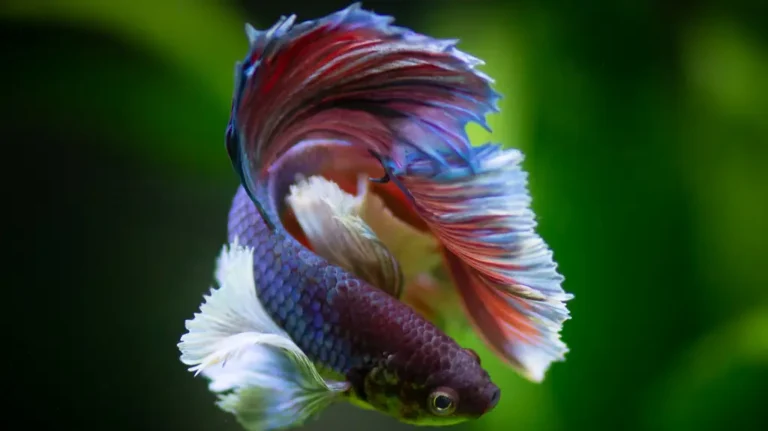
| 20. Betta Betta splendens | 2.8 | 5 | 72 to 86 | 6.0 to 8.0 | Solitary | 1 | Moderate |
Some temperature ranges look wide. Those are tolerance ranges, not targets. For a mixed tropical nano tank, aim for a steady temperature in the middle of the range that all of your species share. White cloud mountain minnows are the clear outlier. They prefer cool water, so they need their own unheated tank or cool-water tank mates.
5 vs 10 vs 20 Gallons: What Really Fits
Tank volume sets your margin for error. The less water you have, the faster ammonia builds, the faster pH drifts and the faster a heater fault turns into a crisis. That is why many experienced keepers find a 10 or 20 gallon tank easier to run than a 5.
5 Gallons: Single-Specimen Territory
A 5 gallon tank suits one betta, one pea puffer or a small colony of least killifish. It also makes a fine shrimp and snail tank. Schooling fish need more swimming length than a 5 gallon gives. Our guide to betta fish tank size explains why 5 gallons is the practical floor for a single betta.
10 Gallons: One School, One Focus
A 10 gallon tank is the classic nano. It can hold one school of 8 to 10 tiny fish, such as chili rasboras, ember tetras or celestial pearl danios, plus shrimp and snails. Alternatively, it suits a pair of sparkling gouramis or one male scarlet badis with two or more females. Resist adding a second school and a bottom group on top. That is where small tanks start to fail.
20 Gallons: A Real Nano Community
A 20 gallon long tank is where nano fish shine. It holds two schools of tiny fish plus a group of pygmy corydoras or otocinclus. It also gives slightly larger species, such as neon tetras, harlequin rasboras and honey gouramis, the room they need. For worked examples, see our guide to how many fish fit in a 20 gallon tank.
If you would rather stock a bigger community tank, our list of the best freshwater fish for fish tanks covers 30 species for setups from 5 to 75 gallons.

Rasboras, Danios and Minnows
Small Asian cyprinids make up much of any nano fish list. They are peaceful, colorful and happiest in planted tanks with gentle flow.
1. Chili Rasbora (Boraras brigittae)
The chili rasbora, also called the mosquito rasbora, is one of the smallest fish in the hobby at about 0.8 inches. Males turn deep red with a dark side stripe. It comes from soft, acidic blackwater in Borneo, so it colors up best in a planted, dimly lit tank. The Seriously Fish profile of Boraras brigittae recommends a group of at least 8 to 10 and a well-established tank. Offer tiny foods such as crushed flakes, micro pellets and baby brine shrimp.
Quick facts: 0.8 in · 10 gal minimum · 68 to 82°F · pH 5.0 to 7.0 · peaceful · group: 8 to 10+ · care: moderate

2. Exclamation Point Rasbora (Boraras urophthalmoides)
At about 0.6 inches, this fish is even smaller than the chili rasbora. It is often sold under the chili rasbora’s name, but it has a dark spot near the tail. Care is almost identical, including a group of 8 to 10. It is timid, so keep it alone or with other tiny, calm species. Seriously Fish also advises against mixing it with other Boraras species, because they may hybridize.
Quick facts: 0.6 in · 10 gal minimum · 68 to 82°F · pH 6.0 to 7.0 · peaceful, timid · group: 8 to 10+ · care: moderate
3. Celestial Pearl Danio (Danio margaritatus)
The celestial pearl danio, or galaxy rasbora, has a dark blue body covered in pearly spots, with orange-red fins. It was only discovered in 2006, yet it quickly became a nano favorite. Males spar constantly, so keep at least 10. Seriously Fish suggests that larger groups, ideally 20 or more, spread the sparring and make the fish bolder. Plants that break lines of sight help too.
Quick facts: 0.8 in · 10 gal minimum · 68 to 79°F · pH 6.5 to 7.5 · peaceful, males spar · group: 10+ · care: easy

4. Kubotai Rasbora (Microdevario kubotai)
Often sold as the neon green rasbora, this fish glows lime green under good light. It is very peaceful and schools in groups of 8 to 10 or more. It needs a little more length than the Boraras species, and Seriously Fish suggests a base of about 24 by 12 inches, so a 15 or 20 gallon tank suits it better than a 10. Soft, slightly acidic water brings out its best color.
Quick facts: 0.8 in · 15 gal minimum · 68 to 81°F · pH 6.0 to 7.0 · peaceful · group: 8 to 10+ · care: moderate
5. Harlequin Rasbora (Trigonostigma heteromorpha)
The harlequin is the largest fish on this list that still suits nano tanks. It reaches about 1.8 inches and has a copper body with a black wedge-shaped patch. It is very peaceful and undemanding, which makes it an easy pick for new keepers. Seriously Fish recommends a group of at least 8 to 10 and a base of at least 24 by 12 inches, so plan on 15 to 20 gallons rather than 10.
Quick facts: 1.8 in · 15 gal minimum · 70 to 82°F · pH 5.0 to 7.5 · peaceful · group: 8 to 10+ · care: easy
6. White Cloud Mountain Minnow (Tanichthys albonubes)
This hardy minnow reaches about 1.6 inches and shows a red tail and a bright side stripe. Unlike most nano fish, it is a cool-water species. Seriously Fish notes that keeping it permanently warm is likely to shorten its life, and that it is often best kept without a heater in a normal home. Keep a school of 10 or more in a 15 gallon or larger tank. Do not mix it with tropical fish that need a heater, and do not keep it with goldfish.
Quick facts: 1.6 in · 15 gal minimum · 57 to 72°F · pH 6.0 to 8.5 · peaceful · group: 10+ · care: easy
Nano Tetras
Most tetras grow too big for nano tanks. These three stay small enough, provided you respect their school size.
7. Ember Tetra (Hyphessobrycon amandae)
The ember tetra is one of the best nano fish for beginners. It stays around 0.8 inches, glows orange and accepts soft to moderately soft water. Keep a school of 8 to 10 so the fish settle and swim in the open. It is also a calm tank mate for pygmy corydoras and otocinclus.
Quick facts: 0.8 in · 10 gal minimum · 68 to 82°F · pH 5.0 to 7.0 · peaceful · group: 8 to 10+ · care: easy

8. Green Neon Tetra (Paracheirodon simulans)
The green neon looks like a slimmer neon tetra with a blue-green stripe along its body. It stays around an inch, which makes it a better fit for a 10 gallon than the regular neon. However, it comes from very soft, acidic blackwater and trade fish are wild caught. It is less forgiving of hard water, so add it only to a mature, stable tank.
Quick facts: 1.0 in · 10 gal minimum · 75 to 81°F · pH 5.0 to 6.5 · peaceful · group: 8 to 10+ · care: moderate
9. Neon Tetra (Paracheirodon innesi)
The classic neon tetra comes with a caveat. It reaches about 1.2 inches standard length, so it sits at the top end of nano size. Seriously Fish recommends a base of 24 by 12 inches, which makes a 15 or 20 gallon tank the realistic minimum. Neons also need a steady temperature on the cooler side of tropical, and they rarely do well in a newly set-up tank. Keep a group of at least 8 to 10.
Quick facts: 1.2 in · 15 gal minimum · 70 to 77°F · pH 5.0 to 7.5 · peaceful · group: 8 to 10+ · care: easy
Livebearers
Livebearers give birth to free-swimming young. That makes them lively and easy, but it also means a nano tank can fill up fast.
10. Endler’s Livebearer (Poecilia wingei)
Males reach about an inch and flash orange, black and metallic green. Females are larger and plainer. Endler’s prefer hard, alkaline water and warm temperatures. Keep several females for each male, so no single female is harassed. They breed readily, so a 10 gallon tank can overcrowd within months. Keep males only if you do not want fry, and never mix them with guppies, as the two crossbreed.
Quick facts: 1.0 in · 10 gal minimum · 75 to 86°F · pH 7.0 to 8.5 · peaceful · group: several females per male · care: easy

11. Least Killifish (Heterandria formosa)
Despite its name, the least killifish is a livebearer from the southeastern United States. Females reach about 0.8 inches standard length, and males are even smaller. Seriously Fish notes that a pair can live in a tank as small as 12 by 8 by 8 inches, so a small colony suits a 5 gallon. It handles cooler room temperatures and needs very gentle flow. Tank mates must be tiny, since most community fish see the males as food.
Quick facts: 0.8 in · 5 gal minimum · 68 to 79°F · pH 7.0 to 8.0 · peaceful · group: small colony · care: easy
Killifish
Many killifish are short-lived or need specialist care. These two are peaceful, easier exceptions that live near the surface.
12. Clown Killifish (Epiplatys annulatus)
Bold black bands and a flame-colored tail make the clown killifish, or rocket killifish, a standout. It reaches about 1.4 inches and stays near the surface under floating plants. Seriously Fish suggests a group of 8 to 10. It accepts small dried foods, but it should also get regular live or frozen fare such as baby brine shrimp and daphnia. Use a tight lid, as surface fish can jump.
Quick facts: 1.4 in · 10 gal minimum · 68 to 79°F · pH 5.0 to 7.0 · peaceful · group: 8 to 10 · care: moderate
13. Norman’s Lampeye (Poropanchax normani)
This small West African killifish is named for the bright blue spot above each eye, which shines under the light. FishBase lists a maximum of about 1.8 inches total length and describes it as easy to keep in the aquarium. It is a peaceful, active fish that swims near the top in loose groups. Keep a small group in a covered tank with gentle flow.
Quick facts: 1.8 in total length · 10 gal minimum · 72 to 79°F · pH 6.5 to 7.2 · peaceful · group: small group · care: easy
Gouramis, Badis and Puffers
These fish have more personality than most schooling species. Several are territorial or picky eaters, so plan the tank around them first.
14. Sparkling Gourami (Trichopsis pumila)
This tiny labyrinth fish reaches about 1.6 inches and shimmers with blue spots and red-edged fins. Males make a soft croaking sound when they display. Seriously Fish recommends a pair or small group in a calm, planted tank with very peaceful, similarly sized tank mates. Like a betta, it breathes air at the surface, so leave a small gap under the lid.
Quick facts: 1.6 in · 10 gal minimum · 72 to 82°F · pH 5.0 to 7.5 · peaceful · group: pair or small group · care: easy
15. Honey Gourami (Trichogaster chuna)
The honey gourami is the gentlest gourami for a small tank. Adults reach about 2.2 inches, and breeding males turn honey orange with a dark throat. It is slow and shy, so larger or pushy fish easily outcompete it. Seriously Fish recommends at least 4 to 6, a base of 24 by 12 inches and plenty of plants and floating cover. That makes it a 15 to 20 gallon fish rather than a 10.
Quick facts: 2.2 in · 15 gal minimum · 72 to 81°F · pH 6.0 to 7.5 · peaceful, shy · group: 4 to 6 · care: easy

16. Scarlet Badis (Dario dario)
Male scarlet badis are bright red with blue bars and reach only about 0.8 inches. Females are plainer. Males fight each other, so a small tank should hold one male with two or more females. Scarlet badis are slow, shy micropredators that often ignore dry food. Offer small live or frozen foods such as baby brine shrimp, daphnia and microworms. Seriously Fish advises leaving out bloodworms, which can cause obesity in this group.
Quick facts: 0.8 in · 10 gal minimum · 64 to 79°F · pH 6.5 to 8.5 · males territorial · group: 1 male, 2+ females · care: moderate
17. Pea Puffer (Carinotetraodon travancoricus)
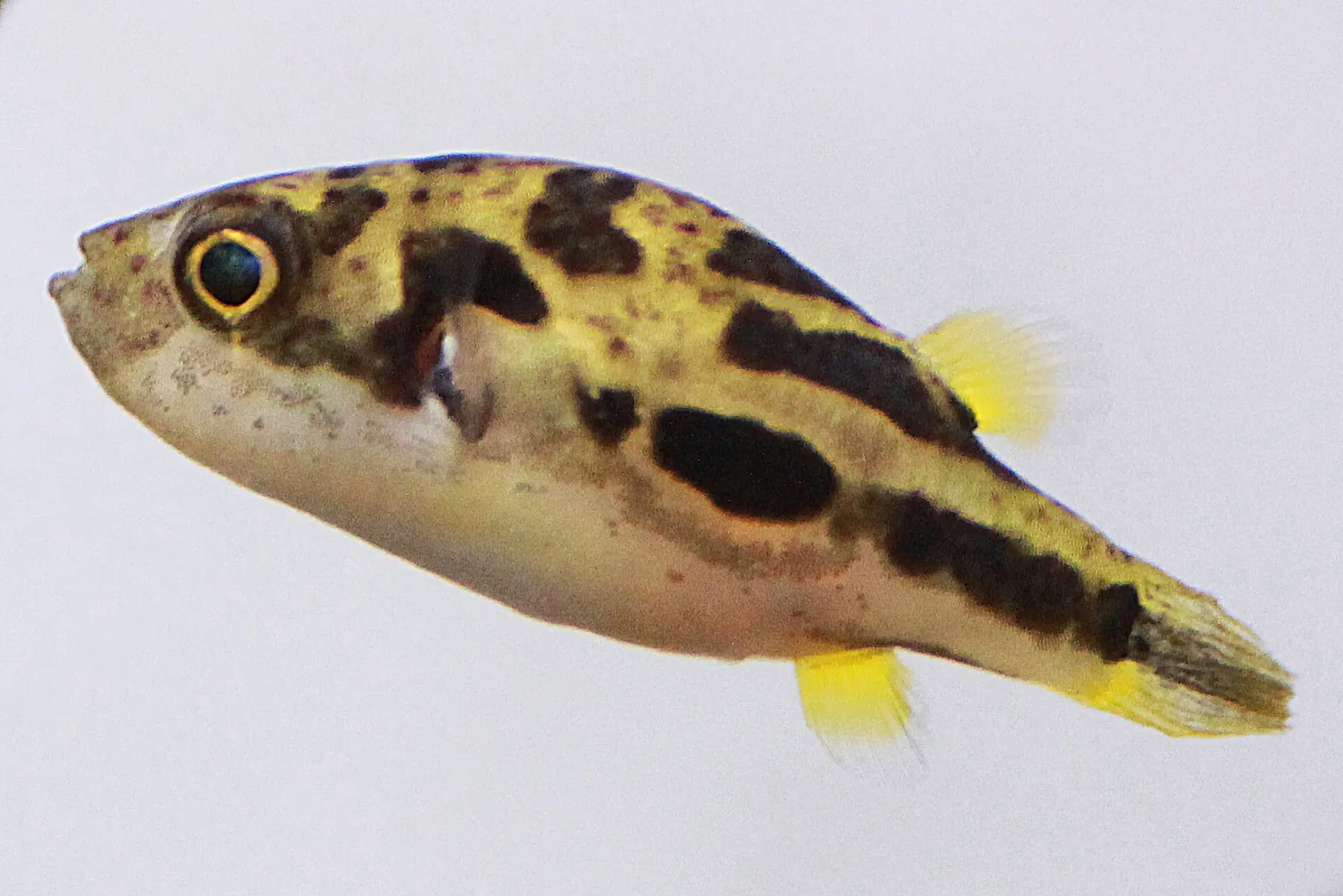
The pea puffer, or dwarf puffer, is about an inch long and full of character. It is not a community fish, because it nips fins and hunts snails and shrimp. Seriously Fish notes that a single puffer can live in a tank as small as 12 by 8 by 8 inches, and suggests 2 to 3 gallons per puffer for a group, with heavy planting. Pea puffers need meaty foods such as snails and frozen foods.
Quick facts: 1.0 in · 5 gal (one fish) minimum · 72 to 82°F · pH 6.8 to 8.0 · fin nipper · group: 1, or 2 to 3 gal each · care: moderate
Bottom Dwellers
Bottom dwellers fill the lowest layer of a nano tank. Choose tiny species only. Even a bristlenose pleco grows far too big for a 10 gallon.
18. Pygmy Corydoras (Gastrodermus pygmaeus)
Unlike most catfish, the pygmy cory spends much of its time in mid-water, hovering in loose groups. It reaches about 1.2 inches. A recent revision moved it to the genus Gastrodermus, so you may see either name in stores. Seriously Fish recommends at least 6 and preferably 10 or more. Keep it over fine sand with other tiny species, and make sure sinking food reaches the bottom.
Quick facts: 1.2 in · 10 gal minimum · 72 to 79°F · pH 6.4 to 7.4 · peaceful · group: 6 to 10+ · care: moderate
19. Otocinclus (Otocinclus spp.)
Otocinclus come with a caveat too. These tiny algae-eating catfish graze biofilm from plants and glass, and they are shy and easily outcompeted. Several similar species are sold under the same name. Keep a group of at least 6, and add them only to a mature tank with plenty of biofilm. Then feed algae wafers and blanched vegetables, because a clean nano tank rarely grows enough food on its own.
Quick facts: 1.4 in · 10 gal minimum · 70 to 79°F · pH 5.5 to 7.5 · peaceful, shy · group: 6+ · care: moderate

Single-Specimen Option: The Betta
20. Betta (Betta splendens)
A betta is the obvious pick if you want one fish with a big personality in a small tank. At about 2.8 inches standard length, it is larger than every other species here. Even so, one betta can live well in a heated, filtered 5 gallon tank, and more room is better. It needs warm, stable water and, in most cases, a tank to itself. Seriously Fish describes it as best kept alone, with tank mates the exception. If you want company for a betta, read our list of fish that can live with bettas before adding anything. Our betta fish care guide covers the daily routine.
Quick facts: 2.8 in · 5 gal minimum · 72 to 86°F · pH 6.0 to 8.0 · solitary · group: 1 · care: moderate
Bonus: Shrimp and Snails for Nano Tanks
Invertebrates are not counted in the 20, but they suit nano tanks well. They add very little bioload and help clean up leftover food.
- Cherry shrimp. Hardy, colorful and fine in a 5 gallon tank. Many nano fish eat baby shrimp, so add moss for cover.
- Amano shrimp. Larger algae eaters that suit 10 gallons or more.
- Nerite snails. Strong algae grazers that will not overrun the tank, because their eggs do not hatch in fresh water.
- Ramshorn snails. Useful cleaners, though they multiply quickly when food is plentiful.
Shrimp need stable mineral levels to molt. Our guide to spring or distilled water for a fish tank explains GH and KH for shrimp tanks.
How to Cycle a Nano Tank
Every nano fish on this list needs a cycled tank. Cycling grows beneficial bacteria in the filter. These bacteria turn toxic ammonia from fish waste into nitrite, then into much less toxic nitrate. The University of Florida guide to ammonia in aquatic systems notes that a new biofilter needs six to eight weeks to build up enough bacteria.
- Set up the tank fully. Run the filter and heater with substrate, plants and conditioned water in place.
- Add an ammonia source. Use bottled aquarium ammonia or a small pinch of fish food every day or two.
- Test every few days. Ammonia rises first, then nitrite spikes, and then nitrate appears.
- Run the ready test. The tank is cycled when a dose of ammonia reads zero ammonia and zero nitrite within 24 hours.
- Change water, then stock lightly. Lower nitrate with a water change and add your first small group of fish.

Tiny fish such as chili rasboras, green neons and otocinclus are sensitive to new tanks. Add them last, once the tank has run stably for a few weeks. Quarantine new fish when you can, since a small tank gives disease little room to dilute. Our guide to ich on fish shows what to watch for after new arrivals.
Nano Tank Care That Keeps Fish Alive
Tiny fish are only easy when the tank is stable. Each of these habits matters more in 10 gallons than in 50.
- Choose gentle filtration. Nano fish dislike strong current. A sponge filter, or a small hang-on-back filter with a sponge over the intake, protects tiny fish. Our guide to the best fish tank filters compares the options.
- Use a reliable heater and thermometer. Small volumes swing fast when the room warms or cools. Choose an adjustable heater sized for the tank, unless you keep cool-water fish.
- Plant heavily. Live plants use up waste, break lines of sight and make shy fish bolder.
- Add fish in batches. Stock one species at a time and wait a week or two between additions. Test ammonia and nitrite after each batch.
- Feed tiny portions. Overfeeding is the fastest way to crash a nano tank. Leftover food is also a common cause of a cloudy fish tank.
- Change water weekly. Replace about 10 to 25% each week with conditioned water at the same temperature.
Common Nano Stocking Mistakes
- Keeping schooling fish in twos or threes instead of a full group.
- Adding the whole stocking list on the first day.
- Mixing soft-water fish with hard-water fish to fill space.
- Keeping cool-water white clouds in a warm tropical tank.
- Choosing fish by store size instead of adult size.
In short, pick one or two species, give them the right group size and let the tank mature. A lightly stocked nano tank is easier to keep healthy, and the fish show better color and behavior.
Nano Fish FAQs
What is the best nano fish for beginners?
Ember tetras, celestial pearl danios and Endler’s livebearers are among the easiest nano fish. They accept common foods and handle a sensible range of water conditions. Start with one species in a cycled 10 gallon tank, then add a second group only after the tank has stayed stable for a few weeks.
Can nano fish live in a 5 gallon tank?
Only a few can. A 5 gallon tank suits one betta, one pea puffer or a small colony of least killifish. Schooling fish such as rasboras and tetras need at least 10 gallons, because they need room to swim as a group.
How many nano fish can I put in a 10 gallon tank?
Plan for one school of about 8 to 10 tiny fish, such as chili rasboras or ember tetras, plus shrimp and snails. Adding a second school and a bottom group usually overstocks a 10 gallon tank. A bigger filter does not make up for too little water.
Do nano fish need a heater?
Most do. The majority of nano species are tropical, and small tanks change temperature quickly. Use an adjustable heater and a thermometer. White cloud mountain minnows are the main exception, since they prefer cool water and usually do better unheated in a normal room.
What nano fish can live with a betta?
In a 10 gallon or larger tank, calm, short-finned species such as ember tetras, pygmy corydoras and otocinclus are the safest choices. Some bettas still attack tank mates, so watch closely and have a backup tank ready. In a 5 gallon tank, keep a betta alone or with snails.
Why do nano fish need to be kept in groups?
Most nano species are schooling or shoaling fish. Kept alone or in pairs, they hide, lose color and stress easily. A group of 8 to 10 helps them feel safe, spreads out any sparring and lets them behave naturally.
How long does it take to cycle a nano tank?
A new biological filter often needs six to eight weeks to grow enough bacteria. The tank is ready when a dose of ammonia drops to zero ammonia and zero nitrite within 24 hours, with nitrate showing on tests. Add fish in small batches after that.
What is the smallest nano fish for an aquarium?
The exclamation point rasbora is one of the smallest, at about 0.6 inches standard length. The chili rasbora, ember tetra, scarlet badis and least killifish all stay around 0.8 inches. Tiny size still means a full group and a stable, mature tank.