Fish Tank Heater Basics: The Short Answer
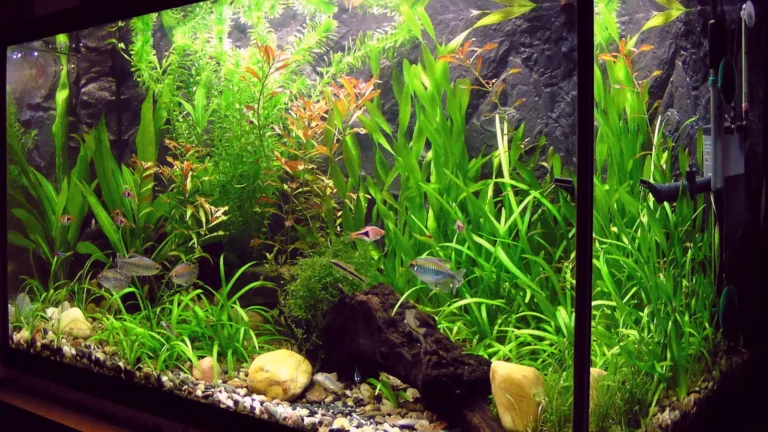
A fish tank heater keeps aquarium water at a steady, safe temperature for tropical fish. Most popular freshwater species, from tetras to bettas, come from warm waters and get stressed when the temperature drops or swings through the day. A good heater, sized correctly and placed in the right spot, fixes both problems.
This guide covers the main types of aquarium heater, how many watts your tank needs, where to put the heater and which temperature suits common fish. It also explains how to spot a failing heater before it harms your fish.
- Best type for most tanks: an adjustable submersible aquarium heater.
- Size: about 3 to 5 watts per gallon, more in cold rooms.
- Typical setting: 75 to 80°F for a tropical community tank.
- Placement: near the filter flow, fully under the water line.
- Always pair it with: a separate thermometer.
Who needs this guide
This page is for anyone setting up a new tropical tank or replacing a heater that came with a starter kit. If you are still choosing the tank itself, start with our fish tank buying guide, then come back here to size the heater.
Why Tropical Fish Need a Fish Tank Heater
Fish are cold blooded. Their body temperature follows the water around them, so the water temperature controls how fast they eat, digest, grow and fight off disease.
Stable water keeps fish healthy
Most homes cool down at night and warm up during the day. In a tank without a heater, the water follows that pattern. Repeated swings of a few degrees stress tropical fish and weaken their immune system. Stress is one of the main triggers for white spot disease, which our guide to ich on fish covers in detail.
Room temperature is usually too cool
Many US homes sit somewhere in the high 60s to low 70s °F, especially in winter. That is below the range most tropical fish prefer. A heater lifts the water a few degrees above room temperature and holds it there day and night.
Do all fish need a heater?
No. Coldwater fish such as goldfish and white cloud mountain minnows usually do fine at room temperature, as long as the room does not get very cold. Tropical species like bettas, tetras, gouramis, angelfish and discus need a heater in almost every US home.
Types of Aquarium Heaters
Several designs are sold for home aquariums. They all do the same job, but they differ in safety, looks and price.
Submersible aquarium heaters
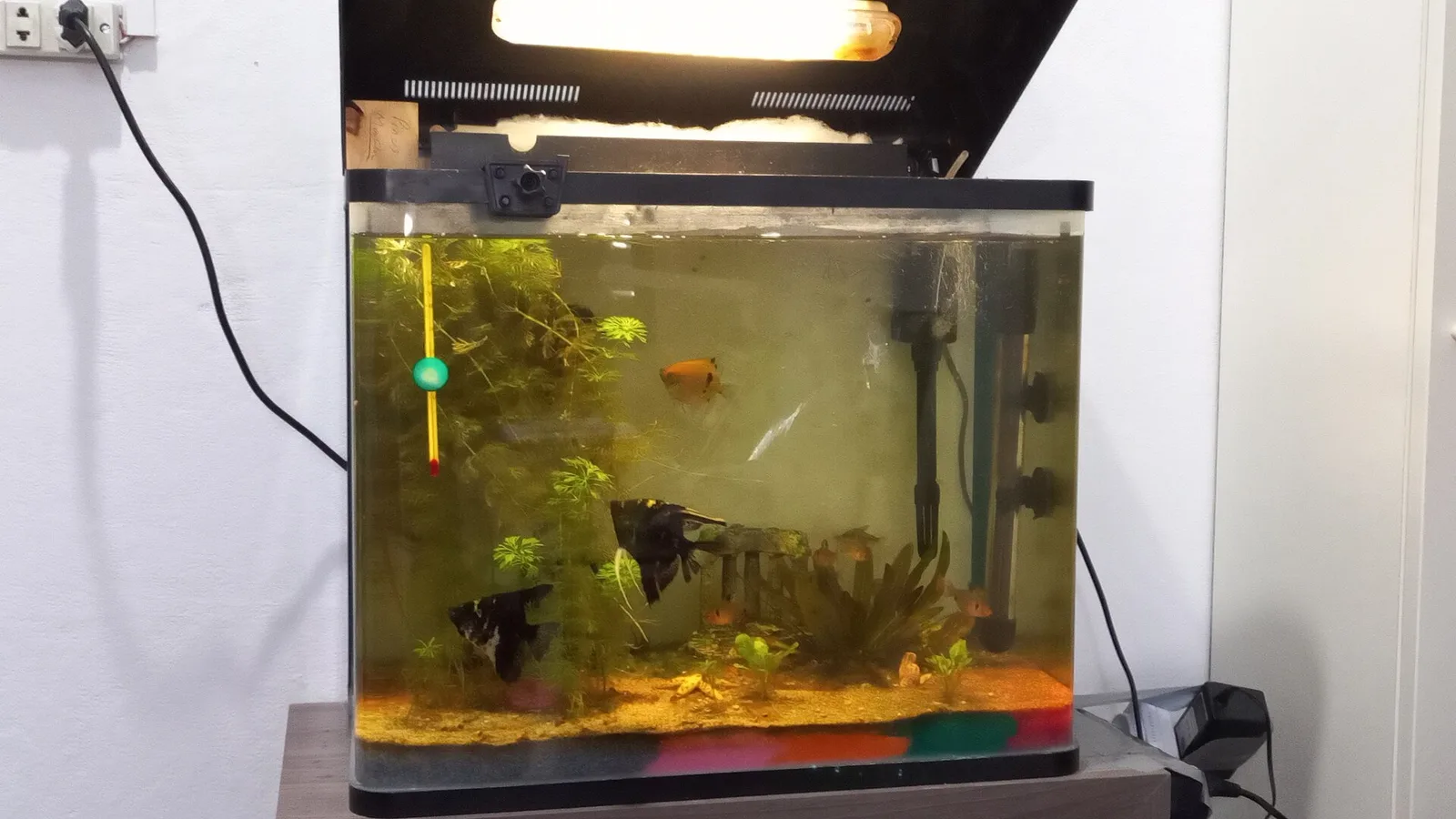
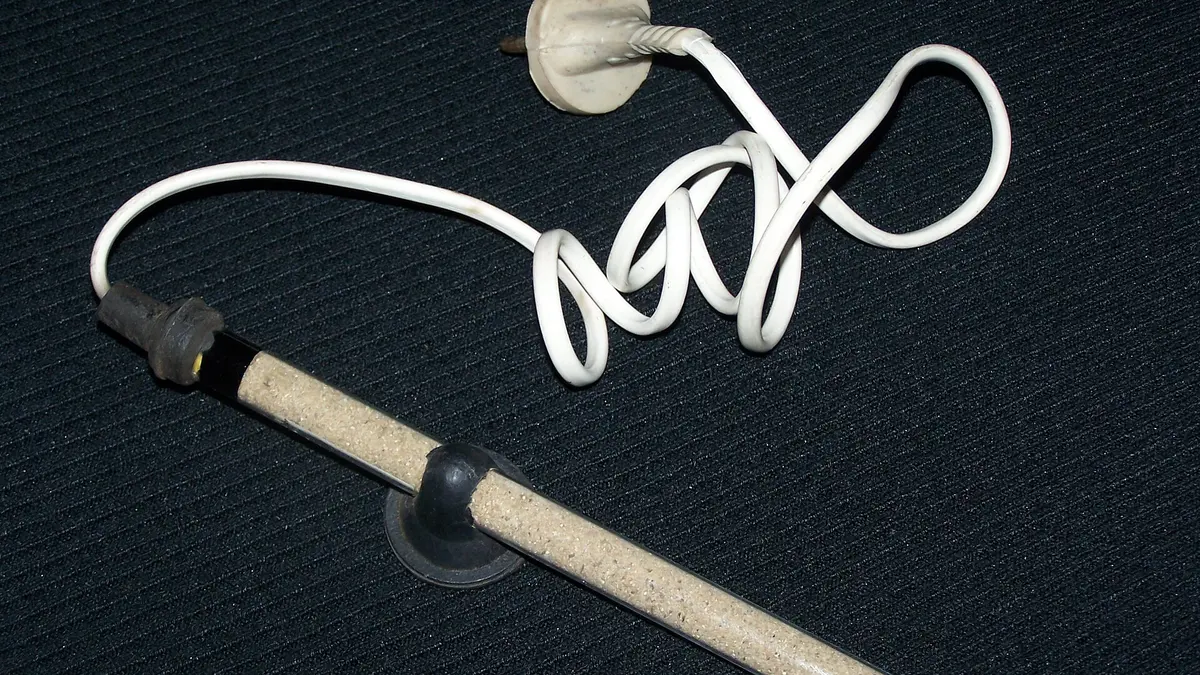
A submersible aquarium heater sits fully under the water and is the most common choice. Glass models are cheap and widely sold. Shatterproof models use plastic or a protective sleeve, which makes them safer around large or boisterous fish. Most have a dial on top to set the temperature.
Hang-on heaters
Older hang-on heaters clip to the rim with the control head above the water. Only the lower part is submerged. They are less common today because they must sit at a fixed depth and are easier to break during water changes.
In-line heaters
An in-line heater fits on the outlet hose of a canister filter, so nothing heats inside the tank. This keeps the display clean and protects the heater from fish. It only works if you run a canister filter, and the filter must keep running for the heater to work safely.
Titanium heaters with a controller
Titanium heaters are almost unbreakable and are popular in large or cichlid tanks. Many have no built-in thermostat, so they need an external temperature controller with a probe in the water.
Preset vs adjustable heaters
Preset heaters hold one fixed temperature, often around 78°F. They are simple, but you cannot change the setting for fish that need warmer or cooler water. An adjustable heater costs a little more and is the better buy for most keepers.
| Type | Best for | Watch out for |
|---|---|---|
| Glass submersible | Most small and medium tanks | Can crack if knocked or run dry |
| Shatterproof submersible | Bettas, cichlids, family homes | Costs a little more |
| In-line | Tanks with a canister filter | Stops heating if the filter stops |
| Titanium with controller | Large or heavy-stocked tanks | Needs a separate controller |
| Preset | Simple betta or nano tanks | No way to adjust the setting |
What Size Fish Tank Heater Do You Need?
Heater size is measured in watts. Too small and the heater runs nonstop without reaching the target. Too large and a stuck heater can overheat the tank quickly.
The 3 to 5 watts per gallon rule
Veterinary guidance from PetMD recommends heaters that provide 3 to 5 watts per gallon. Use the lower end when the room stays warm and the higher end when the tank sits in a cool basement or near an outside wall.
| Tank size | Suggested heater |
|---|---|
| 5 gallon | 25 W |
| 10 gallon | 50 W |
| 20 gallon | 75 to 100 W |
| 29 gallon | 100 to 150 W |
| 40 gallon | 150 to 200 W |
| 55 gallon | 200 to 250 W, or two smaller heaters |
| 75 gallon | Two 150 W heaters |
Use two heaters in big tanks
For tanks of about 55 gallons and up, many keepers split the wattage between two heaters, one at each end. The water warms more evenly, and if one heater fails, the other keeps the tank from cooling fast. If one sticks in the on position, a smaller heater also takes longer to cook the tank.
Check the box rating
Manufacturers print a tank size range on each heater. Pick one rated for at least your tank size. If you are between sizes, choose the larger rating.
Best Temperature for Your Fish Tank
There is no single perfect number. Most tropical community fish are happy in the mid to upper 70s °F, but some species need more or less heat.
| Fish | Typical range (°F) |
|---|---|
| Tropical community (tetras, rasboras, corydoras) | 74 to 80 |
| Betta fish | 76 to 82 |
| Angelfish and gouramis | 76 to 82 |
| Discus | 82 to 86 |
| Goldfish and white clouds | Room temperature, no heater in most homes |
Bettas need steady warmth
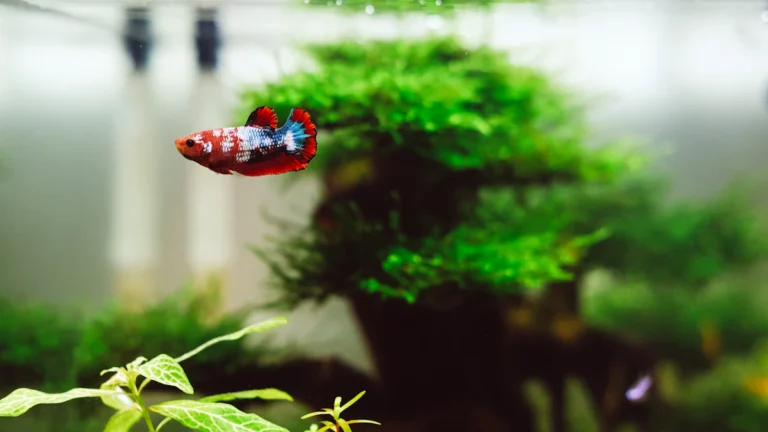
Bettas are tropical fish that turn sluggish and lose color in cool water. Even a small betta tank needs a low-wattage heater. Our betta fish care guide covers the full setup.
Avoid sudden changes
Change the setting slowly, by a degree or two per day, when you move fish to a new temperature. Match the temperature of new water to the tank during water changes as well.
How to Place and Install an Aquarium Heater
Where the heater sits matters as much as its size. Poor placement leaves cold spots and can damage the heater.
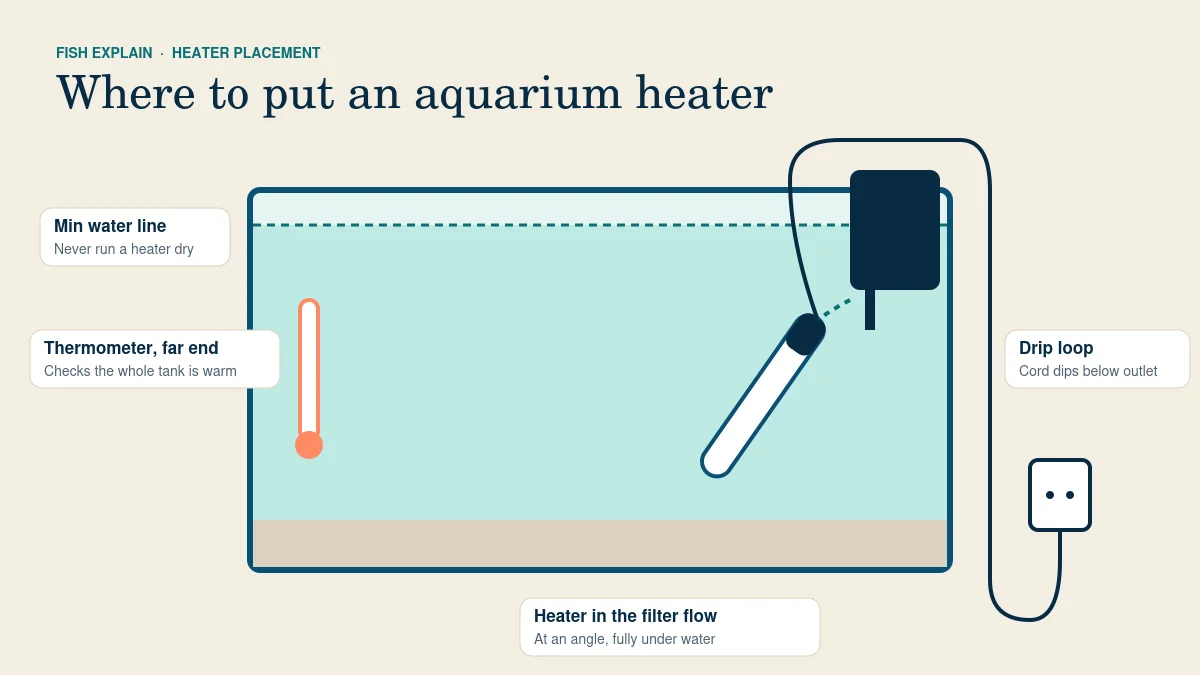
Put it near water movement
Place the heater close to the filter outlet or intake so moving water spreads the warmth around the tank. Fluval’s heater manual, for example, advises placing the heater at the rear of the aquarium, close to a source of water movement. Keep gravel, rocks and decor from touching it.
Mind the water line
Most heaters have a minimum water line, and many fully submersible models can sit horizontally near the bottom so they stay covered during water changes. Never run a heater out of water, even for a minute. A fitted fish tank cover slows evaporation, so the water level drops less between top offs.
Let it adjust before you plug it in
Glass heaters need time to match the water temperature before you switch them on. Wait times vary by brand: the Fluval T series manual asks for 30 minutes, while some other brands ask for 15. Follow the instructions that came with your heater.
Use a drip loop and a separate thermometer
Let every cord dip below the outlet before it rises to the plug, so drips fall to the floor instead of into the socket. A ground fault (GFCI) outlet adds another layer of protection. Then place a thermometer at the far end of the tank to confirm the whole tank is warm, since heater dials are often off by a degree or two.
Heater Safety and Common Problems
A heater is the piece of aquarium equipment most likely to fail in a way that harms fish, so check it often.
Unplug before maintenance
Unplug the heater before you lower the water level or take it out of the tank. Let it cool before lifting it from the water. A hot glass heater can crack when it meets cooler air or water.
Signs a heater is failing
- The tank temperature drifts away from the setting.
- The indicator light stays on all the time, or never comes on.
- You see cracks, water inside the tube or a cloudy glass body.
- Fish gasp at the surface on a hot day, a sign the water may be too warm.
Protect fish from burns
Bottom-dwelling fish and large cichlids sometimes rest against a heater or knock it loose. A plastic heater guard or a shatterproof model prevents burns and breakage.
How to Choose the Best Fish Tank Heater
The best fish tank heater for your setup is the one that matches your tank size, fish and room, and that you can trust to hold a steady temperature.
Features worth paying for
- An adjustable dial with clear temperature markings.
- Automatic shut-off if the heater runs dry.
- A shatterproof body for active or large fish.
- A rating that covers your tank size with room to spare.
Keep a spare
Heaters can fail without warning, often in the middle of winter. A spare heater in the cupboard lets you fix the problem the same day instead of waiting for a delivery.
Fish Tank Heater FAQs
What temperature should I set my fish tank heater to?
For most tropical community fish, set the heater between 75 and 80°F. Bettas, angelfish and gouramis do well around 76 to 82°F, while discus need warmer water in the low to mid 80s. Always confirm the real temperature with a separate thermometer.
How many watts does my aquarium heater need?
A common guideline is 3 to 5 watts per gallon. A 10 gallon tank needs about 50 watts, a 20 gallon tank 75 to 100 watts and a 40 gallon tank 150 to 200 watts. Use the higher figure if your room gets cold.
Should a fish tank heater stay on all the time?
Yes. An aquarium heater has a built-in thermostat that switches the element on and off to hold the set temperature. Leave it plugged in day and night, and unplug it only for maintenance or when the water level drops.
Can a submersible aquarium heater go fully underwater?
A fully submersible heater is designed to sit completely underwater, and many can lie horizontally near the bottom. Older hang-on heaters cannot be fully submerged. Check the minimum and maximum water lines in your heater manual.
Where is the best place to put a fish tank heater?
Put the heater near the filter outlet or intake so the current spreads warm water through the tank. Keep it away from gravel and decor, and place a thermometer at the opposite end to check the whole tank is heated evenly.
Final Thoughts
A steady heater means steady fish
A fish tank heater is a small purchase that protects every fish in the tank. Choose an adjustable submersible model rated for your tank size, place it in the filter flow, check it with a thermometer and keep a spare on hand. For more equipment and setup guides, visit our aquarium care section.