How to Set Up a Fish Tank: The Short Answer
Learning how to set up a fish tank the right way saves you from cloudy water, sick fish and early losses. The order matters: place the tank, add substrate and decor, fit the equipment, fill it with treated water, then let the tank cycle for several weeks before any fish go in. Most beginner problems come from rushing that last step.
This guide walks through a complete beginner aquarium setup for a freshwater tank, one step at a time. It covers what to buy, the order to set things up, how to cycle the tank and how to add your first fish safely.
- Best first tank: 20 to 40 gallons of fresh water.
- Time to set up: an afternoon for the hardware.
- Time before fish: often 4 to 6 weeks of cycling.
- Must-have gear: filter, heater, thermometer, test kit and water conditioner.
- Golden rule: add fish slowly, a few at a time.
What you need before you start
Gather everything before setup day so you do not stop halfway with a half-filled tank. You will need the tank and stand, a filter, a heater for tropical fish, a thermometer, a lid and light, substrate, decor or plants, a water conditioner, a liquid test kit and a clean bucket used only for the aquarium.
| Item | Why you need it |
|---|---|
| Tank and stand | Holds the water and carries the full weight safely |
| Filter | Removes waste and houses beneficial bacteria |
| Heater and thermometer | Keeps tropical fish in steady warm water |
| Lid and light | Stops jumpers, slows evaporation, grows plants |
| Substrate and decor | Gives bacteria surface area and fish cover |
| Water conditioner | Neutralizes chlorine and chloramine in tap water |
| Liquid test kit | Tracks ammonia, nitrite, nitrate and pH |
Not sure which tank to buy yet? Our fish tank buying guide compares sizes, shapes and materials.
Steps 1 to 3: Choose the Spot, Stand and Tank
The first three steps happen before any water goes in. Once the tank is full, it is far too heavy to move.

Step 1: Pick the right spot
Choose a level spot away from windows, heating vents, radiators and drafty doors. Direct sunlight feeds algae and can overheat the water. Make sure you have power outlets nearby and that the spot is easy to reach with a bucket or hose.
Step 2: Set up a strong, level stand
Fresh water weighs about 8.3 pounds per gallon, and gravel, glass and rock add more. A common rule of thumb is about 10 pounds per gallon once the tank is set up, so a 29 gallon tank can weigh close to 300 pounds. Use a stand made for aquariums, check that it is level in both directions and place larger tanks near a load-bearing wall.
Step 3: Rinse and leak test the tank
Wipe the tank inside and out with a clean cloth and plain water. Never use soap or household cleaners, since residues can harm fish. Many keepers fill a new or used tank partway and leave it for a day to check for leaks before decorating it.
Steps 4 and 5: Add Substrate, Decor and Plants
Decorating an empty tank is easier and less messy than working through water.
Step 4: Rinse and add the substrate
Rinse gravel or sand in a bucket until the water runs mostly clear, which cuts down on cloudy water later. Spread it about 1.5 to 2 inches deep, sloping it a little higher at the back for depth. Planted tank soils are usually not rinsed, so follow the instructions on the bag.
Step 5: Place hardscape and plants
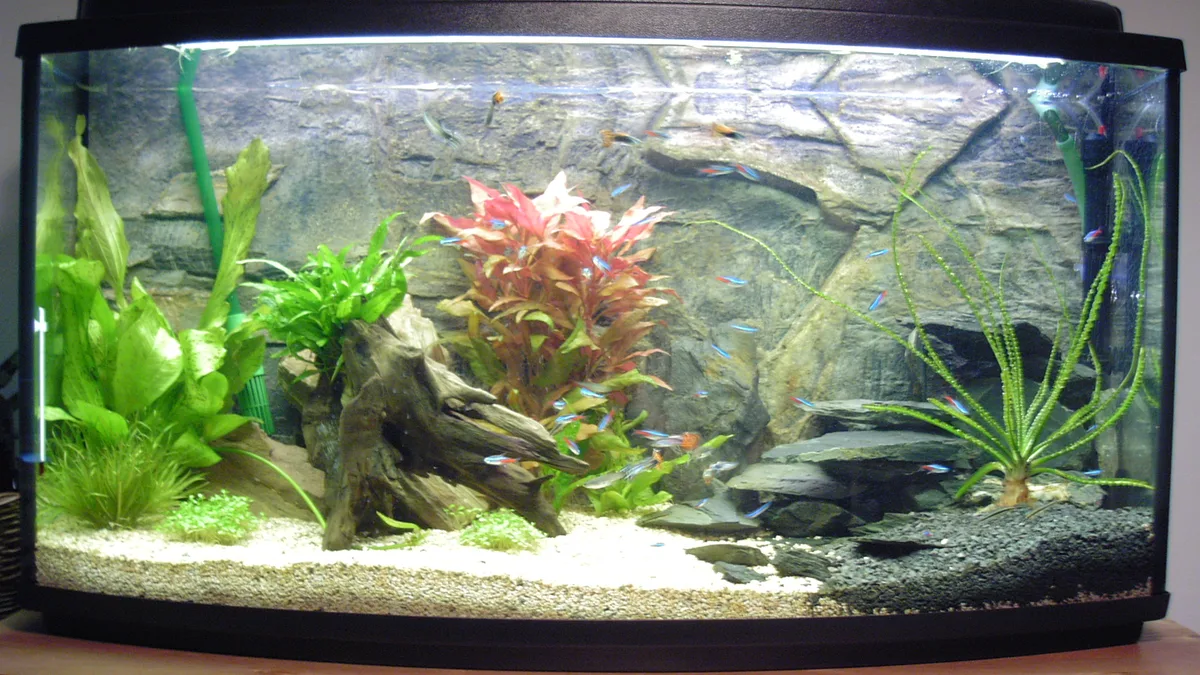
Add rocks and driftwood first, pressing them firmly into the substrate so they cannot topple. Leave open swimming space at the front and hiding spots at the back. Live plants go in next. Easy beginner plants such as java fern, anubias and Amazon swords also help absorb waste.
Steps 6 to 8: Fit the Equipment and Fill the Tank
With the layout done, install the equipment and add water. Keep everything unplugged until the tank is full.
Step 6: Install the filter and heater
Fit the filter so its outflow moves water across the whole tank. Hang-on-back, canister and sponge filters all work, and our guide to the best fish tank filters compares them. Place the heater near the filter flow so warm water spreads evenly, and put a thermometer at the opposite end. See our fish tank heater guide for wattage and placement tips.
Step 7: Fill with treated water
Set a clean plate or bowl on the substrate and pour water onto it, so the stream does not dig holes in the gravel. Treat all tap water with a water conditioner. According to the US Environmental Protection Agency, more than one in five Americans uses drinking water treated with chloramines, and both chlorine and chloramine are harmful to fish. Our guide on which water is safe for a fish tank explains the options.
Step 8: Switch everything on
Start the filter and light first. Wait the time your heater manual asks for, often 15 to 30 minutes, so the glass can adjust to the water before you plug it in. Use a drip loop on every cord. Give the tank a day to reach a stable temperature and check that the filter runs quietly.
Step 9: Cycle the Tank Before Adding Fish
Cycling is the most important part of freshwater aquarium setup. It grows the beneficial bacteria that turn toxic fish waste into safer compounds.
How the nitrogen cycle works
Fish waste and leftover food break down into ammonia, which is toxic. One group of bacteria turns ammonia into nitrite, which is also toxic. A second group turns nitrite into nitrate, which is far less harmful and is removed with regular water changes. A new tank has almost none of these bacteria, so they must be grown first. Our guide to the aquarium nitrogen cycle explains each stage in more detail.
How long cycling takes
A natural cycle usually takes four to six weeks, according to veterinary guidance on PetMD. Bottled bacteria products can shorten that, and filter media from an established, healthy tank can speed it up even more.
Fishless cycling in brief
- Add a small, steady ammonia source, such as pure liquid ammonia or a pinch of fish food.
- Test the water every few days with a liquid test kit.
- Watch ammonia fall, then nitrite rise and fall.
- The tank is cycled when ammonia and nitrite both read 0 ppm and nitrate is present.
- Do a large water change before adding fish to lower the nitrate.
Milky water during the first weeks is common and usually comes from a bacterial bloom. Our guide to a cloudy fish tank explains when it clears on its own.
Step 10: Add Your First Fish Slowly
Even a cycled tank holds only enough bacteria for the waste it already has. Add fish in small groups so the bacteria can keep up.
Choose hardy starter fish
Start with a few hardy, peaceful fish that suit your tank size. Our list of the best freshwater fish for fish tanks sorts species by tank size and temperament. For stocking numbers, see how many fish in a 20 gallon tank.
Acclimate new fish
Float the closed bag in the tank for about 15 minutes so the temperatures match. Then add small amounts of tank water to the bag over the next 20 to 30 minutes before netting the fish into the tank. Do not pour store water into your aquarium.
Wait between additions
Test the water for a week or two after each new group. If ammonia and nitrite stay at zero, add the next small group. Feed lightly at first, since uneaten food quickly turns into ammonia.
Your First Month: A Simple Care Routine
A steady routine keeps a new tank healthy long after setup day.
Daily and weekly tasks
| How often | Task |
|---|---|
| Daily | Feed lightly, check the thermometer, look for sick fish |
| Weekly | Change 10 to 25 percent of the water, vacuum the gravel, test the water |
| Monthly | Rinse filter media in old tank water, trim plants, clean the glass |
Common beginner mistakes
- Adding fish on the first day, before the tank has cycled.
- Adding too many fish at once.
- Rinsing filter media under tap water, which kills the bacteria.
- Overfeeding, which pollutes the water.
- Skipping the water conditioner during water changes.
Fish Tank Setup FAQs
How long after setting up a fish tank can I add fish?
Wait until the tank has cycled, which usually takes four to six weeks without help. The tank is ready when ammonia and nitrite both test at 0 ppm and some nitrate shows. Bottled bacteria or media from an established tank can shorten the wait.
Can I use tap water to set up a fish tank?
Yes, tap water is fine once you treat it with a water conditioner. Most US tap water contains chlorine or chloramine, which harms fish and the beneficial bacteria in your filter. Treat every bucket of new water, including during water changes.
What is the best tank size for a beginner aquarium setup?
A 20 to 40 gallon tank suits most beginners. The larger water volume keeps temperature and water quality more stable than a small tank, which gives you more room for small mistakes while you learn.
Do I need to rinse gravel before putting it in a fish tank?
Yes, rinse gravel and sand in a bucket until the water runs mostly clear. This removes dust that would otherwise cloud the tank. Special planted tank soils are an exception, so follow the instructions on the bag.
How many fish should I add to a new tank at first?
Start with only a few small, hardy fish. Wait a week or two and test the water before adding more. Adding fish slowly lets the beneficial bacteria grow to match the extra waste, which prevents ammonia spikes.
Final Thoughts
Patience is the secret
Setting up a fish tank is simple when you follow the steps in order: spot, stand, substrate, decor, equipment, treated water, cycling and then fish. The weeks of cycling feel slow, but they are what keep your first fish alive. For more setup and water care guides, visit our aquarium care section.