Corydoras Catfish Care: Tank Setup, Diet and Best Tank Mates
Corydoras spp.Corydoras care is simple if you keep these peaceful catfish in a group of at least six of the same species, in a cycled tank of 20 gallons or more (10 gallons for pygmy species), over soft sand or smooth gravel. Keep most species at 72 to 78°F with a pH of about 6.5 to 7.8, feed sinking pellets and frozen foods, and change 20 to 25% of the water every week.
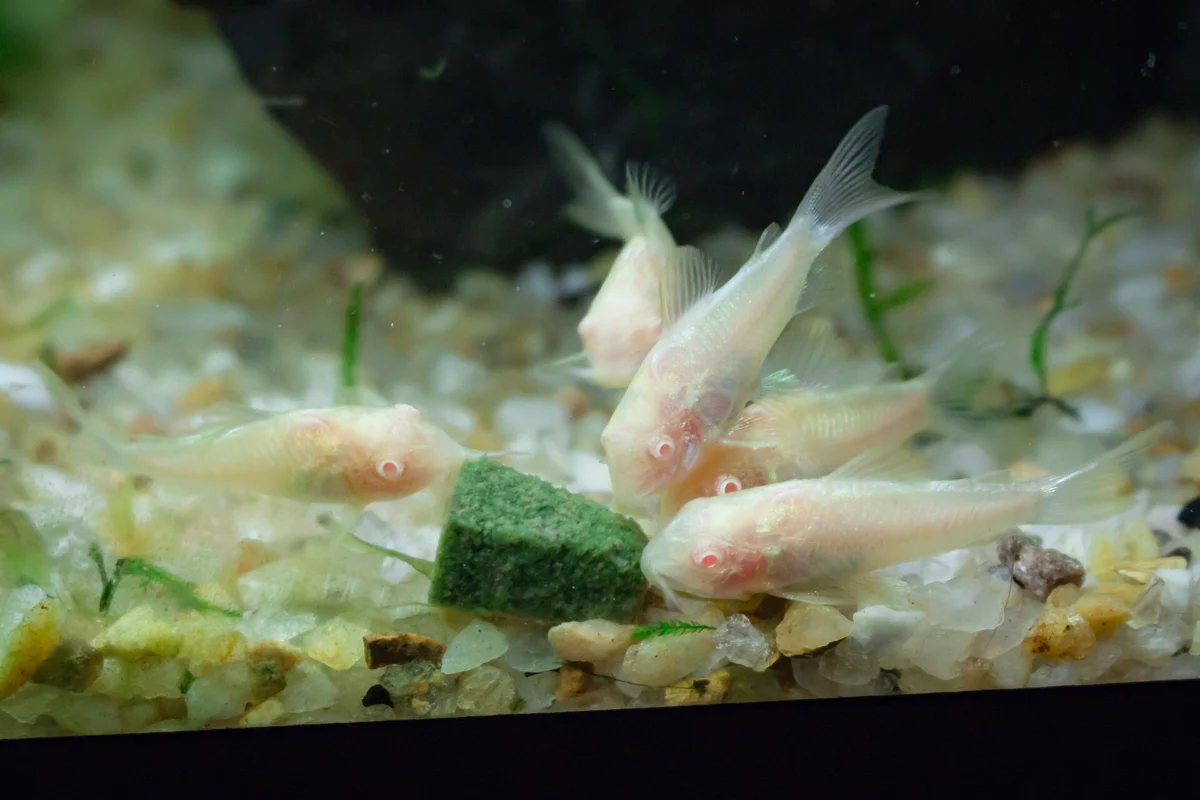
Corydoras care is one of the easiest ways to bring life to the bottom of a community aquarium. Cory catfish are small, peaceful and busy fish that spend their day sifting through the substrate with their whiskers, often in tight little groups that move together across the tank.
They are hardy once settled, but they do have a few needs that beginners often miss: a soft bottom, clean water near the substrate, and enough company of their own kind. This guide covers tank setup, water parameters, diet, tank mates, breeding and common health problems.
Corydoras Catfish at a Glance
Corydoras are armored catfish from the family Callichthyidae, native to streams, rivers and flooded forests across South America. Instead of scales, their bodies are covered in overlapping bony plates. The genus is large, with well over 100 described species and many more undescribed forms traded under code numbers.
| Trait | Details |
|---|---|
| Family | Callichthyidae (armored catfish) |
| Origin | South America |
| Adult size | About 1 to 3 inches, depending on species |
| Temperature | 72 to 78°F for most species |
| pH | About 6.5 to 7.8 |
| Temperament | Peaceful, social shoaling fish |
| Group size | 6 or more of the same species |
| Lifespan | Often 5 years or more, and longer with good care |
Why Corydoras Swim to the Surface
You will often see a cory dart up to the surface, gulp air and dive back down. This is normal. Corydoras can absorb oxygen from air through their gut, which helps them survive in warm, low oxygen water in the wild. An occasional trip to the surface is healthy, but constant surface gasping by the whole group points to poor water quality or low oxygen.
Popular Corydoras Species
Most corys sold in US stores are captive bred and share the same basic care. A few species differ in size and temperature.
| Species | Common Name | Adult Size | Notes |
|---|---|---|---|
| Corydoras aeneus | Bronze cory (also sold as albino) | About 2.5 inches | Very hardy, great for beginners |
| Corydoras paleatus | Peppered cory | About 2.5 to 3 inches | Tolerates slightly cooler water |
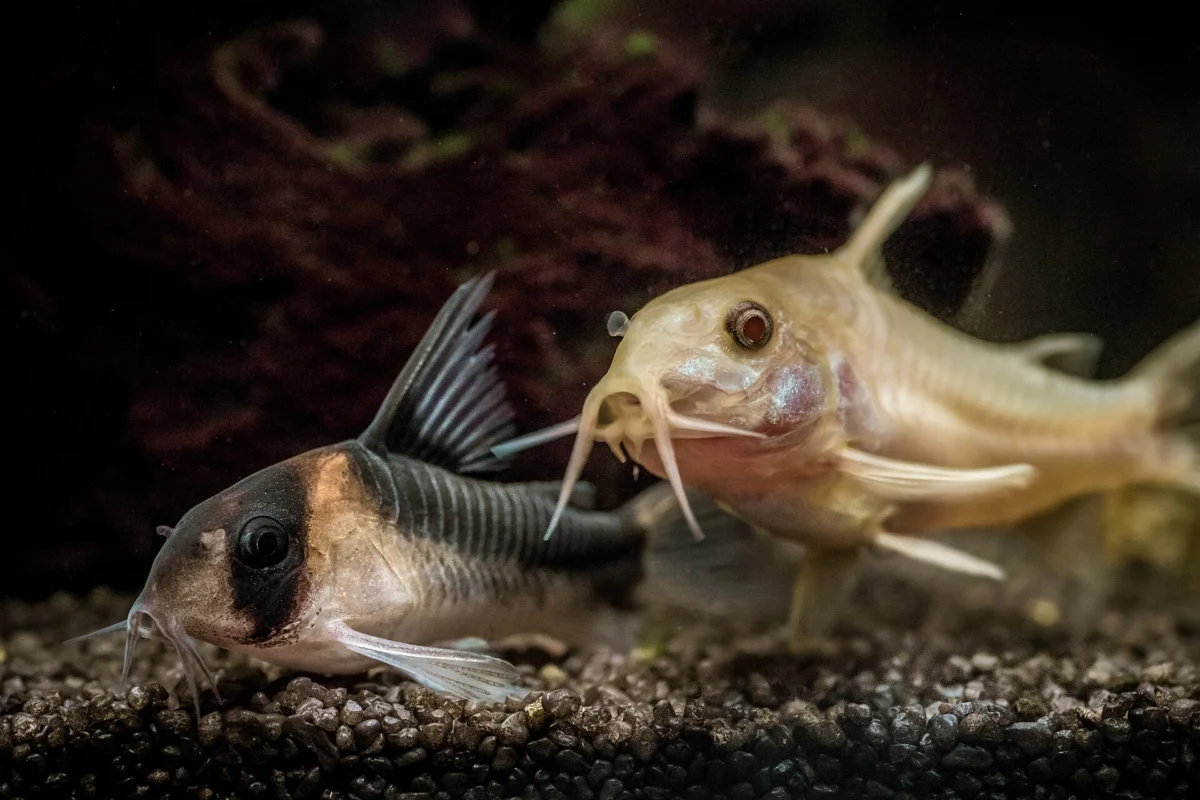
| Corydoras panda | Panda cory | About 2 inches | Black eye patches, likes cleaner water |
| Corydoras sterbai | Sterbai cory | About 2.5 inches | Handles warmer tanks well |
| Corydoras trilineatus | Three stripe or false julii cory | About 2.5 inches | Often sold as julii cory |
| Corydoras pygmaeus | Pygmy cory | About 1 inch | Swims in midwater, ideal for nano tanks |
How Many Corydoras Should You Keep Together?
Keep at least six corydoras of the same species. They are shoaling fish, and a single cory or a mixed pair often hides, loses color and stays inactive. In a group, they explore the tank, feed with more confidence and show natural behavior such as resting side by side.
Mixing Species
Different corydoras species will often shoal together, but each fish feels safest with its own kind. If you want variety, build groups of six or more of each species rather than buying one of each. Larger groups of 8 to 12 look even better in tanks with enough floor space.
Corydoras vs Other Bottom Feeders
Corys are only one option for the bottom of a tank. Our guide to the best bottom feeder fish compares them with plecos, loaches and other bottom dwellers, so you can pick the right fit for your tank size.
Corydoras Tank Size and Setup
Because corys live on the bottom, floor space matters more than height. A long, standard tank gives a group room to forage, while a tall, narrow tank wastes space they will never use.
| Corydoras Type | Group Size | Minimum Tank |
|---|---|---|
| Pygmy, habrosus and other dwarf species | 6 to 10 | 10 gallons |
| Bronze, peppered, panda and similar | 6 | 20 gallons long |
| Larger groups or mixed species | 10 or more | 29 gallons or more |
Substrate: Sand Is Best
Substrate is the most important part of corydoras care. Corys use sensitive barbels around their mouths to search for food, and they push their faces into the substrate all day. Fine sand lets them sift naturally and is gentle on their barbels. Smooth, rounded gravel also works if you keep it clean. Sharp or rough gravel can wear down and infect the barbels over time. See our guide to the best aquarium substrate for a full comparison of sand, gravel and planted tank soil.
Filter, Heater and Flow
Use a filter rated for your tank, but keep the flow moderate so corys are not pushed around the bottom. A sponge filter or an adjustable hang on back filter works well. Most homes need a heater to keep the water stable at 72 to 78°F, and our fish tank heater guide explains how to choose one. A tight lid helps, because a startled cory can jump when it dashes to the surface.
Plants, Cover and Lighting
Corys feel safest with shaded areas to rest in. Driftwood, leaf litter, rocks and plants such as java fern, anubias and cryptocoryne all give cover. Leave an open stretch of sand at the front of the tank for feeding. Moderate lighting is fine, and floating plants help dim it.
Cycle the Tank First
Corydoras live right where waste settles, so they are often the first fish to suffer when water quality drops. Always finish the steps in how to cycle a fish tank before you add them, and acclimate new fish slowly using our guide on how to acclimate fish.
Water Parameters for Corydoras
Captive bred corys adapt to a wide range of water, but they do not like sudden changes. Aim for stability first.
| Parameter | Ideal Range | Notes |
|---|---|---|
| Temperature | 72 to 78°F | Sterbai prefer the warm end, peppered corys the cool end |
| pH | 6.5 to 7.8 | Wild caught fish prefer softer, more acidic water |
| General hardness (GH) | 2 to 12 dGH | Soft to moderately hard water |
| Ammonia | 0 ppm | Any reading is a problem |
| Nitrite | 0 ppm | A reading means the tank is not fully cycled |
| Nitrate | Under 20 ppm | High nitrate is linked to barbel damage |
Aqueon’s corydoras care guide gives similar ranges for captive bred fish. For a full explanation of each test, read our guide to aquarium water parameters.
Weekly Maintenance
Change 20 to 25% of the water every week and gently vacuum the top layer of sand or gravel, where uneaten food and waste collect. Do not dig deep into sand beds or move all the decor at once. Match the new water temperature to the tank and treat it with a dechlorinator.
What Do Corydoras Eat?
Corydoras are omnivores. In the wild they eat worms, insect larvae, small crustaceans and plant matter they find in the substrate. In the aquarium they need their own food, not just leftovers from other fish.
Best Foods for Cory Catfish
- Sinking pellets or wafers as the main daily food
- Frozen or live bloodworms, brine shrimp and daphnia two or three times a week
- Small amounts of blanched zucchini or algae wafers for variety
How to Feed Corydoras
Feed once or twice a day and give only what the group can finish in a few minutes. In busy community tanks, faster fish often grab food before it sinks, so drop pellets in after the other fish have eaten or feed shortly after the lights go off. Remove leftovers so they do not rot in the substrate. Corys are not algae eaters, so do not rely on them to clean the glass.
Best Corydoras Tank Mates
Corydoras get along with almost any peaceful fish that is too small to eat them and calm enough not to harass them. Good corydoras tank mates include:
- Small tetras, such as neon, ember and rummy nose tetras
- Livebearers, such as guppies, platies and mollies
- Rasboras and small danios
- Honey, pearl and dwarf gouramis
- Bettas, in tanks that are large enough for both
- Angelfish, as long as the corys are fully grown
- Cherry shrimp, nerite snails and mystery snails
Our neon tetra care and guppy care guides cover two of the most popular companions, and the angelfish care guide explains how to keep corys with larger cichlids.
Fish to Avoid
Avoid large or aggressive fish that can swallow or bully corys, such as oscars, large cichlids and big catfish. Territorial bottom dwellers like red tail and rainbow sharks can chase them away from food. Goldfish are a poor match too, because they prefer cooler water and grow large enough to compete for the same floor space.
Breeding Corydoras
Bronze, peppered and panda corys breed readily in home tanks. Many keepers trigger spawning by doing a large water change with slightly cooler water, which mimics the rainy season in the wild.
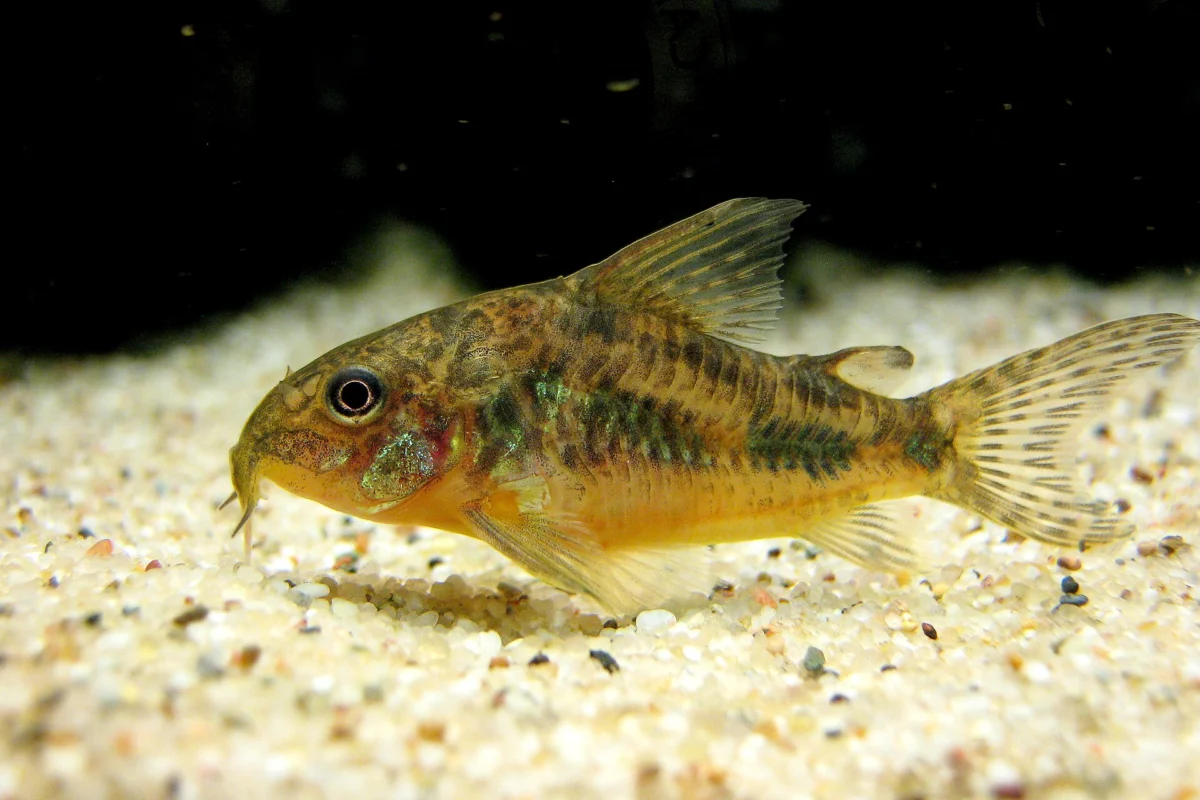
How Corydoras Spawn
- Condition the group with frozen bloodworms and brine shrimp for one to two weeks.
- Do a 30 to 50% water change with water a few degrees cooler than the tank.
- Males chase the female, and a pair forms the classic T position.
- The female holds a few eggs between her pelvic fins and sticks them to the glass, plants or decor.
- The pair repeats this until dozens of eggs are laid.
- Move the eggs or the adults, because adults may eat the eggs.
Raising the Fry
The eggs usually hatch within 3 to 5 days, depending on temperature. Once the fry use up their yolk sacs, feed infusoria or powdered fry food, then newly hatched baby brine shrimp. Keep the fry tank bare or lined with a thin layer of sand, and do small, frequent water changes.
Common Corydoras Health Problems
Most cory health problems come from the substrate and the water directly around it.
Barbel Erosion
Short, red or missing barbels are usually caused by sharp gravel, dirty substrate or high nitrate. Switch to sand or smooth gravel, vacuum more often and keep nitrate under 20 ppm. Barbels can regrow once conditions improve.
Ich and Other Diseases
Ich shows up as small white spots, often after a temperature drop or the arrival of new fish. Follow the steps in our guide to ich on fish, and check the common fish diseases guide for other symptoms. Corys can be sensitive to some medications, including copper and strong salt doses, so read the label for warnings about catfish and sensitive species before you treat.
Handling Tips
Corys have sharp spines on their dorsal and pectoral fins that easily tangle in nets. Scoop them with a cup or a fine net used gently, and avoid squeezing them.
Corydoras Care Checklist
- A group of 6 or more of the same species
- A cycled tank of 20 gallons or more, or 10 gallons for pygmy species
- Fine sand or smooth gravel, kept clean
- Water at 72 to 78°F with a pH of 6.5 to 7.8
- Sinking pellets plus frozen foods, fed where corys can reach them
- A 20 to 25% water change every week
With a soft bottom and a good sized group, corydoras are some of the most charming fish you can keep. For more species, browse all our aquarium fish care guides or see the best freshwater fish for fish tanks.
Frequently Asked Questions
How many corydoras should be kept together?
Keep at least six corydoras of the same species. Larger groups of 8 to 12 are even better if the tank has enough floor space.
Do corydoras need sand?
Sand is the best choice because it lets corys sift naturally and protects their barbels. Smooth, rounded gravel also works if it is kept clean, but sharp gravel should be avoided.
What size tank do cory catfish need?
A group of six bronze, peppered or panda corys needs a 20 gallon long tank or larger. Pygmy and other dwarf species can live in a 10 gallon tank.
Do corydoras need a heater?
Most homes need one. Corydoras are tropical fish that do best at 72 to 78°F, and a heater keeps the water stable when the room temperature drops.
Why do my corydoras swim to the surface?
Corys gulp air at the surface now and then, which is normal. If the whole group keeps rushing to the surface, test the water for ammonia and nitrite and check that the tank has good oxygen.
Keep exploring
 Aquarium Fish
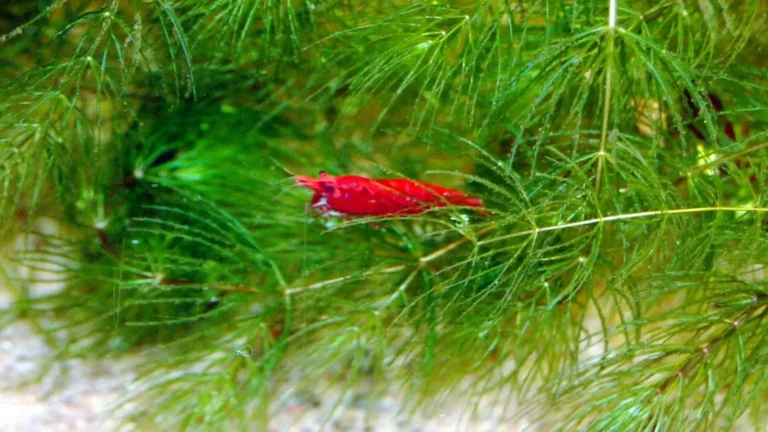
Cherry Shrimp Care: Tank Setup, Water Parameters and Breeding
Cherry shrimp care made easy: tank setup, ideal water parameters, feeding, molting, breeding and safe tank mates for a thriving colony.
 Aquarium Fish
Cheap Freshwater Fish: 15 Hardy Species That Cost Under $5
Cheap freshwater fish that stay hardy: 15 species under $5, with sizes, tank needs and a sample budget stocking plan for a…
 Aquarium Fish
Types of Freshwater Fish: 40 Species by Family, With Facts
Types of freshwater fish explained: 40 species across trout, bass, catfish, carp, cichlid, perch and more, with quick facts and where each…