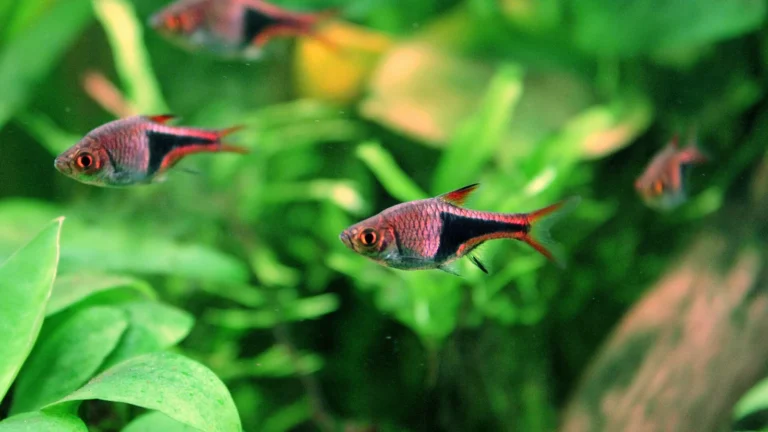
Freshwater Puffer Fish: The Short Answer
Freshwater puffer fish are some of the most charming fish in the hobby. They watch you, beg at the glass and hunt snails with real skill. They are also fin nippers with teeth that never stop growing. This guide sorts true freshwater puffers from brackish ones, compares nine species, and covers setup, diet, beak care, tank mates, toxicity and health.
What Is a Freshwater Puffer Fish?
Puffers belong to the family Tetraodontidae. Most of its species live in the sea, but some live in rivers, lakes and swamps in Africa, Asia and South America. Freshwater puffers share a few traits:
- A beak instead of normal teeth. Their jaws carry four fused, toothlike plates, two above and two below. These plates grow throughout life.
- The ability to inflate. A frightened puffer gulps water into an expandable part of its gut and swells into a ball. It is a defense, and a sign of stress in the tank.
- Tough, scaleless skin. Instead of normal scales, many species have small prickles or smooth skin.
- A hunter’s diet. Most freshwater puffers eat snails, crustaceans, worms and other invertebrates.
They are not beginner community fish. They are better seen as pets with big personalities and specific needs.
Truly Freshwater vs Brackish Puffers
Stores often sell every small puffer as a “freshwater puffer.” That label hides an important difference. Some species are true freshwater fish. Others come from estuaries and mangroves, where fresh and salt water mix, and they decline without salt.
- True freshwater: pea, red-eye, Amazon, Congo, fahaka and mbu puffers. Seriously Fish says the fahaka, mbu and Congo puffers need no added salt.
- Freshwater with an option: the figure 8 puffer. The FishBase profile of the figure 8 puffer describes it as a freshwater fish, not a brackish species. Seriously Fish adds that it is also found in brackish water and may live longer with salt at a specific gravity (SG) around 1.005.
- Brackish: the green spotted puffer. Juveniles are often sold in fresh water, but FishBase notes that it needs salt. Care guides place adults in brackish water from about 1.010 SG up to full marine conditions.
The lesson is simple. Check the scientific name before you buy, because the tank you need depends on it.

Freshwater Puffer Fish Species Compared
The table compares nine puffers often sold as freshwater puffer fish. Sizes are typical maximum lengths from Seriously Fish and FishBase, so many aquarium fish stay a little smaller. Minimum tanks are based on the base dimensions Seriously Fish recommends, converted to gallons.
| Species | Water type | Adult size (in) | Min. tank (gal) | Temp (°F) | pH | Temperament |
|---|---|---|---|---|---|---|
| Pea puffer Carinotetraodon travancoricus | Freshwater | About 1 | 5 for one; 2 to 3 per fish | 72 to 82 | 6.8 to 8.0 | Nippy; best in a species tank |
| Red-eye puffer Carinotetraodon lorteti | Freshwater | 2.4 | 15 | 68 to 82 | 5.0 to 7.5 | Territorial fin biter; keep alone |
| Red-tail red-eye puffer Carinotetraodon irrubesco | Freshwater | 1.8 | 15 | 68 to 82 | 6.0 to 7.5 | Milder; males territorial |
| Amazon (South American) puffer Colomesus asellus | Freshwater; tolerates some brackish | 5 | 30 (more for a group) | 68 to 79 | 5.5 to 8.0 | Social in groups; nips fins |
| Congo puffer Tetraodon miurus | Freshwater | 6 | 20 | 75 to 82 | 6.8 to 7.5 | Ambush predator; keep alone |
| Fahaka puffer Tetraodon lineatus | Freshwater | 17 | 120 | 75 to 79 | 6.5 to 7.5 | Very aggressive; keep alone |
| Mbu puffer Tetraodon mbu | Freshwater | 24 to 30 | About 500 | 75 to 79 | 7.0 to 8.0 | Aggressive; keep alone |
| Figure 8 puffer Tetraodon biocellatus | Freshwater or low brackish (SG up to 1.005) | 3 | 20 | 72 to 79 | 6.5 to 7.5 | Semi-aggressive; nips fins |
| Green spotted puffer Tetraodon nigroviridis | Brackish; adults SG 1.010 up to marine | 6.7 | 30 or more | 75 to 82 | About 8 | Aggressive with age |
Temperature and pH values are tolerance ranges, not targets. Aim for the middle of each range and keep it steady.
Popular Freshwater Puffer Species
Here is what sets each species apart, from the tiny pea puffer to the giant mbu.
Pea puffer (Carinotetraodon travancoricus)
The pea puffer, or dwarf puffer, is the smallest puffer in the trade at about an inch long. It comes from southwestern India, mainly Kerala. The Seriously Fish profile of the pea puffer calls it an exclusively freshwater species. One fish can live in about 5 gallons, and a group needs 2 to 3 gallons per fish. Rival males can fight hard, so keep a pair or one male with several females in a heavily planted tank. It also features in our guide to the best nano fish for small tanks.
Quick facts: about 1 in · 5 gal for one, 2 to 3 gal per fish in a group · 72 to 82°F · pH 6.8 to 8.0 · freshwater
Red-eye puffer (Carinotetraodon lorteti)
Red-eye puffers are small Asian puffers with bright red eyes. Males raise keels on the back and belly when they display. Seriously Fish describes C. lorteti as territorial and prone to biting fins, so it is best kept alone. Give it plants, wood and soft water.
Quick facts: 2.4 in · 15 gal minimum · 68 to 82°F · pH 5.0 to 7.5 · freshwater
Red-tail red-eye puffer (Carinotetraodon irrubesco)
This red-eye relative is less aggressive than C. lorteti. Males have red dorsal and tail fins, while females are paler with a mottled pattern. It can live alone or with peaceful schooling fish that are too big to eat. Males are still territorial, so a group needs space and lots of cover.
Quick facts: 1.8 in · 15 gal minimum · 68 to 82°F · pH 6.0 to 7.5 · freshwater
Amazon (South American) puffer (Colomesus asellus)
The Amazon puffer is one of the few social puffers. It lives in loose groups in the wild and can act nervous without its own kind, so Seriously Fish suggests a group of six or more. It is a busy, active swimmer. It is not aggressive in the way fahakas are, but it still nips fins and does not suit a general community tank. FishBase notes that it lives mostly in fresh water but can tolerate brackish water.
Quick facts: 5 in · 30 gal minimum (more for a group) · 68 to 79°F · pH 5.5 to 8.0 · freshwater; tolerates some brackish

Congo puffer (Tetraodon miurus)
The Congo puffer is an ambush hunter. It buries itself in sand with only its eyes showing, then strikes at prey. A soft sand bed of 2 to 3 inches is essential. It eats any fish small enough to swallow and bites larger ones, so keep it alone.
Quick facts: 6 in · 20 gal minimum · 75 to 82°F · pH 6.8 to 7.5 · freshwater
Fahaka puffer (Tetraodon lineatus)
The fahaka, or Nile puffer, is a striking striped fish from the Nile and West African rivers. It reaches about 17 inches. Seriously Fish calls it generally aggressive and intolerant and recommends keeping it alone, in a tank of about 120 gallons. It will bite chunks out of other fish and is very hostile to its own kind.
Quick facts: 17 in · 120 gal minimum · 75 to 79°F · pH 6.5 to 7.5 · freshwater
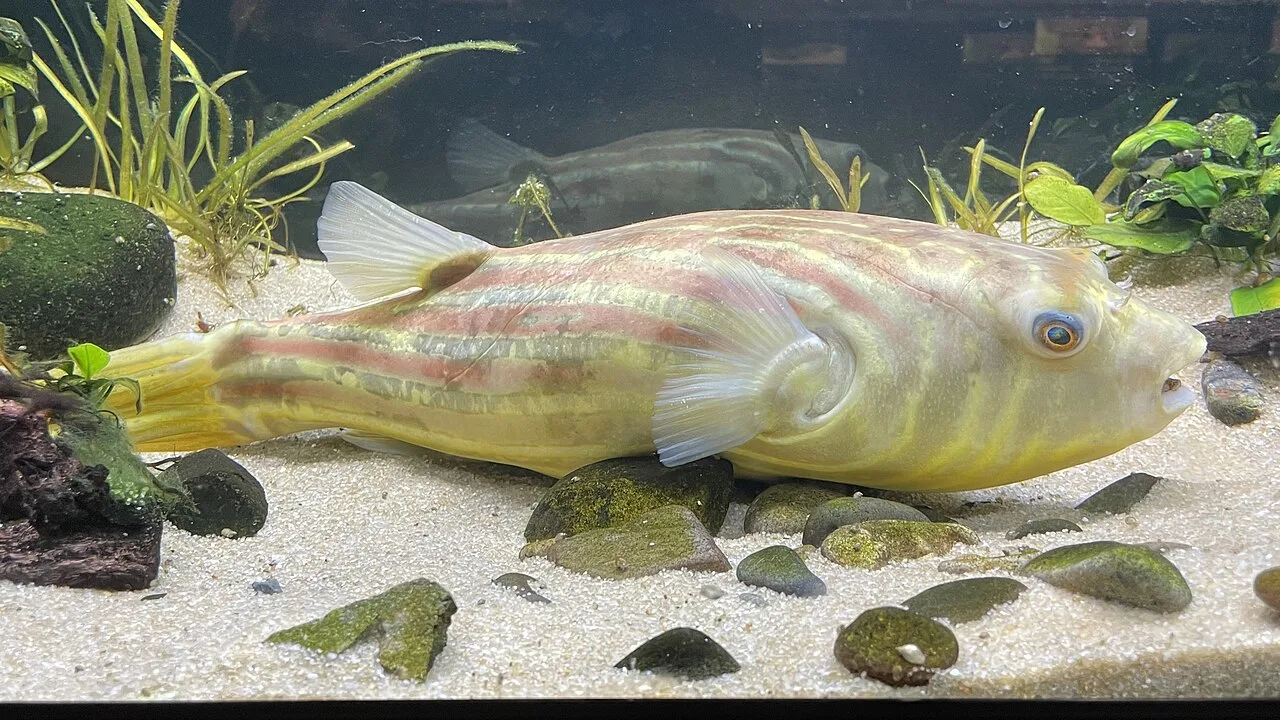
Mbu puffer (Tetraodon mbu)
The mbu is the giant of the group. It lives in the Congo basin and Lake Tanganyika and can exceed 2 feet in aquariums. An adult needs a tank of about 96 by 36 by 36 inches, which is around 500 gallons. Few home keepers can house one for life. Keep it alone and plan for a custom setup before you buy a juvenile.
Quick facts: 24 to 30 in · about 500 gal · 75 to 79°F · pH 7.0 to 8.0 · freshwater

Brackish-Leaning Puffers Sold as Freshwater
These two species are sold alongside freshwater puffers, but their salinity needs differ.
Figure 8 puffer (Tetraodon biocellatus)
The figure 8 puffer is named for the looping lines on its back. FishBase lists it as a freshwater fish, while Seriously Fish says it may live longer with low salt levels. It is fairly active and can live with fast-moving tetras, rasboras and barbs, but it will nip slow or long-finned fish. It is very sensitive to falling water quality, so change water often.
Quick facts: 3 in · 20 gal minimum · 72 to 79°F · pH 6.5 to 7.5 · freshwater or low brackish (SG up to 1.005)
Green spotted puffer (Tetraodon nigroviridis)
The green spotted puffer is bright green with black spots and a white belly. It grows to nearly 7 inches and often becomes more aggressive with age. It does not belong in a freshwater tank for life. Raise the salinity as it grows, with adults kept in brackish water from about 1.010 SG upward. In a large brackish tank, it can live with robust fish such as monos, scats and archerfish.
Quick facts: 6.7 in · 30 gal or more · 75 to 82°F · pH about 8 · brackish; adults SG 1.010 up to marine

Tank Setup for Freshwater Puffers
Puffers are messy eaters and sensitive to poor water. A good setup is built around stable, clean water and enough space for the adult fish.
Tank Size
Buy for the adult size, not the juvenile in the store. Small species need a long, low tank more than a tall one. The fahaka and mbu grow large, and Seriously Fish warns that young mbu grow quickly.
Cycling and Water Quality
Never add a puffer to a new, uncycled tank. Ammonia and nitrite should read zero. The Ornamental Aquatic Trade Association advises keeping nitrate no more than 20 mg/L above your tap water level. Change about 25% of the water every week, and test ammonia, nitrite, nitrate and pH regularly. If you use RO water, remineralize it first. Our guide to spring, distilled and tap water for fish tanks explains why.
Filtration and Flow
Choose a filter rated for more than your tank volume, because shell fragments and leftovers add a heavy load. Many small puffers are weak swimmers and dislike strong current, so spread the outflow or use a sponge filter in small tanks. Our comparison of the best fish tank filters covers sponge, hang-on-back and canister options.
Substrate, Plants and Decor
- Pea and red-eye puffers: dense plants, wood and leaf litter that break up sightlines and reduce fighting.
- Congo puffers: a deep bed of fine sand to bury in, with a few rocks.
- Fahaka and mbu puffers: open swimming space and sturdy decor. Larger species prefer a less cluttered tank.
Heater, Lid and Salt
Use an adjustable heater to hold a steady tropical temperature, and fit a lid. Do not add aquarium salt to true freshwater species. Only the figure 8 and green spotted puffers benefit from salt, and that requires marine salt and a hydrometer or refractometer.
Diet: Snails, Frozen Foods and Feeding
Diet is where most new puffer keepers struggle. Puffers are carnivores, and most ignore flakes and pellets. Plan to feed frozen and live foods from day one.
Snails
Snails are the most important food for small puffers. Hunting and crushing them wears down the beak and keeps the fish busy. Small ramshorn and bladder snails suit pea and red-eye puffers. Many keepers breed snails in a spare tank or jar to keep a steady supply. Quarantine snails from unknown sources, since they can carry pests into the tank.
Frozen and Live Foods
- Small species: frozen bloodworms, brine shrimp, daphnia and other small frozen foods.
- Medium species: earthworms, chopped shellfish, krill and shrimp.
- Large species: mussels, cockles, clams, crab legs and prawns, ideally in the shell.
Hard pellets can add variety for some species, but they should not be the main diet.
How Much and How Often
Feed most puffers once a day, giving only what they eat in a few minutes. Remove leftovers promptly, because uneaten meaty food rots fast. If the water turns hazy, our guide to a cloudy fish tank explains the fixes. A healthy puffer has a gently rounded belly, not a swollen one.
Beak and Teeth Overgrowth: Prevention and Trimming
Puffer teeth never stop growing. In the wild, crushing shells keeps them short. In aquariums fed only soft food, the beak can grow until the fish cannot eat.

Signs of an Overgrown Beak
- Teeth stick out past the lips and look bucktoothed.
- The puffer chases food but cannot bite or swallow it.
- The fish loses weight even though it seems hungry.
Prevention
Feed hard, shelled foods several times a week. Snails work for small species. Mussels, clams, cockles and crab legs in the shell suit larger ones. This is far easier and safer than trimming.
Trimming
If the beak already blocks feeding, it needs trimming. The fish is sedated, the beak tips are carefully clipped, and the puffer then recovers in clean tank water. Small species need fine clippers, and large ones may need a rotary tool. The risks are real: an anesthetic overdose can kill the fish, and a slip can cut the lips. Ask an aquatic vet, or an experienced keeper who has done it before, rather than trying it alone for the first time.
Aggression and Tank Mates
Puffers are curious, smart and often aggressive. Most do best in a species tank. Here is how the main species behave:
- Pea puffers: nip fins and eat shrimp. Rival males can fight hard. Small Otocinclus catfish are among the few suggested companions.
- Red-eye puffers: territorial biters. Keep C. lorteti alone. C. irrubesco may live with peaceful schooling fish too big to eat.
- Amazon puffers: keep a group of six or more. They suit a large tank with other active river fish, not a general community.
- Figure 8 puffers: can live with fast characins, rasboras and barbs. If you keep several, buy at least four to spread out aggression.
- Congo, fahaka and mbu puffers: keep alone. They bite pieces out of tank mates and fight their own kind.
Never house puffers with slow, long-finned fish such as bettas, fancy guppies or angelfish. Treat shrimp and snails as food, not tank mates. For general stocking rules, see our guide to how many fish fit in a 20 gallon tank.
Are Freshwater Puffers Poisonous?
Yes, many puffers carry toxins, but the danger comes from eating them. Marine puffers are known for tetrodotoxin, a nerve toxin. Hong Kong’s Centre for Food Safety notes that it collects mainly in the ovaries, liver, intestines and skin. Cooking does not destroy it, and there is no antidote. Puffers are believed to gain the toxin through their diet, with toxin-making bacteria involved, so levels vary.
Freshwater puffers can carry a different toxin. A 2020 study of wild Pao puffers from Cambodia found saxitoxins and no tetrodotoxin at all. Cambodia’s Ministry of Health linked at least seven poisoning incidents and five deaths from 2017 to 2019 to eating freshwater puffers.
For aquarium keepers, the practical rules are simple:
- Never eat an aquarium puffer, and keep dead fish away from pets and children.
- Normal care, such as feeding and water changes, is not how puffer poisoning happens. Still, wash your hands after tank work.
- Large puffers bite hard, so keep fingers away from fahakas and mbus.
- Do not chase a puffer until it inflates. Puffing up is a stress response. Move puffers in a container of water, and double bag them for transport, since spines and beaks can pierce a single bag.
Common Freshwater Puffer Diseases
Most puffer health problems trace back to water quality, diet or parasites brought in with new fish.
Internal Parasites
Many puffers sold are wild caught, and puffers are prone to internal parasites such as tapeworms. A puffer that eats well but stays thin or develops a pinched belly may have them. Quarantine new puffers for several weeks, and ask a fish vet or a specialist store about a suitable dewormer.
Ich (White Spot)
Ich appears as small white spots on the body and fins, often after stress or a temperature drop. Our guide to ich on fish covers treatment. Puffers have scaleless skin, so read medication labels carefully, since some products advise caution or lower doses for scaleless fish.
Ammonia and Nitrite Stress
Puffers produce a lot of waste. Rising ammonia or nitrite causes lethargy, darkened color, rapid breathing and loss of appetite. Test the water first whenever a puffer stops eating.
Fin Damage and Bacterial Infections
Bites from tank mates and poor water lead to torn fins, fin rot and other infections. Fix the cause first, then treat if needed. Our chart of common fish diseases helps match symptoms to causes.
Overgrown Beak
A puffer that looks hungry but cannot eat may have an overgrown beak. Check the teeth before assuming illness.
Is a Freshwater Puffer Right for You?
A freshwater puffer suits you if you enjoy feeding live and frozen food, like a single-species tank, and keep up with weekly water changes. Start with a pea puffer if you have a small, planted tank. Consider an Amazon puffer group if you have a 55 gallon tank or larger. Choose a fahaka or mbu only if you can provide a very large tank for many years. Whatever you choose, confirm the scientific name, plan for the adult size and set up a snail supply before the fish comes home.
Freshwater Puffer FAQs
What is the easiest freshwater puffer fish to keep?
The pea puffer is the usual first choice. It stays about an inch long, needs no salt and fits a small, heavily planted tank. It still needs frozen or live food and snails, and it nips fins, so give it a species tank rather than a community setup.
Do freshwater puffer fish need salt?
True freshwater species such as pea, red-eye, Amazon, Congo, fahaka and mbu puffers do not need salt. The figure 8 puffer can live in fresh water or low brackish water. The green spotted puffer is a brackish fish, and adults need brackish to marine conditions.
Can freshwater puffers live with other fish?
Most do best alone or in a species tank. Puffers nip fins and eat shrimp and snails, and the large species bite chunks out of tank mates. A few, such as Amazon and figure 8 puffers, can live with fast, robust fish in a roomy tank.
What do freshwater puffer fish eat?
They eat meaty foods. Offer small snails, frozen bloodworms, brine shrimp and similar foods for small species. Larger puffers eat snails, mussels, cockles, crab legs, shrimp and earthworms. Most refuse flakes, so plan on frozen and live foods.
Are freshwater puffer fish poisonous to touch?
Puffer toxins are a danger when the fish is eaten, not during normal tank care. Never eat an aquarium puffer or let pets eat a dead one. Wash your hands after tank work, and take care with large puffers, which can bite hard.
How big do freshwater puffers get?
It depends on the species. Pea puffers reach about an inch and red-eye puffers stay under 3 inches. Amazon and Congo puffers reach 5 to 6 inches. Fahaka puffers grow to about 17 inches, and mbu puffers can top 2 feet.
Why are my puffer’s teeth so long?
Puffer teeth grow all the time and wear down when the fish crushes shells. A diet of soft frozen food lets them overgrow. Add snails and shelled foods. If the beak already stops the puffer from eating, an aquatic vet can trim it under sedation.
How many pea puffers can I keep together?
One pea puffer can live in about 5 gallons. For a group, allow 2 to 3 gallons per fish, add dense plants to break up sightlines, and keep more females than males. Males can fight hard, so watch closely and have a backup tank ready.