Severum Fish at a Glance
Severums are often called the gentle giants of the cichlid world. They have the size and personality of a big cichlid but are calmer than most of their cousins. Many keepers say a severum learns to recognize its owner and begs at the glass at feeding time.
This guide covers everything you need to keep a severum fish healthy. You will learn about tank size, water quality, diet, tank mates and how to breed a pair at home.
- Scientific name: Heros severus, plus close relatives sold under the same name.
- Adult size: about 6 to 8 inches, sometimes larger.
- Lifespan: 10 years or more.
- Temperament: calm for a cichlid, territorial when breeding.
- Care level: beginner to intermediate, if the tank is big enough.
Severum Species Overview
The name “severum” covers more than one fish. Knowing which one you have helps you set up the right tank.
Where severums come from
Severums live in the rivers of northern South America. The classic Heros severus comes from the upper Rio Negro and Orinoco basins. Related species, such as Heros efasciatus, live in the main Amazon basin. In the wild, they hang around slow, wooded parts of rivers, often near fallen branches and roots.
Common color forms
The wild-type green severum has a greenish-gold body with dark vertical bars that fade with age. Selective breeding has produced several popular forms:
- Gold severum: a bright yellow to orange fish with little or no barring.
- Red-spotted severum: a golden fish covered in red-brown dots.
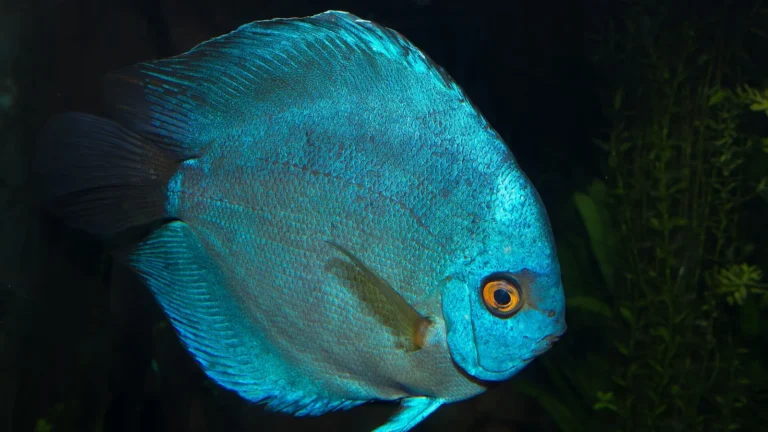
- Turquoise severum: a green fish with blue-green scales on the face and body.
- Rotkeil severum: a wild form from Peru with deep red on the throat and belly.

Size and lifespan
Most severums reach 6 to 8 inches in home tanks. Large males can grow bigger. With good care, they often live 10 years or longer, so a severum is a long-term pet.

Severum Tank Setup
A good tank setup prevents most health and behavior problems. Severums like calm, clean water and places to hide.
Tank size
Give a single adult severum at least 55 gallons. For a pair or a severum with tank mates, choose 75 gallons or more. Severums are deep-bodied fish, so they need both length and some height. A 4 foot or longer tank gives them room to turn and claim a territory.
Filtration
Severums eat heartily and produce a lot of waste. Use a canister filter or a large hang-on-back filter rated above your tank size. Gentle to moderate flow works best, since they come from slow water. Add a sponge prefilter on the intake if you keep fry.
Substrate and decor
Use fine sand or small smooth gravel. Severums sift through the bottom and sometimes dig. Add driftwood, smooth rocks and a few caves to break up sight lines. Leave open water in the middle for swimming.
Plants
Severums eat many soft plants. Choose tough species such as Java fern and Anubias, tied to wood or rock so they cannot be uprooted. Floating plants dim the light and make severums feel secure. Expect some nibbling no matter what you choose.
Lighting
Moderate lighting suits severums. Floating plants and tannins from driftwood soften bright light and bring out their colors. Keep a steady day and night schedule of about 8 to 10 hours of light.
Water Parameters
Severums are fairly hardy, but stable water keeps them at their best.
Ideal ranges
| Parameter | Ideal range |
|---|---|
| Temperature | 76 to 82°F (24 to 28°C) |
| pH | 6.0 to 7.5 |
| Hardness | Soft to moderately hard, about 4 to 12 dGH |
| Ammonia and nitrite | 0 ppm |
| Nitrate | Below 20 ppm if possible |
Water changes
Change 25 to 30 percent of the water every week. Vacuum the substrate at the same time to remove uneaten food and waste. Big, messy eaters like severums foul water quickly, and high nitrate can lead to fin rot and head pitting.
Cycling the tank
Always cycle a new tank before adding severums. A cycled tank has bacteria that turn toxic ammonia into safer nitrate. Test the water with a liquid test kit until ammonia and nitrite read zero for several days.
Severum Diet and Feeding
Severums are omnivores that lean toward plant foods. A varied diet keeps their color bright and their digestion healthy.
Staple foods
Use a high-quality cichlid pellet as the base of the diet. Choose one that includes spirulina or other plant ingredients. Sinking and slow-sinking pellets both work.
Vegetables
Offer blanched vegetables a few times a week. Good options include zucchini, cucumber, shelled peas and spinach. Remove leftovers after a few hours so they do not rot.
Protein treats
Frozen foods such as brine shrimp, mysis shrimp and bloodworms make good treats. Feed them two or three times a week. Too much rich protein can upset digestion in these plant-loving fish.
How often to feed
Feed adults once or twice a day, only as much as they eat in about two minutes. Young severums grow quickly and can eat two or three small meals a day. For more on balanced fish diets, see our article on what fish eat.
Best Severum Tank Mates
Severums are peaceful for cichlids, but size matters. Any fish that fits in a severum’s mouth may become a snack.

Good tank mates
- Angelfish: adults are large enough and share similar water needs.
- Silver dollars: fast, peaceful schooling fish that also eat plants.
- Geophagus and other eartheaters: calm South American cichlids of similar size.
- Festivum and uaru cichlids: gentle cichlids that like the same water.
- Bristlenose plecos: hardy algae eaters that stay out of the way.
- Larger tetras and barbs: such as Buenos Aires tetras or tinfoil barbs in very large tanks.
Tank mates to avoid
Skip very small fish such as neon tetras, guppies and small rasboras. Adult severums will eat them. Also avoid highly aggressive cichlids, such as large Central American species, which can bully calmer severums. Slow, long-finned fish may get nipped.
Keeping more than one severum
Two severums can live together in a large tank, but they may fight if they are not a pair. A mated pair or a group of five or more young fish raised together works best. Watch for chasing and torn fins, and have a backup tank ready.
Can severums live with African cichlids?
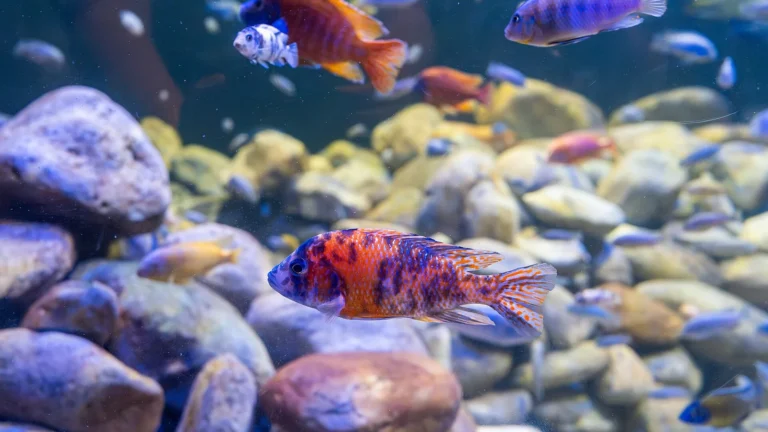
It is not a good match. Most African cichlids from Lakes Malawi and Tanganyika need hard, alkaline water and are far more aggressive. Our African cichlids guide explains their needs, and our list of cichlid fish types shows which species share water conditions with severums.
Breeding Severum Fish
Severums breed in home aquariums, though finding a compatible pair is the hardest part.
How to sex severums
Males usually have red-brown spots or wavy lines on the face and gill covers. Their dorsal and anal fins grow longer and more pointed. Females tend to have plainer faces and often show a dark spot on the dorsal fin. These signs are not perfect, so many keepers raise a group of young fish and let them pair off naturally.
Setting up for spawning
Give the pair a large tank with a flat stone or a piece of slate. Keep the water soft and slightly acidic, around pH 6.0 to 6.5, and raise the temperature to about 80 to 82°F. Feed extra frozen foods to bring the fish into condition.
Spawning behavior
A pair ready to breed will clean a flat surface together. They may dig small pits in the sand. The female then lays rows of eggs on the stone, and the male fertilizes them. A large female can lay several hundred to around a thousand eggs.
Eggs and fry
Both parents guard the eggs and fan them with their fins. At warm temperatures, the eggs usually hatch in about three to four days. The young wiggle on the bottom while they use up their yolk sacs. About a week after hatching, they swim freely.
Feeding the fry
Once the fry swim, feed newly hatched brine shrimp or finely crushed flakes several times a day. Keep the water very clean with small, frequent water changes. Parents often guard the fry for weeks. If they start eating the young, move the fry to a grow-out tank.
Common Health Problems
Most severum health problems trace back to water quality. Keep the tank clean and stable, and these issues are rare.
Hole in the head
Small pits on the head and along the lateral line can appear in cichlids kept in poor water. Causes are not fully understood, but high nitrate, poor diet and activated carbon use are often suspected. Improve water quality and diet first.
Ich and other parasites
White spots that look like grains of salt usually mean ich. Raise the temperature slowly and treat the whole tank. Our guide to ich on fish walks through treatment step by step.
Bloat and digestive problems
A swollen belly, stringy white feces and loss of appetite may point to digestive problems or internal parasites. Feed more plant matter and fewer rich treats. If symptoms continue, compare them with our common fish diseases chart and consider an aquatic vet.
Severum Fish FAQs
How big do severum fish get?
Most severums reach about 6 to 8 inches in home aquariums, and large males can reach close to 10 inches. They grow fairly fast in the first year if they get good food and clean water, so plan the tank for the adult size from the start.
What size tank does a severum need?
A single adult severum needs at least a 55 gallon tank. A pair, or a severum with a group of tank mates, does better in 75 gallons or more. A long tank with a wide footprint matters more than a tall one.
Are severums aggressive?
Severums are among the calmer South American cichlids. Most get along with fish of similar size. They can become territorial while spawning, and they will eat fish small enough to fit in their mouths, such as neon tetras.
Can severums live with angelfish?
Yes, in many cases. Adult angelfish are usually large enough to live with severums in a spacious tank. Add plenty of cover and watch for chasing, especially if either species starts to breed.
How long do severums live?
Severums often live 10 years or more with good care. Stable water, regular water changes and a varied diet help them reach a long lifespan.
How can you tell a male severum from a female?
Males usually have red-brown spots or wavy lines on the face and gill covers, plus longer, more pointed dorsal and anal fins. Females have plainer faces and often show a dark spot on the dorsal fin. Watching for a pair that cleans a flat stone together is the most reliable sign.
Do severums eat plants?
Yes. Severums eat a lot of plant matter and will nibble or uproot soft plants. Hardy plants such as Java fern and Anubias, tied to wood or rock, usually survive. Floating plants also work well.
Final Thoughts
A calm cichlid with big personality
Severum fish are a great choice if you want a large, friendly cichlid without constant fights. Give them a tank of 55 gallons or more, soft and stable water, a plant-rich diet and tank mates of similar size. In return, you get a colorful, long-lived fish that learns your routine and may even raise a family of its own.