New Tank Syndrome: Signs, Causes and How to Prevent It
New tank syndrome is the build up of toxic ammonia and nitrite in an aquarium that does not yet have enough beneficial bacteria to break down fish waste. It usually happens when fish are added to a new, uncycled tank. Signs include gasping, clamped fins, lethargy and sudden deaths. Fix it with daily water tests, 25 to 50% water changes and very light feeding, and prevent it by cycling the tank before adding fish.
New tank syndrome is the most common reason new aquarium fish die in the first few weeks. The water looks clean, the fish looked healthy in the store, and yet they start gasping, hiding or dying one by one. The cause is almost always invisible: toxic waste building up faster than the tank can process it.
This guide explains what new tank syndrome is, the warning signs, what causes it, how to save fish that are already affected and how to prevent it in every new setup.
What Is New Tank Syndrome?
Every aquarium relies on beneficial bacteria to stay safe. Fish produce ammonia through their gills and waste. In an established tank, one group of bacteria turns that ammonia into nitrite, and a second group turns nitrite into nitrate. Ammonia and nitrite are highly toxic to fish, while nitrate is far less harmful and is removed with water changes. Our guide to the aquarium nitrogen cycle explains each step in detail.
A brand new tank has almost none of these bacteria. If fish go in before the colony grows, ammonia and then nitrite rise to dangerous levels. That toxic period is called new tank syndrome. According to PetMD, it typically lasts four to six weeks while the tank cycles.
How Long Does New Tank Syndrome Last?
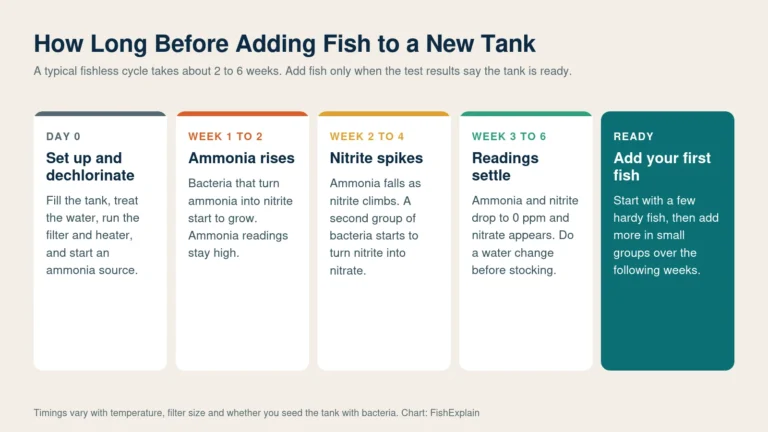
Most tanks take about four to six weeks to build enough bacteria, though warmer water tends to cycle faster and very cold or heavily treated water can take longer. The dangerous period ends when ammonia and nitrite both read 0 ppm and nitrate starts to appear. Our guide on how long to wait before adding fish to a new tank shows how to time your first fish.
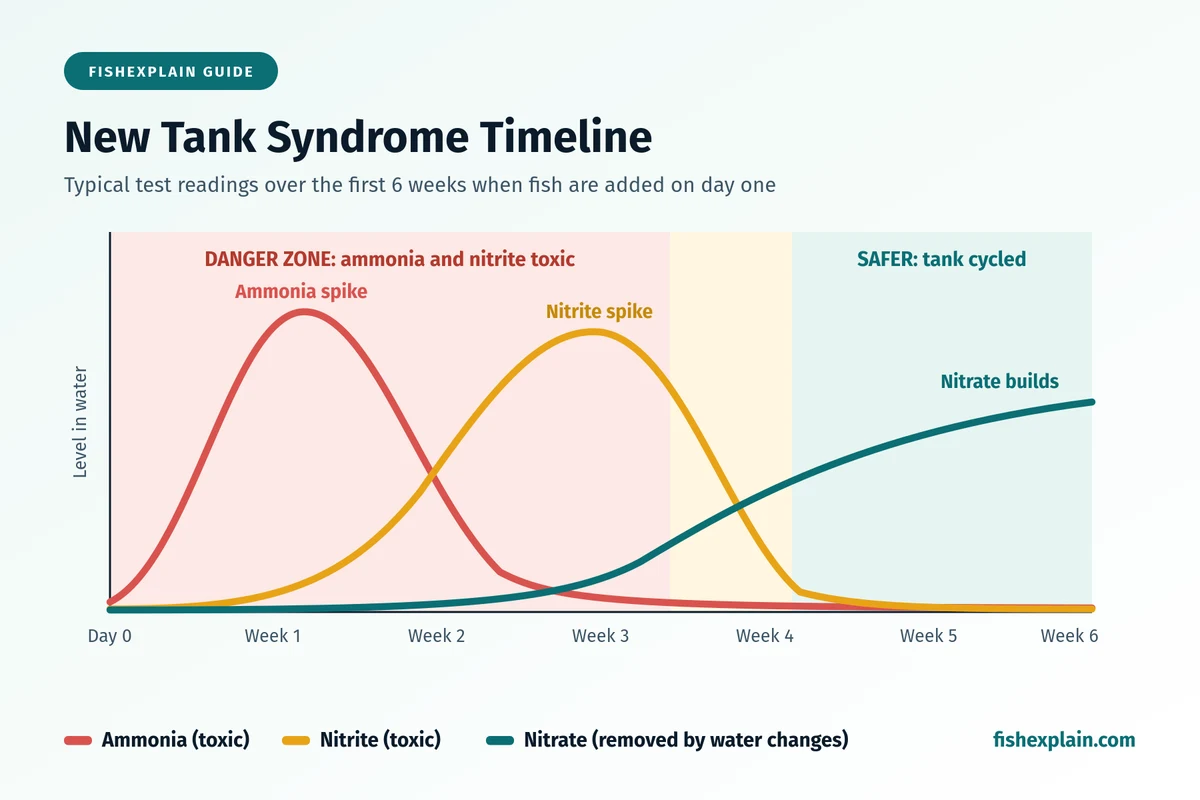
Uncycled Tank vs Established Tank
| Test | Uncycled Tank (Early) | Uncycled Tank (Middle) | Established Tank |
|---|---|---|---|
| Ammonia | Rising, often above 1 ppm | Falling | 0 ppm |
| Nitrite | 0 ppm | Rising sharply | 0 ppm |
| Nitrate | 0 ppm | Starting to appear | Present, ideally under 20 to 40 ppm |
| Risk to fish | High | High | Low |
Signs of New Tank Syndrome
Ammonia and nitrite are clear and odorless, so the water usually looks perfectly normal. Watch the fish instead, and test the water at the first sign of trouble.
Common Symptoms in Fish
- Gasping at the surface or hanging near the filter outflow
- Clamped fins and dull or darker colors
- Lethargy, hiding or lying on the bottom
- Loss of appetite
- Red, inflamed or dark gills
- Rapid gill movement
- Sudden deaths across different species in a short time
Signs in the Water
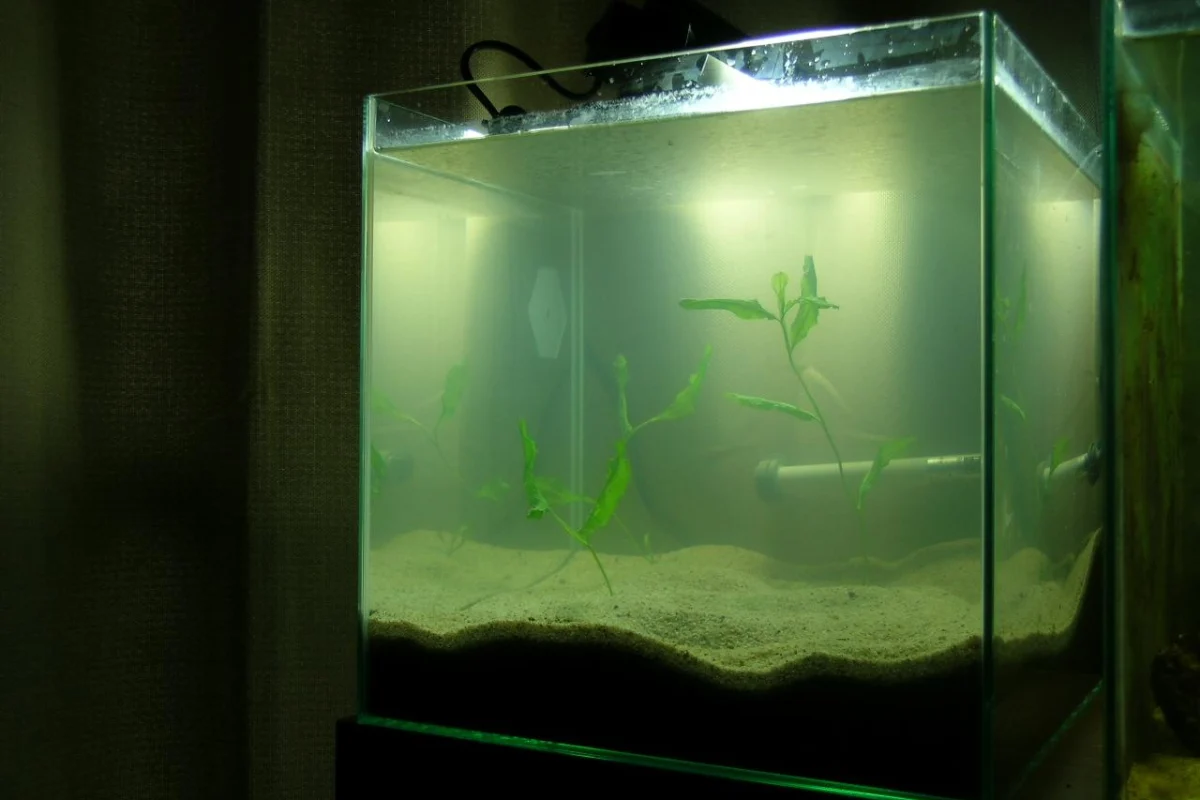
Some tanks also show a cloudy white haze in the first weeks, which is usually a bacterial bloom linked to the cycle. Our guide to a cloudy fish tank explains how to tell a harmless bloom from a water quality problem. The only reliable way to confirm new tank syndrome is a test kit that reads ammonia, nitrite and nitrate.
What Causes New Tank Syndrome?
The root cause is a lack of beneficial bacteria, but several common mistakes trigger it or make it worse.
Adding Fish Too Soon
Setting up a tank and adding fish the same day, or after only a few days of running the filter, is the classic cause. Bottled water conditioners make tap water safe from chlorine, but they do not cycle the tank.
Adding Too Many Fish at Once
Even a partly cycled tank can be overwhelmed if you add a full stock of fish in one trip. The bacteria colony grows to match the waste it receives, so a sudden jump in fish load causes an ammonia spike.
Overfeeding
Uneaten food rots and releases ammonia. New owners often feed several times a day, which adds far more waste than a young tank can handle.
Killing the Bacteria You Already Have
New tank syndrome can also hit an established tank. Common causes include rinsing filter media under chlorinated tap water, replacing all the filter media at once, deep cleaning the whole tank in one day, a long power cut that stops the filter, or some antibiotic treatments. A sudden crash in pH can also harm the bacteria. Our guide on how to clean a fish tank shows how to clean without losing your bacteria.
How to Fix New Tank Syndrome
If your fish are already showing symptoms, act quickly. The goal is to keep ammonia and nitrite low enough for the fish to survive while the bacteria catch up.
Emergency Steps
- Test ammonia, nitrite and nitrate right away.
- Change 25 to 50% of the water with dechlorinated, temperature matched water.
- Feed very lightly, or skip feeding for a day or two.
- Retest daily and repeat water changes whenever ammonia or nitrite reads above about 0.25 ppm.
- Add surface movement or an air stone to improve oxygen.
- Do not add any new fish until both ammonia and nitrite read 0 ppm for several days.
Use a water conditioner that removes chlorine and chloramine, as explained in how to dechlorinate water for a fish tank. Some conditioners are also labeled to temporarily detoxify ammonia and nitrite, which can buy time between water changes. For more on large water changes, see how to do a fish tank water change.
Speeding Up the Cycle
Bottled beneficial bacteria products can help a new tank build its colony faster. The most effective shortcut is seeded media: a used sponge, filter floss or a handful of gravel from a healthy, established tank. Place it in your filter to bring in live bacteria straight away.
Ammonia, pH and Temperature
Ammonia becomes more toxic as pH and temperature rise. Do not try to raise pH during an ammonia spike. Our guide to ammonia in a fish tank explains the safe range and how to lower it step by step.
Can Fish Recover?
Fish often recover fully if the problem is caught early and water quality is restored. Gills damaged by ammonia can leave fish weak and more likely to catch infections, so watch closely for white spots, fin rot or fungus over the following weeks. The common fish diseases guide covers what to look for.
How to Prevent New Tank Syndrome
Prevention is far easier than treatment. Every step below keeps waste in balance with the bacteria in your tank.
Cycle the Tank Before Adding Fish
A fishless cycle is the safest method. Add a small source of ammonia, test every few days and wait until the tank can turn ammonia into nitrate within 24 hours. Our step by step guide on how to cycle a fish tank covers both fishless and fish in methods.
Stock Slowly
Start with a few hardy fish, then add more in small groups every couple of weeks, testing the water before each addition. Acclimate each new group carefully using our guide on how to acclimate fish.
Protect Your Filter Bacteria
- Rinse filter media only in old tank water, never under the tap
- Replace no more than part of the filter media at a time
- Do not clean the filter and deep clean the gravel on the same day
- Keep the filter running at all times
If You Already Bought the Fish
If you brought fish home before cycling the tank, you can do a fish in cycle. Keep only a few hardy fish in the tank, feed tiny amounts once a day and test the water daily. Change 25 to 50% of the water whenever ammonia or nitrite climbs above about 0.25 ppm. It takes more work than a fishless cycle, but it keeps the fish safe while the bacteria grow.
Keep Up Routine Testing
Test ammonia, nitrite, nitrate and pH weekly in the first few months, then regularly after that. Our guide to aquarium water parameters lists the safe ranges for freshwater fish.
New Tank Syndrome vs Old Tank Syndrome
These two problems sound alike but have different causes, and the fix for one can make the other worse.
What Is Old Tank Syndrome?
Old tank syndrome affects long established tanks that have gone without regular water changes. Over time, nitrate builds up and the water’s buffering capacity (KH) drops, so pH slowly falls. The fish already in the tank adapt to the poor water, but new fish added to it often die quickly from the shock.
How to Tell Them Apart
| Sign | New Tank Syndrome | Old Tank Syndrome |
|---|---|---|
| Tank age | Days to about 6 weeks | Months or years |
| Ammonia and nitrite | High | Usually low |
| Nitrate | Low or none | Very high |
| pH | Normal or rising | Low and falling |
| Who gets sick | All fish in the tank | Mostly newly added fish |
Fixing Old Tank Syndrome Safely
Do not fix old tank syndrome with one huge water change, because the sudden jump in pH can turn stored ammonia toxic and shock the fish. Instead, change 10 to 15% of the water every day or two for a couple of weeks until nitrate and pH return to normal.
New Tank Syndrome Checklist
- Cycle the tank fully before adding fish
- Treat all new water with a dechlorinator
- Add fish slowly and feed lightly
- Test the water often in the first few months
- Clean filter media in tank water only
- Act fast with water changes if ammonia or nitrite appear
For the full setup process from empty tank to first fish, read our guide on how to set up a fish tank.
Frequently Asked Questions
What is new tank syndrome?
New tank syndrome is a toxic build up of ammonia and nitrite in an aquarium that does not yet have enough beneficial bacteria to process fish waste. It is most common in new tanks that were not cycled before fish were added.
How long does new tank syndrome last?
It usually lasts about four to six weeks, until the tank has grown enough bacteria to keep ammonia and nitrite at 0 ppm.
Why are my fish dying in a new tank?
The most common reason is ammonia or nitrite poisoning from an uncycled tank. Test the water right away and do a partial water change if either reading is above zero.
Can you fix new tank syndrome without removing the fish?
Yes. Daily water testing, frequent partial water changes, light feeding and an ammonia detoxifying conditioner can keep fish alive while the tank finishes cycling.
Can an established tank get new tank syndrome?
Yes. Cleaning filter media in tap water, replacing all the media at once, a long power cut or some medications can kill beneficial bacteria and restart the problem.
Keep exploring
 Aquarium Care
How Long to Wait Before Adding Fish to a New Tank
How long before adding fish to a new tank? Usually 2 to 6 weeks. Learn the water test results that mean it…
 Aquarium Care
Aquarium pH: How to Raise or Lower pH Safely
Aquarium pH guide: ideal ranges for freshwater fish, how KH keeps pH stable, and safe ways to raise or lower pH without…
 Aquarium Care
Glass vs Acrylic Fish Tanks: Which Should You Buy?
Glass vs acrylic aquarium compared: weight, strength, clarity, scratches, cost and stand needs, so you can pick the right fish tank for…