How Long to Wait Before Adding Fish to a New Tank
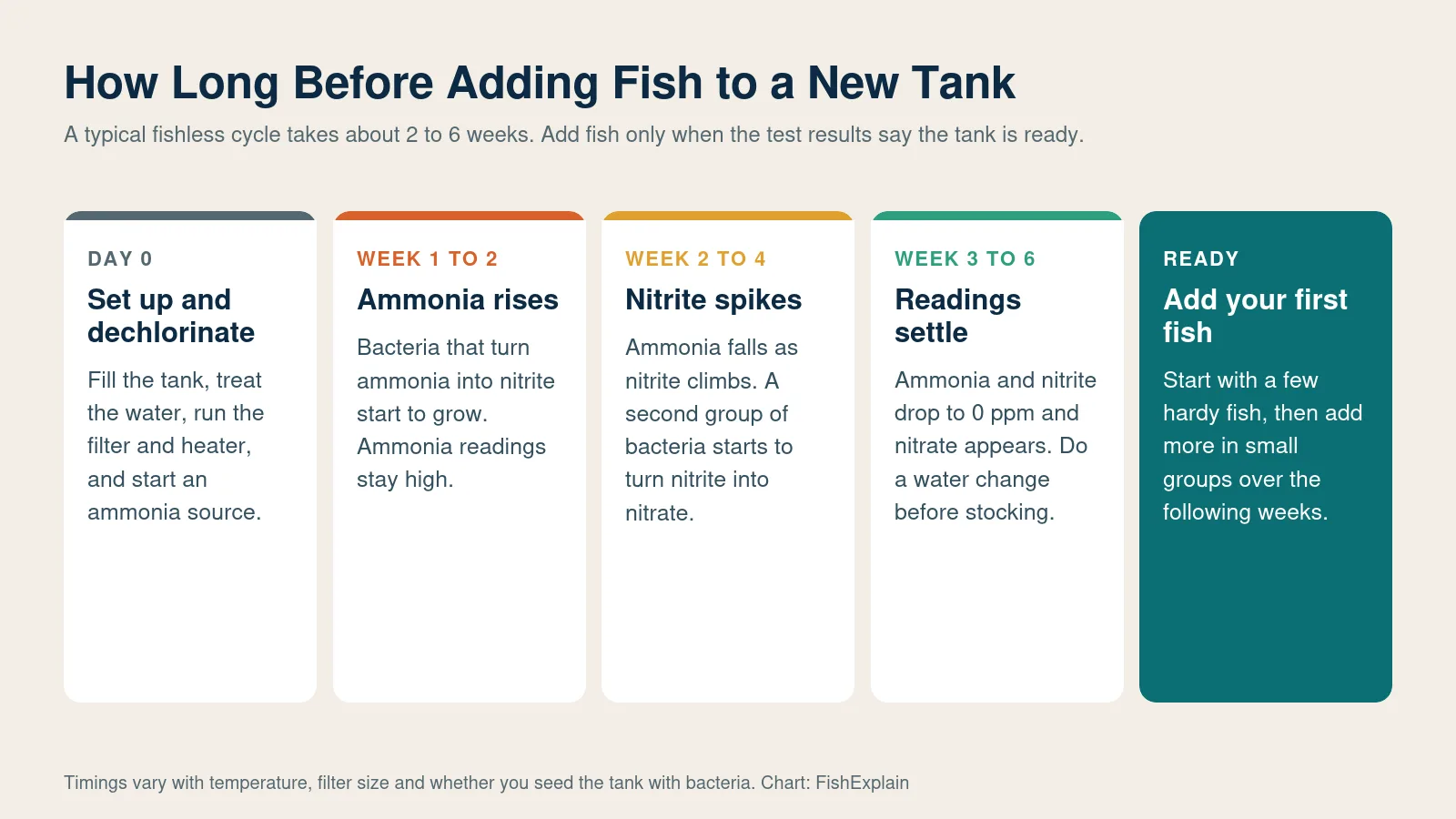
In most cases, wait about 2 to 6 weeks before adding fish to a new tank. That is how long the nitrogen cycle usually takes to grow enough beneficial bacteria. The exact answer depends on your water tests, not the calendar: add fish only when ammonia and nitrite read 0 ppm and nitrate is above 0. Running the tank for 24 to 48 hours is enough to check the heater and filter, but it is not enough time to make the water safe.
The most common question new aquarium owners ask is how long before adding fish to a new tank is safe. Pet store advice ranges from “a day” to “a couple of months,” which is confusing. The real answer is that you wait until the tank can process fish waste, and a water test kit tells you when that has happened.
This guide explains why the wait matters, how long each method takes, the test results that mean your tank is ready, and how to add your first fish without causing a deadly ammonia spike. If you have not set up your aquarium yet, start with our step by step guide on how to set up a fish tank.
Why You Cannot Add Fish to a New Tank Right Away
Fish produce ammonia through their gills and waste. In a new tank, nothing removes it, so ammonia builds up quickly and burns the gills. Beneficial bacteria fix this problem, but they take weeks to grow.
The Nitrogen Cycle in Brief
One group of bacteria turns ammonia into nitrite, which is also toxic. A second group turns nitrite into nitrate, which is far less harmful and is removed with water changes. Our guide to the aquarium nitrogen cycle explains each stage in detail.
What Happens If You Add Fish Too Soon
Fish added to an uncycled tank often show gasping, red gills, clamped fins and lethargy within days. Many die. This pattern is called new tank syndrome, and it is the main reason beginners lose their first fish.
How Long Before Adding Fish to a New Tank?
The table below compares the most common approaches. The times are typical ranges reported by hobby guides, and your tank may be faster or slower.
| Method | Typical Wait Before Fish | What You Do |
|---|---|---|
| Fishless cycle with ammonia | About 2 to 6 weeks | Dose ammonia, test until it clears in 24 hours |
| Fishless cycle with bottled bacteria | Often faster, but still test | Add bacteria and ammonia, confirm with tests |
| Seeded with mature filter media | Can be days to 2 weeks | Move media from a healthy tank, test closely |
| Fish-in cycle | Fish added on day 1, cycle takes about 4 to 6 weeks | Few hardy fish, light feeding, frequent water changes |
| Heavily planted tank | Varies, often shorter | Fast growing plants absorb ammonia, test before stocking |
The First 24 to 48 Hours
Even if you use bottled bacteria or seeded media, run the tank for at least a day or two first. Use that time to confirm the heater holds a steady temperature, the filter flows well and there are no leaks. Make sure you also dechlorinate the water, because chlorine and chloramine kill both fish and bacteria.
Why Some Tanks Cycle Faster
Warmer water, plenty of surface area in the filter and a small amount of mature media from another tank all help bacteria grow faster. Very soft, acidic water and low temperatures slow the process down.
How to Tell Your Tank Is Ready for Fish
The calendar is only a guide. Test the water with a liquid test kit, since strips are less accurate at low readings.
The Three Readings to Look For
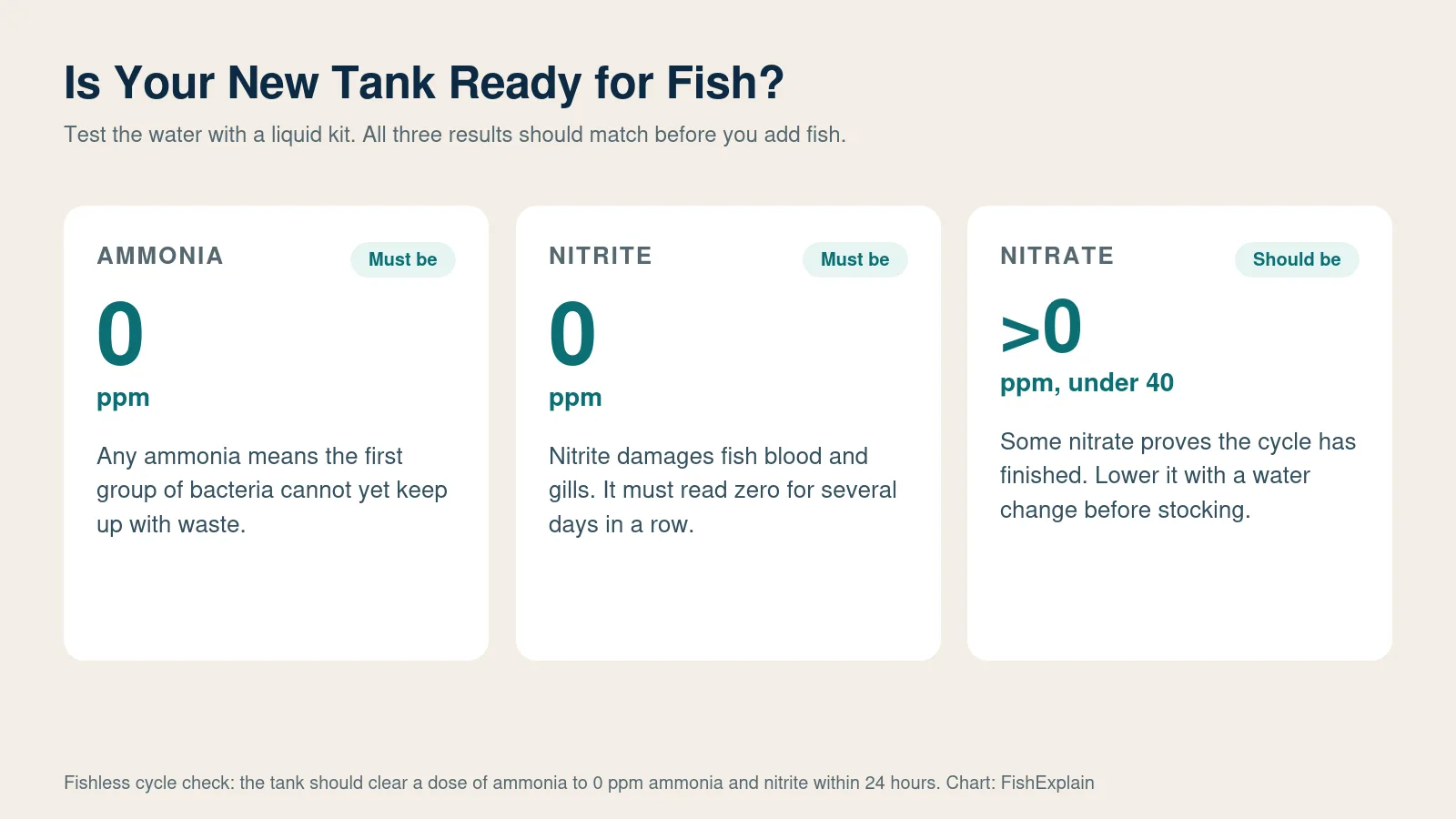
- Ammonia: 0 ppm. Any reading means the first group of bacteria cannot keep up yet.
- Nitrite: 0 ppm. Nitrite must stay at zero for several days in a row.
- Nitrate: above 0 ppm. Some nitrate proves both groups of bacteria are working. Keep it under 40 ppm.
The 24 Hour Ammonia Test
If you cycle without fish, add a dose of ammonia (many hobbyists use about 2 ppm) and test again 24 hours later. When both ammonia and nitrite are back to 0 ppm within that day, the tank can handle a normal fish load. Do a large water change to lower nitrate before you add fish.
Signs During a Fish-In Cycle
Aquarium Co-Op suggests that a fish-in cycle is complete when you can feed normal amounts for a week while ammonia and nitrite stay at 0 ppm and nitrate is above 0. During that time, do a partial water change whenever ammonia or nitrite climbs above about 0.2 ppm. See the full method in our guide on how to cycle a fish tank.
How to Add Fish to a New Tank
Once the tank is ready, the way you add fish matters as much as the wait. A cycled tank holds only enough bacteria for the waste it has been processing.
Start With a Few Hardy Fish
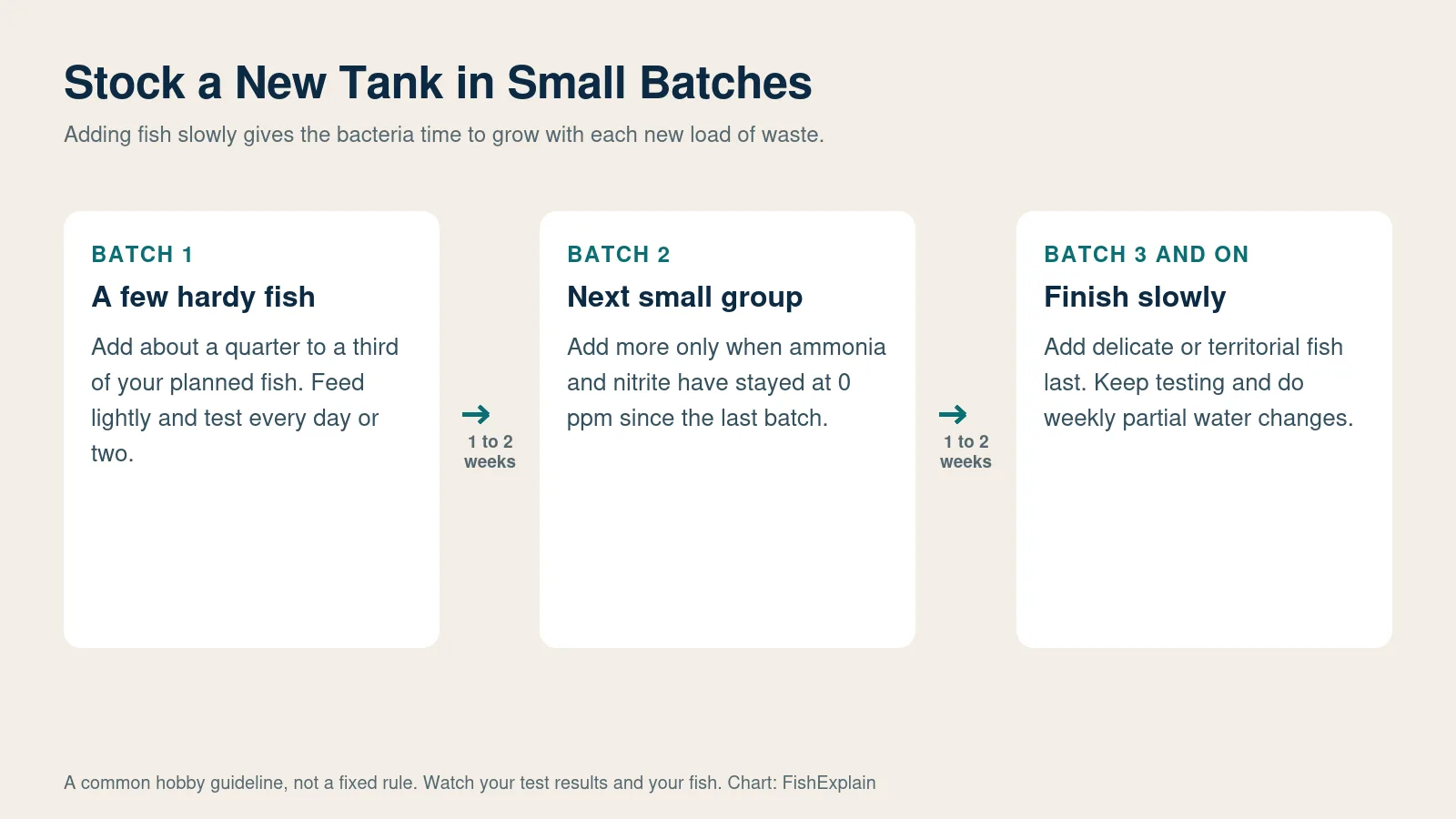
Add a small group of tough, inexpensive species first, such as zebra danios, platies or White Cloud Mountain minnows. Our list of cheap freshwater fish includes several good starters. Save delicate or territorial fish for later.
Wait Between Batches
Bacteria need time to grow with each new load of waste. A common guideline is to wait one to two weeks between groups and to test ammonia and nitrite every day or two after each addition.
Acclimate Every New Fish
Float the bag to match temperature, then mix in tank water slowly before netting the fish into the tank. Follow the steps in how to acclimate fish to reduce stress and shock.
Mistakes That Make the Wait Longer
Overfeeding and Overstocking
Too much food or too many fish at once produce more ammonia than the bacteria can handle. Feed lightly for the first month, and remove uneaten food after a few minutes.
Cleaning Too Much
Most beneficial bacteria live in the filter media and substrate, not in the water. Never rinse filter media under chlorinated tap water, and avoid replacing all the media at once. Rinse it gently in old tank water instead.
Chasing Cloudy Water
A white haze in the first weeks is usually a harmless bacterial bloom. It often clears on its own. Read more about ammonia in a fish tank if cloudy water comes with rising test readings.
New Tank Waiting Checklist
- Fill, dechlorinate and run the tank for 24 to 48 hours
- Start an ammonia source or add bottled bacteria
- Test ammonia, nitrite and nitrate every few days
- Wait until ammonia and nitrite read 0 ppm and nitrate is present
- Do a water change, then add a few hardy fish
- Wait one to two weeks between new batches
Frequently Asked Questions
Can I add fish to a new tank after 24 hours?
Only if the tank is already cycled, for example with mature filter media from an established tank. In a brand new tank with no bacteria, 24 hours is not enough and ammonia will build up quickly.
How long does it take to cycle a new fish tank?
A fishless cycle usually takes about 2 to 6 weeks. Warmer water, bottled bacteria and seeded filter media can shorten it, while cold or very soft water can slow it down.
Does bottled bacteria let me add fish the same day?
Some products say you can, but results vary. Test the water daily after adding fish and be ready to do partial water changes if ammonia or nitrite appear.
How many fish should I add to a new tank first?
Start with a small group of hardy fish, roughly a quarter to a third of your planned stock. Add the rest in small batches one to two weeks apart.
How do I know my fish tank is cycled?
Your tank is cycled when ammonia and nitrite read 0 ppm and nitrate is above 0. In a fishless cycle, the tank should also clear a dose of ammonia to zero within 24 hours.
Keep exploring
 Aquarium Care
Aquarium pH: How to Raise or Lower pH Safely
Aquarium pH guide: ideal ranges for freshwater fish, how KH keeps pH stable, and safe ways to raise or lower pH without…
 Aquarium Care
New Tank Syndrome: Signs, Causes and How to Prevent It
New tank syndrome kills fish in uncycled tanks. Learn the warning signs, what causes ammonia and nitrite spikes, and how to fix…
 Aquarium Care
Glass vs Acrylic Fish Tanks: Which Should You Buy?
Glass vs acrylic aquarium compared: weight, strength, clarity, scratches, cost and stand needs, so you can pick the right fish tank for…