Ammonia in a Fish Tank: Causes, Signs and How to Lower It
Ammonia in a Fish Tank: Causes, Signs and How to Lower It
Why ammonia builds up, how to spot ammonia poisoning in fish, which levels are safe at your pH and the exact steps to bring it back to zero.
By Fish Explain Editorial TeamUpdated November 11, 20269 min read
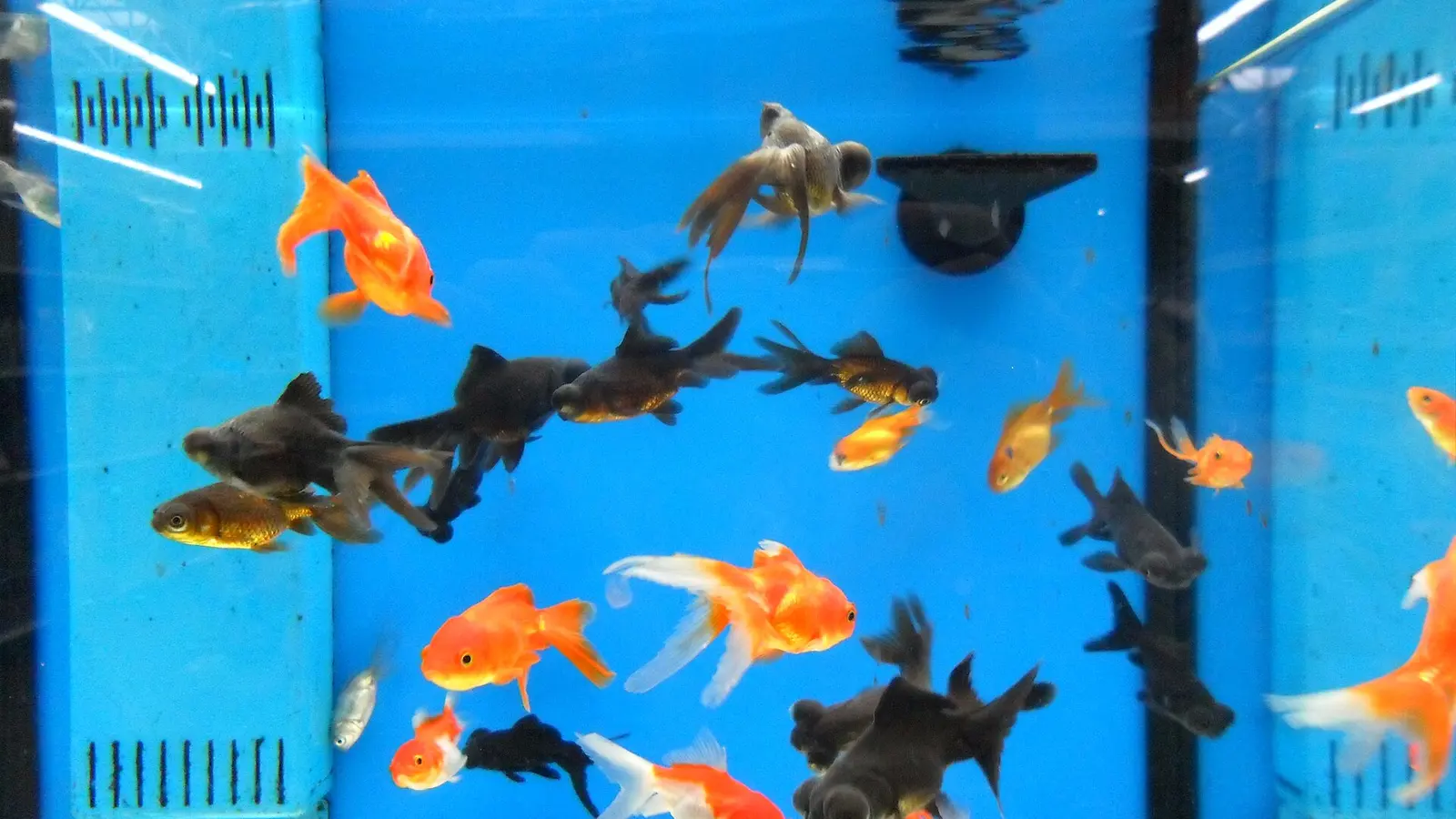
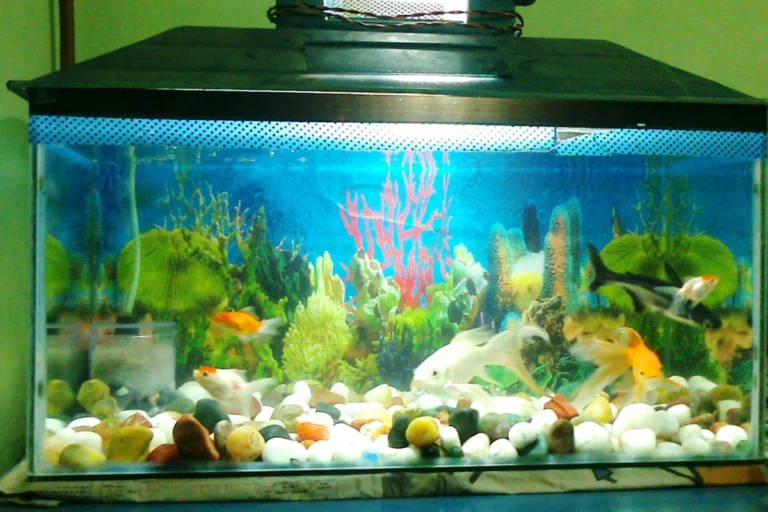
Photo: AJ Gray (CC0), via Wikimedia Commons (cropped)
Ammonia in a fish tank comes from fish waste, uneaten food and rotting matter, and it builds up when there are not enough beneficial bacteria to convert it. The safe level is 0 ppm. Signs of ammonia poisoning include gasping at the surface, red or inflamed gills and lethargy. To lower it, do a 25 to 50 percent water change with dechlorinated water, remove waste, feed less, use an ammonia binding conditioner and test daily until it reads zero.
On this page
What Is Ammonia in a Fish Tank?
Ammonia in a fish tank is a toxic waste product that fish release mainly through their gills, and that also forms when uneaten food, dead plants and fish waste break down. In a healthy, cycled aquarium, beneficial bacteria convert ammonia into nitrite and then nitrate so quickly that a test reads 0 ppm. Any reading above zero means waste is building up faster than your filter bacteria can handle it.
Ammonia is the first step of the aquarium nitrogen cycle. Understanding where it comes from makes it much easier to keep it at zero.
Ammonia (NH3) versus ammonium (NH4+)
Test kits measure total ammonia, which is a mix of two forms. Free ammonia (NH3) is the toxic form. Ammonium (NH4+) is far less harmful. The balance between them depends mostly on pH and temperature. The Southern Regional Aquaculture Center notes in its fact sheet on managing ammonia that less than 10 percent of total ammonia is in the toxic form when pH is below 8.0, and that the share rises sharply above that.
Why pH and temperature matter
The same ammonia reading is much more dangerous in hard, alkaline water than in soft, acidic water. Warmer water also shifts more ammonia into the toxic form. That is why an African cichlid tank at pH 8.2 needs faster action on a small reading than a soft water tetra tank at pH 6.8.
| pH at 77 °F | Approximate share as toxic NH3 | Risk from a 1 ppm reading |
|---|---|---|
| 6.5 | About 0.2% | Low, but still fix it |
| 7.0 | About 0.6% | Moderate |
| 7.5 | About 1.8% | High |
| 8.0 | About 5% | Very high |
| 8.5 | About 15% | Emergency |
What Causes High Ammonia in an Aquarium?
High ammonia aquarium problems almost always come from one of a few causes.
An uncycled or new tank
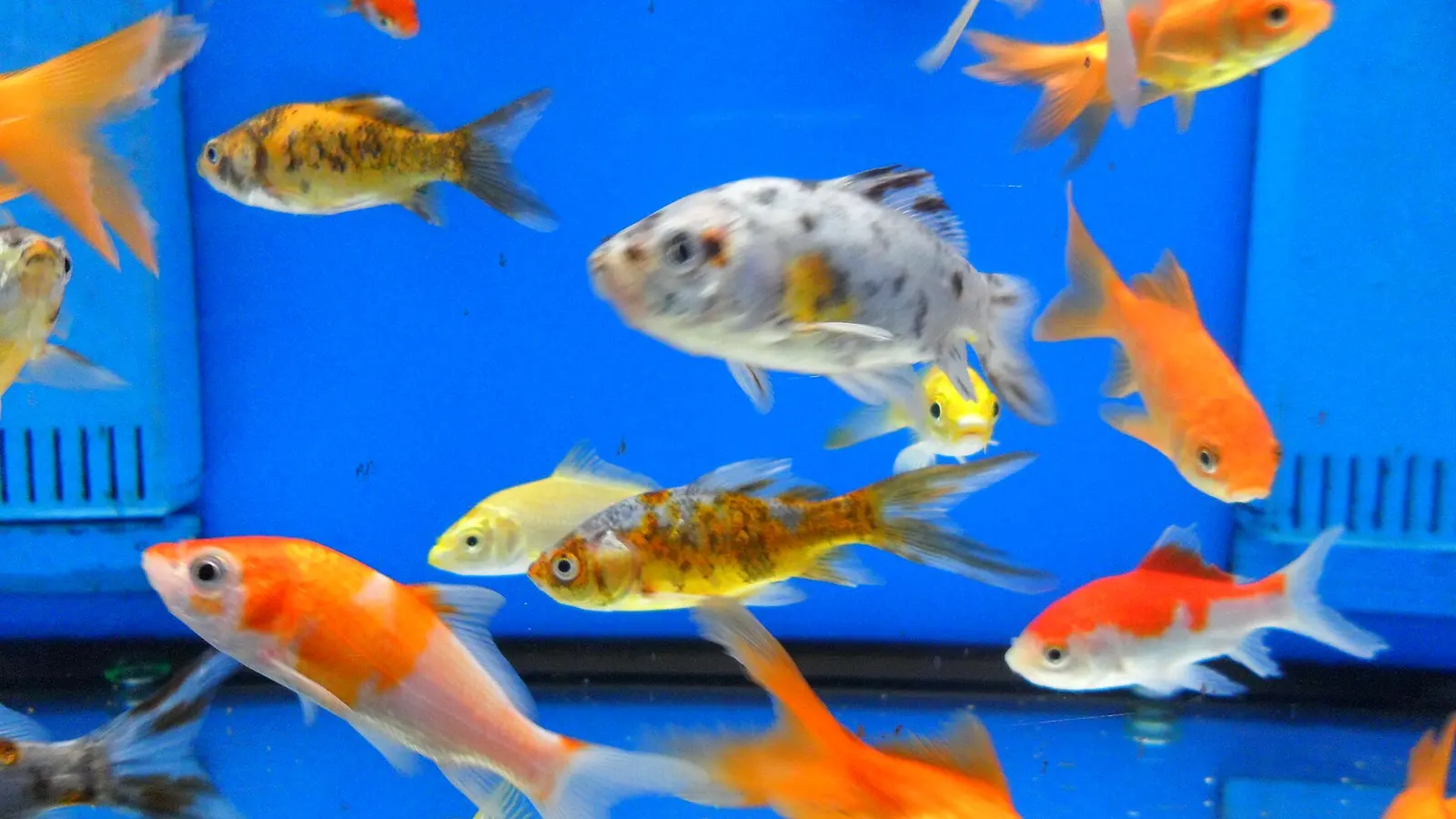
New tanks have not grown enough beneficial bacteria yet. Adding fish too early, or adding too many at once, is the most common cause of ammonia spikes and is often called new tank syndrome. Our guide on how to cycle a fish tank shows how to build those bacteria before fish go in.
Overfeeding and overstocking
Every flake of food that is not eaten rots and releases ammonia. Too many fish for the tank size, or large waste producers such as goldfish and plecos in a small tank, can overwhelm even a mature filter.
Dead fish, snails or plants
A dead fish or snail hidden behind decor can release a lot of ammonia in a day or two. Melting plants do the same on a smaller scale.
Killing the filter bacteria
Most nitrifying bacteria live in the filter media. Rinsing media under chlorinated tap water, replacing all of it at once, or leaving the filter switched off for hours can wipe out the colony. Some medications can also harm these bacteria.
Ammonia in tap water
Many US water suppliers treat water with chloramine, which is chlorine bonded to ammonia. When a water conditioner breaks the bond, some ammonia can remain. Test your tap water so you know your starting point. Our guide to aquarium water parameters explains how to test every level.
Signs of Ammonia Poisoning in Fish
Ammonia poisoning fish symptoms often look like general stress, so test the water whenever fish act strangely.
Behavior changes
- Gasping at the surface or hanging near the filter outlet
- Lethargy, resting on the bottom or hiding
- Loss of appetite
- Clamped fins and darting or erratic swimming
Physical signs
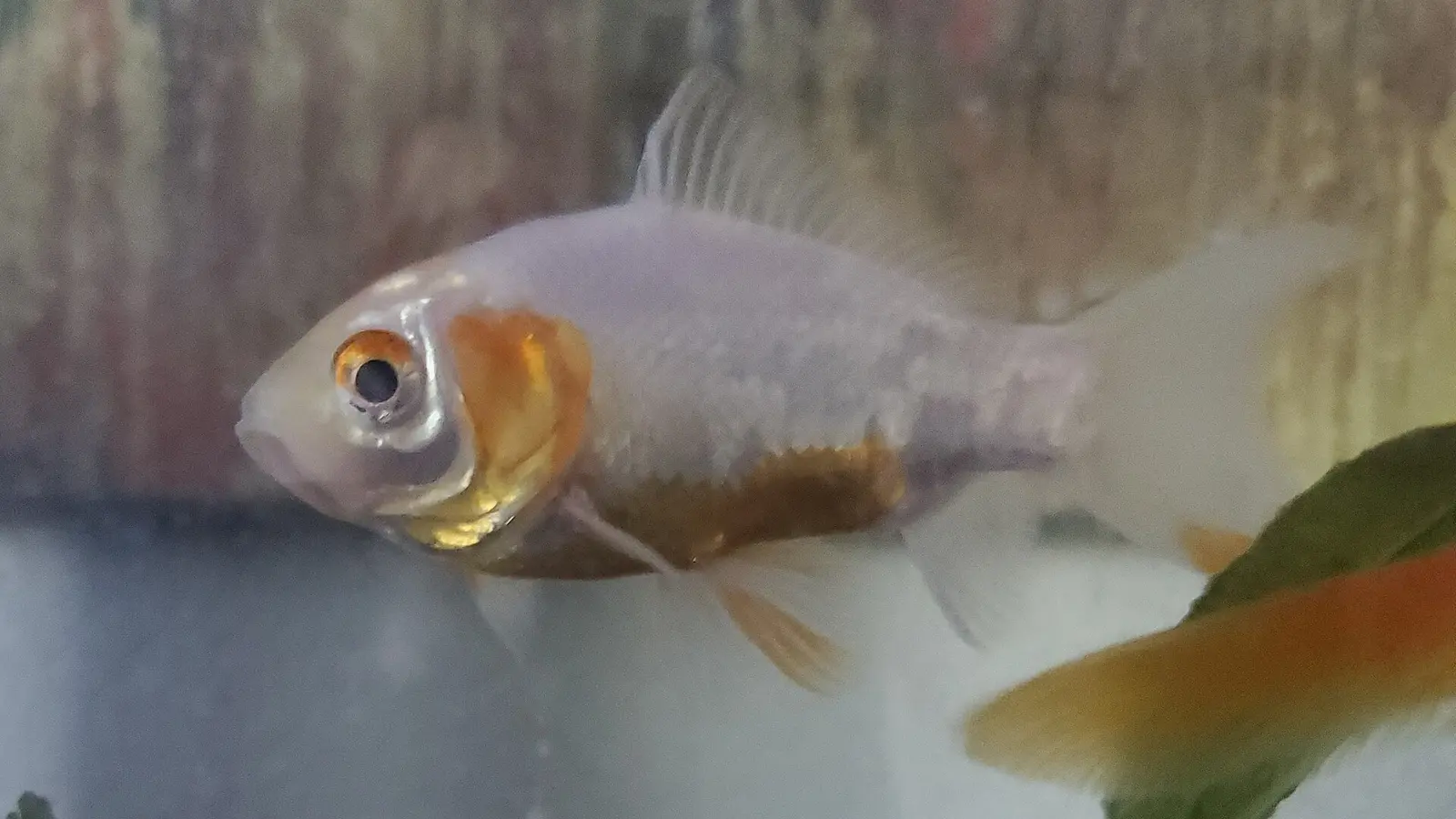
- Red, purple or inflamed gills
- Red streaks in the fins or red patches on the body
- Cloudy eyes or darkened color
- Damaged fins or skin that later picks up infections
The aquaculture fact sheet notes that fish exposed to high ammonia become lethargic, and that lower long term exposure reduces growth and disease resistance. That is why fish in tanks with ammonia problems often catch diseases such as fin rot or ich. If your betta shows these signs, see our guide to a sick betta fish.
Safe Ammonia Levels for a Fish Tank
The only safe reading in an established tank is 0 ppm. Use this table as a quick guide for action.
| Ammonia reading | What it means | What to do |
|---|---|---|
| 0 ppm | Healthy, cycled tank | Keep testing weekly |
| 0.25 ppm | Early warning | 25% water change, feed less, test daily |
| 0.5 ppm | Fish are stressed | 30 to 50% water change, check filter |
| 1 ppm or more | Dangerous, worse at high pH | 50% water change now, repeat daily, use a binder |
How to Lower Ammonia in a Fish Tank
If you need to know how to lower ammonia in a fish tank fast, follow these steps in order.
Step by step
- Test to confirm. Use a liquid test kit or fresh strips and also test pH, since high pH makes ammonia more toxic.
- Do a water change. Replace 25 to 50 percent of the water with dechlorinated water matched to the tank temperature. For very high readings, do 50 percent and repeat the next day.
- Remove the source. Siphon uneaten food and waste from the gravel and look for dead fish, snails or rotting plants.
- Feed less. Skip a day of feeding, then feed small amounts that are eaten within two minutes until the reading is zero.
- Use an ammonia binder. Many water conditioners bind ammonia into a less toxic form for about a day. This buys time but does not remove the waste, and some test kits still read the bound ammonia.
- Support the bacteria. Add a bottled nitrifying bacteria product, keep the filter running, and only rinse media in old tank water.
- Test daily. Keep testing and changing water until ammonia and nitrite both stay at 0 ppm for a week.
What not to do
Do not replace all the filter media, do not add more fish, and do not change 100 percent of the water at once. A sudden full change can shock fish with big swings in temperature and pH. Do not try to lower pH quickly with chemicals during a spike either, since rapid swings stress fish further.
Long term fixes
Match your stocking to the tank size, keep a weekly water change routine of about 20 to 30 percent, clean the filter gently and add live plants, which use ammonia as a nutrient. If you are starting over, our guide on how to set up a fish tank walks through a safe setup from day one.
How to Test for Ammonia Correctly
A reliable test is the only way to know your real ammonia level, since clear water can still hold a toxic amount.
Liquid kits versus test strips
Liquid test kits use drops and a color chart and are usually more accurate and cheaper per test than strips. Strips are quick and handy for a fast check. Whichever you use, check the expiry date, since old reagents can give false readings.
Getting a fair reading
- Test before a water change, not right after, so you see the true level.
- Read the color in daylight or under white light, against a white background.
- Test your tap water too, so you know if ammonia is coming in with new water.
- Test nitrite at the same time. Ammonia and nitrite both above zero usually means the tank is not fully cycled.
Reading the result with pH
Always look at ammonia and pH together. A 0.5 ppm reading at pH 6.8 gives you time to fix the cause, while the same reading at pH 8.2 calls for an immediate water change.
How to Prevent Ammonia Spikes
Prevention is cheaper and kinder to your fish than treatment.
Build a good routine
- Fully cycle every new tank before adding a full group of fish.
- Add new fish a few at a time so bacteria can catch up.
- Feed only what fish eat in about two minutes, once or twice a day.
- Test ammonia weekly, and daily in the first months of a new tank.
- Do partial water changes every week and vacuum the gravel.
Watch for cloudy water
A sudden bacterial bloom often shows up as milky water and can go with rising ammonia. Our guide to a cloudy fish tank explains the different causes and fixes.
Ammonia in Fish Tank FAQs
What level of ammonia is safe for fish?
0 ppm is the only safe level in an established tank. Any reading above zero means waste is building up, and even 0.25 ppm deserves a water change.
How long does it take to lower ammonia in a fish tank?
A 50 percent water change with ammonia free water cuts the level roughly in half right away. Keeping it at zero depends on the cause and can take a few days in a mature tank or several weeks in a new tank that is still cycling.
Does a water conditioner remove ammonia?
Some conditioners bind ammonia into a less toxic form for about a day, but they do not remove it. Water changes and healthy filter bacteria are what take ammonia out of the tank.
Can fish recover from ammonia poisoning?
Many fish recover if ammonia is brought down quickly and the water stays clean. Damaged gills or skin can pick up infections, so watch fish closely for a few weeks.
Why is my ammonia high after a water change?
Your tap water may contain ammonia, often from chloramine treatment, or the water change may have stirred up trapped waste. Test your tap water and vacuum the gravel to find the source.
Final Thoughts
Keep ammonia at zero
Ammonia in a fish tank is almost always a sign that waste is outrunning your filter bacteria. Test often, act quickly with partial water changes, feed lightly and protect your filter media. Keep pH in mind, because the same reading is far more toxic in alkaline water. With a cycled tank and a steady routine, your ammonia test should read zero every week.
Keep exploring
More fish guides
Keep exploring
 Aquarium Care
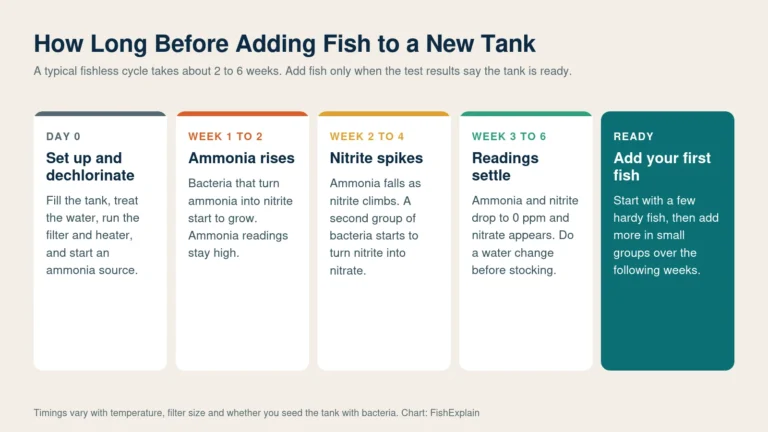
How Long to Wait Before Adding Fish to a New Tank
How long before adding fish to a new tank? Usually 2 to 6 weeks. Learn the water test results that mean it…
 Aquarium Care
Aquarium pH: How to Raise or Lower pH Safely
Aquarium pH guide: ideal ranges for freshwater fish, how KH keeps pH stable, and safe ways to raise or lower pH without…
 Aquarium Care
New Tank Syndrome: Signs, Causes and How to Prevent It
New tank syndrome kills fish in uncycled tanks. Learn the warning signs, what causes ammonia and nitrite spikes, and how to fix…