Do Fish Tanks Need an Air Pump? When and Why to Use One
Not always. Fish tanks need oxygen, not bubbles. If your filter ripples the water surface and the tank is not overcrowded, most fish get enough oxygen without an air pump. Add one if your fish gasp at the surface, the water is warm, the tank is heavily stocked, you run a sponge filter, or you are treating sick fish.
Do fish tanks need an air pump? Many beginners assume the bubbling air stone is what keeps fish alive, but that is only part of the story. Fish need dissolved oxygen in the water, and an air pump is one of several ways to provide it. In many tanks the filter already does the job.
This guide explains how oxygen gets into aquarium water, when an air pump is optional, when it is a must, and how to choose and set one up. If you are still planning your tank, our fish tank buying guide covers the rest of the equipment you need.
How Fish Tanks Get Oxygen
Oxygen enters aquarium water at the surface, where water meets air. At the same time, carbon dioxide that fish breathe out escapes from the water into the room. This swap is called gas exchange, and the more the surface moves, the faster it happens.
What an Air Pump Actually Does
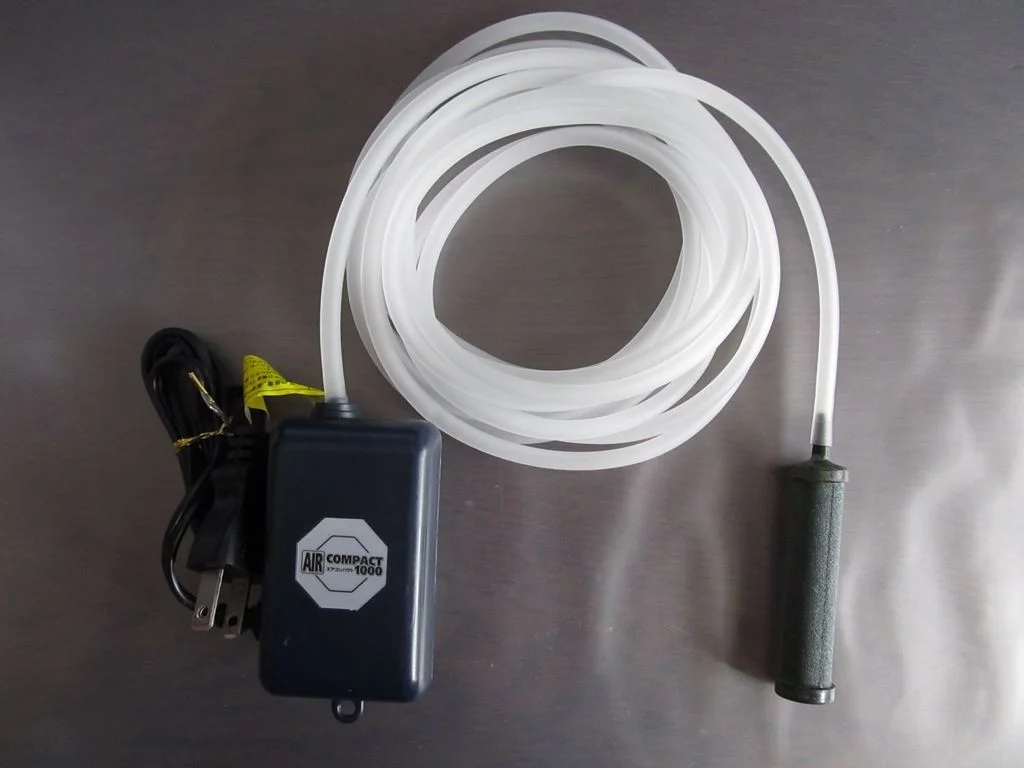
An air pump pushes room air through thin tubing to an air stone or sponge filter in the tank. The bubbles add a little oxygen as they rise, but their main benefit comes when they reach the top and break the surface. That movement, plus the current the bubbles create, pulls oxygen rich water from the surface down into the tank.
Aquarium Co-Op’s guide to aquarium air stones recommends having at least one air source in every tank as a cheap safety net, even when a filter is running.
Filters Also Move the Surface
Hang on back filters pour water onto the surface, and canister filters with spray bars or angled outlets create ripples. If you can see the surface moving gently, your filter is already helping with gas exchange. Our guide to the best fish tank filters compares filter types and their flow.
When Is an Air Pump Optional?
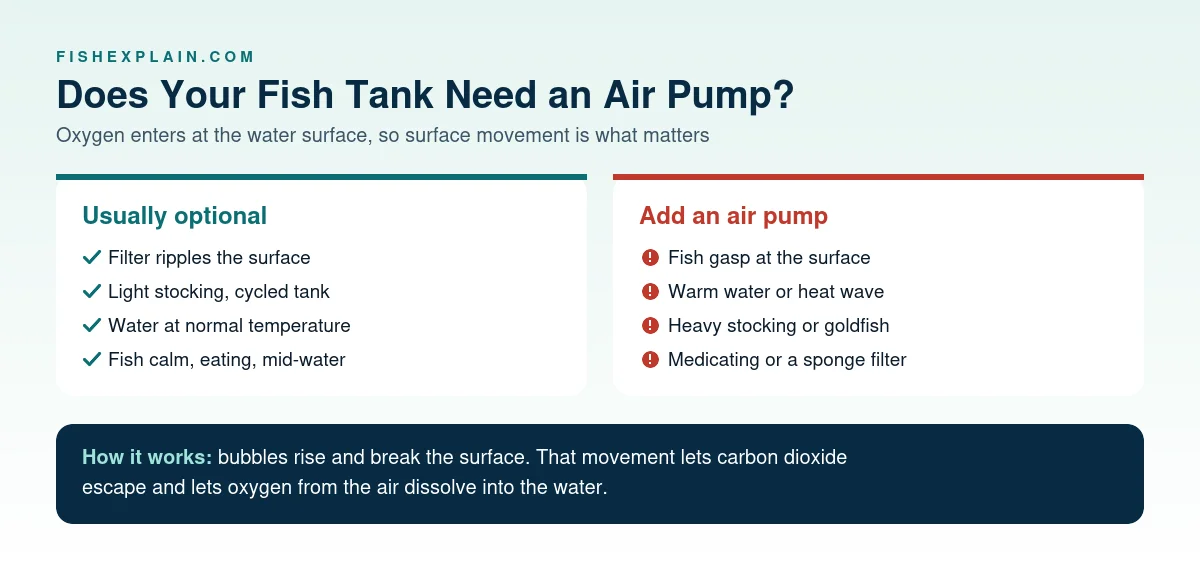
An air pump is a nice extra, but not essential, when all of these are true:
- The filter visibly ripples the water surface
- The tank is cycled and lightly or moderately stocked
- The water temperature stays in the normal range for your fish
- Live plants do not cover the whole surface
- Your fish swim calmly through the tank and eat well
Many planted community tanks and small betta tanks run for years without an air pump. In these setups, gentle surface movement from the filter is enough.
When Does a Fish Tank Need an Air Pump?
Some situations lower the oxygen in the water or raise the amount fish need. In these cases, an air pump is a smart, low cost addition.
Warm Water and Heat Waves
Warm water holds less dissolved oxygen than cool water, while fish breathe faster as the temperature rises. During summer heat waves, or in tanks with a heater set high, an air stone helps make up the difference. Our fish tank heater guide lists safe temperature ranges for common fish.
Heavily Stocked Tanks and Goldfish
More fish means more oxygen used and more waste produced. Goldfish are a classic example. They are large, messy fish that often appreciate extra aeration, as explained in our goldfish care guide.
Sponge Filters
A sponge filter is powered by air. Without an air pump, it does not filter at all. Sponge filters are popular in breeding, shrimp and fry tanks because they are gentle and cannot suck up small animals.
Medicating Sick Fish
Some treatments, and the higher temperatures used to treat ich, can lower oxygen levels or make fish breathe harder. Adding an air stone while you medicate is a common precaution.
Tanks With Little Surface Movement
Thick floating plants, a filter outlet aimed below the surface or a tight fitting lid can all reduce gas exchange. If you use a solid cover, check that air can still reach the water. Our guide to fish tank covers explains how to keep a gap for airflow.
Power Outages
During a power cut, filters stop and oxygen levels can fall within hours in a busy tank. A battery powered air pump is a cheap backup that keeps water moving until power returns.
Signs of Low Oxygen in a Fish Tank
Fish usually show clear signs when oxygen is running low. Act quickly if you notice any of these:
- Fish gasping or hanging just below the surface
- Fast, heavy gill movement
- Fish crowding near the filter outlet
- Lethargy, resting on the bottom and loss of appetite
- Problems that are worse early in the morning, after a night without light for plants
What to Do Right Away
- Lower the water level slightly so the filter outflow splashes the surface.
- Add an air stone or point the filter outlet up toward the surface.
- Do a partial water change with dechlorinated water at the same temperature, as shown in how to do a fish tank water change.
- Test for ammonia and nitrite, since poor water quality often appears alongside low oxygen. Our guide to ammonia in a fish tank explains what to do if levels are high.
- Remove uneaten food and dead plant matter that use up oxygen as they rot.
Fish That Prefer Calm Water
Not every fish enjoys a stream of bubbles. Bettas and gouramis have a labyrinth organ that lets them gulp air from the surface, and they come from slow, still water. Strong bubbles can push them around and make it hard for a betta to build a bubble nest. If you keep a betta, use a small air stone with a valve to turn the flow down, or skip the pump if the filter already ripples the surface. Our guide to betta fish tank size covers the best setups for bettas.
Planted Tanks With CO2
In planted tanks that use added carbon dioxide, heavy aeration during the day drives off the CO2 that plants need. Many planted tank keepers run the air stone only at night, when plants stop using CO2 and start using oxygen.
How to Choose an Aquarium Air Pump
Air pumps are rated for a range of tank sizes. A deeper tank needs a stronger pump, because the air has to push against more water pressure to reach the air stone.
| Pump Type | Best For | Notes |
|---|---|---|
| Small diaphragm pump | Tanks up to about 20 gallons | Cheap, simple, may hum slightly |
| Dual outlet diaphragm pump | 20 to 75 gallon tanks or two air stones | Most popular choice for home aquariums |
| Piston or linear pump | Large tanks, racks of tanks, ponds | Higher output, more expensive |
| Battery or USB pump | Power outages, travel, transporting fish | Keep one in a drawer as a backup |
Useful Accessories
- Airline tubing to carry air to the tank
- A check valve to stop water flowing back into the pump
- An air stone, bubble wand or sponge filter
- A control valve to turn the flow down for calm water fish
How to Set Up an Air Pump
- Place the pump above the water line if possible, or fit a check valve to prevent back siphoning.
- Cut airline tubing to length and connect it from the pump to the check valve.
- Connect the other side of the check valve to the air stone or sponge filter, with the arrow pointing toward the tank.
- Place the air stone in the tank, ideally near the back or under the filter intake to spread the current.
- Plug in the pump and adjust the flow until the surface ripples without blasting the fish.

Reducing Pump Noise
Set the pump on a soft pad or folded towel to stop vibration against the stand. Fine bubble air stones are quieter than large bubbles. If an older pump starts to rattle or loses power, the rubber diaphragm inside may need replacing.
Air Pump vs Filter: Do You Need Both?
A filter cleans the water and an air pump adds movement and oxygen. In a lightly stocked tank with a good filter, you can skip the pump. In a crowded, warm or medicated tank, using both gives your fish a wider safety margin. When you set up a fish tank for the first time, adding a small air pump costs little and gives you an easy fix if oxygen ever drops.
Frequently Asked Questions
Can fish live without an air pump?
Yes, if the filter moves the water surface and the tank is not overcrowded. Fish need dissolved oxygen, and surface movement from a filter often supplies enough.
Should I turn off my air pump at night?
Most tanks are fine with the air pump running all the time. Planted tanks with added CO2 are the exception, where many keepers run aeration only at night.
Does a betta fish need an air pump?
No. Bettas can breathe air from the surface and prefer calm water. A gentle filter is usually enough, and strong bubbles can stress them.
Can an air pump replace a filter?
Only when it powers a sponge filter. An air stone on its own adds oxygen but does not remove waste, so the tank still needs filtration.
How do I know if my fish tank needs more oxygen?
Watch for fish gasping at the surface, fast gill movement and fish crowding near the filter outlet. These signs mean you should increase surface movement right away.
Keep exploring
 Aquarium Care
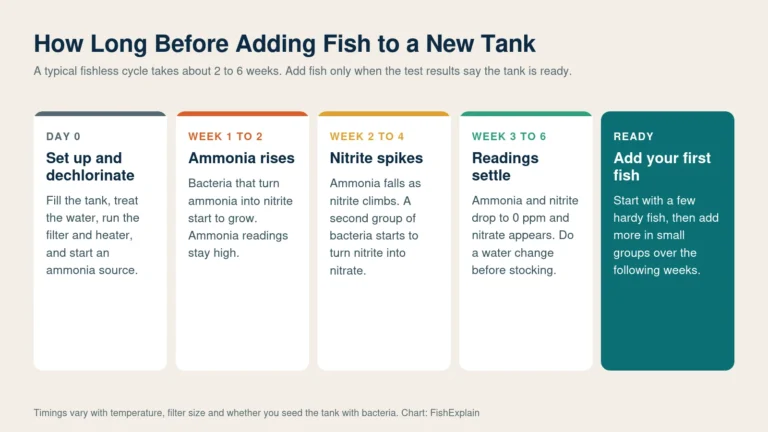
How Long to Wait Before Adding Fish to a New Tank
How long before adding fish to a new tank? Usually 2 to 6 weeks. Learn the water test results that mean it…
 Aquarium Care
Aquarium pH: How to Raise or Lower pH Safely
Aquarium pH guide: ideal ranges for freshwater fish, how KH keeps pH stable, and safe ways to raise or lower pH without…
 Aquarium Care
New Tank Syndrome: Signs, Causes and How to Prevent It
New tank syndrome kills fish in uncycled tanks. Learn the warning signs, what causes ammonia and nitrite spikes, and how to fix…