The minimum betta fish tank size is 5 gallons for a single betta, with a heater, a filter and a lid. A 5 to 10 gallon tank is ideal, giving more swimming space, room for live plants and a bigger safety buffer. Bowls and vases fail because waste builds up fast and most cannot hold a heater or filter.
Pet stores sell Siamese fighting fish (Betta splendens) in cups, so many beginners assume tiny containers are fine. In reality, a cup is only temporary housing. Your fish can survive there, but it cannot thrive.
This guide explains the minimum tank size, the ideal tank size, and why a bowl or vase fails. Also, you will find water parameters, a comparison table, and a setup checklist for a betta tank. For the bigger picture on diet, health, and behavior, see our complete betta fish care guide.

Minimum Vs Ideal Betta Fish Tank Size
For one adult betta, 5 gallons is the practical minimum. Veterinarians at the University of Illinois College of Veterinary Medicine also recommend a 5-gallon tank or larger over a bowl. Below that, water quality and temperature swing too quickly. As a result, even careful owners struggle to keep ammonia at zero and the fish stress-free.
The ideal range is 5 to 10 gallons. A 10-gallon tank gives more swimming space, room for live plants, and a bigger safety buffer. Meanwhile, it costs only slightly more than a smaller aquarium kit.
There is no maximum tank size for a betta. Some keepers use a 20-gallon long. Still, large tanks need gentle water flow and plenty of hiding spots, because long fins tire quickly in open water.
Why The Rice Paddy Myth Misleads Owners
A common myth says bettas live in puddles, so a bowl is natural. In fact, wild bettas come from rice paddies, shallow ponds, and slow streams in Southeast Asia, including the Mekong basin in Thailand.
Those rice paddy fields are shallow, but they stretch for acres. Consequently, waste disperses across huge volumes of water. Natural habitat water stays warm, around 86°F, and dense vegetation offers shade, cover, and resting places.
During the dry season, wild fish may get trapped in shrinking pools. However, that is an emergency drought adaptation, not a lifestyle. Many trapped fish die, so copying those conditions at home makes little sense.
Why Bowls And Vases Fail Bettas
Betta bowls and vases look attractive on a desk. Unfortunately, most hold one gallon or less, and few fit a heater or filter. Without equipment, the water slowly becomes cold, dirty, and low in oxygen.
Vase setups with a peace lily or bamboo on top are worse. Plant roots block the water surface, so the fish struggles to reach air. Moreover, owners often skip feeding, believing the fish eats roots.
Small bowls also limit natural behavior. Bettas like to patrol, flare, explore plants, and build bubble nests. In a cramped bowl, they often become lethargic, develop fin rot, or start glass surfing along the sides.

Ammonia Buildup And The Missing Nitrogen Cycle
Every fish releases ammonia through its gills and waste. Uneaten food and decaying plants add more. In a large, cycled tank, beneficial bacteria convert ammonia into nitrite, then into nitrate, which is far less toxic.
This process is the nitrogen cycle. Those bacteria live mostly in filter media and substrate, so a bowl without a filter has nowhere to host them. Therefore, toxins accumulate quickly, often within a single day.
Ammonia burns gills and fins, even at low levels. To compensate, bowl owners need daily water changes of 50% or more. Unfortunately, those large changes create sudden pH and temperature shifts, which cause further stress.
Temperature Swings In Small Water Volumes
Bettas are tropical fish from Asia. They need steady warm water, ideally between 76°F and 82°F. Most American homes sit near 68 to 72°F, so an unheated bowl usually runs too cold for healthy digestion.
Small volumes also heat and cool very fast. For example, a sunny window or an air conditioner can shift a bowl several degrees within hours. These temperature fluctuations weaken the immune system and invite disease.
Most aquarium heaters are designed for 5 gallons or more. In a one-gallon bowl, even a preset heater can overheat the water. As a result, a 5-gallon tank is the smallest size that heats safely.
Oxygen, Surface Access And The Labyrinth Organ
Bettas own a special breathing structure called the labyrinth organ, described in detail by UF/IFAS Extension. It sits above the gills and lets them gulp air from the surface. Because of it, they tolerate low oxygen better than most aquarium fish.
However, this organ is a backup, not a free pass. Bettas still absorb dissolved oxygen through their gills. Moreover, they must reach the surface easily, so a vase blocked by plant roots is truly dangerous.
The air layer above the water matters too. Bettas breathe that humid air directly, and cold, dry air can harm the organ. Consequently, a covered tank with a small gap at the top works best.
Why 5 Gallons Wins For Most Bettas
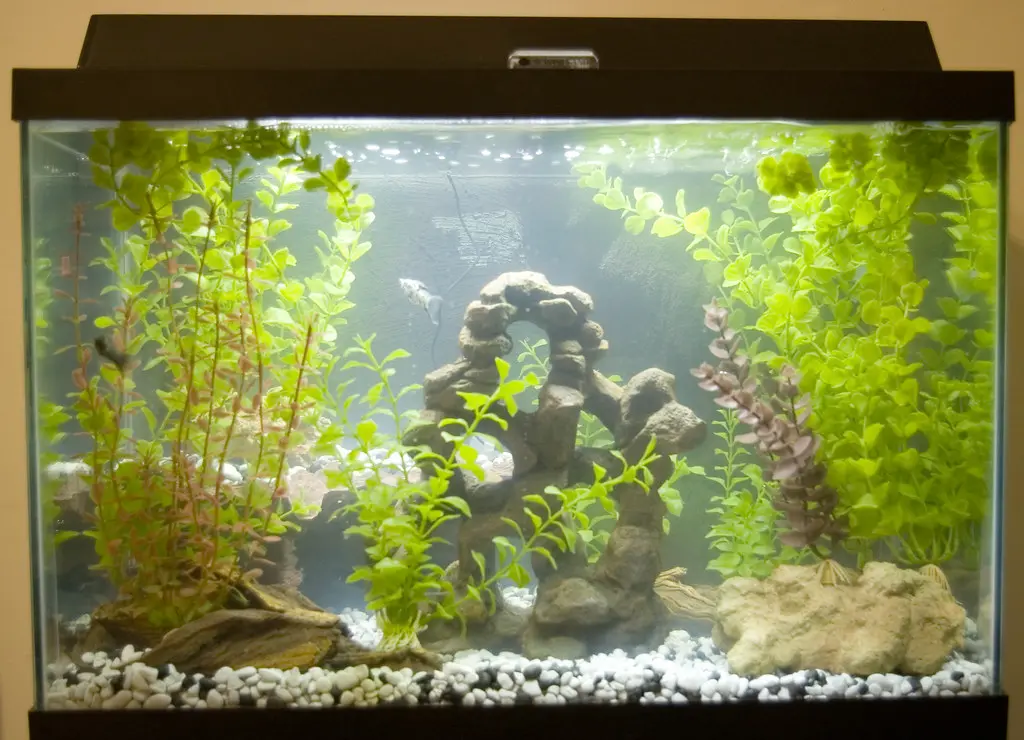
A 5-gallon tank is the point where everything starts working properly. It holds enough water volume to dilute waste, fits a small adjustable heater, and supports a gentle filter with a stable, healthy bacteria colony.
Additionally, 5 gallons gives room for décor, driftwood, and live plants such as Java fern, Anubias, and floating plants. These create the enrichment bettas need. Many owners notice brighter coloration within weeks of upgrading tanks.
Finally, a 5-gallon tank still fits on a desk or dresser. It is affordable, easy to move, and quick to clean weekly. For beginners, it offers the best balance between welfare, budget, and maintenance time.

5 Gallon Vs 10 Gallon Betta Tank
Both sizes work well for one betta, but they suit different owners. A 5-gallon fits small spaces and tight budgets. Meanwhile, a 10-gallon gives more stability, so small mistakes, like overfeeding once, cause fewer problems.
The 10-gallon tank also opens more options. You can add snails, a few nano fish, or a fuller planted tank. In contrast, it weighs about 100 pounds when filled, so it needs a sturdy stand.
Running costs are similar for both sizes. Each needs a 25 to 50 watt heater, a gentle sponge filter, and weekly partial water changes. In short, choose 10 gallons if space allows, otherwise 5 gallons.
| Tank size | Water volume | Stability | Maintenance | Typical setup cost (tank, heater, filter) |
|---|---|---|---|---|
| Cup, bowl or vase | Under 1 gallon | Very poor: ammonia and temperature swing daily | 50% or more water change every day, no nitrogen cycle | $10 to $30 |
| 2.5 to 3 gallon | 2.5 to 3 gallons | Poor to fair: small errors show fast | 2 to 3 partial changes per week | $30 to $60 |
| 5 gallon | 5 gallons | Good: holds a stable cycle | 25 to 30% change weekly | $50 to $100 |
| 10 gallon | 10 gallons | Very good: forgiving for beginners | 25 to 30% change weekly | $70 to $150 |
| 20 gallon long | 20 gallons | Excellent: best for tank mates or sororities | 20 to 25% change weekly, more water to haul | $120 to $250 |
Costs are rough US estimates and vary by brand, lighting, and plants.
Tank Shape And Footprint Matter
Bettas swim mostly horizontally, and long-finned types like halfmoons tire easily. Therefore, a long, wide tank beats a tall, narrow tank of the same volume. The footprint, meaning length times width, matters more than height.
A standard 5-gallon measures about 16 by 8 by 10 inches. A standard 10-gallon measures about 20 by 10 by 12 inches. Ideally, keep water depth under 12 to 15 inches for easy breathing trips.
Avoid hexagon tanks, tall column tanks, and narrow novelty tanks. They offer little horizontal room and usually have poor surface area for gas exchange. A rimless or standard rectangular tank is the safer, smarter choice.
Heater And Gentle Filter Setup
An adjustable heater with a built-in thermostat is essential. A 25-watt model suits 5 gallons, while 50 watts suits 10 gallons. In addition, add a separate thermometer so you can confirm the heater works properly.
Filtration must stay gentle. Strong current pushes bettas around constantly and even tears delicate fins. A sponge filter run by an air pump is ideal. Alternatively, choose a hang-on-back filter with an adjustable flow setting.
If flow feels too strong, baffle it with a piece of filter sponge over the outlet. Meanwhile, watch your fish. A betta that hides constantly or struggles to swim needs calm water and less current.
Why A Betta Tank Needs A Lid
Bettas are strong jumpers. They often leap at insects, reflections, or sudden movements. Without a cover, a startled betta can land on the floor. Unfortunately, many jumping accidents happen at night when no one watches.
A lid also traps warmth and moisture above the water. As explained earlier, that warm humid air protects the labyrinth organ. Additionally, a cover reduces evaporation, so water chemistry stays more stable between water changes.
Leave a gap of about one inch between the water line and the lid. This air gap gives the fish a breathing space. Moreover, a glass lid or mesh cover still lets light reach your plants.
Tank Size For Sororities And Tank Mates
Male bettas must live alone, because two males in one tank will fight, often to the death. Similarly, a male should never share space with long-finned fish like fancy guppies, which can easily trigger aggression.
A betta sorority is a group of female bettas. It needs a 20-gallon tank, five or more females, and heavy planting to break line of sight. Even then, territorial fights happen, so sororities suit experts.
For community tanks, 10 gallons works for nerite snails or ghost shrimp. Schools of rasboras, ember tetras, or corydoras need 15 to 20 gallons. Always watch for fin nipping and keep a backup tank ready. Our guide to what fish can live with bettas covers safe species in detail.

Ideal Water Parameters For Betta Tanks
Tank size only works when the water inside it is also right. Keep temperature steadily between 76°F and 82°F and pH between 6.5 and 7.5. Most importantly, ammonia and nitrite should always read 0 ppm.
Nitrate should stay under 20 ppm, and below 40 ppm at most. Moderate water hardness suits most bettas well. Use a quality liquid test kit weekly, because test strips are less accurate for ammonia readings.
Always treat tap water with a water conditioner to remove chlorine and chloramine. Never use distilled water alone, since it lacks essential minerals fish need. Furthermore, match the new water temperature before every water change.
| Parameter | Target for bettas | Why it matters |
|---|---|---|
| Temperature | 76 to 82°F (24 to 28°C) | Supports digestion, color, and immunity |
| pH | 6.5 to 7.5 | Stability matters more than an exact number |
| Ammonia | 0 ppm | Burns gills and fins even at low levels |
| Nitrite | 0 ppm | Blocks oxygen uptake in the blood |
| Nitrate | Under 20 ppm (40 ppm max) | Builds up between water changes and stresses fish |
| General hardness (GH) | 4 to 12 dGH | Moderate minerals support healthy scales and fins |
Betta Tank Setup Checklist
Start with a 5 to 10-gallon rectangular tank and a fitted lid. Next, rinse your chosen substrate, like fine sand or smooth gravel, thoroughly. Then add driftwood, caves, and live plants for hiding and resting.
Install the heater and the gentle filter, then fill with conditioned water. After that, cycle the tank for four to six weeks. Use bottled bacteria and ammonia source dosing to speed up the whole process.
Before adding your betta, confirm ammonia and nitrite read zero. Then acclimate the fish slowly over 20 to 30 minutes. Finally, feed small portions daily and test the water weekly during the whole first month. Choose a quality pellet from our best betta fish food roundup, and follow our betta feeding schedule to avoid excess waste.
- Rectangular tank of 5 to 10 gallons with a fitted lid and a one-inch air gap.
- Adjustable heater (25 watts for 5 gallons, 50 watts for 10 gallons) plus a thermometer.
- Sponge filter or hang-on-back filter with adjustable, gentle flow.
- Water conditioner and a liquid test kit for ammonia, nitrite, nitrate, and pH.
- Smooth sand or gravel, driftwood, a cave, and live plants such as Java fern, Anubias, and floaters.
- Fishless cycle for four to six weeks, until ammonia and nitrite read 0 ppm.
- Slow acclimation over 20 to 30 minutes before releasing your betta.
Signs Your Betta’s Tank Is Too Small
Bettas show stress signs very clearly once you know what to look for. Clamped fins, dull color, and constant, unusual hiding often point to poor water. Likewise, glass surfing suggests your betta wants more room.
Loss of appetite and lethargy are further warning signs. For example, a betta that sits on the bottom all day may simply be cold. Alternatively, it may be suffering from ammonia burns on its gills.
Repeated fin rot, fungus, or ich outbreaks usually mean unstable conditions. Upgrading to a larger, heated, filtered tank often solves these problems. Our aquarium care section explains routine maintenance step by step. In most cases, the fish recovers its bright color and normal energy quickly.
Betta Tank Size FAQs
Can A Betta Live In A 1-Gallon Tank?
No. A 1-gallon tank cannot hold a heater or a working nitrogen cycle, so ammonia and temperature swing daily. Bettas may survive months there, but they rarely reach their full lifespan.
Is A 3-Gallon Tank OK For A Betta?
A 3-gallon tank is workable only with a heater, filter, and frequent testing. However, it leaves little margin for error. Five gallons is far easier to keep stable, especially for beginners.
Do Betta Fish Need A Bubbler Or Air Stone?
No. Bettas breathe air at the surface, and a gentle filter provides enough surface agitation. Strong bubbles push long fins around and break bubble nests, so a bubbler can cause stress.
How Often Should I Clean A 5-Gallon Betta Tank?
Change about 25 to 30% of the water every week. Vacuum the substrate lightly during each change. Rinse the filter sponge in old tank water monthly to protect beneficial bacteria.
How Long Do Bettas Live In A Proper Tank?
With a heated, filtered tank of 5 gallons or more, bettas commonly live 3 to 5 years. Good diet and clean water are the biggest factors, and some reach 6 years or older.
Can I Keep Two Bettas In A 10-Gallon Tank?
Never keep two males together. A tank divider can split a 10-gallon tank for two males, but each side gets only 5 gallons. Females need a 20-gallon sorority instead.
Pingback: Breeding Betta Fish: Pairing, Bubble Nests and Raising Fry
Pingback: Best Fish Tank Filters: HOB vs Canister vs Sponge
Pingback: Best Nano Fish for Small Tanks: 20 Tiny Species
Pingback: Why Is My Fish Tank Cloudy? Causes and Fixes by Color
Pingback: Fish Tank With Stand: What to Look For Before You Buy