Do Fish Have Teeth? The Short Answer
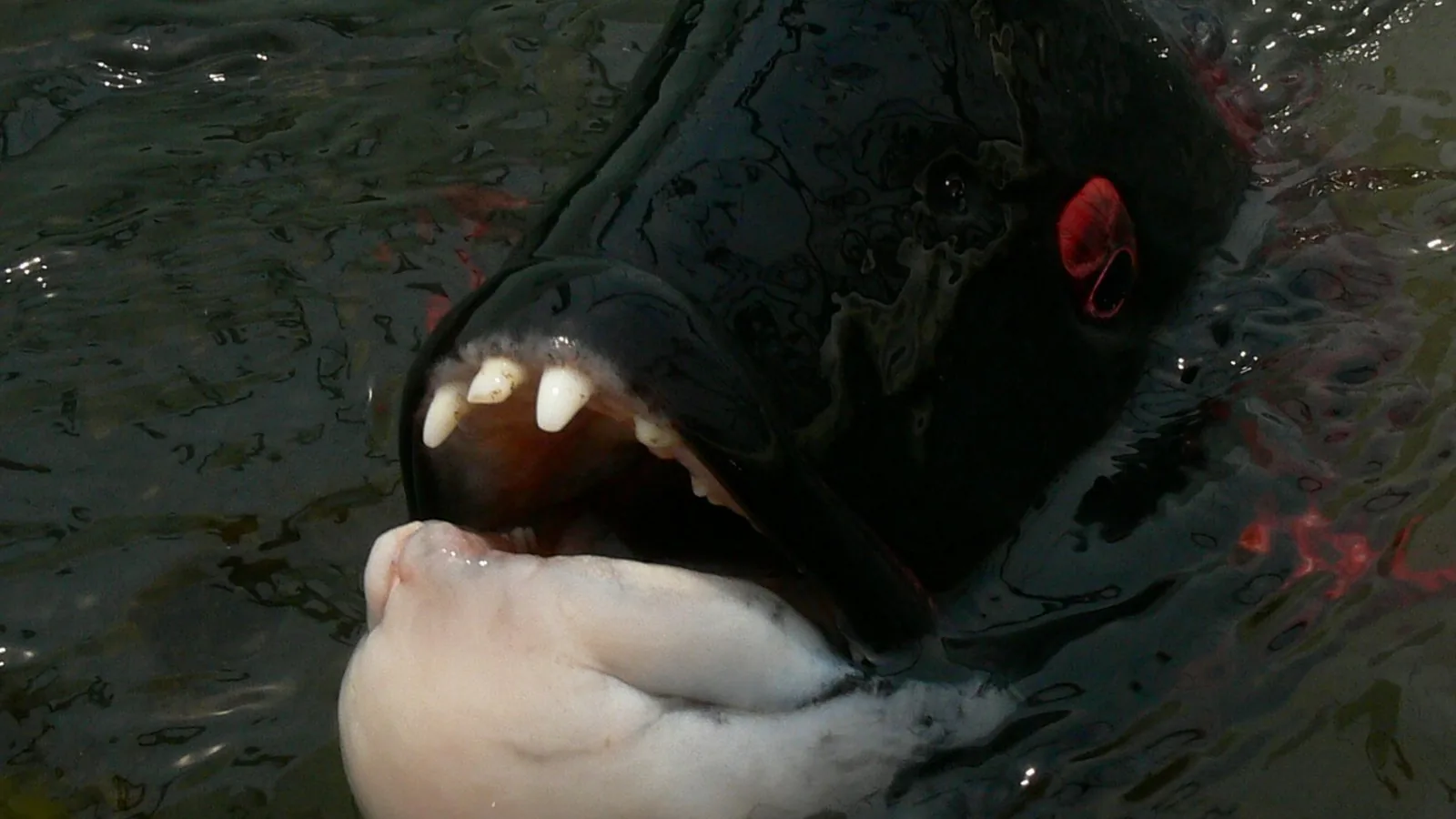
Do fish have teeth? Yes, and the answer surprises most people. Nearly every fish species carries teeth of some kind, from the needle fangs of a pike to the flat grinding plates hidden deep in a goldfish’s throat. Some fish even have teeth that look unsettlingly like our own.
People ask “do fish have teeth” because fish teeth are often tiny, hidden, or located somewhere you would never think to look. A trout’s teeth sit on the roof of its mouth and on its tongue. A carp’s teeth sit behind its gills. A parrotfish’s teeth are fused into a beak.
This guide explains where fish teeth sit, how they differ from mammal teeth, which species have the strangest dentition, and whether your pet betta or goldfish can bite you.
Almost every fish has teeth somewhere
If you ask a biologist “do fish have teeth”, the reply is that fish with teeth are the rule, not the exception. Bony fish, sharks, and rays all evolved teeth early in vertebrate history, and most living species have kept them. The teeth may be microscopic, as in many small schooling fish, or enormous, as in the great white shark. Either way, they are true teeth built from dentine with a hard outer cap.
The exceptions are rare. Seahorses, pipefish, sturgeon, and paddlefish have lost their teeth as adults. Lampreys and hagfish have horny rasping structures, but these are not true teeth and these animals are not true jawed fish. We cover the toothless group later in this article.
Why fish teeth are so easy to miss
Most fish teeth are small and point backward. Their job is to grip slippery prey and guide it toward the throat, not to chew. Because fish swallow food whole, they rarely need large, visible teeth. As a result, a fish can have hundreds of teeth that you would never notice without opening its mouth.
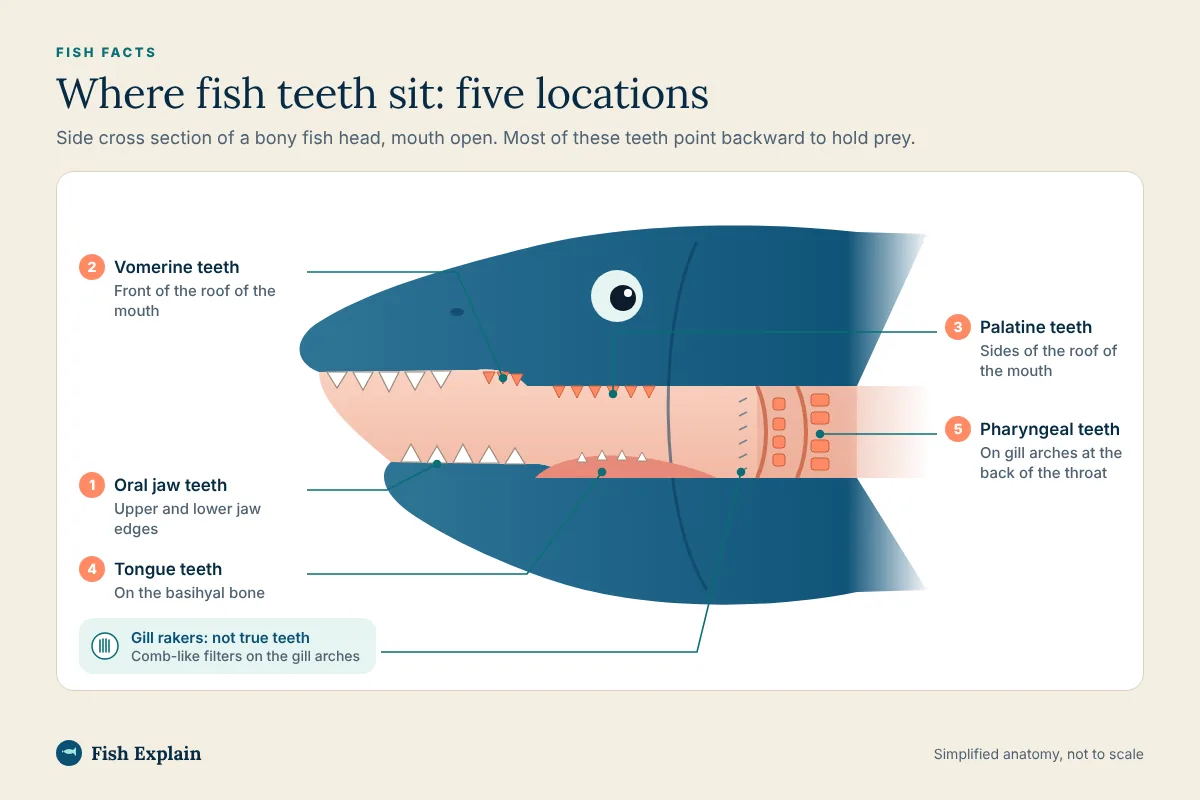
Where Fish Teeth Sit: Five Locations
Oral jaw teeth
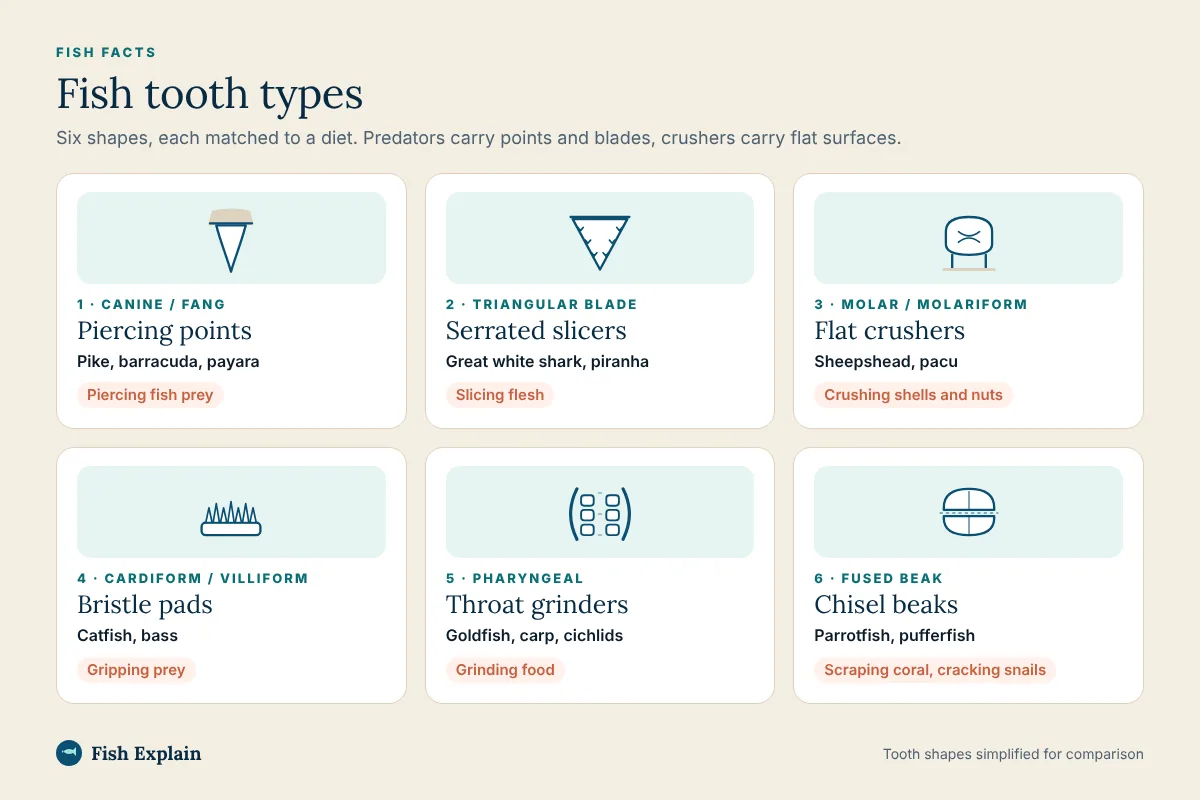
These are the teeth you expect: rows along the upper and lower jaw bones. Pike, barracuda, sharks, piranhas, and walleye all have prominent jaw teeth. Most are canine-shaped for piercing, but sheepshead have flat molars for crushing shells.
Pharyngeal teeth in the throat
Pharyngeal teeth grow on modified gill arches at the back of the throat. Carp, goldfish, koi, and minnows have no teeth in their mouths at all, yet they carry strong grinding teeth here. Cichlids and wrasses also use a second set of jaws in the throat to process food after the mouth has caught it.
Vomerine and palatine teeth on the roof of the mouth
Trout, salmon, pike, and bass carry small teeth on the vomer and palatine bones in the roof of the mouth. Pike have three bands of slender, backward-pointing teeth there, and trout even have teeth on the tongue. These patches keep prey from escaping.
Tooth plates and beaks
Some fish fuse their teeth into solid plates or beaks. Parrotfish, pufferfish, and lungfish fall into this group. The beak works like a chisel or nutcracker rather than a set of individual teeth.
Teeth-like structures that are not teeth
Gill rakers on filter feeders look like a comb of teeth but are not. True teeth grow from a dental lamina and are replaced throughout life.
How Fish Teeth Differ From Mammal Teeth
Do fish have teeth that grow back? Yes, for life
Humans get two sets of teeth and then stop. Most fish are polyphyodont, which means they replace teeth continuously for life. A shark’s jaw works like a conveyor belt: new teeth form in rows behind the functional row and move forward as older teeth fall out. A great white shark may cycle through around 20,000 teeth over its lifetime, with roughly 50 in active use and hundreds more waiting behind them.
Attachment without deep roots
Mammal teeth sit in sockets held by ligaments. Many fish teeth are instead fused directly to the jaw bone or attached by fibrous tissue. Some, including teeth in pike and anglerfish, hinge inward so prey can slide in but cannot back out. This loose attachment is why fish shed teeth so easily.
Enameloid instead of enamel
The hard outer layer on most fish teeth is enameloid, a tissue similar to enamel but built differently during development. Underneath sits dentine, the same material found in human teeth. Parrotfish go a step further. Research from Lawrence Berkeley National Laboratory found that their beak is made of woven fluorapatite crystals, one of the stiffest biominerals ever measured.
Fish With Teeth: 14 Examples Compared
The table below shows how varied fish teeth can be. Diet drives the shape, so predators carry points and blades while shell crushers and plant eaters carry flat surfaces.
| Fish | Tooth type and location | What the teeth do |
|---|---|---|
| Great white shark | Triangular serrated jaw teeth in multiple rows | Slice chunks from large prey; replaced constantly |
| Piranha | Interlocking triangular jaw teeth | Shear flesh; replaced one side of the mouth at a time |
| Pacu | Square molar-like jaw teeth | Crush nuts, seeds and fruit |
| Sheepshead | Front incisors plus rows of molars | Crush barnacles, oysters and crabs |
| Goldfish and carp | Pharyngeal teeth in the throat, none in the mouth | Grind plants, pellets and small invertebrates |
| Channel catfish | Cardiform pads of tiny teeth | Grip prey like a rough brush |
| Northern pike | Jaw canines plus bands on roof of mouth | Impale and hold fish |
| Barracuda | Two rows of pointed jaw teeth, some fang-like | Slash and hold fast prey |
| Lingcod | Large needle canines in jaws and roof of mouth | Hold octopus, crab and fish |
| Parrotfish | About 1,000 teeth fused into a beak | Scrape algae and bite coral |
| Pufferfish | Four teeth fused into a beak | Crack snails, clams and crabs |
| Anglerfish | Long hinged translucent fangs | Trap prey in the dark |
| Payara (vampire fish) | Two long lower fangs plus smaller teeth | Impale fish; fangs fit into holes in the upper jaw |
| Lamprey | Horny rasping plates in a sucker mouth | Scrape flesh; not true teeth, and no jaws |
The sheepshead: a fish with human teeth
The sheepshead (Archosargus probatocephalus) lives along the western Atlantic from Nova Scotia to Brazil. Its front teeth are broad incisors, and the back of its jaw holds several rows of rounded molars. Young sheepshead eat soft prey, but once they pass about 2 inches long they switch to barnacles, oysters and crabs.
Piranhas and pacus: teeth that change in blocks
A University of Washington team CT-scanned 93 specimens from 40 species and found that piranhas and pacus replace all the teeth on one side of the mouth at once. The new teeth form beneath the old ones, so the fish is never toothless. Each side locks together into a single cutting block, which spreads the stress of a bite across every tooth.
Beaks: parrotfish and pufferfish
A parrotfish beak contains roughly 1,000 teeth packed in about 15 rows and cemented together. Fresh rows replace worn tips as the fish bites coral and passes out fine white sand. Pufferfish take the opposite approach with just four teeth, two above and two below, fused into a beak that keeps growing. This is why freshwater puffer fish need hard-shelled snails in their diet: without crunchy food, the beak overgrows and the fish cannot eat.

Do Pet Fish Have Teeth?
Goldfish and koi
Goldfish have no teeth in their mouths. Their teeth sit in the throat on the last gill arch, where flat pharyngeal teeth grind against a hard pad on the skull. Koi share this setup. The faint crunch you hear while a goldfish eats is those throat teeth at work.
Bettas, guppies and tetras
Betta fish have tiny pointed teeth in their jaws, which suits a species that eats insect larvae in the wild. Guppies and tetras also have small jaw teeth. Tetras even belong to the same broad group as piranhas, though their teeth are a fraction of a millimeter long. Good betta fish care includes offering foods those teeth can handle, such as frozen bloodworms and quality pellets.
Cichlids and marine fish
Cichlids have both jaw teeth and pharyngeal jaws, which is one reason the family has adapted to so many diets. Many African cichlids have specialized teeth for scraping algae, crushing snails or plucking scales from other fish. Clownfish have small jaw teeth too, and anyone who has done clownfish care for a few years has probably felt a nip during tank maintenance.
Can Pet Fish Bite, and Does It Hurt?
What a bite from a small fish feels like
Most aquarium fish have teeth, but they cannot break human skin. A betta or clownfish nip feels like a light pinch. Goldfish and koi cannot bite at all with their mouths. Oscars, large cichlids and pacus are different. A pacu’s molars can crush a fingernail, and an adult oscar can draw blood.
When a fish bite needs attention
Fish mouths carry bacteria, so clean any bite that breaks the skin with soap and water. Then watch for redness or swelling over the next two days. Puffer beaks, moray eel teeth and triggerfish teeth cause the deepest wounds among commonly kept fish, so see a doctor if the wound is deep.
Fish That Have No Teeth or Very Few
Seahorses and pipefish
Seahorses and their pipefish relatives have no teeth and no true stomach. They suck tiny crustaceans through a tube-shaped snout and swallow them whole. These are among the strangest fish in the sea, alongside the species in our guide to the rarest fish in the world.
Filter feeders and sturgeon
Whale sharks still carry about 3,000 tiny teeth, but they are useless for feeding. Instead, the shark strains plankton through sponge-like gill rakers. Basking sharks and paddlefish work the same way. Sturgeon lose their teeth as they mature and vacuum food off the bottom. Even some air-breathing walking fish, such as mudskippers, keep only small teeth suited to scraping algae and catching insects.
Unicornfish and other grazers
Grazers keep teeth but simplify them. The unicornfish has a single row of small, notched teeth that trim seaweed like a hedge cutter. Surgeonfish and some blennies have similar comb-like rows.
How Often Fish Replace Their Teeth
Sharks lose thousands
Shark teeth sit in soft tissue rather than bone, so they fall out often. Depending on species and diet, a shark can replace a tooth every week or two. This is why fossil shark teeth are so common on beaches.
Bony fish follow slower cycles
Bony fish replace teeth too, but usually one at a time in a staggered wave so the jaw never loses its grip. Exceptions include piranhas, which swap a whole side at once, and pufferfish, whose beak grows continuously. A diet too soft to wear the beak down is a common cause of feeding problems, a point covered in our guide to common fish diseases.
What Fish Teeth Tell Scientists
Reading diet from fish teeth
Because tooth shape tracks diet so closely, biologists can estimate what a fish eats from a jaw alone. Pointed canines mean a fish hunter. Flat molars mean shellfish or hard seeds. Fused beaks mean coral, algae or armored invertebrates. Comb-like rows mean grazing.
Teeth in the fossil record
Teeth are the hardest part of a fish and often the only part that survives as a fossil. Megalodon is known almost entirely from teeth up to 7 inches long, and museum collections such as those at the Smithsonian use fish teeth to reconstruct ancient food webs and extinction events.
Handling Fish With Teeth Safely
Tools that keep fingers out of the mouth
- Use long-nosed pliers or a hook remover for pike, walleye, barracuda and bluefish.
- Wear cut-resistant gloves when gripping any toothed fish by the jaw.
- Hold pike and muskie behind the gill plate, never by the lower lip.
Fish teeth fun facts
- Goldfish shed and replace their throat teeth throughout life, and owners sometimes find them on the tank floor.
- The payara’s lower fangs are long enough that the upper jaw has two holes for them to slot into.
- A parrotfish beak tip withstands pressures compared by researchers to a stack of 88 elephants on a square inch.
Fish Teeth FAQs
Do all fish have teeth?
Nearly all do. Jawed fish evolved teeth early, and most living species keep them somewhere in the mouth or throat. The clear exceptions are adult seahorses, pipefish, sturgeon and paddlefish. Lampreys and hagfish have rasping plates but no jaws, so they fall outside the true toothed fish group entirely.
Do goldfish have teeth?
Goldfish have no teeth in their mouths. Their teeth are pharyngeal, meaning they sit on a modified gill arch at the back of the throat. These flat teeth grind food against a hard pad on the base of the skull. Goldfish replace these teeth regularly, and shed ones sometimes turn up in the gravel.
Do betta fish have teeth, and can they bite?
Betta fish have small, sharp jaw teeth suited to catching insect larvae. They can and do bite, but the teeth are too tiny to break human skin. A betta nip feels like a light pinch. Bettas use their teeth more often on each other, which is why males must be housed apart.
Which fish has teeth most like a human's?
The sheepshead has the most human-looking teeth of any fish. It carries broad incisors at the front and several rows of rounded molars behind them. The arrangement lets it crush barnacles, oysters and crabs. Pacus also have square molar-like teeth, which is why photos of them often circulate as hoaxes.
How many teeth does a shark have?
A great white shark has about 300 teeth in its jaws at any time, with roughly 50 in the front functional row. Teeth in the rows behind move forward as older ones drop out. Over a lifetime, a single great white may go through around 20,000 teeth.
Why do fish lose teeth so easily?
Most fish teeth attach to the jaw by fibrous tissue or a shallow bony base instead of a deep root in a socket. That weaker attachment lets teeth shed and regrow throughout life. Fish never need a dentist because a replacement tooth is always developing beneath or behind the one in use.
Does a fish bite need medical treatment?
Most pet fish bites do not. Clean any wound that breaks the skin with soap and running water, then watch for redness or swelling. Deep bites from pufferfish, moray eels, triggerfish or large predators can introduce bacteria, so seek medical advice if the wound is deep, keeps bleeding or shows signs of infection.
Final Thoughts
A toothed world hiding in plain sight
So, do fish have teeth? Almost all of them do, just not where you expect. From a goldfish grinding pellets in its throat to a great white shedding a tooth a week, fish teeth are among the most varied structures in the animal kingdom. The next fish you see probably hides far more than it shows.