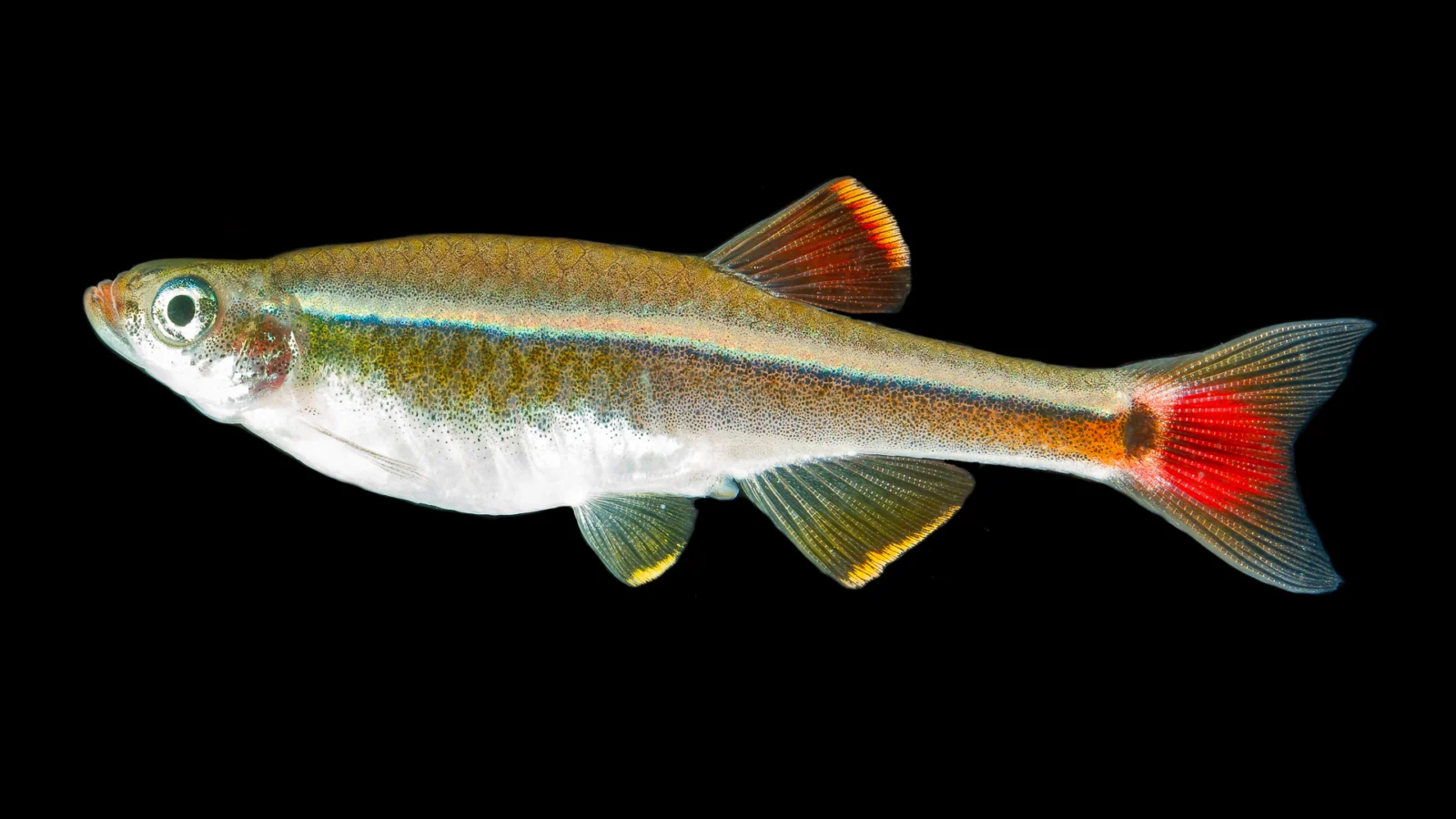
Coldwater Aquarium Fish: 15 Species That Do Not Need a Heater
Coldwater Aquarium Fish: 15 Species That Do Not Need a Heater
Fifteen hardy species that live happily at room temperature, with temperature ranges, tank sizes and the mistakes to avoid in an unheated tank.
By Fish Explain Editorial TeamUpdated November 20, 20267 min read
Photo: Petrtyl (CC BY 4.0), via Wikimedia Commons (cropped)
Coldwater aquarium fish such as white cloud mountain minnows, zebra danios, rosy barbs, variatus platies, medaka, hillstream loaches and goldfish live comfortably at room temperature, roughly 64 to 74 °F. In most heated homes they do not need a heater, as long as the water stays steady and clean.
On this page
What Are Coldwater Aquarium Fish?
Coldwater aquarium fish are species that live comfortably at normal room temperature, so they do not need a heater in most homes. Most popular pet fish come from the tropics and need water held near 76 to 80 °F, but coldwater and temperate species come from cooler streams, ponds and hill country where the water is naturally cooler and changes with the seasons.
In practice, “coldwater” in the hobby usually means water between about 60 and 75 °F. That covers the temperature of most heated homes in the United States. If you are comparing options, our list of tropical freshwater fish covers the species that do need warm water.
Coldwater versus temperate fish
True coldwater fish, such as common goldfish, handle cool water well and can even live in outdoor ponds. Temperate or subtropical fish, such as white cloud minnows and zebra danios, are happiest at ordinary room temperature and dislike both cold winters and very warm tanks.
Why choose an unheated tank?
An unheated tank has one less piece of equipment to buy and one less thing that can fail. Cooler water also holds more oxygen, and many of these fish are hardy, active and long lived. The main tradeoff is that you must pick species that genuinely like cooler water, not tropical fish pushed into a cold tank.
15 Coldwater Aquarium Fish That Do Not Need a Heater
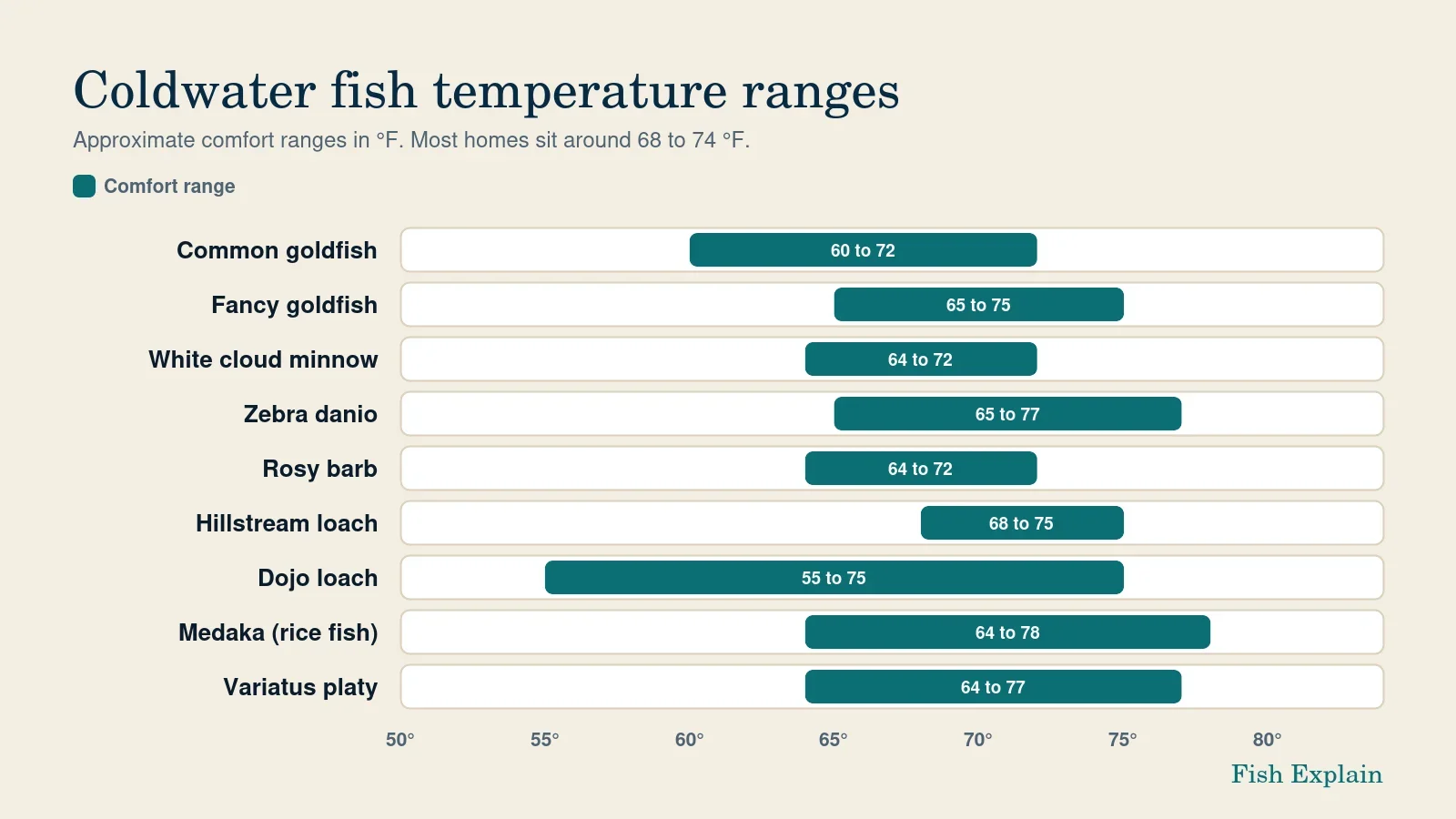
The ranges below are approximate comfort ranges drawn from common care guides. Aim for the middle of each range, and keep the temperature as steady as you can.
| Species | Approx. temperature | Adult size | Minimum tank |
|---|---|---|---|
| White cloud mountain minnow | 64 to 72 °F | 1.5 in | 10 gallons |
| Zebra danio | 65 to 77 °F | 2 in | 20 gallons long |
| Celestial pearl danio | 68 to 76 °F | 1 in | 10 gallons |
| Rosy barb | 64 to 72 °F | 3 to 4 in | 29 gallons |
| Variatus platy | 64 to 77 °F | 2 to 2.5 in | 15 gallons |
| Endler’s livebearer | Room temperature | 1 in | 10 gallons |
| Medaka (Japanese rice fish) | 64 to 78 °F | 1.5 in | 10 gallons |
| Bloodfin tetra | 64 to 78 °F | 2 in | 20 gallons |
| Buenos Aires tetra | 64 to 79 °F | 2.5 to 3 in | 30 gallons |
| Hillstream loach | 68 to 75 °F | 2 to 3 in | 20 gallons long |
| Dojo (weather) loach | 55 to 75 °F | Up to 10 to 12 in | 55 gallons |
| Paradise fish | 61 to 79 °F | 2.5 to 3 in | 20 gallons |
| Rainbow shiner | Cool water | 3 to 3.5 in | 30 gallons |
| Fancy goldfish | 65 to 75 °F | 6 to 8 in | 20 gallons for one |
| Common and comet goldfish | 60 to 72 °F | 10 in or more | 40 gallons or a pond |
Small schooling fish
White cloud mountain minnows are the classic beginner coldwater fish: hardy, peaceful and happy in groups of six or more. Zebra danios are fast, tough swimmers that need a longer tank. Celestial pearl danios are tiny, shy and best in a planted nano tank. Bloodfin and Buenos Aires tetras tolerate cooler water than most tetras, though Buenos Aires tetras eat soft plants.
Barbs and livebearers
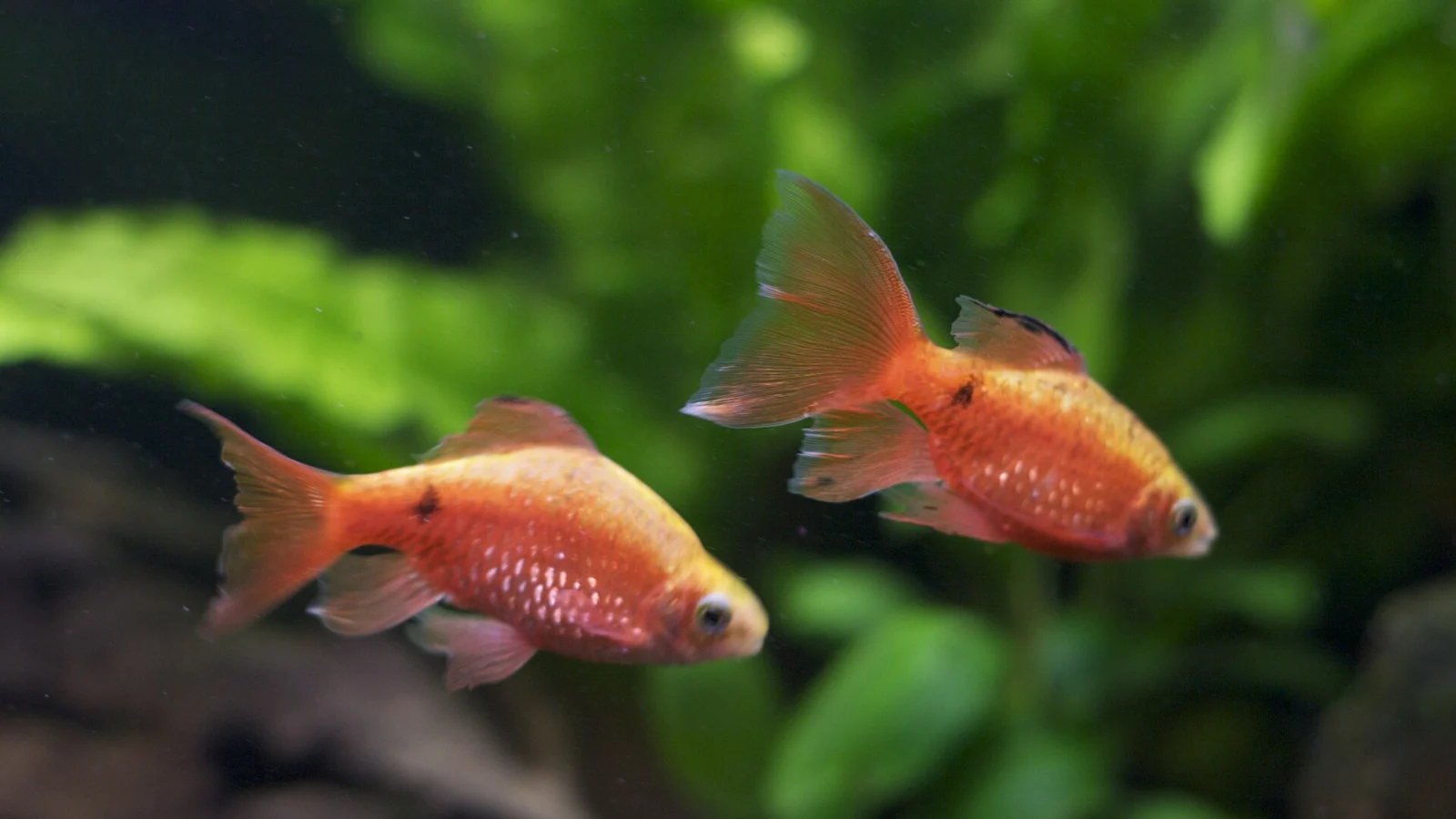
Rosy barbs are larger, active barbs that suit a roomy tank and a group of six or more. Variatus platies and Endler’s livebearers handle a wide temperature range and breed readily. Medaka, or Japanese rice fish, come from rice paddies and handle seasonal changes well.
Bottom dwellers and oddballs
Hillstream loaches cling to rocks in fast, cool, well oxygenated water and graze algae. Dojo loaches are friendly, burrowing fish that grow large and need a big tank with sand. Paradise fish are hardy labyrinth fish, but males are aggressive with each other and with small fish. Rainbow shiners are a striking North American native, though they can be hard to find.
Goldfish
Goldfish are the best known coldwater fish, but they grow large and produce a lot of waste, so they need far more space than most beginners expect. Our full goldfish care guide covers tank sizes and feeding in detail.
Do Coldwater Fish Really Not Need a Heater?
In most heated homes, the answer is yes. The key question is not whether you own a heater, but how warm and how stable your room stays through the year.
Check your room temperature first
Put an aquarium thermometer in the tank and read it in the morning and evening for a week. If the water stays inside the range for your chosen fish, you can skip the heater. If the room drops into the low 60s °F on winter nights, even coldwater fish benefit from steadier water.
When a small heater still helps
A low wattage preset heater can stop sudden drops without making the tank tropical. Set it near the bottom of your fish’s range so it only switches on in cold weather. Our fish tank heater guide and heater size chart explain how to pick a safe model.
Summer heat is the bigger risk
Many coldwater fish struggle more with heat than with cold. Keep the tank away from windows and heating vents, leave a gap under the lid for airflow, and add extra surface movement in hot weather because warm water holds less oxygen.
Setting Up an Unheated Coldwater Tank
Tank size and filtration
Coldwater fish are often active swimmers, so a longer tank is better than a tall one. Use a filter rated for your tank size, and cycle the tank before adding fish so beneficial bacteria can handle the waste. Our list of freshwater fish for fish tanks can help you plan a full stocking list.
Plants and decor for cooler water
Many hardy plants grow well at room temperature, including java fern, anubias, hornwort, elodea, vallisneria and java moss. Smooth stones and driftwood suit loaches, while open swimming space suits danios and barbs.
Water quality
Cooler water does not mean dirtier water is acceptable. Test ammonia, nitrite and nitrate weekly at first, and change 20 to 25 percent of the water each week using dechlorinated tap water at a similar temperature.
Feeding in cooler water
Fish metabolism slows as water cools, so coldwater fish usually eat a little less than tropical fish of the same size. Feed small amounts once or twice a day, only as much as the fish finish in a minute or two, and remove leftovers. Use a quality flake or micro pellet for small schooling fish, sinking pellets or wafers for loaches, and add frozen daphnia or brine shrimp a few times a week for variety. Goldfish do best on sinking pellets made for goldfish, which reduce the gulping of air at the surface.
Lighting and lids
A normal LED aquarium light on a timer for about 8 hours a day suits most unheated tanks. Fit a lid, because danios, rice fish and hillstream loaches can jump or climb, and a lid also slows evaporation.
Coldwater Tank Mates and Community Ideas
Good combinations
- White cloud minnows with variatus platies and cherry shrimp in a 20 gallon tank
- Zebra danios with rosy barbs and a hillstream loach in a 30 gallon long tank
- Medaka with snails and floating plants in a small planted tank
Shrimp and snails also suit cooler tanks. Our guide to freshwater animals for a fish tank covers the best invertebrates.
Combinations to avoid
Do not mix goldfish with small tropical fish. Goldfish can eat tiny fish, need cooler water than most tropicals and produce heavy waste. Paradise fish are also best kept with sturdy fish of a similar size, not with tiny nano species.
Common Mistakes With Coldwater Fish
Keeping tropical fish without a heater
Bettas, most tetras, gouramis and many other popular fish are tropical. Keeping them in cool water weakens their immune system and leaves them open to disease such as ich. If a fish is sold in a heated display tank, check its range before buying.
Assuming goldfish suit a bowl
Goldfish are coldwater fish, but they are not small fish. A bowl or tiny tank leads to ammonia buildup, stunted growth and a short life.
Ignoring big temperature swings
A tank that drops 8 to 10 degrees overnight stresses even hardy species. Steady temperatures matter more than the exact number. The Aquarium Co-op guide to coldwater fish gives more species ideas if you want to explore beyond this list.
Coldwater Aquarium Fish FAQs
What fish can live in a tank without a heater?
White cloud mountain minnows, zebra danios, rosy barbs, variatus platies, medaka, hillstream loaches, dojo loaches and goldfish all live well at normal room temperature in most homes.
What temperature is considered coldwater for fish?
In the aquarium hobby, coldwater usually means about 60 to 75 °F. Many temperate species do best around 64 to 72 °F.
Can tropical fish live without a heater?
Not reliably. Tropical fish such as bettas, tetras and gouramis need steady warm water, and cool water weakens their immune system.
Can I keep goldfish with white cloud minnows?
It is sometimes done, but adult goldfish can eat small fish and need a much larger tank. Keep goldfish with other goldfish of a similar type for the safest setup.
Do coldwater fish need a filter?
Yes. Every fish produces ammonia, so a cycled filter is needed whether the tank is heated or not.
Final Thoughts
Pick the fish to match your room
Coldwater aquarium fish make it easy to run a healthy tank without a heater, as long as you choose species that truly like room temperature and keep the water steady and clean. Start with hardy fish such as white cloud minnows, zebra danios or variatus platies, check your room temperature through the seasons, and give goldfish the large tank they need. For more species ideas, browse our freshwater fish species guide.
Keep exploring
More fish guides

Keep exploring
 Aquarium Fish
Cherry Shrimp Care: Tank Setup, Water Parameters and Breeding
Cherry shrimp care made easy: tank setup, ideal water parameters, feeding, molting, breeding and safe tank mates for a thriving colony.
 Aquarium Fish
Cheap Freshwater Fish: 15 Hardy Species That Cost Under $5
Cheap freshwater fish that stay hardy: 15 species under $5, with sizes, tank needs and a sample budget stocking plan for a…
 Aquarium Fish
Types of Freshwater Fish: 40 Species by Family, With Facts
Types of freshwater fish explained: 40 species across trout, bass, catfish, carp, cichlid, perch and more, with quick facts and where each…