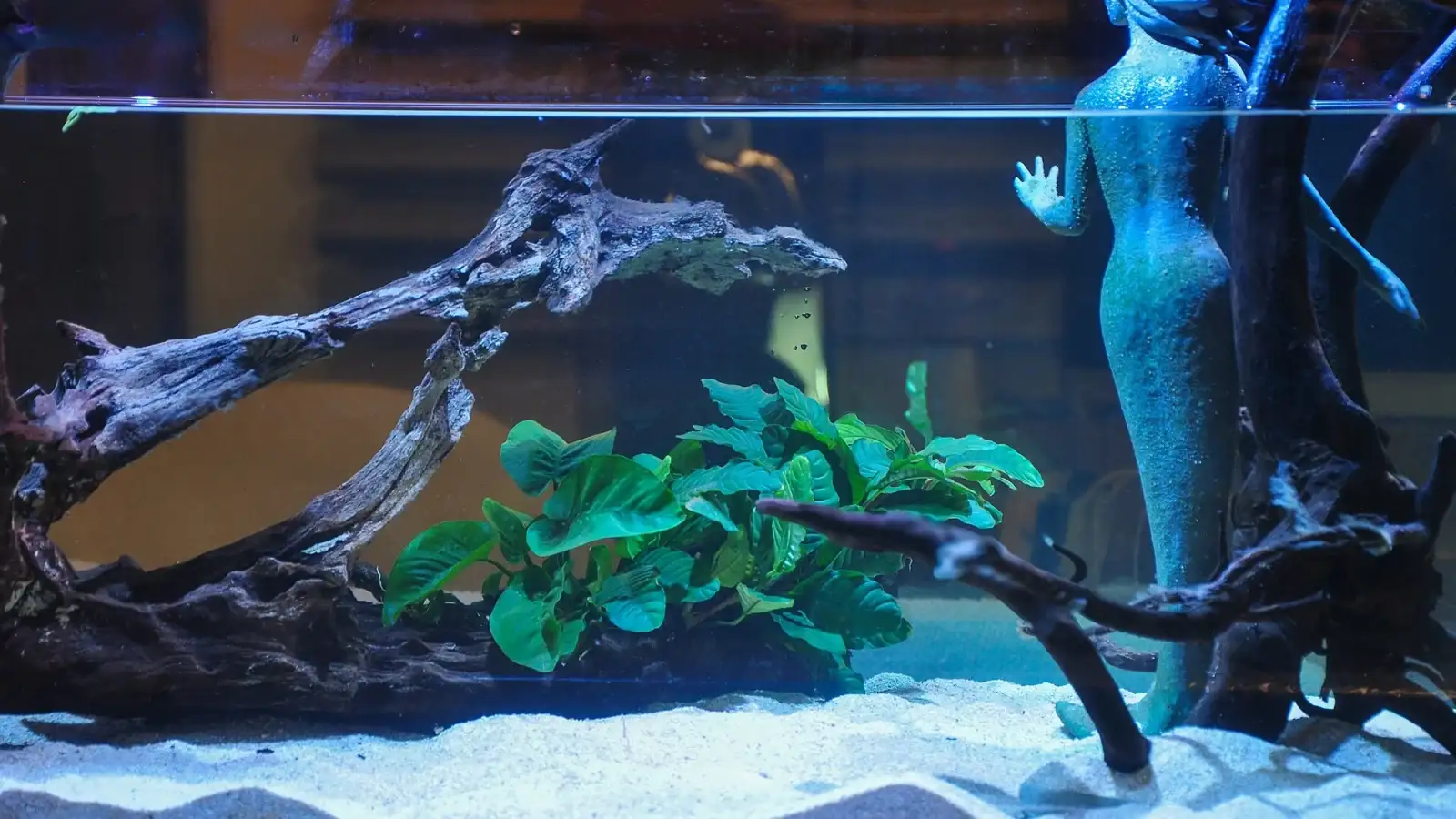
Aquarium pH: How to Raise or Lower pH Safely
Most freshwater aquarium fish do well at a pH between 6.5 and 7.5, and captive bred fish adapt to a wider range if the pH stays stable. To raise aquarium pH slowly, add crushed coral or aragonite to the filter or substrate and increase surface agitation. To lower it, use driftwood, botanicals such as catappa leaves, peat, or blend in RO water. Change pH by only a few tenths per day, and check KH first, because low KH causes sudden pH crashes.
Aquarium pH tells you how acidic or alkaline your tank water is. It affects how comfortable your fish feel, how well beneficial bacteria work, and how toxic ammonia becomes. Yet pH is also the parameter that beginners most often over correct, sometimes with worse results than doing nothing.
This guide explains what aquarium pH means, the ideal range for common freshwater fish, why pH changes, and the safest ways to raise or lower pH in a fish tank when you really need to.
What Is Aquarium pH?
pH is a scale from 0 to 14 that measures how acidic or alkaline water is. A pH of 7.0 is neutral. Values below 7 are acidic and values above 7 are alkaline, also called basic.
The pH Scale Is Logarithmic
Each whole number on the scale is ten times stronger than the next. Water at pH 6.0 is ten times more acidic than water at pH 7.0, and one hundred times more acidic than water at pH 8.0. That is why a drop of a full point in a day can shock fish, even though the numbers look close.
pH, KH and GH
Three tests work together:
- pH measures acidity right now.
- KH (carbonate hardness) measures the water’s buffering capacity, or how well it resists pH changes.
- GH (general hardness) measures dissolved calcium and magnesium, which fish and plants use for body functions.
If your KH is low, pH can swing quickly. If your KH is high, pH stays steady and is hard to move. Our guide to aquarium water parameters explains all three tests and their target ranges.
Ideal Aquarium pH for Freshwater Fish
Most community fish live happily between 6.5 and 7.5. Some species come from very soft, acidic rivers, while others come from hard, alkaline lakes.

| Fish | Preferred pH | Water Type |
|---|---|---|
| Discus | 6.0 to 7.0 | Soft, warm, acidic |
| Neon and cardinal tetras | 6.0 to 7.5 | Soft to moderate |
| Angelfish | 6.5 to 7.5 | Soft to moderate |
| Corydoras | 6.5 to 7.8 | Soft to moderate |
| Guppies, mollies and platies | 7.0 to 8.0 | Moderate to hard |
| Goldfish | 7.0 to 8.0 | Moderate to hard |
| African rift lake cichlids | 7.8 to 9.0 | Hard, alkaline |
Stability Matters More Than a Perfect Number
Today most aquarium fish are captive bred and adapt well to local water. A stable pH of 7.6 is far better than a pH that bounces between 6.6 and 7.2 because of constant adjustments. Aqueon advises that it is generally not necessary to change aquarium pH unless you are keeping or breeding sensitive species. Choose fish that suit your tap water whenever you can.
How to Test Aquarium pH
Liquid Kits, Strips and Meters
Liquid test kits are accurate and inexpensive. Test strips are fast but less precise. Digital pH meters are the most precise option, but they must be calibrated regularly. Whichever you use, test your tap water too, so you know what each water change adds.
When to Test
Test pH weekly, and at the same time of day. In planted tanks, pH often rises during the day as plants use carbon dioxide and falls at night as CO2 builds up. Testing at random times can make normal daily swings look like a problem.
Why Aquarium pH Changes
pH Drops Over Time
In most tanks, pH slowly falls. Fish waste, the nitrogen cycle and decaying food all produce acids that use up the water’s KH. Once KH runs out, pH can crash suddenly, which can kill fish. Regular fish tank water changes replace lost KH and keep pH steady.
What Raises pH
Rocks and substrates that contain calcium carbonate, such as limestone, crushed coral, aragonite and some decorative stones, slowly dissolve and push pH and KH up. Strong aeration also raises pH slightly by driving off carbon dioxide.
What Lowers pH
Driftwood, peat, leaf litter and CO2 injection in planted tanks all lower pH. Heavy stocking and overfeeding lower it too, because they speed up acid production.
How to Raise Aquarium pH Safely
Raise pH only if it is below your fish’s range or keeps crashing. These methods work gradually.
1. Add Crushed Coral or Aragonite
Place crushed coral or aragonite in a mesh bag in your filter, or mix it into the substrate. It dissolves slowly, raising both KH and pH. Aquarium Co-Op suggests about 1 pound of crushed coral per 10 gallons as a starting point. Test every few days and add or remove some until pH settles.
2. Increase Surface Agitation
Raise the filter outflow, add an air stone, or lower the water level slightly so the surface ripples. This releases dissolved CO2 and nudges pH upward.
3. Use Baking Soda Carefully
Sodium bicarbonate raises KH and pH quickly, which makes it easy to overdo. Dissolve a small amount in a cup of tank water, add it slowly over several hours, and retest before adding more. Never add it directly where fish are swimming.
4. Change Water More Often
If your tap water has a higher pH and KH than the tank, regular partial water changes will raise pH gently on their own. Always treat new water first, using the steps in how to dechlorinate water for a fish tank.
How to Lower Aquarium pH Safely
Lower pH only for fish that truly need soft, acidic water, such as wild caught tetras, discus or some dwarf cichlids.
1. Add Driftwood and Botanicals
Driftwood, catappa (Indian almond) leaves and alder cones release tannins that lower pH gently and tint the water a tea color. This is the slowest and safest method.
2. Filter Through Peat
Aquarium peat placed in a filter bag softens the water and lowers pH. Use peat sold for aquariums, not garden peat that may contain fertilizer.
3. Blend in RO or Distilled Water
Reverse osmosis (RO) water has almost no minerals. Mixing it with tap water lowers KH and pH together. Pure RO water has no buffer at all, so always blend it or add a remineralizer. Our guide to spring or distilled water for a fish tank explains the trade offs.
4. Remove Rocks That Raise pH
If pH is high for no obvious reason, test your rocks and substrate. A few drops of vinegar that fizz on a stone show that it contains carbonate and is pushing pH up.
A Note on pH Down Products
Chemical pH reducers work fast, but in water with high KH the pH often bounces back within hours, which causes repeated swings. Some also contain phosphates that feed algae. Use them only with a clear plan and frequent testing.
How Fast Should You Change pH?
Change pH slowly. A common guideline is a shift of only a few tenths of a unit per day, and never a full point in one go. When you move fish between tanks with different pH, follow a slow drip method like the one in how to acclimate fish.
Signs of pH Stress
- Fast breathing or gasping at the surface
- Clamped fins and dull color
- Darting, scratching or erratic swimming
- Excess slime coat or cloudy eyes
pH, Ammonia and the Nitrogen Cycle
pH also changes how dangerous ammonia is. At higher pH, more ammonia exists in its toxic free form, so the same ammonia reading is more harmful at pH 8.0 than at pH 6.8. Very low pH, below about 6.0, slows the beneficial bacteria that process waste, which can stall the nitrogen cycle. Read more in our guide to ammonia in a fish tank.
Matching Fish to Your Water
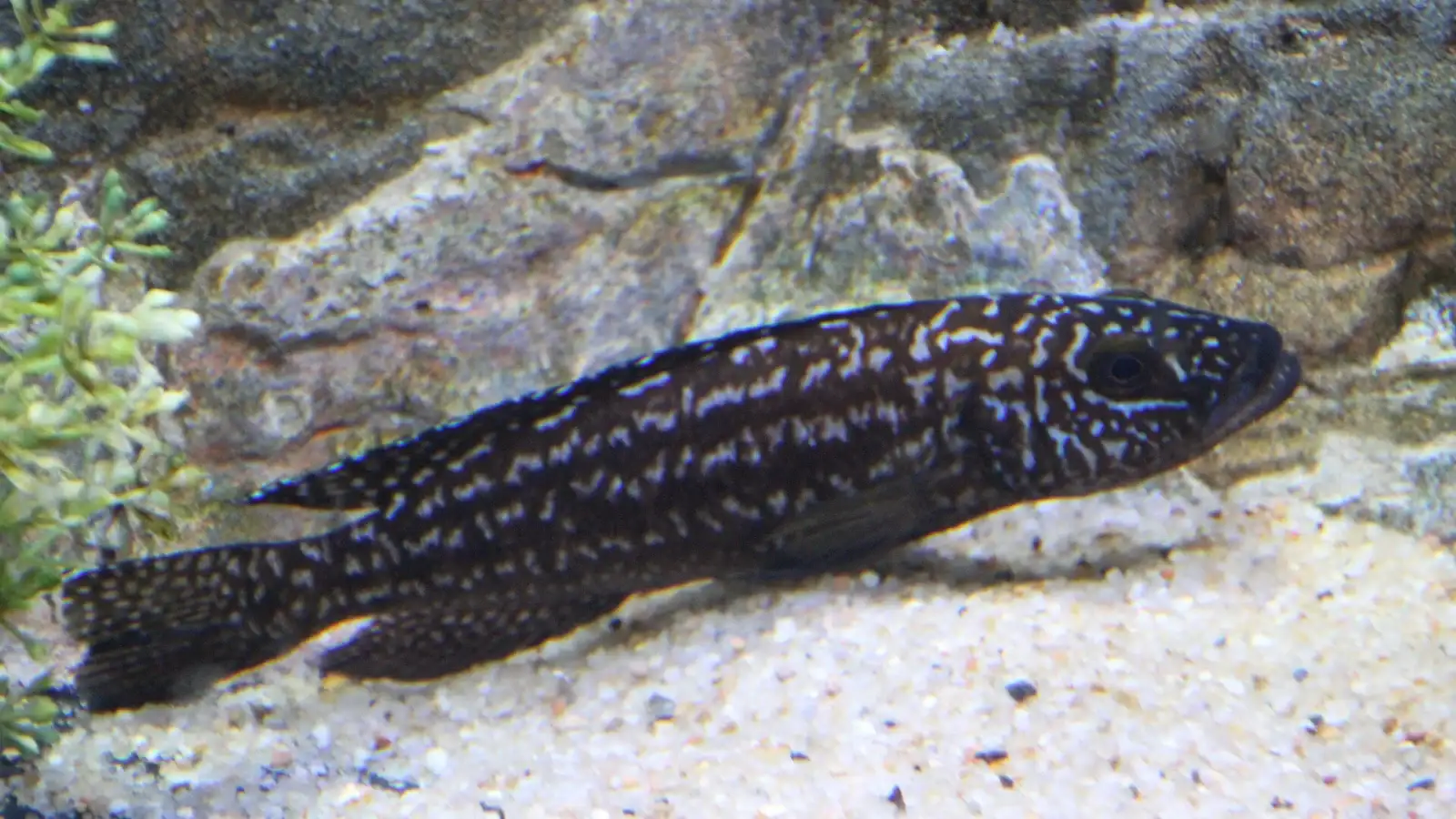
The easiest pH strategy is to stock fish that suit your tap water. Hard, alkaline water suits livebearers, goldfish and African cichlids. Soft, acidic water suits tetras, rasboras and discus. If you are still planning a tank, our guide on how to set up a fish tank covers testing your water before you buy fish.
Aquarium pH Checklist
- Test pH and KH weekly at the same time of day
- Aim for a stable reading, ideally between 6.5 and 7.5 for community fish
- Keep KH above about 3 to 4 dKH to prevent crashes
- Raise pH with crushed coral, aeration or careful baking soda
- Lower pH with driftwood, botanicals, peat or RO water
- Change pH by no more than a few tenths per day
Frequently Asked Questions
What is the ideal pH for a freshwater aquarium?
Most community freshwater fish do well between 6.5 and 7.5. Soft water species such as discus prefer 6.0 to 7.0, while African rift lake cichlids need about 7.8 to 9.0.
How do I raise the pH in my fish tank naturally?
Add crushed coral or aragonite to the filter or substrate, increase surface agitation, and do regular water changes if your tap water has a higher pH.
How do I lower the pH in my aquarium naturally?
Add driftwood, catappa leaves or aquarium peat, or blend reverse osmosis water with tap water. These methods work slowly and gently.
Why does my aquarium pH keep dropping?
Fish waste and the nitrogen cycle produce acids that use up the water’s carbonate hardness (KH). When KH runs low, pH falls. Regular water changes and crushed coral help restore KH.
Is a high pH bad for fish?
Not always. Many fish adapt to a stable pH outside their ideal range. A high pH does make ammonia more toxic, so keep ammonia at zero and avoid sudden swings.
Keep exploring
 Aquarium Care
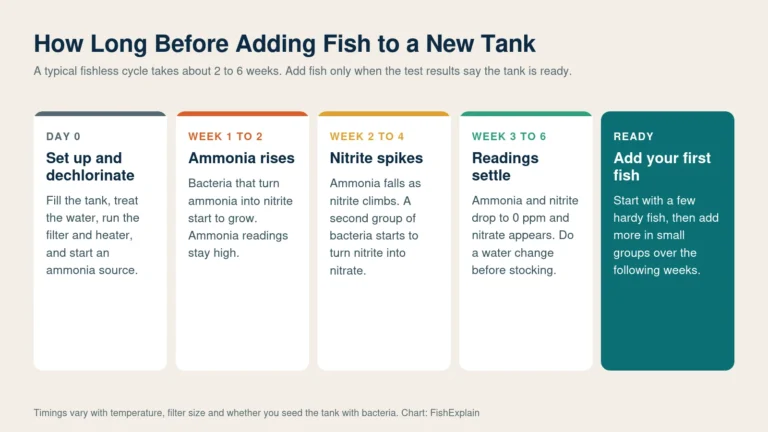
How Long to Wait Before Adding Fish to a New Tank
How long before adding fish to a new tank? Usually 2 to 6 weeks. Learn the water test results that mean it…
 Aquarium Care
New Tank Syndrome: Signs, Causes and How to Prevent It
New tank syndrome kills fish in uncycled tanks. Learn the warning signs, what causes ammonia and nitrite spikes, and how to fix…
 Aquarium Care
Glass vs Acrylic Fish Tanks: Which Should You Buy?
Glass vs acrylic aquarium compared: weight, strength, clarity, scratches, cost and stand needs, so you can pick the right fish tank for…