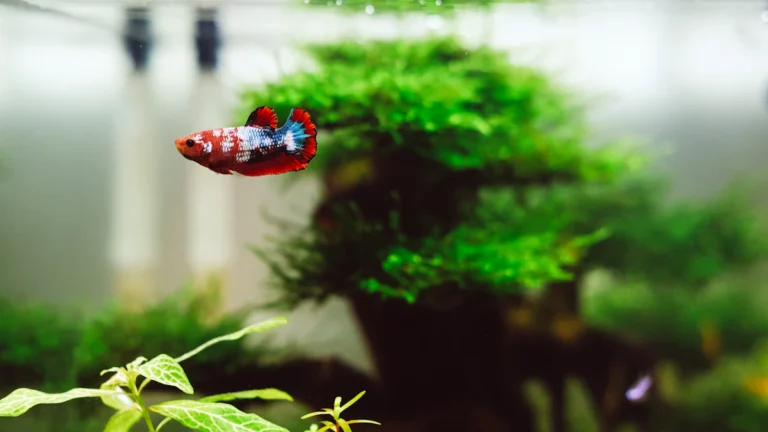
Spring or Distilled Water: The Short Answer
Using distilled water for fish tank top-offs and water changes sounds like the cleanest option. In practice, “too pure” is a real problem for fish. Spring water sits in the middle: some brands work well, others are too hard or too soft. This guide compares every common water type, explains GH, KH and pH in plain English, and shows how to change water safely.
Aquarium Water Types Compared
Each water source differs in two ways that matter to fish. The first is mineral content. The second is whether it carries a disinfectant such as chlorine or chloramine.
| Water type | Minerals and buffer | Chlorine or chloramine | Safe for fish? |
|---|---|---|---|
| Distilled | Almost none | None | Not on its own. Use for top-offs, blending or remineralizing |
| Reverse osmosis (RO) | Very low | Removed by the system | Not on its own. Same uses as distilled |
| Spring water (bottled) | Low to moderate, varies by brand | Usually none | Often yes, if the label and tests fit your fish |
| Mineral water (bottled) | High | Usually none | Rarely a good fit. Often too hard, sometimes high in sodium |
| Tap water, untreated | Varies by town | Yes | No. Disinfectants harm gills and beneficial bacteria |
| Tap water, conditioned | Varies by town | Neutralized | Yes. The best everyday choice for most tanks |
Notice that “clean” and “safe” are not the same thing. Distilled water is very clean, yet it fails the mineral test. Tap water carries chemicals, yet it becomes safe in minutes once treated.

GH, KH, pH and TDS in Plain English
Four readings explain almost every water question. You do not need chemistry training to use them. You only need to know what each one tells you.
GH: General Hardness
GH measures dissolved calcium and magnesium. Fish use these minerals for bones, scales and salt balance. Snails and shrimp need them to build shells and molt. Aquarium kits usually report GH in degrees (dGH) or parts per million (ppm). One degree equals about 17.9 ppm.
Water utilities often report hardness in mg/L, which is the same as ppm. The US Geological Survey’s guide to water hardness classes 0 to 60 mg/L as soft, 61 to 120 as moderately hard, 121 to 180 as hard and anything above 180 as very hard. Some reports use grains per gallon instead, where one grain equals about 17.1 mg/L.
KH: Carbonate Hardness
KH measures carbonates and bicarbonates. Think of it as the tank’s shock absorber. Fish waste, the nitrogen cycle and dissolved CO2 all add acid to the water every day. KH soaks up that acid, so pH stays steady. When KH runs out, pH can fall quickly.
pH: Acid or Alkaline
pH runs from 0 to 14, with 7 as neutral. Most community fish do well somewhere between about 6.5 and 7.8. However, a stable pH matters more than hitting an exact number. Sudden swings stress fish far more than a steady reading slightly outside the ideal range.
TDS: Total Dissolved Solids
TDS is the total amount of everything dissolved in the water, in ppm. A cheap TDS pen estimates it from electrical conductivity. It cannot tell you which minerals are present, but it is a quick check. Distilled and RO water should read close to zero.
As a general guide, many community tanks do well with GH around 4 to 12 dGH and KH around 4 to 8 dKH. Soft-water and hard-water species sit outside that band, so always check your fish’s needs.

Why Distilled Water for Fish Tank Use Is Risky on Its Own
Distilled water is made by boiling water and condensing the steam. Almost all minerals stay behind. That makes it great for steam irons and lab work. For fish, it creates three problems.
1. No Minerals for Salt Balance
Freshwater fish live in water that is less salty than their blood. Water constantly moves into their bodies through the gills, and they lose salts in their urine. To stay balanced, they actively pull minerals back in from the water. This process is called osmoregulation.
In mineral-free water, fish work harder to hold on to essential salts. Over time that adds stress, which weakens the immune system. Stressed fish are more likely to pick up problems such as ich and other parasites.
2. No Buffer, So pH Swings
Distilled water has no KH. It also absorbs CO2 from the air, so it is often slightly acidic, below 7, even before it reaches the tank. Once fish and bacteria add their own acids, nothing holds the pH up. It can drop sharply between water changes.
A falling pH also slows the beneficial bacteria in your filter. That can lead to ammonia problems and sometimes cloudy water. Our guide to why a fish tank gets cloudy explains how bacterial upsets show up.
3. Shrimp and Snails Cannot Build Shells
Invertebrates need calcium and magnesium to grow and molt. In pure distilled water, shrimp may fail to molt properly, and snail shells can thin, pit or crack.
When Distilled or RO Water Is Useful
Pure water is a tool, not a full replacement. Used the right way, it solves several common problems.
- Topping off evaporation. Evaporation removes pure water and leaves minerals behind. If you top off with tap water, hardness slowly creeps up. Distilled or RO water replaces only what left.
- Softening very hard tap water. Blend pure water with tap water to bring GH and KH down. A 50/50 mix roughly halves the hardness. For example, tap water at 16 dGH mixed equally with distilled water gives about 8 dGH.
- Soft-water species. Many tetras, discus, some rasboras and bee or crystal shrimp prefer soft, slightly acidic water. Keepers often start from RO water and add minerals back.
- Remineralizing to a target. Aquarium remineralizer products add calcium, magnesium and, in some cases, carbonates. This lets you build water with exact GH and KH values.
- Problem tap water. If your tap water has high nitrate, phosphate or silicate, pure water gives you a clean base to work from.
The key rule: change one thing at a time. Move from your current water to a new blend over several water changes, not in one step.
Spring Water for a Fish Tank: Labels Matter
Spring water for fish tank use is often a reasonable choice, especially for a small tank. It usually contains some minerals, and bottled water is rarely treated with chloramine. The catch is that “spring water” tells you where the water came from, not what is in it.
What to Look for on the Label
- Plain and unflavored. Avoid flavored, sparkling, vitamin or “electrolyte” waters.
- Spring water, not “purified” or “drinking” water. Purified water is often distilled or RO water, so it carries the same risks as distilled.
- A mineral or TDS listing. Many brands publish a water quality report online with calcium, magnesium and TDS values.
- Not “mineral water” unless you have checked. Under US bottled water rules, mineral water must contain at least 250 ppm dissolved solids. That is often too hard for soft-water fish.
Consistency Is the Real Issue
Mineral content can differ widely between brands and even between sources for one brand. Switching brands can change GH, KH and pH overnight. If you use spring water, pick one brand, test it, and stay with it.
Spring water works best for nano tanks and single-fish setups. For example, a betta in a 5 gallon tank needs only a gallon or so per weekly change. Our betta fish care guide covers temperature and routine for these small tanks.
Tap Water Done Right: Chlorine, Chloramine and Conditioner
For most people, tap water is the best base for a fish tank. It is cheap, consistent and already contains minerals. It just needs one step first.
Why Untreated Tap Water Harms Fish
US utilities disinfect drinking water with chlorine or chloramine. The EPA’s fact sheet on chloraminated water in aquariums says both must be neutralized or removed for aquarium use. They enter a fish’s bloodstream through the gills. They can also prevent the growth of the beneficial bacteria a healthy tank relies on.
Chlorine vs Chloramine
Free chlorine slowly gasses off if water stands in an open container. Chloramine, a mix of chlorine and ammonia, is much more stable. It can stay in the water for weeks, so aging tap water overnight does not make it safe. Many US cities use chloramine. Your utility’s annual water quality report will tell you which one yours uses.
Choosing a Water Conditioner
- Pick a conditioner labeled to remove both chlorine and chloramine.
- When a conditioner breaks chloramine apart, ammonia is left behind. Many products also bind or detoxify that ammonia, so look for that on the label.
- Dose for the volume of new water, or for the whole tank if you add tap water directly. Follow the label.
- Your filter’s bacteria then process the bound ammonia. A properly sized filter helps, and our guide to the best fish tank filters explains how much flow a tank needs.
Avoid water from a home water softener. Most softeners swap calcium and magnesium for sodium, which does not suit most freshwater fish.
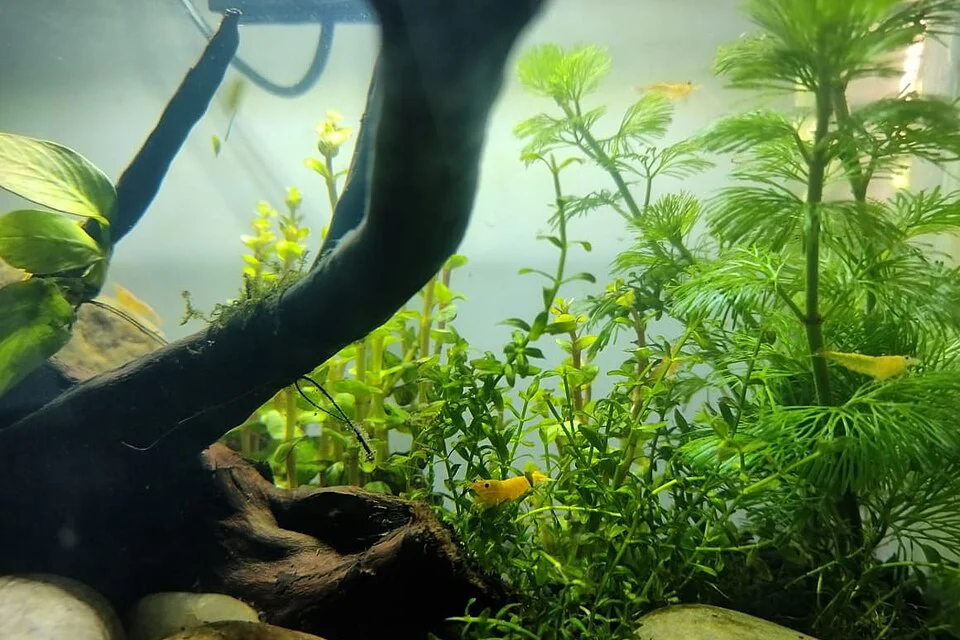
Shrimp and Planted Tanks
Shrimp and live plants are where water choice matters most. Small mistakes show up quickly in both.
Neocaridina Shrimp
Cherry shrimp and other Neocaridina are fairly forgiving. Conditioned tap water usually suits them if it sits in a moderate GH and KH range. Their bigger risk is sudden change. A large water change with water of different hardness can trigger failed molts.
Caridina Shrimp
Crystal red, bee and similar Caridina shrimp prefer soft, slightly acidic water. Keepers usually start with RO or distilled water and add a GH-only remineralizer made for shrimp. These shrimp are less suited to plain tap water in most hard-water areas.
Live Plants
Plants also need calcium and magnesium. In very soft water, they can show stunted growth or pale new leaves. In addition, low KH tanks with injected CO2 can see big daily pH swings. Moderate, stable hardness keeps planted tanks easier to run.
How to Test Your Water
Testing takes the guesswork out of any water choice. Test both the tank and the water you plan to add.
- Use a liquid test kit for ammonia, nitrite, nitrate and pH. Liquid kits are generally more reliable than strips.
- Add GH and KH tests. These are drop-count tests and are easy to read.
- Check your utility’s water quality report. It lists hardness, pH and the disinfectant in use.
- Test bottled water before first use, and again if you change brands.
- Use a TDS pen for quick checks, such as confirming that RO water reads near zero.
Keep a simple log. Patterns, such as pH sliding lower each week, are easier to spot on paper. If fish act oddly, compare their behavior with your readings. Our guide to common fish diseases can help you rule out illness.
How to Do a Safe Water Change
Whatever water you choose, the method matters as much as the source. Follow these steps every time.
- Test first. Check the tank and the new water so you know what you are adding.
- Prepare the new water. Condition tap water, or blend or remineralize distilled and RO water to match the tank.
- Match the temperature. Use a thermometer and aim for within a degree or two of the tank.
- Remove 10 to 25%. Siphon water while vacuuming the gravel. Unplug the heater if the water level will drop below it.
- Refill slowly. Pour over a plate or decor so you do not stir up the substrate.
- Check the next day. Watch the fish and retest pH.
Small, regular changes are safer than big, rare ones. They keep waste low and stop large swings in hardness or pH. Stocking also affects how often water needs changing, so check your numbers against our guide to how many fish fit in a 20 gallon tank.

Cost and Practicality
Price per gallon matters more as tanks get bigger. Here is how the options compare in practice.
| Option | Best for | Drawbacks |
|---|---|---|
| Conditioned tap water | Most tanks of any size | Depends on local water. Very hard or polluted tap water may need blending |
| Bottled spring water | Nano tanks and bettas | Ongoing cost, heavy jugs, plastic waste, brand variation |
| Bottled distilled water | Top-offs and blending in small tanks | Needs minerals added. Costly at larger volumes |
| Home RO or RODI unit | Soft-water species, shrimp, large tanks | Upfront cost, filter changes and waste water. Needs remineralizing |
| Store-bought RO water | Occasional use without a home unit | Trips to refill, and quality depends on the store’s upkeep |
For a 20 gallon tank with weekly 25% changes, you would need about 5 gallons each week. That is easy from the tap. It becomes a chore with bottled jugs. For that reason, most keepers use conditioned tap water and turn to pure water only for specific needs.
Spring and Distilled Water FAQs
Can I use distilled water in a fish tank?
Yes, but not on its own. Pure distilled water has almost no minerals and no buffer, so pH can drift and fish struggle to hold their salt balance. Use it to top off evaporation, blend it with tap water, or add a remineralizer before it goes in the tank.
Is spring water safe for fish?
Plain, unflavored spring water is often safe, because it usually has no chlorine or chloramine and contains some minerals. Mineral content varies a lot between brands, though. Check the label or test the water for pH, GH and KH, and use the same brand every time.
Can I use bottled water for a betta fish?
You can use plain spring water for a betta if it tests within a normal range and you stick with one brand. Avoid distilled or purified water alone, and never use flavored, sparkling or vitamin water. Dechlorinated tap water is usually the easier long-term choice.
Do I need water conditioner for spring or distilled water?
Distilled water and most spring water do not contain chlorine or chloramine, so conditioner is not strictly needed. Many keepers still add a dose because some conditioners also bind ammonia and heavy metals. Tap water always needs a conditioner before it reaches fish.
How long should tap water sit before adding it to a fish tank?
Letting water sit helps only if your utility uses free chlorine, and even then it takes time. Many US utilities use chloramine, which does not gas off quickly and can last for weeks. A water conditioner rated for chloramine works in minutes, so use that instead of waiting.
Can I mix distilled water with tap water for my aquarium?
Yes. Blending is one of the best uses for distilled or RO water. Mixing equal parts with tap water roughly halves the hardness. Treat the tap portion with conditioner, test the mix, and keep the same ratio at every water change so conditions stay stable.
Should I top off evaporated water with distilled water?
Yes. Evaporation removes pure water and leaves minerals behind, so topping off with tap water slowly makes the tank harder. Distilled or RO water replaces only what evaporated. You still need regular water changes with mineralized water to remove waste.