Bottom Feeder Fish for Freshwater Aquariums: 15 Best Species
The best bottom feeder fish for most freshwater tanks are corydoras catfish, bristlenose plecos, otocinclus and kuhli loaches. They stay small, are peaceful and do well in community tanks of 20 to 30 gallons. Bottom feeders still need their own sinking food, a soft substrate and clean water, so they are tank mates to care for, not a cleaning service.
Bottom feeder fish add life to the lowest level of an aquarium, an area most community fish ignore. Catfish, loaches and plecos sift through sand, graze on algae and pick up food that sinks past faster fish. Picking the right species, though, depends on your tank size, water temperature and the fish you already keep.
This guide lists 15 of the best freshwater bottom feeders, with adult sizes, minimum tank sizes and care notes. It also covers feeding, substrate and the popular bottom dwellers that grow too large for most home tanks.
Quick Comparison: 15 Bottom Feeder Fish
Use this table to narrow down the options before reading the full profiles below.
| Species | Adult Size | Minimum Tank | Best For |
|---|---|---|---|
| Bronze corydoras | About 2.5 in | 20 gallons | Beginners, community tanks |
| Sterbai corydoras | About 2.5 in | 20 gallons | Warmer tanks |
| Panda corydoras | About 2 in | 20 gallons | Cooler tropical tanks |
| Pygmy corydoras | About 1 in | 10 gallons | Nano tanks |
| Bristlenose pleco | 4 to 5 in | 29 gallons | Algae control |
| Clown pleco | About 3.5 in | 20 gallons | Tanks with driftwood |
| Otocinclus | About 2 in | 20 gallons | Planted tanks |
| Kuhli loach | 3 to 4 in | 20 gallons | Sand bottoms |
| Dwarf chain loach | 2 to 2.5 in | 30 gallons | Snail control |
| Hillstream loach | 2 to 3 in | 20 gallons | Cool, fast water |
| Upside down catfish | About 4 in | 30 gallons | Caves and shade |
| Bolivian ram | About 3 in | 30 gallons | Peaceful cichlid fans |
| Siamese algae eater | About 6 in | 40 gallons | Larger planted tanks |
| Weather loach | 6 to 8 in or more | 55 gallons | Coldwater tanks |
| Clown loach | Up to about 12 in | 75 gallons and up | Large, long term setups |
Corydoras Catfish
Corydoras are the classic beginner bottom feeder. These small armored catfish shuffle across the bottom in groups, using whisker like barbels to search for food. They are peaceful with almost every community fish and should be kept in groups of at least six of the same species. For tank setup, diet and breeding tips, see our full corydoras care guide.
1. Bronze Corydoras
The bronze cory, Corydoras aeneus, is one of the hardiest species and tolerates a wide range of tap water. It grows to about 2.5 inches and comes in bronze and albino forms. A group of six fits well in a 20 gallon tank.
2. Sterbai Corydoras
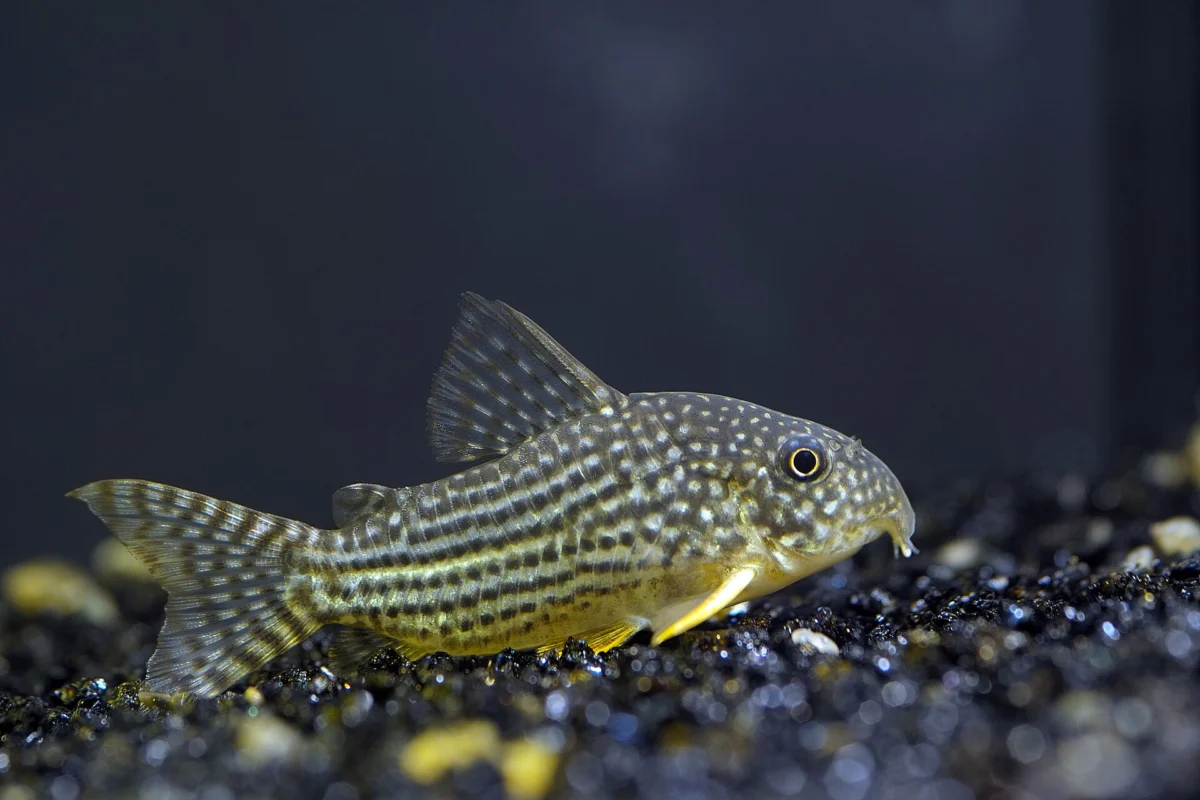
Sterbai corys have white spots on a dark body and orange edged fins. They tolerate warmer water than most corys, which makes them a good match for discus and other heat loving fish.
3. Panda Corydoras
Panda corys have a white body with black patches around the eye, back fin and tail. They prefer the cooler end of the tropical range and are a little more sensitive than bronze corys, so add them to a mature, stable tank.
4. Pygmy Corydoras
At about an inch long, pygmy corys are among the smallest catfish in the hobby. Unlike most corys, they often swim in mid water as a small school. A group of eight suits a planted 10 gallon nano tank, alongside fish from our list of nano fish for small tanks.
Plecos and Algae Eaters
Plecos are suckermouth catfish that rasp algae and soft wood. Several popular algae eaters belong here too, but many need more space than beginners expect. Our pleco care guide explains how big each type grows and the tank it needs.
5. Bristlenose Pleco
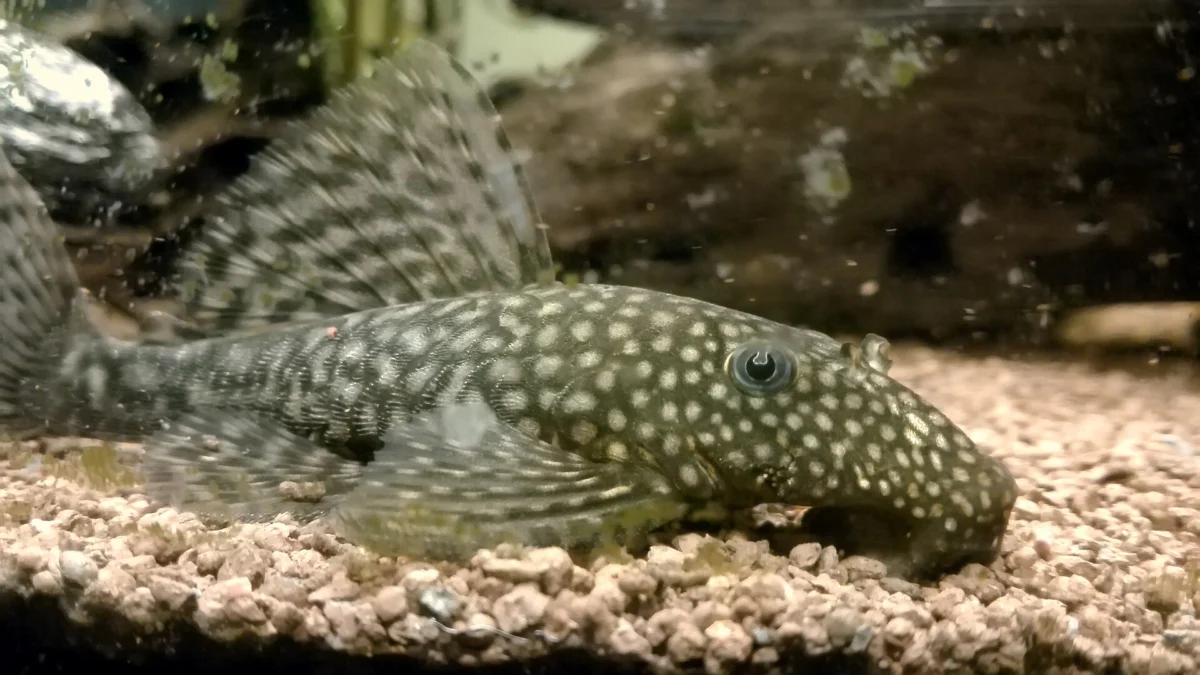
The bristlenose pleco is the best pleco for most home tanks. Adults reach 4 to 5 inches, graze algae from glass and decor, and develop bushy bristles on the snout, especially in males. Give each one driftwood to rasp on and sinking algae wafers several times a week.
6. Clown Pleco
The clown pleco stays around 3.5 inches and has striking light and dark bands. It eats more wood than algae, so driftwood is a must in its tank. It is peaceful but can be territorial toward other plecos over hiding spots.
7. Otocinclus
Otocinclus, often called otos, are tiny algae eaters that graze soft algae from plant leaves without harming them. They need a group of six and a mature tank with natural algae growth, as they can starve in a spotless new setup. Supplement with algae wafers and blanched zucchini.
8. Siamese Algae Eater
The Siamese algae eater grows to about 6 inches and is very active. It eats several types of algae, including the stubborn black beard algae many plants suffer from, especially when young. Choose a long tank of 40 gallons or more and a tight lid, as this species can jump.
Loaches
Loaches are curious, playful bottom dwellers. Many are social and do best in groups, and several species dig and burrow in soft substrate.
9. Kuhli Loach
Kuhli loaches look like small, striped eels and grow to 3 or 4 inches. They are shy during the day and most active at dusk, when they wriggle through sand and plant roots. Keep a group of six or more with plenty of hiding spots. Our guide to the best aquarium substrate explains why fine sand suits burrowing species like kuhlis.

10. Dwarf Chain Loach
Dwarf chain loaches stay around 2 to 2.5 inches and have a neat chain pattern along their sides. They are active in groups and eat small pest snails, making them a smaller option than the clown loach for snail control.
11. Hillstream Loach
Hillstream loaches have flat, disk shaped bodies built to cling to rocks in fast streams. They need cool, well oxygenated water with strong flow, smooth stones and algae to graze. They do not suit warm, still community tanks.
12. Weather Loach
Weather loaches, also called dojo loaches, are coldwater fish that can grow 6 to 8 inches or more. They are friendly, active and get along with goldfish, as covered in our goldfish care guide. They need a sandy bottom and a secure lid.
13. Clown Loach
Clown loaches are bright orange with bold black bands, but they grow slowly to about 12 inches and can live for many years. They are social and should be kept in groups of five or more, which means a very large tank in the long run. Read about large fish tanks before you buy small clown loaches.
Other Peaceful Bottom Dwellers
14. Upside Down Catfish
The upside down catfish, Synodontis nigriventris, often swims belly up under leaves and driftwood. It reaches about 4 inches, is peaceful in groups and is most active in the evening. Caves and shaded areas help it feel secure.
15. Bolivian Ram
The Bolivian ram is a small, peaceful dwarf cichlid that spends most of its time sifting the bottom for food. It grows to about 3 inches and is hardier than the more delicate German blue ram. It pairs well with tetras and corydoras in a planted community tank.
Bottom Feeders to Avoid in Small Tanks
Some bottom dwellers are sold as small, cheap juveniles but quickly outgrow a typical home aquarium or become aggressive.
- Common pleco: can grow well over a foot long and produces heavy waste
- Chinese algae eater: often becomes territorial with age and may latch onto other fish
- Red tail shark: very territorial toward other bottom dwellers
- Iridescent shark: not a true shark, but a large, skittish catfish that can grow several feet long
If you want a striking centerpiece instead, our list of cool freshwater fish includes many unusual species that stay a manageable size.
How to Care for Bottom Feeder Fish
Bottom feeders are easy to keep when a few basics are in place. Most problems come from treating them as cleaners rather than fish with their own needs.
Feed Them on Purpose
Bottom feeders do not live on leftovers. Drop sinking pellets, algae wafers or frozen foods after the lights dim, or after the top swimmers have eaten, so food reaches the bottom. Plecos also need vegetables such as blanched zucchini and driftwood to rasp on.
Choose a Soft Substrate
Corydoras and loaches use delicate barbels to search the bottom. Sharp gravel can wear these barbels down, so choose sand or smooth, rounded gravel. Vacuum the substrate lightly during water changes, as described in how to clean a fish tank.
Keep the Water Clean
Waste and uneaten food collect on the bottom first, so bottom dwellers feel poor water quality early. Keep ammonia and nitrite at zero and nitrate low, using our guide to aquarium water parameters as a reference.
Add Cover and Hiding Spots
Many bottom dwellers are shy or active at night. Caves, driftwood, leaf litter and dense plants help them feel secure and come out more often.
Shrimp and Snails as a Clean Up Crew
If you mainly want help with algae and leftover food, invertebrates are worth a look. Cherry shrimp and nerite snails are small, peaceful and graze constantly. Our guide to freshwater animals for a fish tank covers shrimp, snails and frogs, and how to keep them with fish. Remember that loaches eat snails and many fish eat small shrimp.
Choosing the Right Bottom Feeder
Match the species to your tank, not the other way around. For a 10 gallon tank, pygmy corydoras are the safest choice. For 20 to 30 gallons, a group of bronze or panda corys plus a single bristlenose pleco covers most community setups. Coldwater tanks with goldfish suit weather loaches, and only large tanks should house clown loaches. For ideas on what to keep above them, see our guide to the best freshwater fish for fish tanks.
Frequently Asked Questions
What is the best bottom feeder fish for beginners?
Bronze corydoras are one of the best choices. They are hardy, peaceful and small, and a group of six fits in a 20 gallon tank.
Do bottom feeders clean the tank?
Not really. They eat some leftover food and algae, but they also produce waste. You still need regular water changes and gravel cleaning.
How many corydoras should be kept together?
Keep at least six corydoras of the same species. They are social fish and feel safer and more active in a group.
What do bottom feeder fish eat?
Most eat sinking pellets, algae wafers and frozen foods such as bloodworms. Plecos also need vegetables and driftwood.
Which bottom feeder eats algae best?
For most tanks, a bristlenose pleco or a group of otocinclus gives the best algae control without outgrowing the tank.
Keep exploring
 Aquarium Fish
Cherry Shrimp Care: Tank Setup, Water Parameters and Breeding
Cherry shrimp care made easy: tank setup, ideal water parameters, feeding, molting, breeding and safe tank mates for a thriving colony.
 Aquarium Fish
Cheap Freshwater Fish: 15 Hardy Species That Cost Under $5
Cheap freshwater fish that stay hardy: 15 species under $5, with sizes, tank needs and a sample budget stocking plan for a…
 Aquarium Fish
Types of Freshwater Fish: 40 Species by Family, With Facts
Types of freshwater fish explained: 40 species across trout, bass, catfish, carp, cichlid, perch and more, with quick facts and where each…