How to Dechlorinate Tap Water for a Fish Tank
How to Dechlorinate Tap Water for a Fish Tank
Chlorine versus chloramine, the five ways to treat tap water, how much conditioner to use and the mistakes that put fish at risk.
By Fish Explain Editorial TeamUpdated November 19, 20267 min read
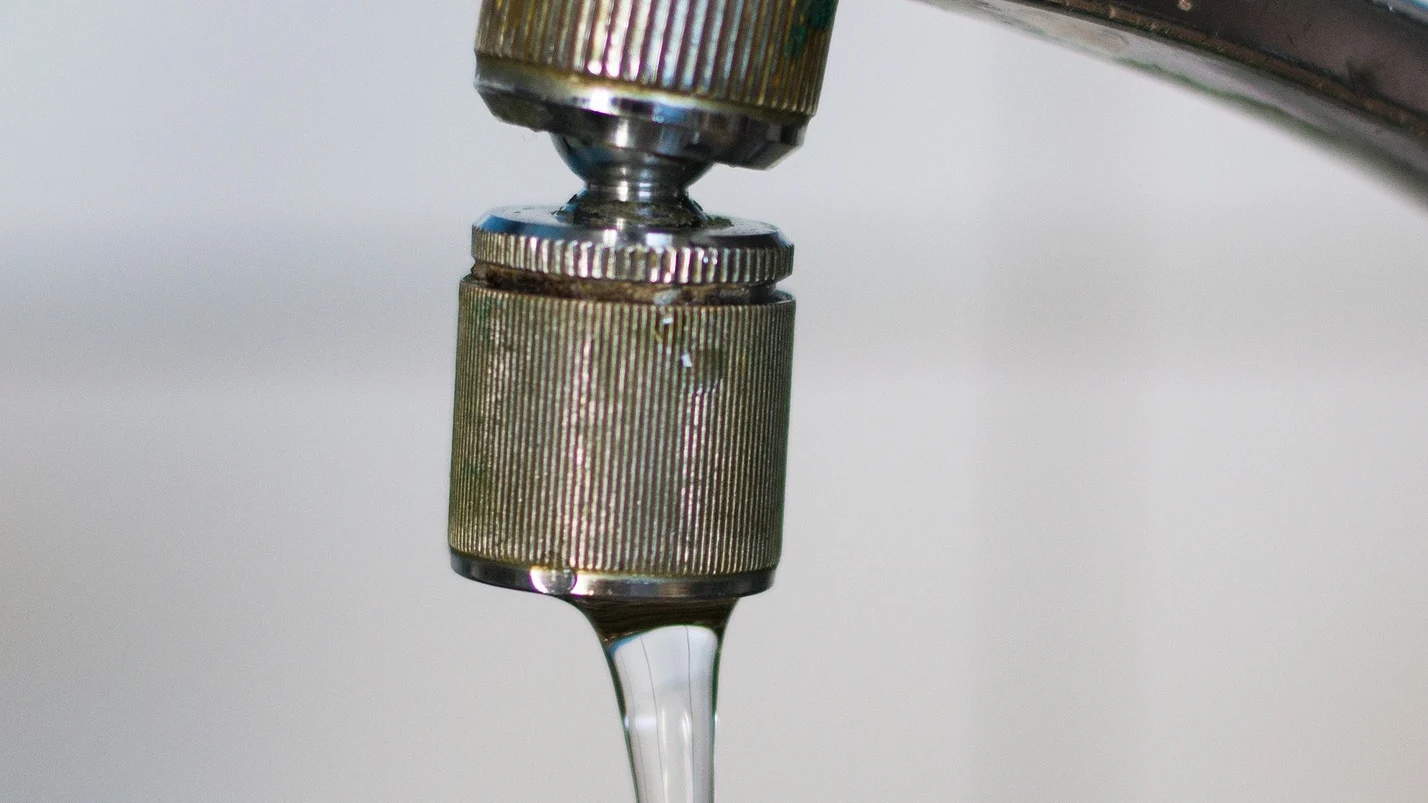
Photo: Vien Hoang (CC0), via Wikimedia Commons (cropped)
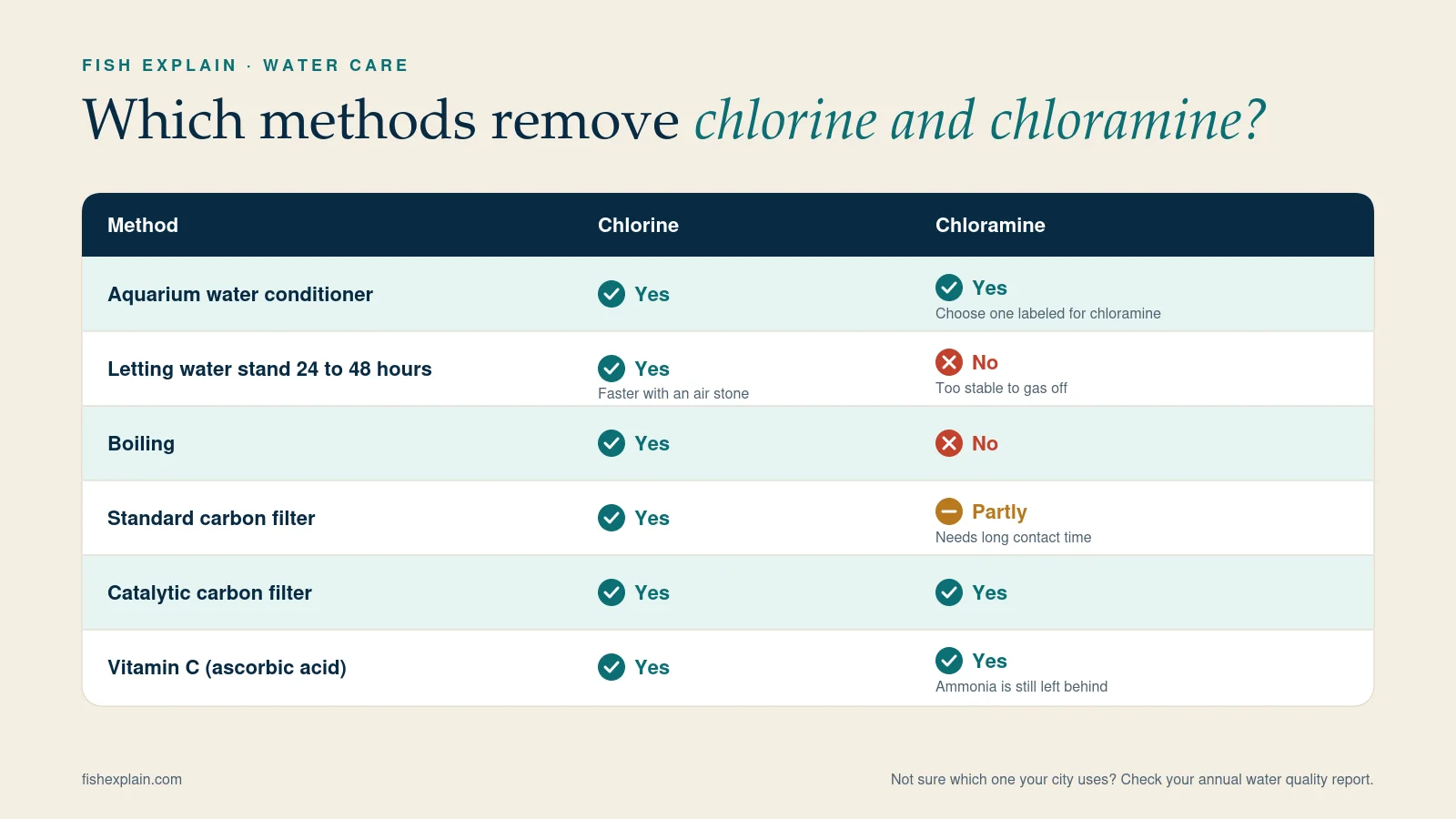
To learn how to dechlorinate water for fish tank use, start with the easiest fix: add an aquarium water conditioner rated for both chlorine and chloramine to every bucket of tap water, dosed by the label for the volume of new water. It works within minutes. Letting water stand or boiling it removes only chlorine, not chloramine, so they are not reliable on their own.
On this page
Why You Must Dechlorinate Tap Water for Fish
If you are wondering how to dechlorinate water for fish tank use, the short version is simple: treat every bucket of tap water with an aquarium water conditioner before it touches your fish. Public water systems add chlorine or chloramine to kill germs. These disinfectants keep drinking water safe for people, but they damage the gills and skin of fish and kill the beneficial bacteria living in your filter.
The US Environmental Protection Agency allows up to 4.0 mg/L of chlorine or chloramine in drinking water, and its guidance on chloramine notes that these disinfectants are toxic to fish and amphibians at drinking water levels. So the question is not whether tap water is safe for fish untreated. It is not. The question is how to treat it correctly.
What chlorine and chloramine do to fish
Both chemicals burn delicate gill tissue, which makes it hard for fish to take in oxygen. Fish exposed to untreated tap water may gasp, dart around, turn pale or develop red, inflamed gills. Even small doses added with every water change can stress fish and set back your biological filter.
Is tap water safe for fish once treated?
Yes. Treated tap water is the standard choice for most freshwater tanks because it contains useful minerals. Bottled options are rarely better, as our guide to spring or distilled water for a fish tank explains.
Chlorine vs Chloramine: Know What Is in Your Water
Before choosing a method, find out which disinfectant your water supplier uses. The difference changes everything.
Chlorine
Chlorine is a gas dissolved in water. It slowly escapes into the air, which is why some older advice says to let water sit. It is easy to neutralize with any basic dechlorinator.
Chloramine
Chloramine is chlorine bonded to ammonia. It is far more stable, which is why many cities switched to it: it lasts longer in long water mains. That stability also means it does not gas off when water stands and is not removed by boiling. When a conditioner breaks chloramine apart, ammonia is left behind, so you need a product that handles both.
How to find out which one you have
Check your water supplier’s website or the annual water quality report, often called a Consumer Confidence Report, that community water systems publish each year. You can also call the utility. If you are not sure, assume chloramine and use a conditioner rated for it.
How to Dechlorinate Water for a Fish Tank: 5 Methods
1. Use an aquarium water conditioner (best method)
A water conditioner for fish tank use is the fastest and most reliable option. Most products use sodium thiosulfate or similar compounds that neutralize chlorine within seconds to minutes. Conditioners labeled for chloramine also break the chlorine to ammonia bond and bind the leftover ammonia for a short time. Many also claim to detoxify heavy metals from household pipes. Measure the dose by the label and the volume of new water.
2. Let water stand (chlorine only)
If your supplier uses only chlorine, water left in an open bucket for 24 to 48 hours loses most of it, and an air stone speeds this up. This method does nothing for chloramine and is too slow for emergencies, so it is a backup at best.
3. Boil the water (chlorine only)
Boiling drives off chlorine but not chloramine, and it is impractical for anything more than a small tank. The water must also cool fully before use.
4. Carbon filtration
Standard activated carbon removes chlorine well but handles chloramine poorly unless water passes through slowly over a lot of carbon. Catalytic carbon filters made for chloramine do a much better job. These are mostly used by keepers with large tanks who pre filter water in bulk.
5. Vitamin C (ascorbic acid)
Vitamin C neutralizes both chlorine and chloramine and is sometimes used by fish hatcheries and pond keepers. It does not bind the leftover ammonia from chloramine, and it can lower pH slightly, so a proper aquarium conditioner remains the easier choice for home tanks.
Step by Step: Treating Water for a Water Change
For a partial water change
- Fill a clean bucket used only for the aquarium with tap water close to tank temperature.
- Add the correct dose of conditioner for the volume of the bucket.
- Stir and wait a minute or two, or the time the label suggests.
- Check the temperature with a thermometer, then pour the water in slowly.
Filling with a hose or Python style water changer
When you refill straight from the tap, add enough conditioner for the full tank volume to the aquarium just before or as you start refilling. Many keepers do this with chlorine and chloramine rated conditioners, but always follow the product label.
Setting up a new tank
Treat the full volume of a new tank before adding filter bacteria or plants, then start the cycle. Our guide on how to set up a fish tank covers the full order of steps, and our fish tank cycling guide explains what to do next.
How Much Water Conditioner to Use
Follow the label
Every brand has its own strength, so the label is the only reliable guide. Concentrated products may need only a few drops per gallon, while others need a capful per 10 gallons. A dosing syringe or measuring cap helps with small volumes.
Is overdosing dangerous?
Most popular conditioners are safe at a modest overdose, and some brands say a double dose is fine during an ammonia emergency. Large overdoses can lower oxygen levels, so do not pour in extra without a reason.
Dose for higher chloramine levels
Some cities raise disinfectant levels at times, for example during system flushing. If your fish act stressed after a water change, consider dosing for the full tank volume and contacting your water supplier to ask about recent changes.
Common Mistakes to Avoid
Forgetting the filter rinse
Rinsing filter media under the tap kills the beneficial bacteria. Rinse sponges in old tank water instead.
Assuming standing water is safe
Aged water still contains chloramine if your city uses it. Always add conditioner unless you know for sure your supply uses chlorine only.
Ignoring ammonia from chloramine
After chloramine is broken down, ammonia remains. In a cycled tank, the filter bacteria handle it, but in a new tank it can show up on tests. Our guide to ammonia in a fish tank explains what to do.
Skipping water tests
Test your treated tap water once for pH, hardness, ammonia and nitrate so you know your starting point. Compare the results with our chart of aquarium water parameters.
Signs of Chlorine Poisoning in Fish
If you forget to treat new water, or a conditioner dose is too low for your supply, fish usually show stress quickly. Knowing the signs lets you act before damage becomes permanent.
Symptoms to watch for
- Gasping at the surface or breathing very fast
- Red, inflamed or pale gills
- Darting, erratic swimming or rubbing against decor
- Pale color, excess slime coat or lying on the bottom
What to do right away
- Add a full dose of water conditioner for the entire tank volume.
- Increase surface movement with an air stone or by lowering the water level slightly below the filter outlet.
- Test ammonia and nitrite over the next few days, because chlorine may have harmed the filter bacteria.
- Feed lightly until the fish behave normally again.
Protect the filter after a mistake
If ammonia or nitrite appears, treat it as a mini cycle. Do small daily water changes with properly conditioned water until both read zero again.
How to Dechlorinate Water for Fish Tank FAQs
How long does water need to sit before adding fish?
With a chlorine only supply, about 24 to 48 hours in an open container removes most chlorine. Chloramine does not leave by standing, so a water conditioner is the safer and faster choice.
Does boiling water remove chloramine?
No. Boiling removes chlorine but not chloramine. Use a water conditioner that is labeled for chloramine instead.
How fast does water conditioner work?
Most aquarium water conditioners neutralize chlorine and chloramine within a couple of minutes. Check your product label for its recommended wait time.
Is bottled water safe for a fish tank?
Spring water can work but varies a lot between brands, and distilled water lacks the minerals fish need. Treated tap water is usually the better and cheaper option.
Can I use tap water for a fish tank without conditioner?
No. Untreated tap water contains chlorine or chloramine at levels that harm fish and kill filter bacteria, so it should always be treated first.
Final Thoughts
Treat every drop
The easiest way to dechlorinate water for a fish tank is to use a conditioner that handles both chlorine and chloramine, dosed by the label, every time new water goes in. Standing and boiling only help with chlorine, and carbon or vitamin C are niche options. Treat every bucket, match the temperature and protect your filter bacteria, and tap water becomes a safe, reliable source for your aquarium.
Keep exploring
More fish guides

Keep exploring
 Aquarium Care
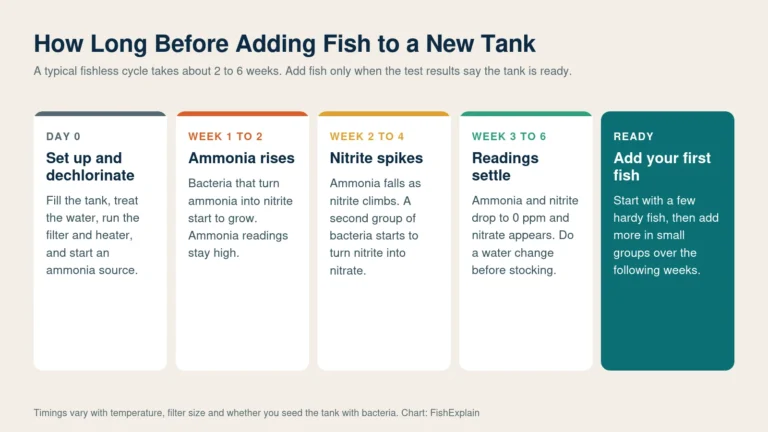
How Long to Wait Before Adding Fish to a New Tank
How long before adding fish to a new tank? Usually 2 to 6 weeks. Learn the water test results that mean it…
 Aquarium Care
Aquarium pH: How to Raise or Lower pH Safely
Aquarium pH guide: ideal ranges for freshwater fish, how KH keeps pH stable, and safe ways to raise or lower pH without…
 Aquarium Care
New Tank Syndrome: Signs, Causes and How to Prevent It
New tank syndrome kills fish in uncycled tanks. Learn the warning signs, what causes ammonia and nitrite spikes, and how to fix…