Why the Stand Matters as Much as the Tank
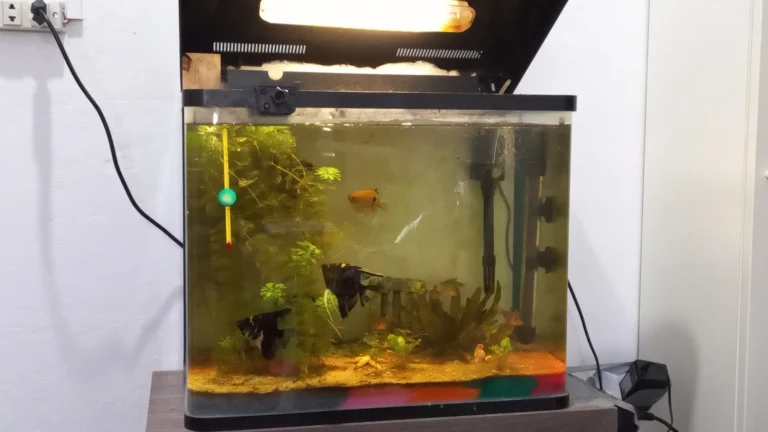
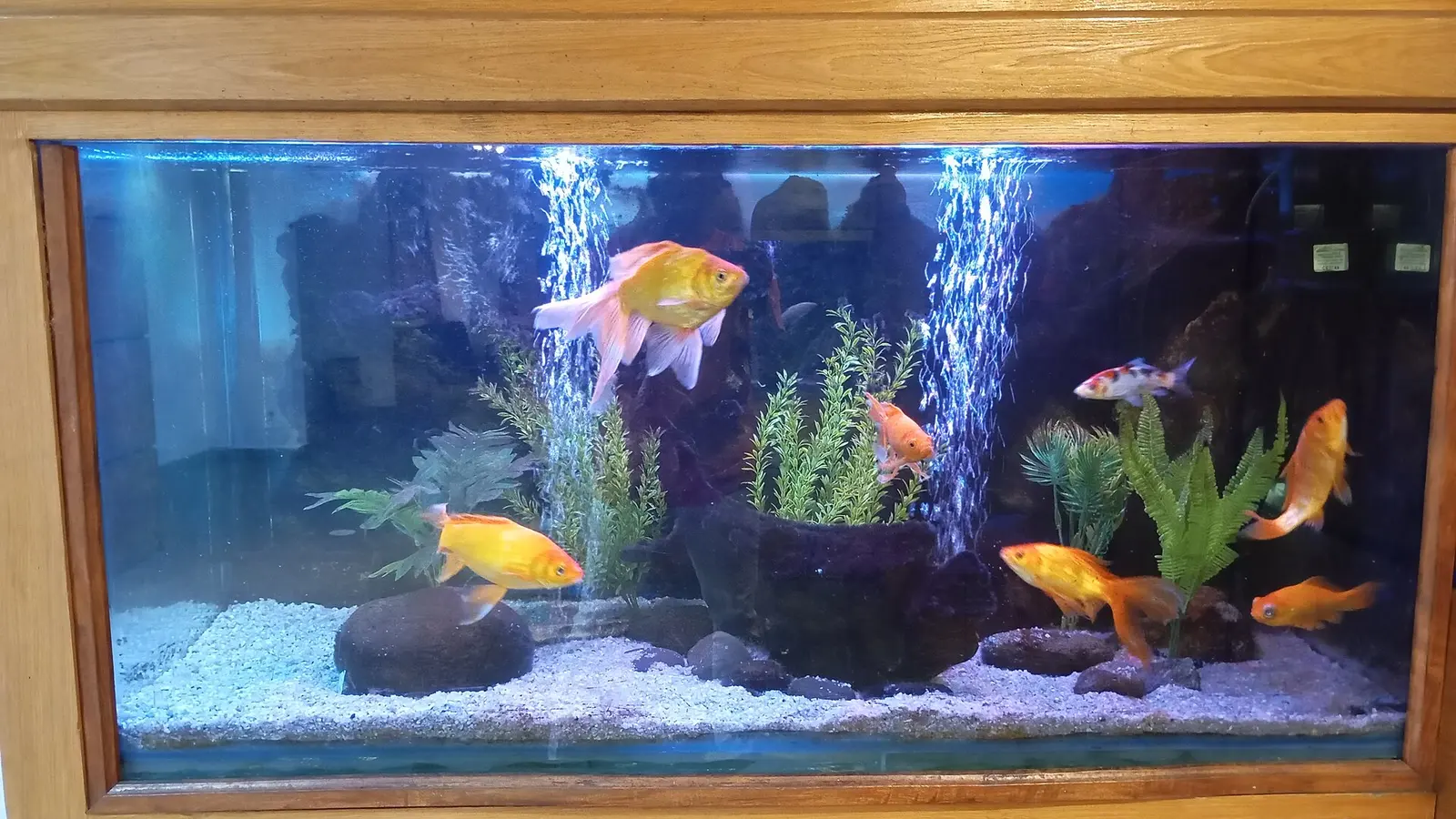
A fish tank with stand is the safest way to start most home aquariums, because the stand is built to carry the full weight of glass, water, gravel and rock for years. Ordinary furniture is not. A bookcase, dresser or TV unit may look strong, but it is rarely designed for hundreds of pounds pressing down on a small footprint, day after day, with the odd splash of water on top.
This guide explains what to check before you buy an aquarium stand, how much weight it has to carry, which materials last, and how to set it up so the tank stays level and safe.
- Footprint: the stand top should match the tank base exactly.
- Weight: plan for about 10 pounds per gallon once the tank is set up.
- Material: sealed solid wood, quality plywood or a welded metal frame.
- Level: check side to side and front to back before you add water.
- Floor: place large tanks near a load-bearing wall.
What a stand does for the tank
Glass aquariums are made to sit on a flat, even surface. Most framed tanks carry their weight on the plastic rim around the bottom, so the stand must support that whole rim. If one corner sits lower than the others, the glass and silicone seams are put under stress, and over time that can lead to leaks or cracks. A purpose-built stand spreads the load evenly and keeps the tank flat.
Why ordinary furniture is a risk
Household furniture is usually built from particleboard with thin backs and shelf pins. It can sag in the middle under a long tank and swells when it gets wet. Water changes, filter maintenance and condensation mean an aquarium stand gets damp far more often than a sideboard. For anything bigger than a small nano tank, buy a stand made for aquariums.
How Much Does a Fish Tank With Stand Hold?
Weight is the first thing to plan for. According to the US Geological Survey, water weighs about 62.4 pounds per cubic foot, which works out to roughly 8.3 pounds per gallon. Add the glass, substrate, rock and equipment, and a common rule of thumb is about 10 pounds per gallon for a set-up tank.

Standard tank sizes and footprints
Standard US glass tanks come in a small set of footprints, and most stands are sold to fit them. Measure your own tank, because sizes vary a little between brands.
| Tank size | Typical footprint (L x W) | Approx. set-up weight |
|---|---|---|
| 10 gallon | 20 x 10 in | About 100 lb |
| 20 gallon long | 30 x 12 in | About 200 lb |
| 29 gallon | 30 x 12 in | About 290 lb |
| 40 gallon breeder | 36 x 18 in | About 400 lb |
| 55 gallon | 48 x 13 in | About 550 lb |
| 75 gallon | 48 x 18 in | About 750 lb |
| 125 gallon | 72 x 18 in | About 1,250 lb |
Why the footprint matters
The 20 gallon long and 29 gallon tanks share a 30 by 12 inch footprint, so one stand often fits both. The 55 and 75 gallon tanks are both 48 inches long but differ in depth, so a 55 gallon stand is usually too narrow for a 75. Never let a tank overhang the edge of the stand, even by half an inch.
Types of Aquarium Stands
Aquarium stands come in a few main styles. The right one depends on your tank size, your budget and how much equipment you want to hide.
Cabinet stands
Cabinet stands have doors that hide the filter, test kits, food and cords. They look like furniture and suit living rooms. Check that the inside has open back panels or cut-outs for hoses and power cables, and that the cabinet frame, not just the outer panels, carries the weight.
Metal frame stands
Welded steel or aluminum frames are strong for their size and often cheaper than cabinets. They leave equipment on show, but they make maintenance easy and do not swell if they get wet. Look for a powder-coated finish to resist rust, and use a flat top board if the frame only has rails.
Wood and DIY stands
Solid wood and plywood stands are sturdy and can be sealed against moisture. Many keepers build their own from 2×4 lumber and plywood for large tanks, which can save money and allow a custom height. If you build one, design it so vertical posts carry the load straight down to the floor rather than relying on screws alone.
Small tank stands and desk setups
Nano tanks of 5 gallons or less can sit on a strong, level desk or shelf if it is rated for the load. A 5 gallon tank, such as a typical betta fish tank, still weighs around 50 pounds once set up, so check the furniture first.
What to Look For Before You Buy
Use this checklist when you compare aquarium stands online or in store. A stand that fails one of these points is not worth the saving.

Weight rating and build quality
Look for a stated weight capacity or a clear list of tank sizes the stand is made for. If no rating is given, treat that as a warning sign. Check how the top is supported: a center brace or a full frame under the rim is better than a top panel held up only at the ends.
Materials and moisture resistance
Particleboard and MDF are common in budget stands. They can work when well sealed, but they swell and weaken if water soaks into raw edges. Sealed solid wood, marine-grade plywood and powder-coated metal handle spills better. Wipe up drips quickly whatever the material.
Height and equipment space
A stand around desk height lets you see the tank well from a chair and still reach the bottom for maintenance. Taller stands look striking but make gravel cleaning harder. If you plan to use a canister filter, check that it fits inside the cabinet with room for hoses. Our guide to the best fish tank filters lists typical filter sizes.
Cheap fish tank and stand deals
A cheap fish tank and stand bundle can be good value, especially for 20 to 40 gallon tanks. Check the stand material, the warranty and whether the tank uses standard dimensions, so you can replace either piece later. Used tanks and stands can also be a bargain, but leak test any used tank and inspect a used stand for water damage, swelling and wobble.
Combo Kit or Separate Tank and Stand?
Many aquarium tanks for home use are sold as a kit with a matching stand, and sometimes a lid, light, filter and heater too. Buying separately gives more choice. Both routes work.
Comparing the two options
| Option | Pros | Cons |
|---|---|---|
| Combo kit | Footprint matches exactly, one purchase, often cheaper | Kit equipment can be basic, stand may be particleboard |
| Separate tank and stand | Choose a stronger stand and better gear | Must check sizes yourself, usually costs more |
| Used tank and stand | Lowest price | Needs a leak test and a careful stand inspection |
Which one suits beginners
For a first tank, a 20 to 40 gallon combo kit from a known aquarium brand keeps things simple. You can upgrade the filter or heater later. Our fish tank buying guide explains how to choose the tank size and shape first, and our fish tank heater guide covers the right heater for tropical fish.
Placing and Leveling Your Stand
Where you put the stand matters as much as the stand itself. Once the tank is full, it cannot be moved without draining it.
Choosing a safe spot
Pick a spot away from windows, heating vents and doors. Direct sunlight feeds algae and can overheat the water. For large tanks, place the stand against a load-bearing wall and run the long side across the floor joists rather than along them, so the weight spreads over more joists. If you plan a very large tank on an upper floor, ask a builder or structural engineer to check the floor. If you are planning a 75 gallon or bigger, our guide to choosing a large fish tank compares sizes, weights and running costs.
How to level the stand
- Place the empty stand in its final position.
- Lay a spirit level on top, side to side and front to back.
- Shim under the stand, not between the stand and the tank, using hard plastic or wood shims.
- Recheck the level with the empty tank in place.
- Fill the tank partway, then check again before filling completely.
Power and safety
Plan for power outlets close to the stand and use a drip loop on every cord, so water runs off the low point of the cable instead of into the socket. A GFCI outlet adds protection. Keep a towel and a bucket nearby for maintenance days. When you are ready to fill the tank, follow our step by step guide on how to set up a fish tank.
Fish Tank With Stand FAQs
Do I need a special stand for a fish tank?
For most tanks, yes. A set-up aquarium weighs about 10 pounds per gallon, so a 40 gallon tank is close to 400 pounds. Aquarium stands are built to carry that weight evenly and to cope with moisture, while ordinary furniture can sag or swell over time.
Can a fish tank overhang the stand?
No. The tank base should sit fully on the stand with no overhang on any side. An overhang leaves part of the bottom rim unsupported and puts stress on the glass and seams, which can lead to leaks.
Is a metal or wood aquarium stand better?
Both work well when they are built for aquariums. Metal frames are strong, slim and do not swell when wet. Wood and cabinet stands hide equipment and look like furniture. Avoid unsealed particleboard, which weakens if water soaks in.
How do I know if my floor can hold a fish tank?
Most floors handle small and medium tanks without trouble. For large tanks, place the stand against a load-bearing wall and across the floor joists. If you plan a very large aquarium, especially on an upper floor, ask a builder or structural engineer to check.
Are fish tank and stand combo kits worth it?
For beginners they often are. A combo kit gives you a stand that matches the tank footprint exactly, usually at a lower price than buying both separately. Check the stand material and weight rating, and plan to upgrade basic kit equipment later if needed.
Final Thoughts
Buy the stand with the tank in mind
The best fish tank with stand is one where the stand matches the tank footprint, carries the full set-up weight, resists water and sits level on a solid floor. Get those basics right and the stand will quietly do its job for years. For more tank and equipment guides, visit our aquarium care section.