Breeding Betta Fish: What To Expect
It is very rewarding, but it takes planning, space and daily time.
Betta splendens is a bubble nest builder. The male builds a raft of saliva-coated bubbles at the surface, guards the eggs after spawning and tends the newly hatched fry. The female plays her part in the spawn and then needs to leave the tank.
This guide walks through choosing a pair, setting up the breeding tank, conditioning, spawning, hatching and raising the fry to the stage where young males need their own containers. Before you start, make sure you already know solid betta fish care.
Before You Start: Space, Time And Homes
One spawn can produce anywhere from a few dozen to several hundred fry. Every one of them needs food several times a day, and most males will eventually need their own container. Plan where those fish will go before you add a pair.
You will need a breeding tank, a grow-out tank of at least 10 to 20 gallons, a steady supply of live first foods and spare jars or small tanks for maturing males. Local fish stores, hobby clubs and breeders are common outlets for young bettas.
Expect to spend time every day for at least eight to ten weeks. Fry need frequent feeding and frequent small water changes. Missed days early on are the most common reason a spawn fails.
Choosing A Healthy Breeding Pair
The best age to breed bettas is between about 4 and 12 months. Younger fish may not be mature, and older females often produce fewer eggs. Choose fish that are active, brightly colored, eating well and free of disease.
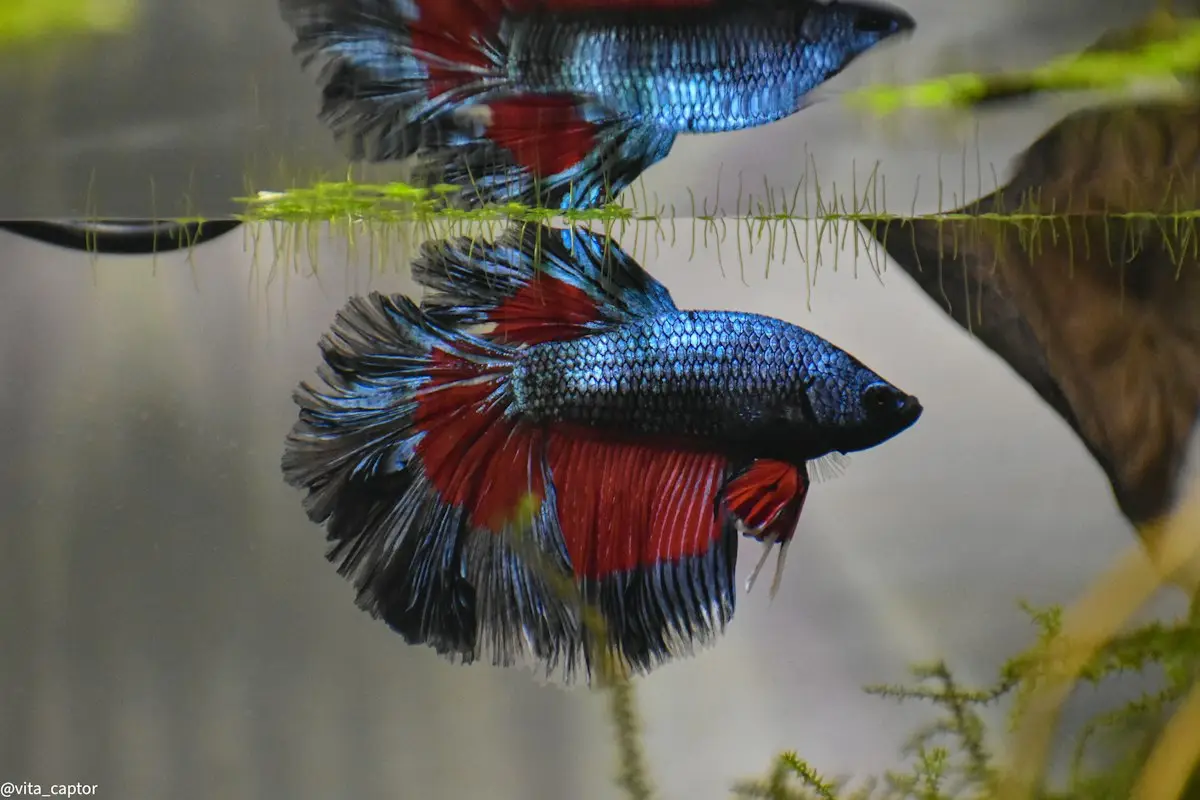
Pick a male with a strong body, full fins and a habit of building bubble nests in his own tank. Choose a female who is slightly smaller, with a rounded belly and a visible white egg spot, called the ovipositor, just behind her ventral fins.
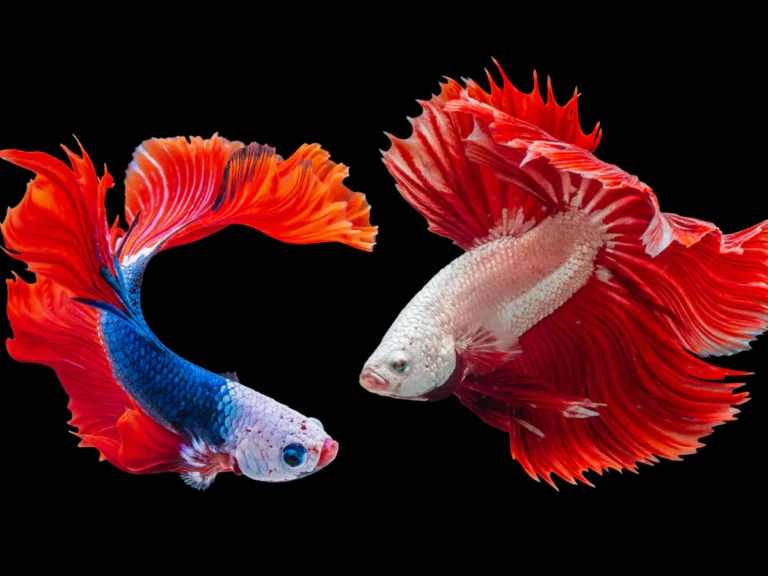
If you want predictable colors and fins, match fish of the same type, such as halfmoon to halfmoon or plakat to plakat. Mixing very different fin types can produce uneven results. A reputable breeder can help you choose a well-matched pair.
Setting Up The Breeding Tank
A simple, bare tank works best. Use a 5 to 10 gallon tank with no substrate, so you can see the eggs and fry and keep the bottom clean. Fill it to a shallow depth of about 4 to 6 inches, which makes it easier for the male to collect falling eggs.

Keep the water at about 80°F to 82°F with an adjustable heater. Add a floating Indian almond leaf, a piece of styrofoam cup or floating plants. The male often anchors his nest underneath. Add a few live plants or a small cave where the female can hide.
Avoid strong filters, which can break up the nest and suck in fry. A gentle sponge filter on a very low airflow is the safest choice, or you can run no filter and rely on small water changes. Keep a tight lid on the tank to hold warm, humid air above the water.
| Breeding tank setting | Target |
|---|---|
| Tank size | 5 to 10 gallons |
| Water depth | About 4 to 6 inches |
| Temperature | 80°F to 82°F |
| Substrate | None (bare bottom) |
| Filtration | Gentle sponge filter or none |
| Cover | Tight lid to keep air warm and humid |
Conditioning The Male And Female
Conditioning means feeding both fish a rich, high-protein diet for one to two weeks before breeding. It builds the female’s eggs and gets the male in peak shape. Keep the pair in separate tanks during this stage.
Feed small portions two or three times a day. Live or frozen foods work best, such as bloodworms, brine shrimp, daphnia and mosquito larvae, alongside a quality pellet. Our guide to the best betta fish food compares the options.
Keep water very clean during conditioning, because extra feeding adds waste. Change part of the water every few days. If you place the tanks side by side, the fish can see each other, which often encourages nest building and egg development.
Introducing The Female Safely
Never drop the female straight into the male’s tank. Bettas can be aggressive, and a female who is not ready can be badly injured. Introduce her behind a clear divider, or inside a glass lamp chimney or clear container, so they can see but not touch.
Over one to three days, watch both fish. A ready female develops dark vertical bars on her body, shows a clear white egg spot and approaches the male with her head angled down. A ready male flares, displays his fins and builds or expands his bubble nest.
When the nest is large and both fish show these signs, release the female, ideally in the evening or early morning. Stay nearby. Some chasing and fin nipping is normal, but remove her if she is cornered, badly torn or cannot escape.
Bubble Nests And The Spawning Embrace
A bubble nest is a floating raft of small air bubbles coated in saliva. The male builds it at the surface, often under a leaf, to hold the eggs and keep them in well-oxygenated water. A large, thick nest is a good sign he is ready.
During spawning, the male leads the female under the nest and wraps his body around hers in an embrace. She briefly freezes and releases a small batch of eggs while he fertilizes them. This repeats many times over one to several hours.

The eggs sink, and the male catches them in his mouth and spits them into the nest. Sometimes the female helps. When she stops releasing eggs and starts hiding, the spawn is over. Remove her right away, because the male will now guard the nest and may attack her.
Caring For The Female After Spawning
Place the female back in her own heated tank. She may have torn fins and look pale or stressed. Keep the water very clean and warm, and add an Indian almond leaf, which many keepers use to support recovery.
Feed her a varied, high-protein diet for the next week or two. Most fins regrow within a few weeks if the water stays clean. Watch for fungus or redness, which can follow injuries. Our guide to a sick betta fish covers treatment.
Give a female at least several weeks of rest before breeding her again. Frequent spawns strain her body and shorten her life.
Betta Eggs And Hatching
Betta eggs are tiny, white or pale yellow spheres held in the bubble nest. Fertile eggs hatch in about 24 to 48 hours at 80°F to 82°F. Eggs that turn opaque white and fuzzy are unfertilized or fungused, and the male often removes them.
During this stage, the male tends the nest constantly, adding bubbles and returning any eggs that fall. Do not feed him much, if at all, for a few days. Most males eat little while guarding, and uneaten food quickly fouls the shallow water.
Keep lights low and avoid disturbing the tank. Sudden movements, bright light or tapping can stress the male into eating eggs. Leave the lid on to keep the humid air layer intact.
The First Days After Hatching
Newly hatched fry look like tiny slivers hanging vertically from the nest, tail down. They are living off their yolk sacs and cannot swim properly yet. The male gathers any that fall and puts them back into the nest.
After about two to three days, the yolk sacs are used up and the fry begin to swim horizontally. This free-swimming stage is the signal to remove the male and return him to his own tank. Once fry swim freely, he may start to see them as food.
Feed the male well and let him recover in clean, warm water. Like the female, he deserves several weeks of rest before another spawn.
Feeding Betta Fry
Feeding is the hardest part of raising betta fry. Their mouths are too small for flakes or crushed pellets at first. Without suitable live food in the first week, most of a spawn can be lost.
Start with infusoria, a culture of microscopic organisms you can grow in a jar of aged tank water with a bit of lettuce or banana peel. Vinegar eels and microworms are also excellent first foods. Feed small amounts several times a day.
After about one week, add newly hatched baby brine shrimp. They are rich in nutrients and greatly speed up growth. From around three to four weeks, you can slowly introduce finely crushed pellets and frozen foods alongside live food.
| Fry age | Main foods | Feeding frequency |
|---|---|---|
| Days 1 to 3 after free-swimming | Infusoria, vinegar eels | 3 to 5 small feeds a day |
| About week 1 to 3 | Microworms, baby brine shrimp | 3 to 4 feeds a day |
| About week 3 to 6 | Baby brine shrimp, crushed pellets, frozen daphnia | 2 to 3 feeds a day |
| Week 6 onward | Small pellets, frozen and live foods | 2 feeds a day |
Water Changes And Growing Out Fry
Frequent feeding means frequent cleaning. Siphon uneaten food from the bare bottom daily with airline tubing. Change about 10 to 20 percent of the water every day or two, matching temperature closely and adding water slowly.
As fry grow, raise the water level gradually and move them into a larger grow-out tank of at least 10 to 20 gallons. More space and stable water help prevent stunting, which is common in crowded betta spawns.
Between about three and six weeks, fry develop their labyrinth organ, which lets them breathe air from the surface. Keep the lid on and the room warm during this period. A cold draft over the water can harm them as they start gulping air.
Sexing And Separating Young Bettas
Around two months of age, young males start to show longer fins, brighter color and flaring. They also begin to fight. This is the point to move each male into its own jar or small heated container, a step breeders call jarring.
Females can usually stay together longer in a well-planted tank with plenty of hiding spots. Watch for bullying and separate any fish that are being harassed. Our guide to betta fish tank size explains how much space adult bettas need.
By three to four months, most young bettas are ready for new homes. Make sure each one goes to a heated, filtered tank, not a small unheated bowl.
Common Breeding Problems
If the male will not build a nest, check that the water is warm, calm and covered. Strong currents and cold air stop nest building. Adding a floating leaf and placing the female in view often helps.
If the female refuses to spawn, she may not be fully conditioned. Separate the pair, condition for another week and try again. If the male eats the eggs, he may be stressed or inexperienced. Give him a quiet, dim tank and try another spawn later.
Mass fry losses in the first week usually come from starvation or poor water. Prepare live food cultures before spawning and keep water changes small but frequent.
Breeding Betta Fish FAQs
How Long Does It Take For Betta Eggs To Hatch?
Betta eggs usually hatch in about 24 to 48 hours at 80°F to 82°F. Cooler water slows hatching. The fry then hang from the nest on their yolk sacs for two to three days before swimming freely.
How Many Babies Do Betta Fish Have?
A single spawn can produce anywhere from a few dozen to several hundred eggs. Young, well-conditioned females tend to lay more. Not every egg hatches, and fry losses are common in the first weeks.
When Should I Remove The Male Betta From The Fry?
Remove the male once the fry are free-swimming, usually about two to three days after hatching. Before then, he protects the nest and returns falling fry. After that point, he may start eating them.
What Do You Feed Baby Betta Fish?
Start with infusoria, vinegar eels or microworms for the first week. Then add newly hatched baby brine shrimp. Crushed pellets and frozen foods can be introduced gradually from about three to four weeks of age.
Can Betta Fish Breed In A Community Tank?
It is not recommended. Other fish eat eggs and fry, and the male becomes aggressive while guarding. A separate, shallow breeding tank gives a much higher chance of success.
How Old Should Bettas Be To Breed?
Most breeders use bettas between about 4 and 12 months old. Fish in this range are mature, active and fertile. Older females usually lay fewer eggs and recover more slowly after spawning.