How to Do a Fish Tank Water Change the Right Way
A fish tank water change means removing 10 to 25% of the tank water once a week with a gravel vacuum, then refilling with dechlorinated tap water at the same temperature. Keep the fish in the tank, rinse the filter sponge only in old tank water and never replace all the water at once, since that strips out the beneficial bacteria your fish depend on.
A regular fish tank water change is the single most useful habit in fishkeeping. It removes nitrate and dissolved waste that your filter cannot, replaces minerals and keeps the water stable so your fish stay healthy and colorful.
This guide explains how much water to change, how often to do it and the exact steps for a safe partial water change. It also covers the mistakes that most often stress or kill fish.
Why Fish Tank Water Changes Matter
Even a well filtered aquarium is a closed system. Fish waste, uneaten food and dying plant leaves break down into ammonia. Bacteria in the filter convert ammonia into nitrite and then nitrate, as explained in our guide to the aquarium nitrogen cycle. Nitrate is far less toxic, but it keeps building up until you remove it.
What Builds Up Between Changes
- Nitrate, which stresses fish and feeds algae at high levels
- Dissolved organic waste that yellows the water and lowers oxygen
- Falling pH as the water’s buffering capacity is used up
- Hormones and compounds released by the fish themselves
Water changes dilute all of these at once. Testing alone cannot fix them; only fresh water can.
How Much Water Should You Change?
For most freshwater tanks, change 10 to 25% of the water each week. Smaller, lightly stocked tanks can do well with 10 to 15%, while larger or heavily stocked tanks often need 20 to 25%.
| Tank Situation | How Much to Change | How Often |
|---|---|---|
| Lightly stocked tank with plants | 10 to 15% | Weekly |
| Average community tank | 20 to 25% | Weekly |
| Heavily stocked tank or messy fish such as goldfish | 25 to 30% | Weekly or twice a week |
| Nano tank under 10 gallons | 15 to 25% | Weekly |
| High ammonia or nitrite emergency | 30 to 50% | Daily until readings fall |
Why Not Change All the Water?
Replacing all the water shocks fish with a sudden change in temperature and chemistry. Large changes can also swing pH quickly. Most of the beneficial bacteria live on surfaces rather than in the water, but a full change still upsets the balance of the tank. Small, regular changes are safer than occasional big ones.
Smaller Tanks Change Faster
Water quality in a small tank can shift in a day or two, because waste builds up in a smaller volume. Nano tanks benefit from steady weekly changes, and you should never skip more than one week. Larger tanks are more forgiving, but they still need the same regular routine to keep nitrate under control.
How Often Should You Change Fish Tank Water?
Once a week is the standard schedule for most tanks. Your test kit is the best guide. Many keepers aim to keep nitrate under 20 ppm, and if it climbs past about 40 ppm between changes, change more water or change it more often. See our guide to aquarium water parameters for ideal levels.
New Tanks
During cycling, water changes are only needed if ammonia or nitrite climb high enough to harm fish. Once the tank is cycled, start the weekly routine.
What You Need for a Water Change
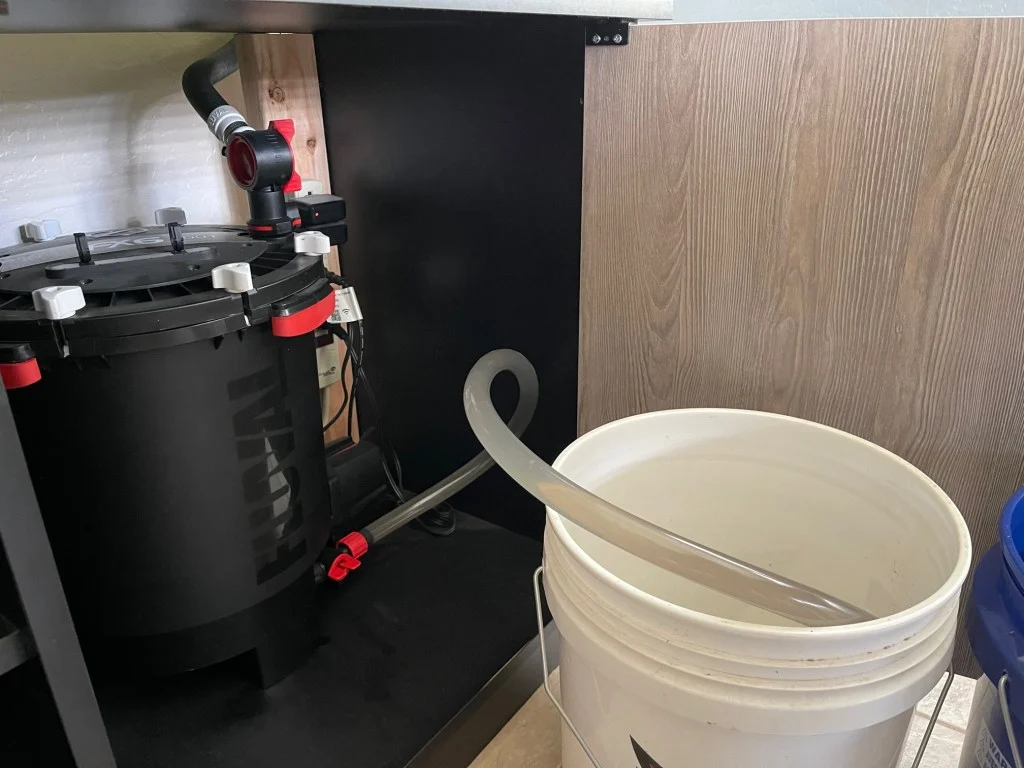
- A gravel vacuum or siphon sized for your tank
- A clean bucket used only for the aquarium, never for soap or chemicals
- A water conditioner that removes chlorine and chloramine
- An aquarium thermometer
- An algae scraper or pad
- A towel for spills
How to Do a Fish Tank Water Change Step by Step
Follow these steps in order. A standard water change on a 20 gallon tank takes about 20 to 30 minutes once you have a routine.
Step 1: Unplug the Heater and Filter
Switch off the heater and filter before you lower the water. A heater that runs out of the water can crack, and many filters can be damaged if they run dry.
Step 2: Scrape the Glass
Clean algae from the inside of the glass first, so loose algae ends up in the water you are about to remove.
Step 3: Siphon Water and Vacuum the Substrate
Start the siphon and push the gravel vacuum into the substrate, lifting it so debris rises up the tube. Work through one section of the tank each week instead of the whole bottom. On sand, hover just above the surface. Stop once you have removed 10 to 25% of the water.
Step 4: Rinse the Filter Media if Needed
Every few weeks, squeeze the filter sponge in a bucket of the old tank water you just removed. Never rinse it under the tap, because chlorine kills the bacteria living in the media.

Step 5: Prepare the New Water
Fill your bucket with tap water and add a water conditioner at the dose for the full tank volume or the new water, as the label directs. Our guide on how to dechlorinate water for a fish tank explains why letting water sit out does not remove chloramine. Match the new water to the tank temperature, ideally within about 2°F.
Step 6: Refill Slowly
Pour the new water gently onto a plate, decoration or your hand so it does not blast the substrate or stress the fish. A clean pitcher or a pump makes this easier in larger tanks.
Step 7: Restart the Equipment
Once the heater is fully underwater again, plug it in along with the filter. Check that the filter restarts and the water level is back to normal.
Common Water Change Mistakes
Using Untreated Tap Water
Most US tap water contains chlorine or chloramine, which burns fish gills and kills beneficial bacteria. Always use a conditioner.
Big Temperature Swings
Cold or hot replacement water shocks fish and can trigger diseases such as ich. Use a thermometer every time.
Cleaning Everything at Once
Deep cleaning the filter, the gravel and the decor on the same day removes too many bacteria and can cause an ammonia spike. Spread these tasks across different weeks.
Removing the Fish
Taking fish out to clean the tank causes more stress and injury than the cleaning itself. Leave them in place.
Skipping Water Changes
Long gaps followed by huge changes can shock fish that have adapted to poor water. If a tank has been neglected, return to normal with several smaller changes over a week or two.
Water Change Tips for Different Tanks
Planted Tanks
Planted tanks often need similar weekly changes, especially if you dose fertilizers. Avoid stirring up nutrient rich soil when vacuuming.
Goldfish Tanks
Goldfish produce a lot of waste. Plan on larger weekly changes and a strong filter. See our goldfish care guide for details.
Shrimp Tanks
Shrimp are sensitive to sudden changes. Change smaller amounts, around 10%, and add the new water slowly.
Tanks With Cloudy Water
If the water turns cloudy after a change, it is usually a harmless bacterial bloom or disturbed substrate. Our guide to a cloudy fish tank explains the causes and fixes.
Signs Your Tank Needs a Water Change
Even on a schedule, your tank will sometimes need extra attention. Watch for these signs between changes.
Water and Test Results
- Nitrate readings above about 40 ppm
- Any measurable ammonia or nitrite in a cycled tank
- Yellow or tea colored water without driftwood in the tank
- A musty or sour smell from the water
Fish Behavior
- Fish gasping at the surface or breathing quickly
- Clamped fins, faded color or loss of appetite
- Fish hiding more than usual or rubbing against decor
If you notice these signs, test the water first, then do a partial water change of 25 to 30% and repeat over the next few days if readings stay high. Our guide to ammonia in a fish tank covers what to do when ammonia is the cause.
Making Water Changes Easier
Hose Style Water Changers
For tanks over about 40 gallons, carrying buckets gets tiring. A long hose water changer that connects to a sink faucet can drain and refill the tank without buckets. Add conditioner for the full tank volume when refilling straight from the tap.
Keep Supplies Together
Store your siphon, bucket, conditioner and thermometer in one place near the tank. When everything is ready, a weekly change becomes a quick habit instead of a chore.
A Simple Weekly Routine
- Test ammonia, nitrite and nitrate
- Scrape algae from the glass
- Vacuum one section of the substrate while removing 10 to 25% of the water
- Treat and temperature match the new water
- Refill slowly and restart the equipment
- Rinse the filter sponge in old tank water every few weeks
A weekly fish tank water change is quick, cheap and keeps your aquarium stable. Pair it with the setup basics in how to set up a fish tank and the right aquarium substrate, and your tank will stay clear and healthy for years.
Frequently Asked Questions
How often should I change my fish tank water?
Change 10 to 25% of the water once a week for most freshwater tanks. Heavily stocked tanks or goldfish tanks may need larger or more frequent changes.
Can I do a 50% water change?
Yes, in an emergency such as high ammonia or nitrite, as long as the new water is dechlorinated and temperature matched. For routine care, smaller weekly changes are safer.
Do I need to remove fish during a water change?
No. Leave the fish in the tank. Catching and moving them causes more stress than a careful partial water change.
Can I use tap water for a fish tank water change?
Yes, as long as you treat it with a water conditioner that removes chlorine and chloramine and match it to the tank temperature.
Why are my fish dying after a water change?
The usual causes are untreated tap water, a large temperature difference or changing too much water at once in a neglected tank. Check each of these and make smaller changes.
Keep exploring
 Aquarium Care
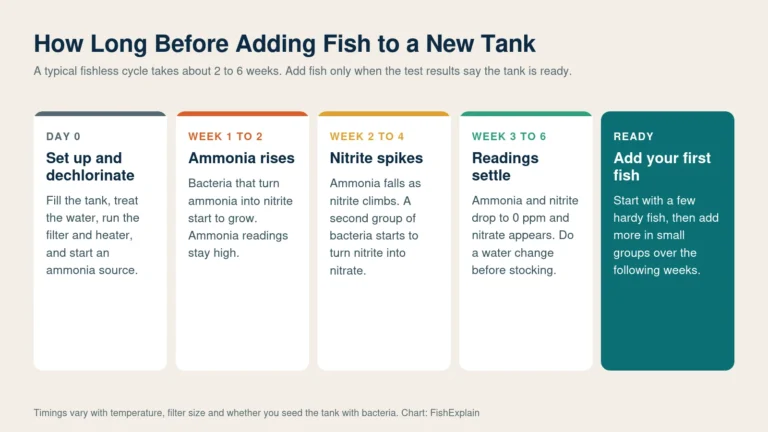
How Long to Wait Before Adding Fish to a New Tank
How long before adding fish to a new tank? Usually 2 to 6 weeks. Learn the water test results that mean it…
 Aquarium Care
Aquarium pH: How to Raise or Lower pH Safely
Aquarium pH guide: ideal ranges for freshwater fish, how KH keeps pH stable, and safe ways to raise or lower pH without…
 Aquarium Care
New Tank Syndrome: Signs, Causes and How to Prevent It
New tank syndrome kills fish in uncycled tanks. Learn the warning signs, what causes ammonia and nitrite spikes, and how to fix…