
Are Fish Mammals? The Short Answer
Are fish mammals? It is one of the most searched animal questions, and the confusion is easy to understand. A dolphin and a tuna share the same ocean, the same streamlined shape and the same fins. Yet they sit on two very different branches of the animal family tree. A dolphin is closer to a cow than it is to any fish.
This guide sets out what makes an animal a fish, what makes one a mammal, and where whales, dolphins and sharks fit. It also covers the few fish that breathe air or keep warm blood, since those make the question harder than it looks.
- Fish and mammals are both vertebrates, but they split from each other more than 400 million years ago.
- Gills, scales and eggs point to a fish. Lungs, milk and live birth point to a mammal.
- Whales and dolphins evolved from land mammals and returned to the water around 50 million years ago.
- Sharks are fish, even though many of them give birth to live pups.
Why the question comes up
Whales were called fish for centuries, and words like shellfish, jellyfish and starfish still stick the label on animals that are not fish at all. On top of that, a few real fish do mammal-like things: lungfish gulp air, guppies bear live young and tuna run warm. The lines look blurry until you know which traits count.
The one-line test
If it has to surface to breathe and feeds its young on milk, it is a mammal. If it pulls oxygen from the water through gills its whole life, it is a fish. Every other difference follows from those two.
What Makes an Animal a Mammal
Mammals are a class of vertebrates defined by a short list of shared traits. An animal needs the whole set, rather than one or two traits, to belong to the group.
Lungs and warm blood
Every mammal breathes air with lungs. A whale can hold its breath for a long time, but it still has to surface, and a dolphin that cannot reach the air will drown. Mammals are also endothermic: they make their own body heat and hold it steady, and sea mammals wrap that heat in blubber.
Milk, hair and live birth
The name “mammal” comes from the mammary glands that produce milk. Every female mammal feeds her young on milk, including whales, whose calves nurse underwater on milk so rich it has the texture of toothpaste. Mammals also have hair at some stage of life. On a dolphin that amounts to a few whiskers on the snout before birth, but the trait is still there. Almost all mammals give birth to live young; the only exceptions are the platypus and the echidnas, which lay eggs.
The ear bone detail
Scientists use one more marker that you cannot see from outside: mammals have three tiny bones in the middle ear, while fish, reptiles and birds have one. In a fossil skull, those bones often settle which group the animal belonged to.
What Makes an Animal a Fish
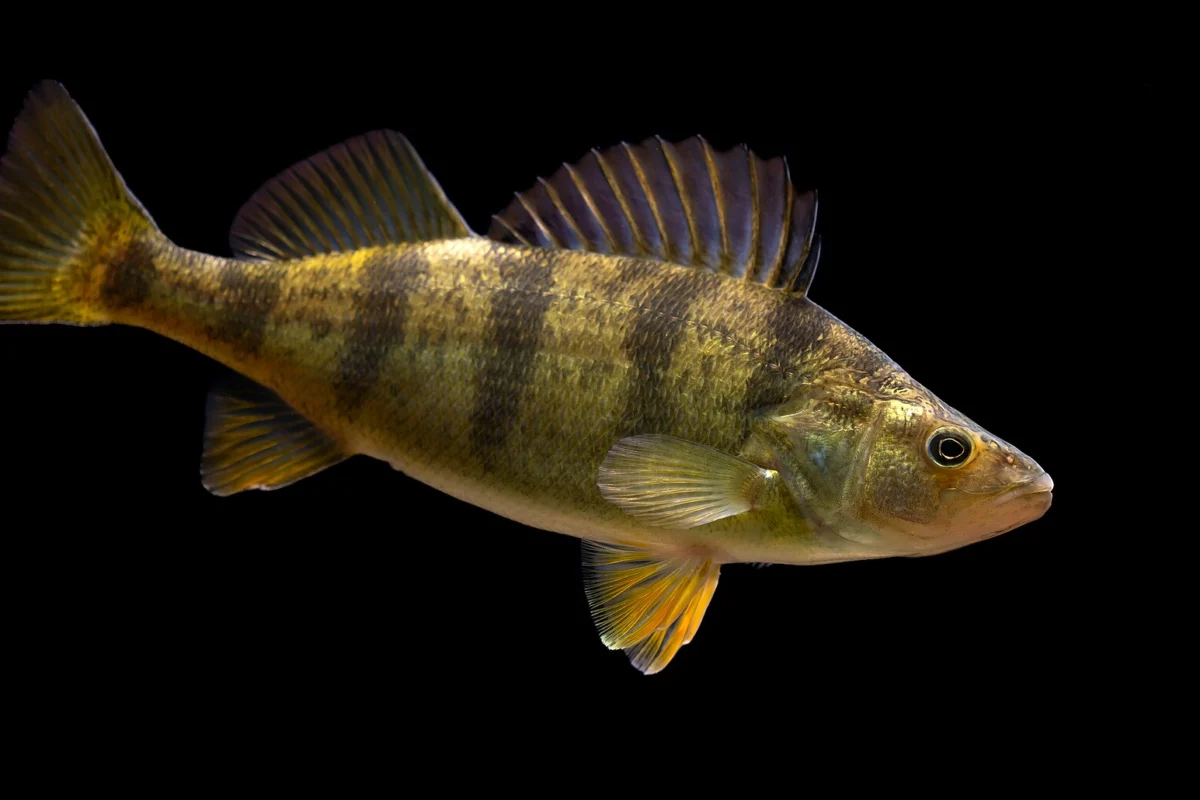
“Fish” is a looser label than “mammal”. It covers more than 34,000 living species across several ancient groups that are not even each other’s closest relatives. In practice, though, a fish is a vertebrate that lives in water, breathes with gills and has fins rather than limbs.
Gills and cold blood
Fish take oxygen directly from water. It flows in through the mouth, across the red filaments of the gills and out through gill openings that sit under a bony cover on most fish and show as separate slits on sharks. Nearly all fish are ectothermic, so their body temperature follows the water around them. That is why pond koi slow down in winter.
Scales, fins and a side-to-side tail
Most fish wear scales coated in mucus, and all of them steer with fins supported by rays or spines. The tail fin is vertical and pushes the fish forward with a side-to-side sweep. That single detail is the fastest way to tell a shark from a dolphin at a distance: the shark’s tail swings left and right, while the dolphin’s horizontal flukes beat up and down.
Three groups that all count as fish
Biologists split fish into jawless fish (lampreys and hagfish), cartilaginous fish (sharks, rays and chimaeras) and bony fish, which hold almost every species you can name, from goldfish and perch to tuna and the unicornfish. A tiny branch of bony fish, the lobe-finned coelacanths and lungfish, gave rise to every land vertebrate, including us.
Fish vs Mammals: Trait by Trait
The diagram and table below put the two groups side by side. Whales and dolphins land in the mammal column on every row, which is why the answer to “are fish mammals” is a clear no in both directions: fish are not mammals, and the mammals that look like fish are not fish.

| Trait | Fish | Mammals |
|---|---|---|
| Breathing | Gills, oxygen taken from water | Lungs, must breathe air |
| Body temperature | Cold-blooded, matches the water (a few exceptions) | Warm-blooded, held steady |
| Young | Mostly eggs, some live birth, no parental feeding | Live birth, fed on milk |
| Skin | Scales or rough denticles with a mucus coat | Smooth skin with hair at some stage |
| Tail | Vertical fin, moves side to side | Horizontal flukes, move up and down |
| Skeleton | Bone or cartilage, fins with rays | Bone, three middle ear bones, limb bones inside flippers |
| Examples | Perch, tuna, goldfish, shark, lungfish | Whale, dolphin, porpoise, seal, manatee |
Why Whales and Dolphins Are Mammals, Not Fish
Whales, dolphins and porpoises form one group called cetaceans, with roughly 90 living species. All of them pass every mammal test.
They breathe through a blowhole
A cetacean’s nostrils sit on top of its head as a blowhole. The animal rises, blows out a cloud of warm air, takes a fresh breath and dives again. A bottlenose dolphin usually surfaces every few minutes, while a sperm whale can stay down for over an hour. Dolphins even sleep with one half of the brain at a time so that the other half keeps them breathing. The NOAA Fisheries profile of the common bottlenose dolphin describes this and the rest of the species’ mammal biology in detail.
They nurse their calves
Dolphin and whale calves are born tail first, pushed to the surface for their first breath and then nursed on fat-rich milk for months or, in some species, years. No fish does any of this. Even the most attentive fish parents, such as mouthbrooding cichlids, do not produce milk.
They came from land
The fossil record shows that cetaceans descend from four-legged land mammals that waded into shallow seas around 50 million years ago. Over time the front legs became flippers, the back legs vanished and the nostrils moved to the top of the head. Modern whales still carry the leftovers: finger bones inside the flippers and small, floating hip bones. Their closest living relative on land is the hippopotamus.
Sharks: Fish That Confuse People
Sharks cause more mix-ups than any other fish, because they look like dolphins from the beach and because many of them break the “fish lay eggs” rule.

Cartilage instead of bone
Sharks, rays and skates have skeletons made of cartilage, the same flexible material in your nose and ears. They have five to seven open gill slits on each side, skin covered in tooth-like denticles and rows of replaceable teeth, which we covered in our guide to whether fish have teeth. They are cold-blooded, apart from fast hunters such as the great white and the mako, which keep their swimming muscles warm.
Live birth in sharks
Many sharks give birth to live, fully formed pups, and a few even nourish the young through a placenta-like connection, much as mammals do. Others lay leathery egg cases known as mermaid’s purses. Either way, the pups swim off and fend for themselves at once. There is no milk and no parental care, so sharks stay firmly on the fish side of the line.
Fish That Blur the Line
A few fish copy one mammal trait each. None copies the full set, which is why the question “are fish mammals” is still answered with a no even for these species.
Air-breathing fish
Lungfish have true lungs and can survive months in dried mud. Bettas carry a labyrinth organ that lets them gulp air at the surface, and mudskippers breathe through their skin on open mudflats. Our guide to walking fish covers these species in depth. All of them still have gills and lay eggs, so air breathing is an add-on, not a change of class.
Warm-blooded fish
Tuna, swordfish and some sharks keep parts of their body warmer than the surrounding water, which lets them hunt in cold seas. The opah, a deep-water fish, warms its whole body by circulating heated blood through its gills. It is the only fish known to do so. Even the opah, though, breathes with gills and spawns eggs into open water.
Live-bearing fish
Guppies, mollies, platies and swordtails give birth to free-swimming fry rather than laying eggs. The fry look after themselves from the first minute. Live birth without milk is still a fish strategy, not a mammal one.

Sea Animals People Mix Up
Names and shapes do a lot of the confusing. The table below sorts the usual suspects.
| Animal | Fish or mammal? | Why |
|---|---|---|
| Whale shark | Fish | The largest fish alive, with gills and a vertical tail; “whale” refers only to its size |
| Killer whale (orca) | Mammal | The largest member of the dolphin family, breathes through a blowhole and nurses calves |
| Seal and sea lion | Mammal | Fur, lungs, milk and flippers built from limb bones |
| Manatee and dugong | Mammal | Slow plant eaters related to elephants, surface every few minutes to breathe |
| Jellyfish, starfish, shellfish | Neither | Invertebrates with no backbone; the “fish” in the name is a historical habit |
| Dolphinfish (mahi-mahi) | Fish | A bony game fish named for its forehead, no relation to dolphins |
The ocean also holds plenty of true fish that look nothing like the textbook shape, including many in our list of the rarest fish in the world. Shape never decides the question. Gills, blood and milk do.
Are Fish Mammals FAQs
Are fish mammals or reptiles?
Neither. Fish, reptiles and mammals are three separate classes of vertebrate. Fish breathe with gills throughout life and most lay eggs in water. Reptiles breathe air with lungs, have dry scaly skin and lay shelled eggs on land. Mammals breathe air, are warm-blooded, have hair and feed their young on milk.
Is a whale a fish or a mammal?
A whale is a mammal. It breathes air through a blowhole on top of its head, keeps a warm body temperature under a layer of blubber, gives birth to a live calf and nurses it on milk. Whales descend from land mammals that returned to the sea around 50 million years ago, and their closest living land relative is the hippopotamus.
Is a dolphin a fish?
No. Dolphins are small toothed whales, so they are mammals. The easiest clue is the tail: a dolphin’s flukes are horizontal and beat up and down, while every fish has a vertical tail that sweeps side to side. Dolphins also have to surface to breathe, give birth to live calves and nurse them on milk.
Is a shark a mammal?
No. Sharks are cartilaginous fish. They breathe through five to seven gill slits, have skeletons made of cartilage rather than bone and are mostly cold-blooded. Many sharks do give birth to live pups, but the pups receive no milk or parental care, so sharks remain fish despite that mammal-like trait.
Are there any warm-blooded fish?
A few. Tuna, swordfish, mako sharks and great white sharks keep their swimming muscles, eyes or brain warmer than the water. The opah is the only fish known to warm its entire body. These fish still breathe with gills and lay eggs, so partial warm blood does not make them mammals.
Why are fish and mammals both called vertebrates?
Both have a backbone made of vertebrae that protects the spinal cord, along with a skull and an internal skeleton. Fish were the first vertebrates, appearing over 500 million years ago. Amphibians, reptiles, birds and mammals all descend from a branch of lobe-finned fish, which is why fish and mammals share that basic body plan.
Do any mammals have gills?
No living mammal has gills. Every mammal, including whales, dolphins, seals and manatees, breathes air with lungs and must surface to breathe. Mammal embryos briefly show structures called pharyngeal arches that resemble the beginnings of gills, but these develop into parts of the jaw, ear and throat rather than working gills.
Final Thoughts
Two groups, one ocean
So, are fish mammals? No, and neither are the mammals that look like fish. Fish breathe with gills, usually run cold and leave their eggs or fry to fend for themselves. Whales and dolphins breathe air, hold a warm body temperature, nurse their calves and still carry the bones of the land animals they came from. Remember the tail, the blowhole and the milk, and you will not confuse the two again. To see how different a fish’s life really is, start with our guide to what fish eat.


