Glass vs Acrylic Fish Tanks: Which Should You Buy?
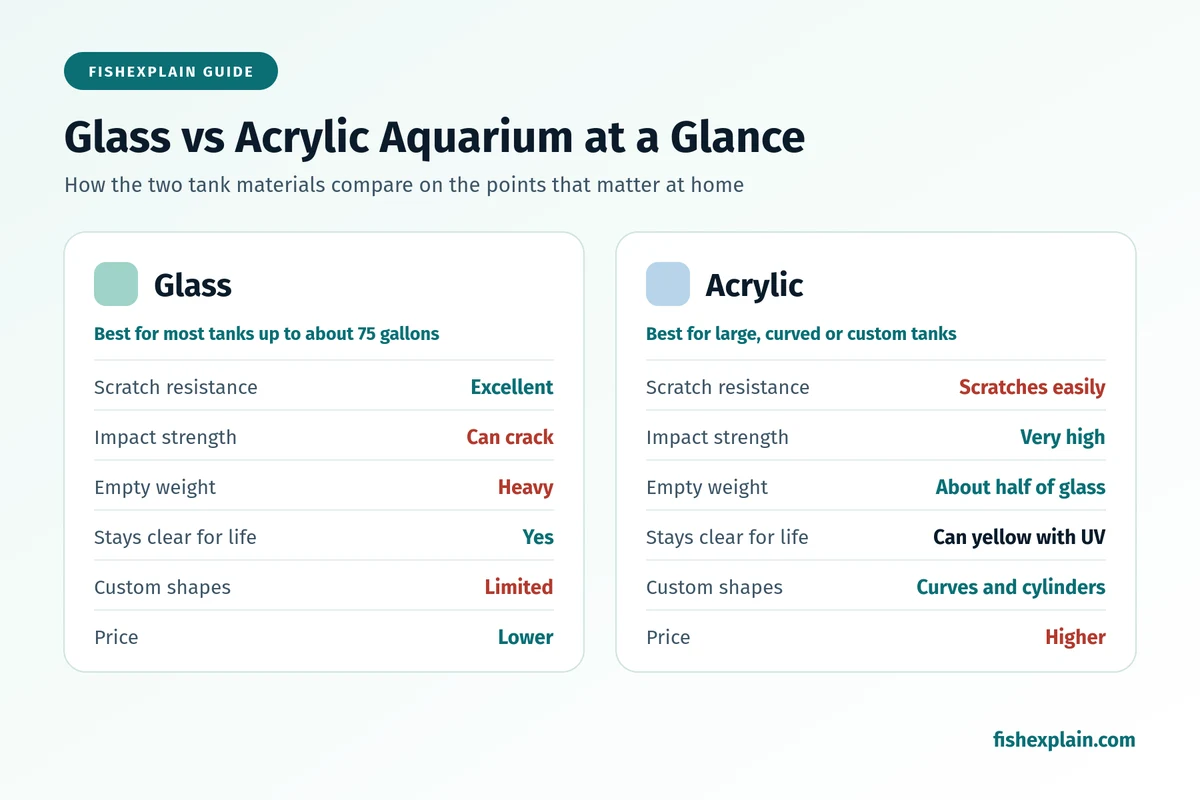
In the glass vs acrylic aquarium debate, glass is the better choice for most home fish tanks up to about 75 gallons because it is cheaper, very hard to scratch and stays clear for life. Acrylic is lighter, far more impact resistant and easier to shape, so it makes more sense for very large tanks, curved or custom designs, and homes where a cracked tank would be a serious risk.
Choosing between glass and acrylic is one of the first decisions you make when buying a new aquarium. Both materials hold water safely when built well, and both are used for everything from small desktop tanks to huge custom displays. The difference is in weight, strength, scratch resistance, clarity and price.
This guide compares glass vs acrylic aquariums side by side, explains which suits each type of setup, and shows how to care for each one so it stays clear for years.
Glass vs Acrylic Aquarium: Quick Comparison
| Feature | Glass | Acrylic |
|---|---|---|
| Weight (empty) | Heavy | Often around half the weight of glass |
| Impact strength | Can crack or shatter from a hard knock | Very impact resistant |
| Scratch resistance | Excellent | Scratches easily, but scratches can be polished out |
| Clarity | Very clear, low iron glass is clearest | Very clear, less distortion in thick panels |
| Yellowing | Never yellows | Older or lower grade acrylic can yellow with UV light |
| Shapes | Mostly flat panels and right angles | Curves, bow fronts, cylinders and seamless corners |
| Stand needs | Supported by the frame or base edges | Needs a flat, fully supported base |
| Price | Lower at standard sizes | Higher at most sizes |
Glass Fish Tanks: Pros and Cons
Most fish aquarium glass tanks are made from flat panels joined with aquarium grade silicone, often with a plastic frame on the top and bottom rims. Rimless glass tanks use thicker, polished glass instead of a frame.
Advantages of Glass Aquariums
- Very hard surface that resists scratches from gravel, sand and algae scrapers
- Stays clear for its whole life and never turns yellow
- Lower price than acrylic at nearly every standard size
- Widely available in standard sizes that fit common stands, lids and lights
- Easy to clean with ordinary aquarium scrapers and pads
Disadvantages of Glass Aquariums
- Much heavier when empty, which makes large tanks hard to move
- Can crack or shatter if hit hard or set on an uneven surface
- Limited to flat panels and simple bow fronts
- Standard glass can have a slight green tint, which is why many premium tanks use low iron glass
Acrylic Fish Tanks: Pros and Cons
An acrylic fish tank is made from clear plastic sheets that are chemically bonded at the seams, so the joints are almost invisible. Acrylic can also be heated and bent into curved fronts and cylinders.
Advantages of Acrylic Aquariums
- Much lighter than glass, which helps with delivery and installation
- Highly impact resistant and unlikely to shatter
- Can be formed into curves, cylinders and custom shapes
- Insulates slightly better than glass, which helps hold a steady temperature
- Easier to drill for custom plumbing and overflows
Disadvantages of Acrylic Aquariums
- Scratches easily, even from a grain of sand caught in a cleaning pad
- Usually costs more than a glass tank of the same size
- Some older or lower grade acrylic can yellow after years of UV exposure
- Needs a stand with a flat, fully supported top, not just support at the edges
- Can flex slightly, so lids and trims must fit well
Head to Head: How Glass and Acrylic Compare
Each material wins in different areas. The sections below explain the differences that matter most at home.
Weight
Water weighs about 8.3 pounds per gallon, so a filled tank is heavy whichever material you choose. The difference is in the empty tank. An acrylic tank often weighs about half as much as a glass tank of the same size, which matters most for tanks of 100 gallons or more and for upstairs rooms. Our guide to a fish tank with stand explains how to check that a stand and floor can carry the load.
Strength and Safety
Acrylic is far more resistant to impact than glass. A hard knock that could crack a glass panel will usually just mark acrylic. Glass is rigid and very strong under steady water pressure, but it is brittle. This is why public aquariums use thick acrylic for their giant windows and walk through tunnels.

Clarity and Distortion
New glass and new acrylic both look very clear. Acrylic bends light at an angle closer to water, so thick panels show less distortion. Standard glass can show a faint green edge, while low iron glass is almost colorless and rivals acrylic.
Scratches and Long Term Looks
Glass is the clear winner for scratch resistance. Acrylic marks easily, though light scratches can be buffed out with an acrylic polishing kit, even on the inside of a drained tank. Over many years, glass keeps its original look with less effort.
Cost
Glass tanks are usually cheaper at every standard size, especially for 10 to 75 gallon tanks sold in pet stores. Acrylic costs more, but custom shapes and very large sizes can narrow the gap. See our full breakdown of how much a fish tank costs for setup and running costs.
Shape and Design
If you want a cylinder, a deep bow front, a seamless corner or a tank built into a wall, acrylic gives you more options. Glass works best for rectangles and cubes, including tall tanks. If you like height, our guide to a tall fish tank covers the best fish for that shape.
Which Is Better for Your Setup?
The right material depends on tank size, where it will sit and who will be around it.
Beginners and Small Tanks
For tanks under about 75 gallons, glass is the practical choice. It is cheaper, easy to clean and forgiving of beginner mistakes with scrapers and gravel. Our fish tank buying guide covers the best sizes and tank types to start with.
Large and Custom Tanks
For tanks over about 100 gallons, acrylic deserves a close look. The lighter weight makes delivery and placement easier, and the material handles impacts better. Read our guide to large fish tanks for setup tips and costs.
Homes With Kids or Pets
If a tank sits where children play or large dogs move around, acrylic offers more peace of mind because it is much less likely to crack. A glass tank can still work well if it sits on a solid stand away from busy walkways.
Planted and Rocky Aquascapes
Tanks with sand, rough rocks and heavy plant care see a lot of scraping and handling near the glass. Glass handles this better. If you choose acrylic, use only acrylic safe tools and keep sand away from cleaning pads.
Saltwater and Reef Tanks
Both materials work for saltwater. Many reef keepers choose rimless low iron glass for its clarity and scratch resistance, since coralline algae must be scraped off often. Large reef systems that need drilled holes and overflows are often built from acrylic because it is lighter and easier to drill.
Common Myths About Glass and Acrylic Tanks
A few ideas about these materials come up again and again in fish keeping forums. Here is what is true.
Myth: Acrylic Always Looks Cloudy
New aquarium acrylic is as clear as glass. Cloudiness usually comes from fine scratches left by the wrong cleaning tools, or from cheap, thin plastic used in toy tanks. Good care keeps acrylic clear for many years.
Myth: Glass Tanks Break Easily
A well built glass tank on a level, solid stand is very safe and can last for decades. Most glass failures come from an uneven stand, a hard knock or a seam that has aged badly. Inspect seams on older and second hand tanks before you fill them.
Myth: Heavier Means Stronger
Glass is heavier, but weight does not equal safety. Acrylic handles impacts much better, while glass handles scratches much better. Each material is strong in a different way, so the best choice depends on where the tank will live and how you will maintain it.
How to Care for Each Type of Tank
Both materials last for many years with simple care. For a full routine, see how to clean a fish tank.
Cleaning a Glass Tank
Use a magnetic cleaner, a razor blade scraper made for aquariums or an algae pad. Clean the outside with a damp cloth or an aquarium safe glass cleaner, and keep any spray well away from the open top of the tank.
Cleaning an Acrylic Tank
Use only scrapers and pads labeled acrylic safe, and rinse them often so sand does not get trapped. Never use household glass cleaners or rough sponges on acrylic. Wipe the outside with a soft microfiber cloth and plain water.
Buying Checklist
- Measure the space and check the floor can hold the full weight of the tank.
- Decide whether you need a standard rectangle or a custom shape.
- For glass, check seams for even silicone with no gaps or bubbles.
- For acrylic, check that seams are clear and the stand top is flat and fully supported.
- Plan the lid early, since a good fish tank cover reduces evaporation and stops fish from jumping.
- Compare the full cost, including stand, filter, heater and lighting.
Frequently Asked Questions
Is glass or acrylic better for a fish tank?
Glass is better for most standard home tanks because it is cheaper and resists scratches. Acrylic is better for very large, curved or custom tanks and for homes where impact resistance matters most.
Is acrylic stronger than glass?
Acrylic is much more impact resistant than glass and is far less likely to crack or shatter. Glass is harder, so it resists scratches better.
Do acrylic aquariums turn yellow?
Older and lower grade acrylic can yellow after years of UV exposure. Modern cast acrylic made for aquariums is much more resistant, and glass never yellows.
How do you remove scratches from an acrylic tank?
Light scratches can be buffed out with an acrylic polishing kit. Outside scratches are easy to reach, while deeper inside scratches usually need the tank drained first.
Why are acrylic tanks more expensive?
Acrylic sheet costs more than standard glass, and bonding and shaping acrylic takes more labor. The gap narrows for very large and custom tanks.
Keep exploring
 Aquarium Care
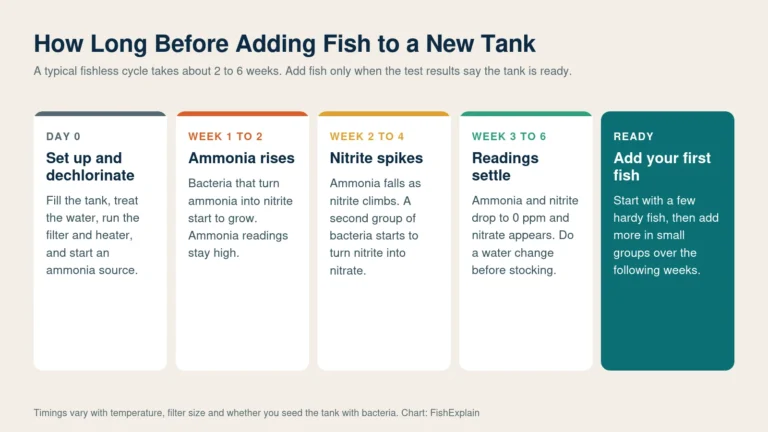
How Long to Wait Before Adding Fish to a New Tank
How long before adding fish to a new tank? Usually 2 to 6 weeks. Learn the water test results that mean it…
 Aquarium Care
Aquarium pH: How to Raise or Lower pH Safely
Aquarium pH guide: ideal ranges for freshwater fish, how KH keeps pH stable, and safe ways to raise or lower pH without…
 Aquarium Care
New Tank Syndrome: Signs, Causes and How to Prevent It
New tank syndrome kills fish in uncycled tanks. Learn the warning signs, what causes ammonia and nitrite spikes, and how to fix…