Good betta fish care comes down to five things: a heated tank of at least 5 gallons, a gentle filter, a cycled tank, weekly water changes and small daily meals. Keep the water between 76 and 82°F, house only one male per tank and watch your fish every day. Get these basics right and a betta can live 3 to 5 years.
This guide covers each step in order, from tank setup and water parameters to tank mates and health checks. You will also find a simple daily, weekly and monthly checklist you can follow from day one.
Betta Fish Basics: Species, Lifespan and Behavior
The betta most people buy is Betta splendens, also called the Siamese fighting fish. It belongs to the gourami family, Osphronemidae. Wild bettas come from Thailand and nearby parts of Southeast Asia.
In the wild, they live in shallow rice paddies, ponds and slow streams. These waters are warm and often low in oxygen. To cope, bettas have a labyrinth organ that lets them gulp air at the surface, according to UF/IFAS Extension research on Betta splendens.
A pet betta grows to about 2.5 to 3 inches and usually lives 3 to 5 years. Males are territorial and will fight other males, so keep one male per tank. Bettas are curious, can learn their owner and even build bubble nests.
Tank Size: Why 5 Gallons Is the Minimum
A betta needs an aquarium of at least 5 gallons, and 10 gallons is even better. Some stores still sell 2.5 or 3 gallon kits. However, those small tanks are hard to keep stable.
Bowls and vases fail for simple reasons. Small water volume lets waste build up fast, so ammonia spikes within days. A bowl also cannot hold a heater or filter, and its temperature swings with the room.
A larger tank dilutes waste and holds heat better. Therefore, a 5 gallon setup means fewer emergencies and less stress for you and your fish. Choose a long, shallow tank, since bettas swim near the surface to breathe.

Heater, Thermometer and Filter Setup
Bettas are tropical fish and need warm water between 76 and 82°F. Room temperature in most US homes runs too cool, so an adjustable aquarium heater is a must. Aim for about 78 to 80°F.
Pick a heater rated at roughly 3 to 5 watts per gallon, so 25 watts suits a 5 gallon tank. Add a separate thermometer and check it daily. Cold water slows digestion and weakens the immune system.
A filter keeps the water clean and houses helpful bacteria. Bettas have long fins and prefer calm water, so choose a gentle sponge filter or an adjustable flow filter. If the current pushes your betta around, baffle the outflow.
Cycling the Tank: The Nitrogen Cycle Explained
Cycling grows beneficial bacteria before your betta moves in. Fish waste and uneaten food release ammonia. Bacteria called nitrifying bacteria turn ammonia into nitrite, then into nitrate, which is far less harmful.
Both ammonia and nitrite burn gills and can kill a betta quickly. UF/IFAS research on ammonia in aquatic systems explains that ammonia becomes more toxic as pH and temperature rise, which matters in a warm betta tank.
A fishless cycle takes about 4 to 6 weeks. Add an ammonia source, test the water with a liquid test kit, and wait until ammonia and nitrite both read 0 ppm. Bottled bacteria can speed things up.
Ideal Water Parameters for Betta Fish
Stable water matters more than chasing perfect numbers. Bettas adapt to a range of conditions, but sudden swings in pH or temperature cause stress. Test weekly at first, then every week or two once the tank settles.
Always treat tap water with a water conditioner before it goes in the tank. Conditioner removes chlorine and chloramine, and many brands also bind heavy metals. Skip distilled water, since it lacks the minerals bettas need.
Use the table below as your target range. If ammonia or nitrite reads above zero, do a partial water change at once. Then look for the cause, such as overfeeding or a dirty filter.
| Parameter | Ideal Range | Notes |
|---|---|---|
| Temperature | 76 to 82°F | 78 to 80°F is the sweet spot |
| pH | 6.5 to 7.5 | Stability matters more than an exact figure |
| Ammonia | 0 ppm | Any reading is a warning sign |
| Nitrite | 0 ppm | Shows the tank is not fully cycled |
| Nitrate | Under 20 ppm | Never let it pass 40 ppm |
| General hardness (GH) | 3 to 12 dGH | Soft to moderately hard water works |
Water Changes and Tank Cleaning
Even a cycled tank collects nitrate and debris over time. For a filtered 5 gallon tank, change 20 to 25% of the water once a week. Smaller or unfiltered tanks need more frequent changes.
Never do a 100% water change in a cycled tank. It shocks your fish and removes the stable water your bacteria rely on. Instead, follow these simple steps:
- Unplug the heater and filter.
- Use a gravel vacuum to siphon out 20 to 25% of the water and waste.
- Treat fresh tap water with conditioner.
- Match the new water temperature to the tank within 1 to 2 degrees.
- Pour slowly, then plug the equipment back in.
Once a month, rinse the filter sponge in old tank water, not tap water. Chlorine in tap water kills beneficial bacteria. Replace filter media only when it falls apart, and wipe algae from the glass as needed.
Decor, Plants, Lighting and a Secure Lid
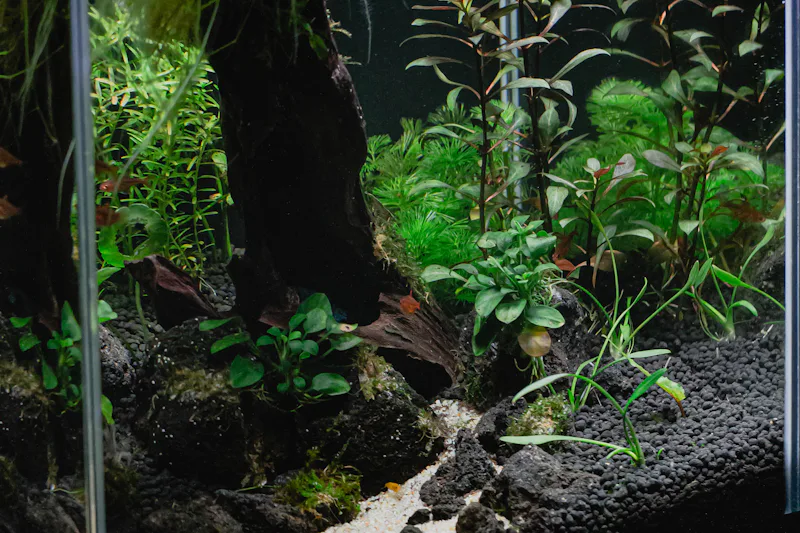
Bettas tear their fins on rough edges, so test every ornament with pantyhose. If it snags, skip it. Choose silk plants or live plants instead of hard plastic ones, and avoid painted or metal decorations.
Live plants such as Java fern, Anubias and Amazon sword help absorb nitrate. A betta leaf hammock and a cave give resting spots. Indian almond leaves release tannins that tint the water and mimic a betta’s natural habitat.
Bettas are skilled jumpers, so always use a lid with a small gap for air. Keep the tank out of direct sunlight to prevent algae and heat spikes. Run aquarium lighting for 8 to 10 hours a day.
Feeding Your Betta: The Short Version
Bettas are carnivores and need a high protein diet. A quality betta pellet makes a good staple. Add frozen or freeze-dried treats such as bloodworms and brine shrimp a few times a week.
Feed once or twice a day, and only as much as your betta eats in about two minutes. A betta’s stomach is roughly the size of its eye. Overfeeding is the most common cause of bloating and dirty water.
For exact portions, schedules and fasting days, read our guide on how often to feed betta fish. To pick the right pellets and treats, see our list of the best betta fish food.
Betta Tank Mates: What Can Live With a Betta?
Many bettas do best alone. Some males attack anything colorful or long finned. That said, a calm betta in a 10 gallon or larger tank may accept peaceful tank mates. Our guide to what fish can live with bettas lists the safest choices.
Never house two male bettas together. Also avoid fin nippers such as tiger barbs and flashy fish such as fancy guppies. Female bettas can live in a sorority, but that needs 20 gallons and experience.
Good options for a 10 gallon or larger tank include:
- Nerite snails and mystery snails
- Ghost shrimp (though a betta may eat small cherry shrimp)
- Small groups of corydoras catfish
- Harlequin rasboras or ember tetras in schools of six or more
- Kuhli loaches in a well planted tank
Add new fish slowly and watch closely for flaring, chasing or torn fins. Keep a backup tank or divider ready in case things go wrong.
Daily, Weekly and Monthly Betta Care Routine
A simple routine keeps your betta healthy without much effort. Most tasks take less than five minutes a day. The bigger jobs happen once a week or once a month.
Print or save the checklist below and keep it near the tank. Ticking off tasks helps you notice small changes early, before they turn into health problems.
| How Often | Task |
|---|---|
| Daily | Feed once or twice and remove leftover food |
| Daily | Check the thermometer reads 76 to 82°F |
| Daily | Look at fins, color, appetite and breathing |
| Daily | Confirm the heater, filter and lid are working |
| Weekly | Change 20 to 25% of the water with conditioned tap water |
| Weekly | Vacuum the gravel and test ammonia, nitrite and nitrate |
| Weekly | Trim dead plant leaves |
| Monthly | Rinse the filter sponge in old tank water |
| Monthly | Test pH and clean algae from the glass |
| Monthly | Replace Indian almond leaves and check the heater for cracks |
Consistency is the real secret. A betta kept on the same schedule, in the same stable water, shows fewer signs of stress and lives longer.
Signs of a Healthy vs Sick Betta
A healthy betta has bright color, open fins and a strong appetite. It patrols the tank, flares now and then, and may build a bubble nest. Watching daily helps you spot trouble early.
Sick bettas often hide, clamp their fins or sit on the bottom. Common illnesses include fin rot, ich, velvet, dropsy and swim bladder disorder. Most begin with poor water quality, so test the water first.
| Healthy Betta | Sick Betta |
|---|---|
| Bright, even color | Faded or dull color, stress stripes |
| Fins spread wide and smooth | Clamped, ragged or melting fins (fin rot) |
| Eats eagerly | Refuses food or spits it out |
| Swims actively and rests normally | Lies on the bottom, floats sideways or struggles to swim |
| Smooth, clean scales | White spots (ich), gold dust (velvet) or pinecone scales (dropsy) |
| Calm breathing with normal surface trips | Gasping at the surface constantly |
If your betta shows signs of illness, test the water and do a partial water change before adding any medication. For serious cases, move the fish to a hospital tank and contact an aquatic veterinarian.
Common Betta Care Mistakes to Avoid
Most betta problems come from a few repeat mistakes. The good news is that each one is easy to fix. Check your setup against this list, especially if you are a first-time owner.
- Keeping a betta in a bowl or vase with no heater or filter
- Adding the fish before the tank is cycled
- Skipping the water conditioner when using tap water
- Overfeeding, which pollutes the water and causes bloating
- Using a strong filter current that pushes the betta around
- Rinsing the filter sponge under the tap
- Leaving the tank uncovered, which invites jumping
- Mixing a betta with fin nippers or another male
Another common error is skipping acclimation. Float the sealed cup or bag in the tank for 15 to 20 minutes so the temperatures match. Then net the betta in, leaving the store water behind.
Finally, avoid big, sudden changes. Swapping all the water, moving the tank or changing temperature fast all add stress. Small, steady habits keep a betta healthier than any product or medicine.
Betta Fish Care FAQs
How Long Do Betta Fish Live?
Pet bettas usually live 3 to 5 years, and some reach 6 or more with a heated, filtered tank, clean water and a varied diet.
Can a Betta Fish Live in a Bowl?
No. A bowl is too small to hold a heater or filter, so ammonia builds up and temperature swings, which shortens a betta’s life.
Do Betta Fish Need a Heater?
Yes. Bettas need water between 76 and 82°F, and most homes are cooler than that, so an adjustable heater is necessary year round.
Can Betta Fish Live in Tap Water?
Yes, as long as you treat it first with a water conditioner that removes chlorine and chloramine. Untreated tap water can burn their gills.
How Often Should I Clean My Betta Tank?
Change 20 to 25% of the water weekly in a filtered 5 gallon tank, and rinse the filter sponge in old tank water once a month.
Why Is My Betta Lying at the Bottom of the Tank?
Older bettas rest more, but lying on the bottom often means cold water, high ammonia or illness. Check the temperature and test the water first.
Pingback: Betta Fish Tank Size: Why 5 Gallons Beats a Bowl
Pingback: Sick Betta Fish: Symptoms, Common Diseases and How to Treat Them - Fish Explain
Pingback: Breeding Betta Fish: Pairing, Bubble Nests and Raising Fry
Pingback: Walking Fish: 13 Fish That Walk, Climb and Breathe Air
Pingback: Best Nano Fish for Small Tanks: 20 Tiny Species
Pingback: How Many Fish in a 20 Gallon Tank? Stocking Guide