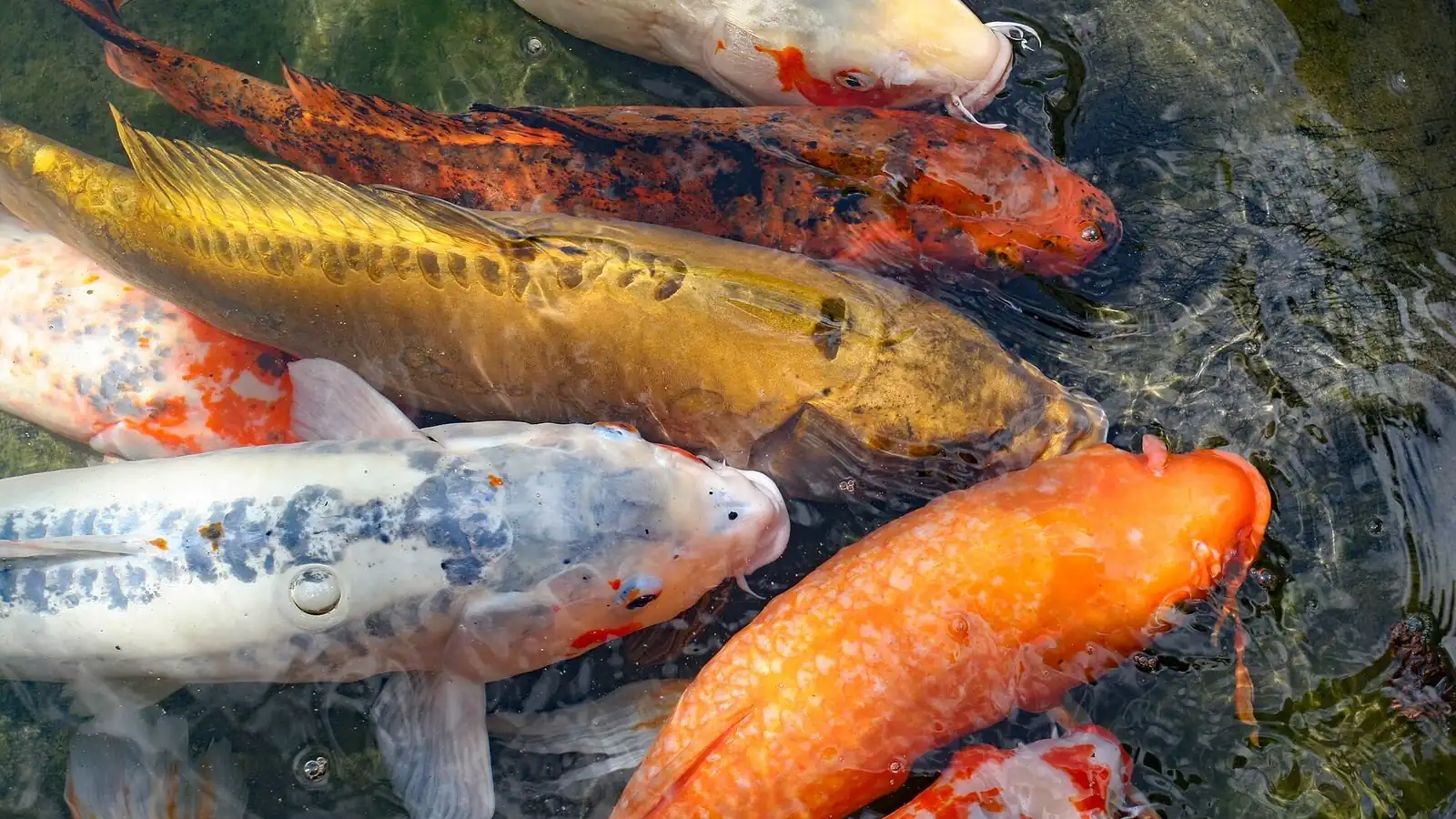
Koi Fish Meaning: The Short Answer
Few fish carry as much meaning as the koi. You see them in temple ponds, on festival streamers, in paintings and in tattoos. For many people, a koi is more than a pretty fish. It is a symbol of grit, good fortune and balance.
This guide explains where the koi fish meaning comes from, what each color is said to represent and why the yin yang koi became so popular. It also covers the real history of how farmers in Japan turned plain carp into living jewels.
- Main meaning: perseverance and success through effort.
- Origin of the symbol: the Chinese Dragon Gate legend.
- Colors: each variety is linked with a theme such as love, wealth or courage.
- Yin yang koi: a black and a white koi circling each other to show balance.
What Koi Fish Symbolize
Koi symbolism is not one fixed rule. It is a mix of Chinese legend, Japanese custom, Buddhist art and modern pop culture. Still, a few themes appear again and again.
Perseverance and strength
Carp are tough fish. In the wild they swim against strong currents and survive in cold, muddy water. That hardiness made the carp a natural symbol of strength. A koi swimming upstream became shorthand for someone who keeps going when life gets hard.
Success and ambition
In old China, the carp became linked with passing the imperial exams and rising in rank. A student who succeeded was said to have “leaped the Dragon Gate.” Today the koi still stands for ambition, career success and reaching a big goal.
Good fortune and wealth
Bright koi in a garden pond have long been seen as a sign of prosperity. Part of this is practical. Show quality koi can cost a great deal, so owning them was a mark of wealth. Gold and yellow koi carry this meaning most strongly.
Love and friendship
In Japanese, the word for carp is koi. It sounds the same as another Japanese word for love or longing, though the two are written with different characters. Because of this wordplay, koi are a popular gift between couples and a common motif at weddings.
Family and children
Koi are central to Children’s Day in Japan, held every year on May 5. Families fly carp-shaped streamers to wish their children health, courage and success. You can read more about this custom further down.
The Dragon Gate Legend
Most koi symbolism traces back to one Chinese story. It is worth knowing, because it explains why a simple carp became a symbol of triumph.
The story
According to the legend, thousands of carp swam up the Yellow River each year. Near the top stood a huge waterfall known as the Dragon Gate. Most carp gave up or were swept back. After long effort, one carp finally leaped over the falls. The gods rewarded it by turning it into a golden dragon.
What it teaches
The lesson is simple. Steady effort can turn an ordinary life into something great. That is why a carp leaping a waterfall still appears in art meant to encourage students, athletes and anyone starting something hard.
Koi and dragon art
Many koi tattoos and paintings show the fish halfway through its change, with a carp’s body and a dragon’s head. Others place a koi below a dragon to tell the full story in one image. Both designs point back to the Dragon Gate tale.
Koi Colors and What They Mean
Koi come in many named varieties. Breeders judge them on color, pattern, body shape and skin quality. Over time, popular culture has attached a meaning to the main colors. These meanings vary from source to source, so think of them as common associations rather than strict rules.

Kohaku: red and white
The Kohaku has a pure white body with red patches. It is the most famous koi variety and often the most prized at Japanese shows. It is linked with love, success and career progress. The colors also mirror the Japanese flag.
Tancho: a single red spot
A Tancho koi is white with one round red mark on its head and no other red on its body. It is named after the red-crowned crane, a bird that stands for long life and luck in Japan. A good Tancho is rare, so it is often treated as a lucky fish.
Taisho Sanke and Showa: three colors
Sanke koi are white with red and black markings. Showa koi have a black base with red and white patterns. Both mix three colors, and many people read them as symbols of balance, family and a life with many sides.
Ogon and Yamabuki: gold and yellow
Ogon koi have one solid metallic color. Gold and yellow forms, such as the Yamabuki Ogon, are the go-to symbol for wealth and business success. Platinum Ogon, which shine silver-white, are tied to prosperity as well.
Asagi: blue
Asagi koi have a blue-gray net pattern on the back and orange-red on the sides and belly. Blue koi are linked with calm, peace and, in some modern lists, masculinity. The Asagi is also one of the oldest koi varieties.
Karasugoi and black koi
Mostly black koi, called Karasugoi, are associated with overcoming hardship. The idea is that something dark and difficult can become a source of strength. On Japanese carp streamers, the big black carp also represents the father.
Chagoi: brown and bronze
Chagoi are plain brown or bronze, but they are known for being calm and friendly. They often grow very large and learn to eat from the hand. Keepers say a Chagoi in the pond helps the other koi settle down, so it has come to stand for friendship and good luck.
Butterfly koi
Butterfly koi have long, flowing fins. They came from crossing koi with long-finned wild carp, so traditional Japanese judges do not show them alongside standard koi. In popular meaning, they are linked with grace and freedom.
The Yin Yang Koi Explained
The yin yang koi is one of the most popular koi designs today. It shows two koi, one black and one white, swimming head to tail in a circle.
Where yin and yang come from
Yin and yang is a Chinese idea, closely tied to Taoism. It holds that opposite forces depend on each other. Dark and light, cold and warm, rest and action all form one whole. The classic symbol is a circle split into a black half and a white half, each with a dot of the other color.
How the koi version works
In the koi design, the black koi takes the place of yin and the white koi takes the place of yang. The two fish often have a contrasting eye or spot, which mirrors the small dots in the original symbol. The circle they form suggests constant movement and harmony.
What it means today
People choose the yin yang koi to show balance in life, a strong partnership or a mix of strength and calm. It is common in tattoos, wall art and pond designs. It is a modern blend of Chinese philosophy and koi imagery rather than an ancient Japanese symbol, but its meaning is clear and widely understood.
Pairs of fish in Buddhist art
A related image is the pair of golden fish, one of the eight auspicious symbols in Buddhist art. The two fish stand for happiness, freedom and living without fear. They are often drawn as carp, which helps explain why fish in pairs carry such positive meaning across Asia.
A Short Cultural History of Koi
The koi we know today is a fairly recent creation. Its roots, however, go back a very long way.
Carp in ancient China
The common carp has been farmed for food in China for well over two thousand years. Chinese art and stories about carp built up a rich set of meanings, including the Dragon Gate legend. Colored carp were known in China, but the fancy koi varieties did not develop there.
Rice farmers in Niigata
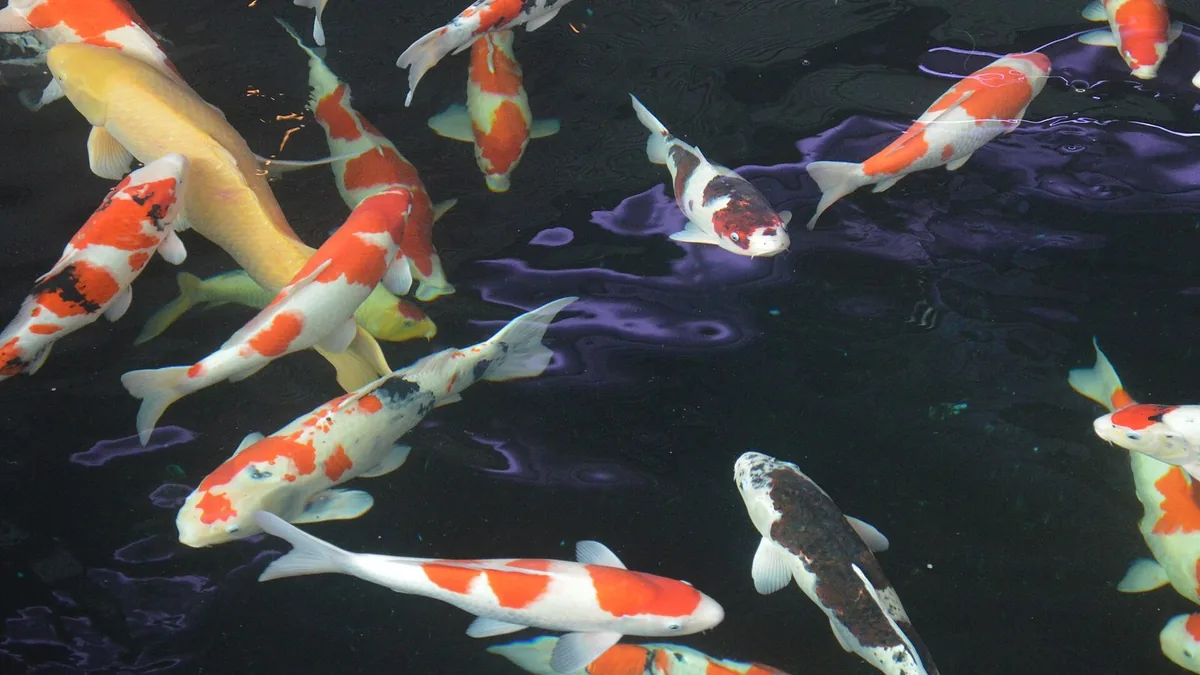
Koi as we know them began in the mountain villages of Niigata Prefecture in Japan during the early 1800s. Farmers kept carp in rice paddies and small ponds as a winter food source. Some fish showed red, white or yellow patches. Farmers began breeding these colorful fish on purpose, and the first true varieties slowly appeared. The town of Ojiya in Niigata is still a center of koi breeding.
From village ponds to the world
Koi became widely known in Japan in the early 1900s, after they were shown at a large exhibition in Tokyo. Interest kept growing through the 20th century. Improved shipping later let breeders send koi overseas, and koi keeping spread across Asia, Europe and North America. The Japanese name for them is nishikigoi, often translated as “brocaded carp.”
Koi as a living art form
Today, top koi are judged at shows much like fine art. Breeders spend years refining patterns and skin quality. A champion koi can sell for a very high price. For many keepers, though, the joy is simpler: watching calm, colorful fish move through clear water.
Koinobori and Children’s Day
The clearest living example of koi symbolism is the carp streamer, or koinobori. Each spring, Japanese families fly them from poles outside their homes.

The meaning of the streamers
Koinobori are hollow cloth or nylon carp that fill with wind and seem to swim through the sky. They are flown in the weeks before Children’s Day on May 5. The custom expresses the hope that children will grow strong and brave, like a carp swimming up a waterfall.
What each streamer color stands for
A common set has a large black carp for the father, a red or pink carp for the mother and smaller blue or colored carp for each child. In older customs, the red carp stood for the eldest son. Families often add a carp as each new child is born.
From Boys’ Day to Children’s Day
The festival was once known as Boys’ Day. It became a national holiday for all children in 1948, and today girls are included in the streamers on many homes. Large public displays with hundreds of koinobori stretched across rivers draw crowds every spring.
Koi in Feng Shui, Tattoos and Gardens
Koi symbolism is alive today in homes, gardens and body art. Here is how people use it.
Koi in feng shui
In feng shui, water features are linked with the flow of wealth, and fish add living energy. Some practitioners suggest placing a pond or aquarium near an entrance. A traditional idea is to keep nine fish, with eight colorful fish and one black fish to absorb bad luck. These are cultural beliefs, so treat them as a matter of taste.
Koi tattoos
Koi are among the most popular tattoo subjects in the world. In modern tattoo lore, a koi swimming upstream shows a struggle still in progress, and a koi swimming downstream shows a goal reached. Adding a dragon, lotus flower or waves changes the story told by the design.
Koi ponds at home
If the symbolism draws you to keeping real koi, plan for a large pond rather than a tank. Adult koi often grow past two feet long and can live for decades. They need strong filtration, cool water and plenty of space. Our guide to what fish eat covers pond fish diets, and our fish tank filter guide explains how filtration works.
Koi versus goldfish
People often mix up koi and goldfish. Both are carp relatives, but koi come from the common carp, grow much bigger and have whisker-like barbels near the mouth. Goldfish come from a different carp species and stay far smaller. Goldfish carry their own meaning in Chinese culture, where they are linked with abundance. You can learn more about how scientists define a fish in our article on whether fish are mammals.
Koi Fish Meaning FAQs
What does a koi fish symbolize?
A koi fish most often symbolizes perseverance, strength and success won through effort. The idea comes from the Chinese legend of a carp that swam up a waterfall and turned into a dragon. In Japan, koi also stand for good fortune and family, and the word koi sounds like a Japanese word for love.
What does a red and white koi mean?
A red and white koi, called a Kohaku, is the classic Japanese koi variety. Many people link it with love, success and career progress. The red and white colors also echo the Japanese flag, which adds a sense of national pride for some keepers.
What does a black and white koi mean?
A black koi is often tied to overcoming hardship and turning a struggle into something positive. A white koi is linked with purity and new beginnings. Shown together as a circling pair, a black and a white koi represent yin and yang, or balance between opposite forces.
What does a gold koi mean?
Gold and yellow koi, such as the metallic Ogon and the Yamabuki Ogon, are widely linked with wealth and prosperity. Many business owners and feng shui fans choose a gold koi for that reason.
Is a koi tattoo swimming up or down different?
In popular tattoo lore, a koi swimming upstream shows someone still facing a challenge, while a koi swimming downstream shows a challenge that has been overcome. These meanings come from modern tattoo culture rather than from old Japanese texts, so treat them as tradition, not fixed rules.
Are koi and goldfish the same fish?
No. Koi are colored forms of the common carp, while goldfish come from a different carp relative. Koi grow much larger, often past two feet, and have small barbels at the corners of the mouth. Goldfish stay smaller and have no barbels.
How long do koi live?
Well kept pond koi often live 25 to 35 years, and some live longer. A famous Japanese koi named Hanako was claimed to be over 200 years old, but that figure came from counting rings on a scale and is not proven.
Final Thoughts
A small fish with a big story
The koi fish meaning starts with a carp that would not give up. From the Dragon Gate legend in China to the carp streamers of Japanese spring, koi have come to stand for perseverance, luck, love and family. Each color adds its own flavor, and the yin yang koi brings in the idea of balance. Whether you admire koi in a pond, on a streamer or in a tattoo, you are looking at one of the most meaningful fish in the world. For more surprising facts about fish, browse our rarest fish in the world list.