How Do Fish Breathe Underwater? Gills Explained
Fish breathe by pulling oxygen out of water with their gills. A fish takes water in through its mouth, pumps it over thin, blood filled gill filaments, and pushes it out under the gill covers. Oxygen dissolved in the water passes into the blood, and carbon dioxide passes out. Because water and blood flow in opposite directions, fish gills can capture most of the oxygen in the water that passes over them.
How do fish breathe underwater when there is no air to inhale? Fish need oxygen just like people do. The difference is where they get it. Instead of lungs that pull oxygen from air, most fish use gills that pull dissolved oxygen out of water.
That is a harder job than it sounds. The same volume of air holds roughly 20 to 30 times more oxygen than water, and oxygen moves through water far more slowly. This guide explains how gills solve that problem, which fish can also breathe air, and what all of this means for the fish in your aquarium.
How Do Fish Breathe? The Short Version
Fish breathe in four repeating steps:
- The fish opens its mouth and draws water in.
- It closes its mouth and squeezes the water back over the gills.
- Oxygen from the water moves into the blood inside the gills, and carbon dioxide moves out.
- The used water leaves through the gill openings behind the head.
In bony fish, the gills sit under a hard flap called the operculum, or gill cover. You can watch it open and close as a fish breathes. Sharks and rays have no gill cover, so their water leaves through a row of gill slits instead.
Do Fish Breathe Oxygen?
Yes. Fish use oxygen in the same way land animals do: their cells need it to turn food into energy. The oxygen they breathe is not the oxygen in the water molecule itself (H2O). It is oxygen gas that has dissolved into the water from the air and from plants and algae.
Inside a Fish Gill
A gill looks simple from the outside, but it is built to pack a huge surface area into a small space.
Gill Arches
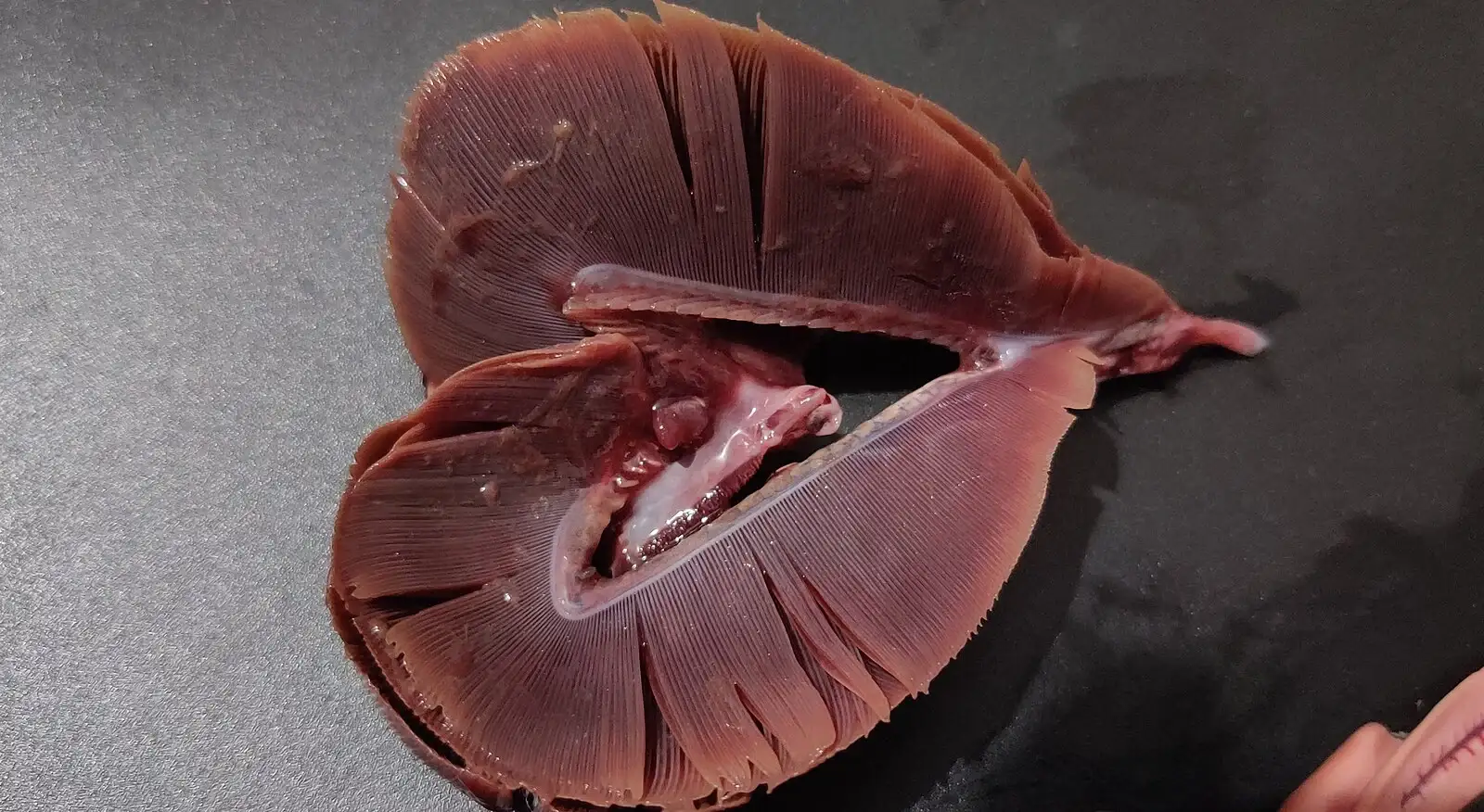
Most bony fish have four gill arches on each side of the head. Each arch is a curved support of bone or cartilage. The side facing the mouth often carries gill rakers, small comb like projections that stop food and debris from reaching the delicate gill tissue.
Gill Filaments and Lamellae
Each arch holds two rows of thin gill filaments. Every filament is lined with hundreds of tiny folds called lamellae. The lamellae are where breathing actually happens. Their walls are extremely thin, and they are packed with tiny blood vessels, so oxygen only has to travel a very short distance from the water into the blood.
Why Gills Are Red
Healthy gills are bright red because blood flows so close to the surface. Pale, brown or swollen gills can be a sign of disease, ammonia burns or poor water quality.
Countercurrent Exchange: How Gills Work So Well
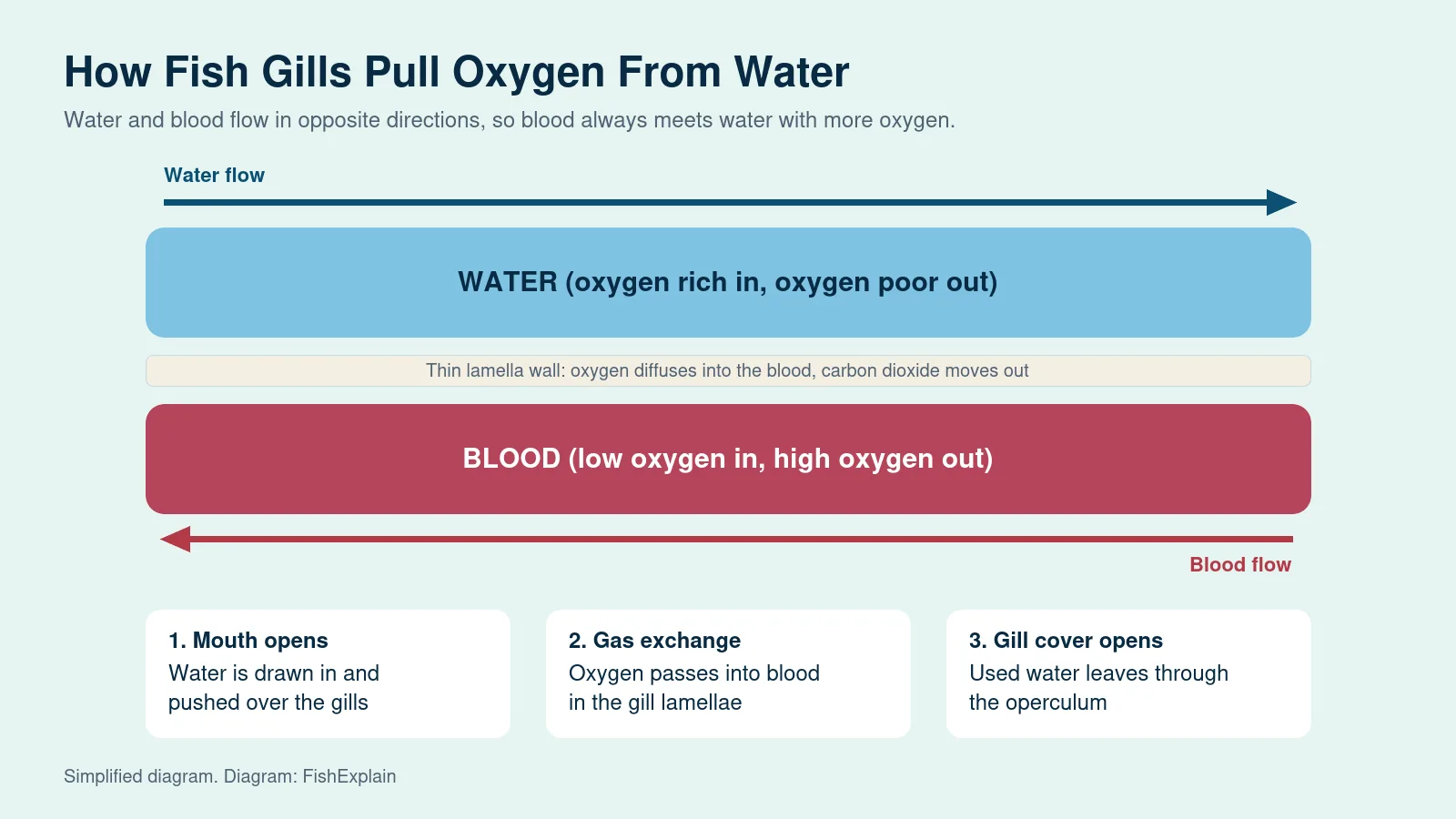
The secret of fish gills is the direction of flow. Water moves across the lamellae one way, while blood inside them flows the opposite way. Biologists call this countercurrent exchange.
Why Opposite Flow Matters
Oxygen only moves from a place with more oxygen to a place with less. As blood travels through a lamella, it picks up oxygen and becomes richer. Because it is moving against the water, it keeps meeting fresher water that still holds even more oxygen. The difference never disappears, so oxygen keeps flowing in along the full length of the gill.
If water and blood flowed the same way, they would quickly reach a balance and the blood could take up only about half of the available oxygen. With countercurrent flow, fish gills can extract around 80 to 90% of the oxygen from the water, according to fisheries scientists at FISHBIO.
Gills Do More Than Breathe
Gills also release carbon dioxide and most of a fish’s ammonia waste into the water. They help freshwater fish balance salts as well. That is one reason gill damage is so serious, and why ammonia in an aquarium is so harmful. Our guide to ammonia in a fish tank explains how it burns gill tissue.
Two Ways Fish Move Water Over Their Gills
Buccal Pumping
Most fish pump water actively by opening and closing their mouths and gill covers. This lets them breathe while they rest, hover or sleep. If you have read our guide on whether fish sleep, this is how resting fish keep breathing.
Ram Ventilation
Some fast swimming fish, such as tuna and certain sharks, swim with their mouths open so water rushes over the gills. This is called ram ventilation. Species that depend on it, such as tuna and the mako shark, must keep moving to get enough oxygen. Many other sharks can switch between pumping and ram ventilation.
Fish That Can Breathe Air
A few fish can take oxygen from air as well as water, which helps them survive in warm, stagnant water where oxygen runs low.
| Fish | How It Breathes Air | Air Breathing Type |
|---|---|---|
| Betta and gouramis | Labyrinth organ above the gills | Regular air gulps, especially as adults |
| Corydoras catfish | Swallows air and absorbs oxygen in the gut | Occasional, when oxygen is low |
| Common pleco | Absorbs oxygen from swallowed air in the stomach | Occasional, when oxygen is low |
| African lungfish | True lungs | Must breathe air or it suffocates |
| Mudskippers | Through the skin and mouth lining | Spends long periods out of water |
Labyrinth Fish
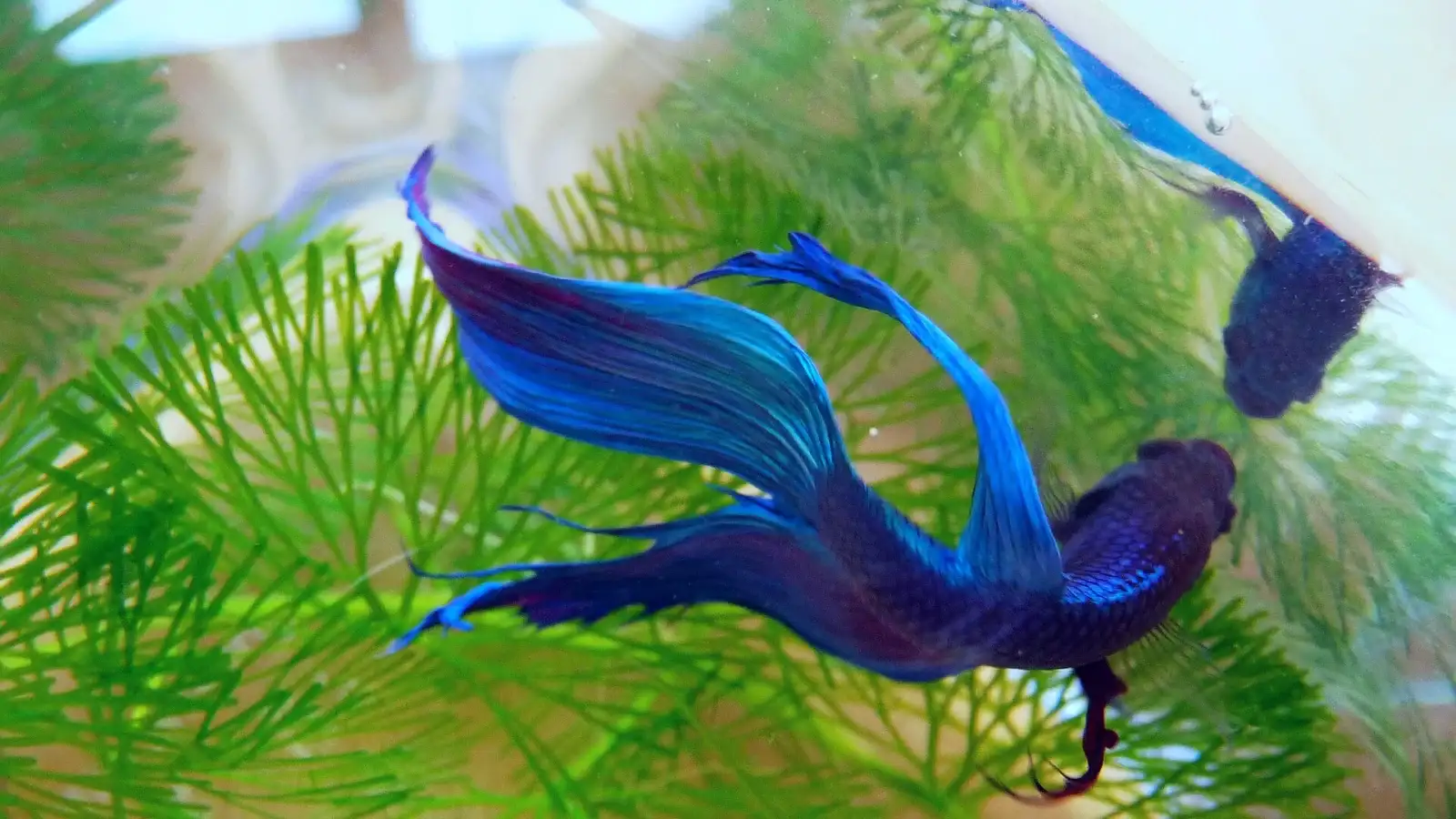
Bettas, gouramis and paradise fish are called labyrinth fish because they have a folded, maze like organ above the gills. It is lined with thin, blood rich tissue that absorbs oxygen from gulped air. The organ develops as the fish grows, so young fry still rely on their gills. Our betta fish care guide explains why bettas still need clean, filtered water even though they can breathe at the surface.
Facultative and Obligate Air Breathers
Most air breathing fish are facultative, which means they breathe air only when they need to. A few, like the African lungfish, are obligate air breathers and will drown if they cannot reach the surface.
Fish Gills vs Human Lungs
Gills and lungs do the same job, moving oxygen into the blood and carbon dioxide out, but they work in very different ways.
| Feature | Fish Gills | Human Lungs |
|---|---|---|
| Medium | Water | Air |
| Flow | One way, in the mouth and out the gill covers | Two way, in and out through the same airway |
| Exchange surface | Thin lamellae on gill filaments | Tiny air sacs called alveoli |
| Main trick | Countercurrent flow of water and blood | Large surface area and rich blood supply |
| Out of their medium | Gill filaments collapse in air | Lungs fill with water and cannot exchange gas |
Why One Way Flow Helps
Water is heavy and thick compared with air. Pulling it in and pushing it back out through the same opening, the way we breathe, would waste a lot of energy. A steady one way stream over the gills lets fish keep fresh water moving across the exchange surface at all times.
Can Fish Drown?
Fish cannot drown in the human sense of filling their lungs with water, but they can suffocate. This happens in a few ways:
- The water holds too little dissolved oxygen, often because it is too warm, overcrowded or poorly circulated
- The gills are damaged by ammonia, nitrite, parasites or disease
- A fish is out of water, where its thin gill filaments collapse and stick together, so they can no longer exchange gas
- Water cannot flow over the gills normally, for example when a hooked fish is dragged backward
Obligate air breathers, such as lungfish, are the exception: they really can drown if they are trapped underwater.
What This Means for Your Aquarium
Understanding how fish breathe helps you spot oxygen problems early.
Signs of Low Oxygen
- Fish gasping or hanging at the surface, especially non labyrinth fish
- Rapid gill movement
- Fish crowding near the filter outflow
- Sluggish behavior in warm weather or after a power cut
How to Keep Oxygen Levels Healthy
Surface movement is the key, because oxygen enters water at the surface. Aim your filter outflow to ripple the surface, avoid overstocking, and keep the water within your fish’s temperature range, since warm water holds less oxygen. An air stone helps in crowded or very warm tanks. Read do fish tanks need an air pump to see when one is worth adding, and keep ammonia at zero so the gills stay healthy.
Fish are remarkable animals, and their gills are one of the best designed gas exchange systems in nature. For more surprising science, read whether fish are mammals or browse all our fish facts.
Frequently Asked Questions
How do fish breathe underwater?
Fish take water in through the mouth and push it over their gills. Thin gill tissue lets dissolved oxygen pass into the blood and carbon dioxide pass out, and the used water leaves through the gill openings.
Do fish breathe oxygen?
Yes. Fish breathe oxygen gas that is dissolved in the water. They do not split water molecules to get oxygen.
Can fish drown?
Fish do not drown like people, but they can suffocate when the water has too little oxygen, when their gills are damaged, or when they are out of water and their gills collapse.
Why do fish open and close their mouths?
Most fish open and close their mouths and gill covers to pump water over the gills. This is how they breathe, even while resting.
Can any fish breathe air?
Yes. Bettas and gouramis use a labyrinth organ, corydoras and some plecos absorb oxygen from swallowed air, and lungfish have true lungs.
Keep exploring
 Fish Facts
Do Fish Sleep? How and When Fish Rest
Do fish sleep? Yes, most fish rest in a sleep like state. Learn how fish sleep without eyelids, when they rest and…
 Fish Facts
Koi Fish Meaning: Colors, Yin Yang Symbolism and Cultural History
Koi stand for perseverance, good fortune and love. Here is what each koi color means, the story behind the yin yang koi,…
 Fish Facts
Can Fish Blink or Close Their Eyes? How Fish See and Sleep
Most fish cannot blink because they have no eyelids, so they sleep with their eyes open. Here is which fish can cover…