
Do Fish Sleep? How and When Fish Rest
Yes, fish sleep, but not the way people do. Most fish enter a resting state where they slow down, lower their metabolism and react less to their surroundings, often at night. Because most fish have no eyelids, they rest with their eyes open. Many hover in place, wedge into plants or rock, or settle on the bottom until morning.
Do fish sleep? It is one of the most common questions new fish owners ask, usually after spotting a fish hanging motionless in the tank at night. The short answer is yes. Fish do not curl up and close their eyes, but scientists agree that most fish have regular periods of rest that do the same job as sleep.
This guide explains how fish sleep, when they rest, where different species go to sleep and how to tell a sleeping fish from a sick one. It also covers simple ways to help your aquarium fish get good rest.
Do Fish Sleep? What Science Says
Sleep in fish looks different from sleep in mammals, so researchers judge it by behavior. A fish is considered asleep when it becomes still for a long period, stays in one place or posture, responds more slowly to light, sound or movement, and then makes up for lost rest if it is kept awake. Many fish meet all of those signs.
According to NOAA’s Ocean Service, fish do not sleep like land mammals, but most fish rest by reducing their activity and metabolism while staying alert to danger. Some float in place, some wedge themselves into mud or coral, and some use a nest.
What Brain Studies Show
Zebrafish have helped scientists look inside a sleeping fish brain. A 2019 study led by researchers at Stanford Medicine and published in Nature found that zebrafish show two sleep states similar to the slow wave sleep and paradoxical sleep seen in mammals, just without rapid eye movement. The team suggested these sleep patterns may have appeared at least 450 million years ago.
Sleep or Rest?
Because fish brains are built differently from ours, some scientists prefer the word rest. In everyday terms, both words describe the same thing: a regular quiet period when the fish slows down and recovers.
How Do Fish Sleep Without Eyelids?
Most fish have no eyelids, so they cannot close their eyes. That is why a sleeping fish looks awake. Our article on whether fish can blink explains which fish can cover their eyes and how fish see underwater. Instead of shutting their eyes, resting fish simply become less responsive.
What a Sleeping Fish Looks Like
- It hovers in one place with only small fin movements
- It stays near the bottom, under decor or among plants
- Its colors look paler or duller than during the day
- Its gills move slowly and evenly
- It reacts slowly when the room light comes on
Neon tetras are a good example. Many owners notice that their bright blue and red stripes fade at night, then return once the fish wake up and become active.
Where and How Different Fish Rest
Fish have found many ways to stay safe while they sleep. The method usually depends on where they live and what hunts them.
Hiding in Reefs and Rocks
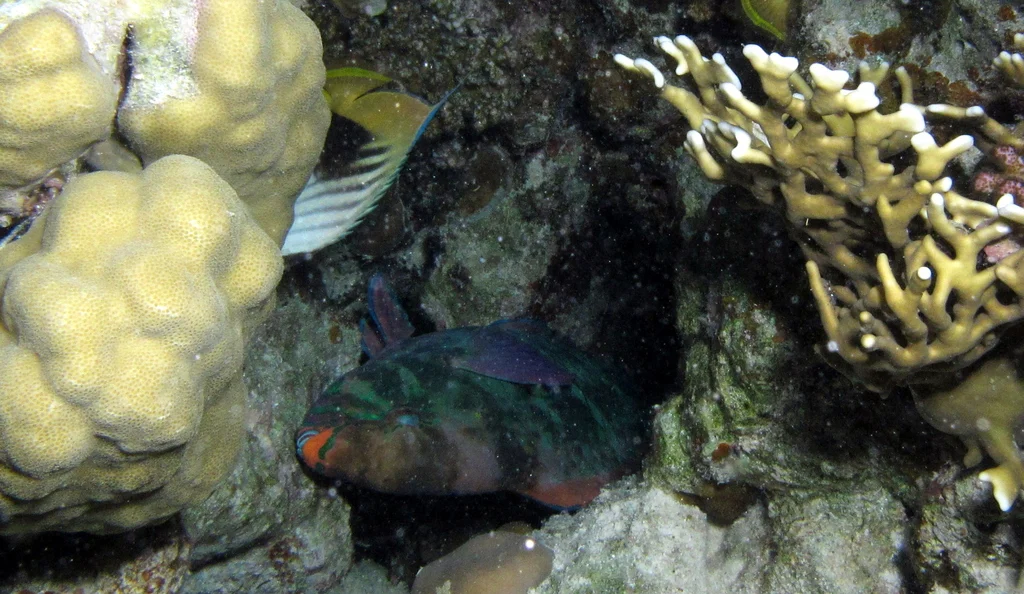
Many reef fish tuck themselves into cracks in coral or rock at night. Some parrotfish go further and wrap themselves in a clear mucus cocoon before they rest. Scientists think the cocoon helps protect them from parasites and may hide their scent from predators.
Burying in Sand
Several wrasses dig into the sand at night, and NOAA notes that the Pacific sand lance burrows into sand to rest, save energy and avoid predators.
Floating in Open Water
Many schooling fish slow down and drift in loose groups at night. In the aquarium you will often see tetras, rasboras and danios hanging quietly in the middle or lower part of the tank after the lights go out.
Fish That Keep Moving
Some sharks rely on swimming to push water over their gills, so they cannot stop completely. These fish still have quieter periods, and scientists are still studying how they rest while moving.
When Do Fish Sleep?
Most aquarium fish are active during the day and rest at night, following the light around them. Others are the opposite.
| Activity Pattern | When They Rest | Aquarium Examples |
|---|---|---|
| Diurnal (day active) | At night | Tetras, guppies, bettas, goldfish, angelfish |
| Nocturnal (night active) | During the day | Many plecos, kuhli loaches, some catfish |
| Crepuscular | Midday and late night | Some loaches and catfish that are busiest at dawn and dusk |
Nocturnal fish often hide all day under driftwood or in caves. If you rarely see your pleco or loach, that is usually normal behavior, not a sign that something is wrong.
How Long Do Fish Sleep?
There is no single number. Sleep time varies by species, age and environment. Some studies of the Mexican tetra found that blind cave populations sleep far less than the same species living in rivers, which shows how much habitat can shape rest. For pet fish, a steady day and night cycle matters more than counting hours.
Is My Fish Sleeping or Sick?
A still fish at night is usually just asleep. A fish that stays still during the day, or rests in an unusual position, may need a closer look.
| Usually Normal | Worth Checking |
|---|---|
| Still at night, upright, slow even gill movement | Lying on its side or upside down |
| Wakes and swims when the light comes on | Does not react to light or food |
| Pale color at night that returns by day | Gasping at the surface or very fast gills |
| Rests on plants or decor, then moves on | Clamped fins, spots or a swollen belly |
Bettas are known for resting on leaves or lying on the gravel, which often worries new owners. Our betta fish care guide covers normal behavior, and the guide to betta fish behavior before death lists the warning signs that mean a fish needs help.
Quick Checks to Make
- Watch the gills. Slow, even movement is normal during rest.
- Turn on a room light and wait a minute. A sleeping fish should slowly wake up.
- Offer a small pinch of food in the morning. A healthy fish usually eats.
- Test the water if the fish still seems sluggish, starting with ammonia, nitrite and temperature.
How to Help Your Aquarium Fish Sleep Well
Aquarium fish depend on you for a natural day and night rhythm. A few simple habits make a clear difference.
Keep a Steady Light Schedule
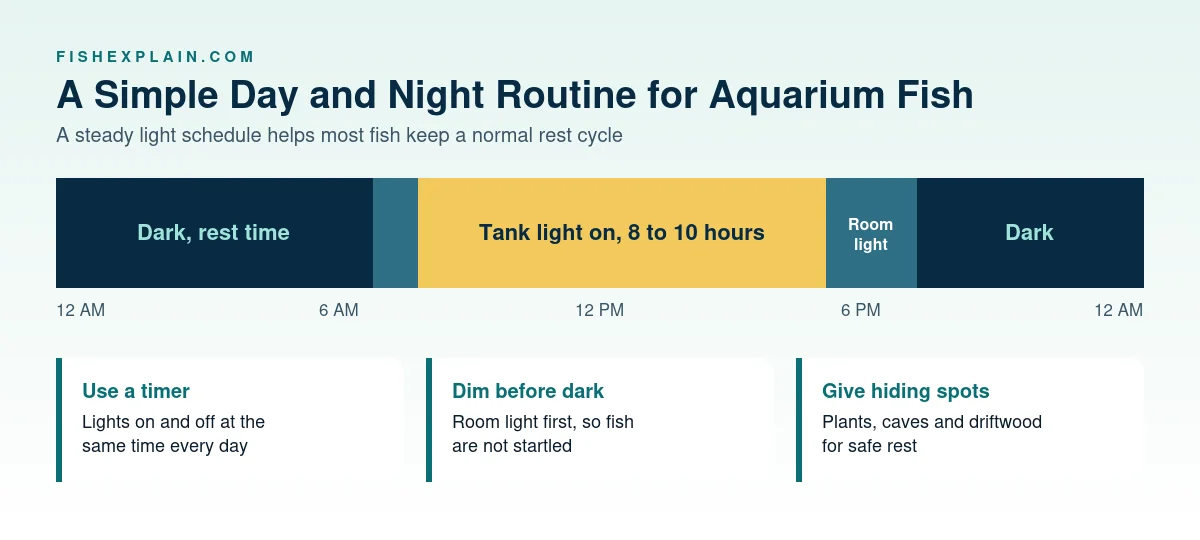
Most tanks do well with about 8 to 10 hours of light a day. Leaving the aquarium light on around the clock stresses fish and also feeds algae. Our aquarium lighting guide explains how many hours of light different tanks need and how to set a timer.
Turn Lights Off Gently
Switching from bright light to total darkness in one moment can startle fish. Turn the tank light off while the room is still lit, or use a light with a sunset mode, so the fish can settle down slowly.
Give Fish Places to Hide
Live plants, caves, driftwood and rock work give fish safe spots to rest. Bottom dwellers and nocturnal species especially need cover during the day.
Keep the Tank Quiet at Night
Avoid tapping on the glass, loud music near the tank and bright screens pointed at the aquarium late at night. A calm room helps fish stay settled.
Do Fish Dream?
Nobody can ask a fish what it experiences, so there is no way to know whether fish dream the way people describe dreams. What researchers can say is that zebrafish show a sleep state with brain and body activity similar to the paradoxical sleep linked with dreaming in mammals. That makes the question interesting, but it does not answer it.
Why Fish Need Rest
Rest gives fish time to save energy, recover and stay alert for the next active period. Fish that are kept awake by constant light or disturbance often become stressed, eat less and are more likely to get sick. In a home aquarium, a dark and quiet night is one of the easiest things you can give your fish.
Can Fish Lose Sleep?
Yes. In lab studies, fish that are kept awake tend to rest more afterward, which is one of the signs scientists use to define true sleep. At home, common causes of poor rest are tank lights left on all night, a bright room, heavy foot traffic past the tank and aggressive tank mates that chase other fish after dark.
Fun Facts About Fish Sleep
- Most fish sleep with their eyes open because they have no eyelids
- Some parrotfish make a mucus cocoon before they sleep
- Zebrafish show brain activity similar to two stages of mammal sleep
- Many fish fade in color at night while they rest
- Some cave fish sleep much less than their river relatives
For more surprising facts about how fish live, breathe and behave, browse our fish facts collection or read are fish mammals to see how fish differ from whales and dolphins.
Frequently Asked Questions
Do fish sleep at night?
Most aquarium fish rest at night, when the lights are off. Nocturnal fish such as many plecos and loaches do the opposite and rest during the day.
How can you tell if a fish is sleeping?
A sleeping fish stays still in one spot, often near the bottom or among plants, with slow, even gill movement and paler colors. It wakes up slowly when the light comes on.
Do fish close their eyes when they sleep?
Most fish cannot close their eyes because they have no eyelids. They rest with their eyes open and simply become less responsive.
Should I turn off the fish tank light at night?
Yes. Fish need a regular period of darkness to rest. About 8 to 10 hours of light a day on a timer suits most aquariums.
Is my fish dead or sleeping?
Check the gills and posture. A sleeping fish is upright and its gills move slowly. A fish lying on its side, not breathing or not reacting to light needs immediate attention.
Keep exploring
 Fish Facts
How Do Fish Breathe Underwater? Gills Explained
How do fish breathe? Learn how gills pull oxygen from water, why countercurrent flow works so well, which fish breathe air, and…
 Fish Facts
Koi Fish Meaning: Colors, Yin Yang Symbolism and Cultural History
Koi stand for perseverance, good fortune and love. Here is what each koi color means, the story behind the yin yang koi,…
 Fish Facts
Can Fish Blink or Close Their Eyes? How Fish See and Sleep
Most fish cannot blink because they have no eyelids, so they sleep with their eyes open. Here is which fish can cover…