Wahoo Fish: The Short Answer
Few ocean fish combine speed and table quality the way the wahoo does. Offshore anglers prize it for blistering runs that strip line off a reel in seconds. Chefs prize it for clean, white meat that works on the grill, in a pan or raw as sashimi.
This guide covers the essential wahoo facts, from size and speed to habitat and diet. It also explains what wahoo tastes like, how to cook it and how anglers find and catch this famous gamefish.
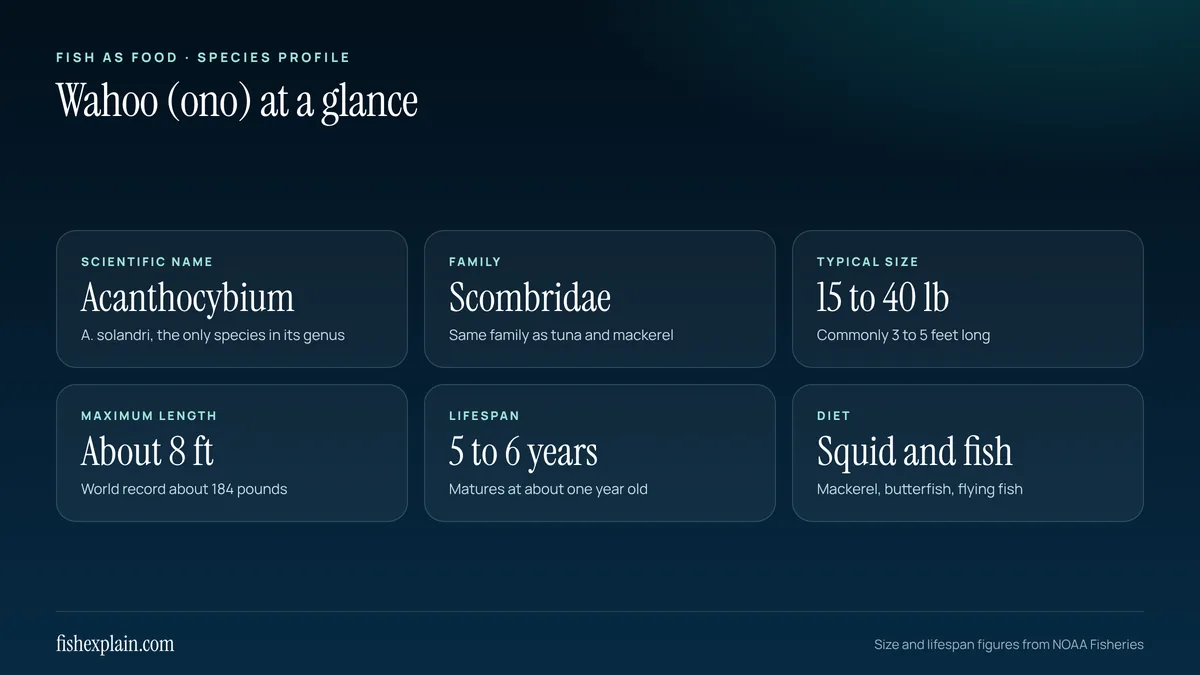
- Scientific name: Acanthocybium solandri.
- Family: Scombridae, the mackerels and tunas.
- Other names: ono in Hawaii, peto in many Spanish-speaking areas.
- Typical size: 15 to 40 pounds, 3 to 5 feet long.
- Range: tropical and subtropical seas worldwide.
Wahoo Fish Facts
Wahoo stand out from their mackerel and tuna cousins in several ways.
A family of one
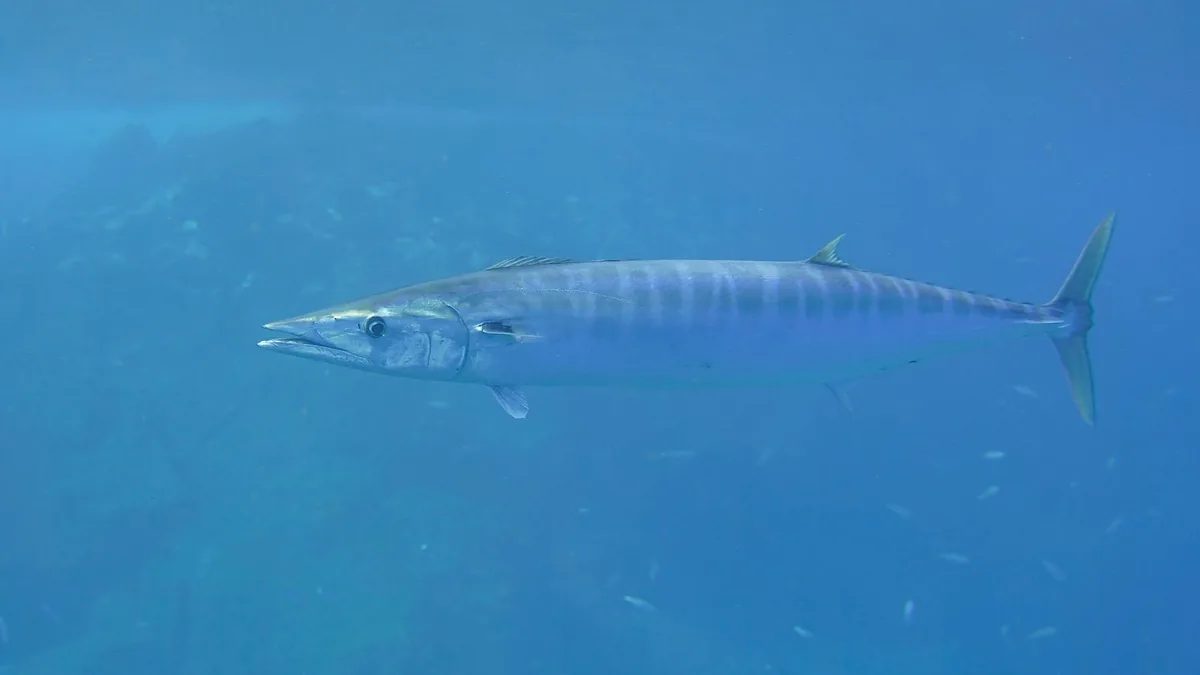
The wahoo is the only species in its genus, Acanthocybium. It belongs to the same family as tuna, bonito and king mackerel. Like them, it is built for life in open water, with a streamlined body and a deeply forked tail.
Size and growth
Wahoo grow very fast. According to NOAA Fisheries, they can reach about 8 feet in length, are commonly 3.3 to 5.4 feet long and can reproduce at about one year old. They live only about 5 or 6 years. The all-tackle world record, caught off Mexico’s Baja California in 2005, weighed about 184 pounds.
Speed
Wahoo are often listed among the fastest fish in the ocean. Burst speeds of around 50 miles per hour or more are widely quoted, though measuring the top speed of a wild fish is very hard. What is certain is that a hooked wahoo can take off with enormous power in a heartbeat.
Teeth and jaws
A wahoo has a long, beak-like snout lined with rows of flat, triangular teeth that are as sharp as razors. The teeth sit close together, forming a cutting edge. Wahoo can slice larger prey into pieces in one pass. Our guide to fish teeth shows how different predators use their teeth.
Color and markings
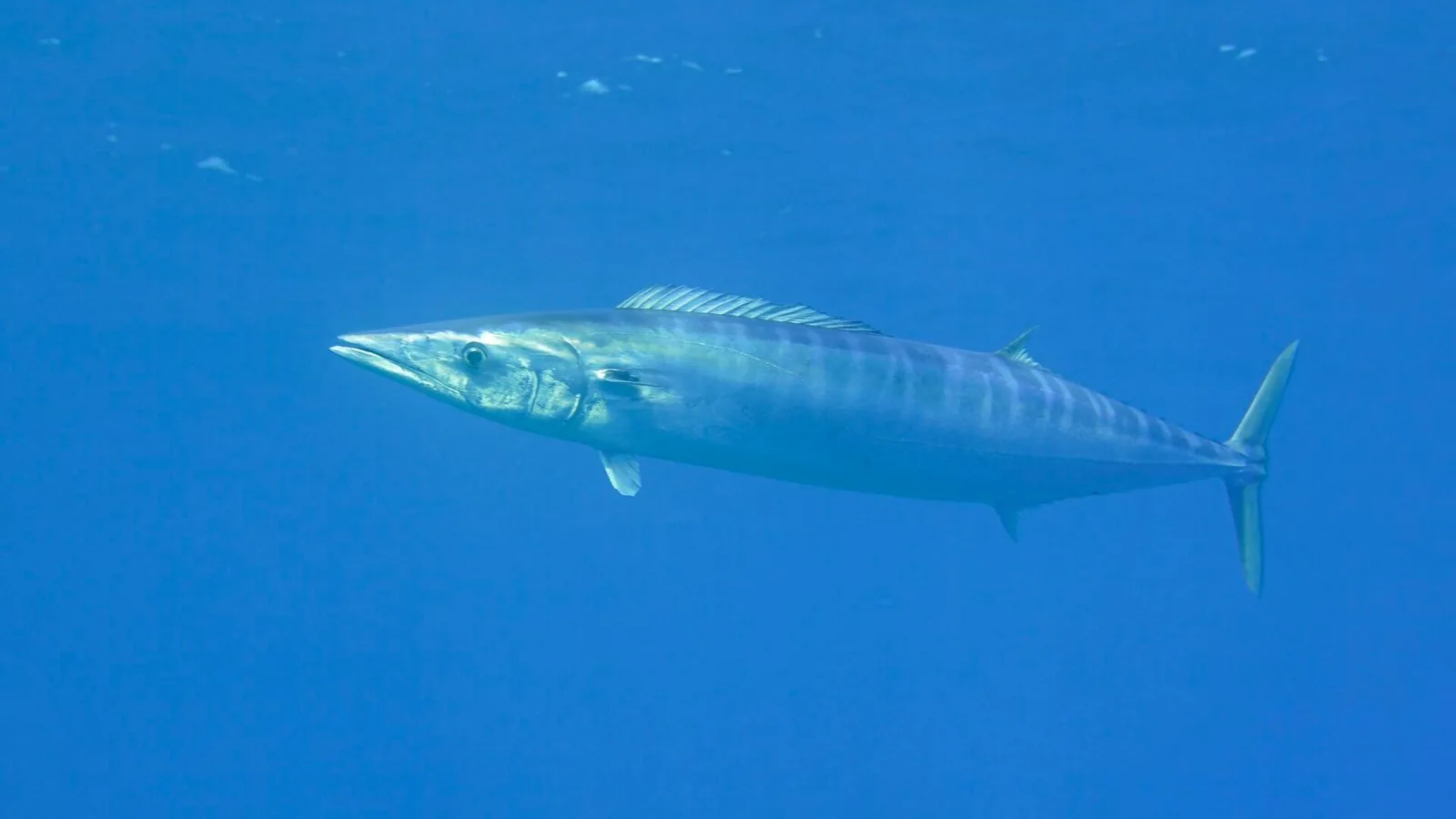
Live wahoo are iridescent blue-green on the back with silvery sides. Bold, dark blue vertical bars run down the body. These bars can look brighter when the fish is excited and often fade after it dies.
Where Wahoo Live and What They Eat
Wahoo are ocean wanderers that follow warm water and food.
Range
Wahoo live in tropical and subtropical waters around the world, including the Atlantic, Pacific and Indian Oceans, the Caribbean Sea and the Gulf of Mexico. In the United States, they are common off Florida, the Carolinas, the Gulf Coast and Hawaii.
Favorite spots
Wahoo often hang around underwater structure. Look for them along steep drop-offs, reef edges, seamounts, oil rigs and floating debris. They usually travel alone or in small, loose groups rather than large schools.
Seasonal movements
Wahoo stay in tropical water year-round, and some move toward higher latitudes during warmer months. Many fisheries have strong seasonal runs, so local captains often know the best months in their area.
Diet
Wahoo are fast predators. They feed mainly on squid and fish such as frigate mackerel, butterfish, flying fish and small tunas. Their speed lets them run down prey that would escape slower hunters. For more on predator diets in the wild, see our guide to what fish eat.
Spawning
Wahoo spawn in warm water over a long season and release eggs several times. A single female can produce hundreds of thousands to millions of eggs in a year. Fast growth and early maturity help wahoo populations handle fishing pressure better than many slow-growing ocean fish.
What Does Wahoo Taste Like?
Wahoo has an excellent reputation as a food fish. Its name in Hawaii, ono, means good or delicious.
Flavor
Wahoo tastes mild, clean and slightly sweet. It has much less of the strong “fishy” taste found in many mackerel. People who do not usually like fish often enjoy it.
Texture
The raw meat is pale pink to white and turns bright white when cooked. It is firm and forms large, circular flakes. The texture is often compared to a cross between tuna and a mild white fish.
Wahoo versus similar fish
| Fish | Flavor | Texture |
|---|---|---|
| Wahoo (ono) | Mild, slightly sweet | Firm, large white flakes |
| Mahi mahi | Mild, a little sweet | Moist, medium flakes |
| Albacore tuna | Mild to rich | Firm, meaty |
| King mackerel | Strong, oily | Soft, oily flakes |
Nutrition
Wahoo is a good source of protein and selenium. NOAA Fisheries describes it as an excellent source of lean protein. It also provides some omega-3 fats, though less than salmon or sardines.
How to Cook Wahoo
Because wahoo is firm and fairly lean, it suits fast, hot cooking. The main rule is simple: do not overcook it.
Grilling
Cut wahoo into thick steaks or fillets, brush with oil and grill over high heat for a few minutes per side. A simple marinade of citrus, garlic and herbs works well. Pull it off the heat as soon as the center turns opaque.
Pan-searing
Sear wahoo in a hot pan with a little oil until golden on the outside. Many cooks leave the center slightly translucent for tender results, but cook fully to 145°F if you are serving children, older adults or anyone who is pregnant.
Raw dishes
In Hawaii, ono is a favorite for sashimi and poke. Only use fish sold for raw use from a trusted supplier, and keep it very cold.
Fish tacos and more
Wahoo holds together well, which makes it ideal for fish tacos, kebabs and stir-fries. It also smokes well.
Handle it cold
Like tuna and other members of the mackerel family, wahoo can form histamine if it warms up after being caught. Histamine is not destroyed by cooking and can cause scombroid poisoning, with symptoms such as flushing, headache and a peppery taste in the mouth. Ice wahoo right away after catching it and keep store-bought fish refrigerated.
How Wahoo Are Caught
Wahoo are a top target for offshore anglers. Catching them takes the right tactics and the right gear.
High-speed trolling
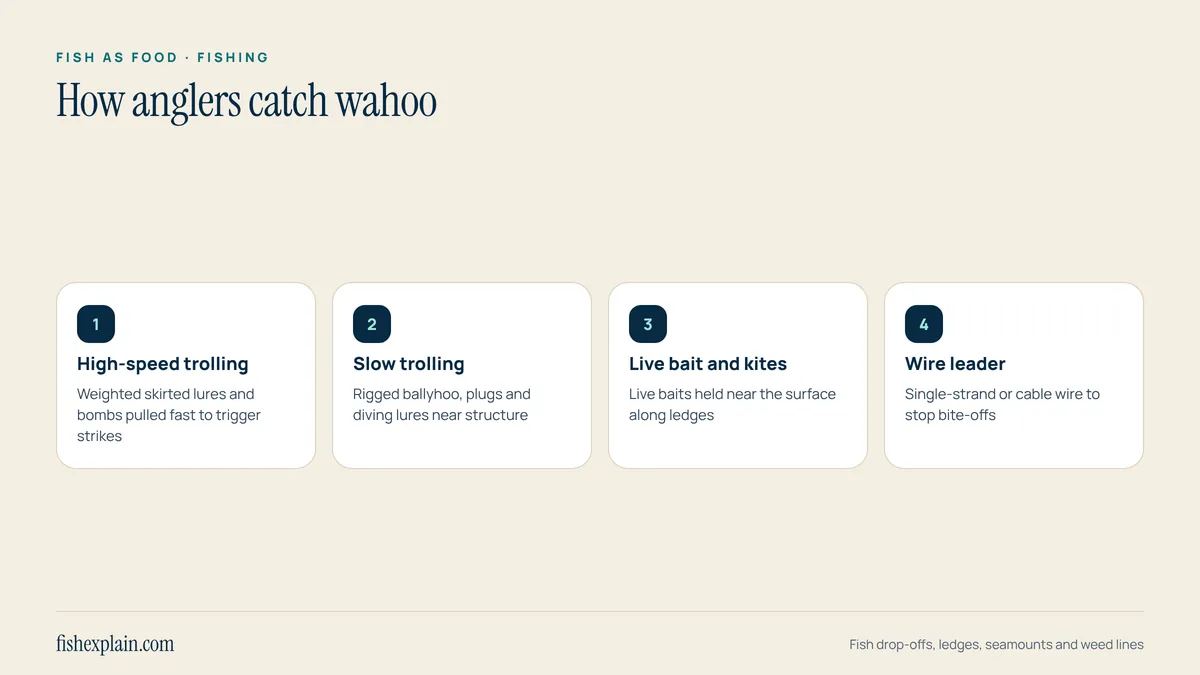
The most famous method is high-speed trolling. Boats pull heavy, weighted lures at speeds far faster than normal trolling, often well over 12 knots. The speed covers lots of water and triggers the wahoo’s chase instinct. Strikes are sudden and violent.
Lures and baits
Popular high-speed lures include weighted skirted lures and metal-headed “bombs.” At slower speeds, anglers troll rigged ballyhoo, plugs or diving lures. Live baits fished near structure or from a kite also catch wahoo.
Wire leaders are a must
A wahoo’s teeth slice through monofilament leader in an instant. Use a short length of single-strand or cable wire leader between the lure and the main line. Many anglers lose their first wahoo to a bite-off before learning this lesson.
Where to fish
Focus on drop-offs, ledges, seamounts and the edges of reefs. Areas where current pushes bait against structure are prime spots. Floating weed lines and debris can also hold wahoo, along with mahi mahi.
Spearfishing and commercial fishing
Freedivers and spearfishers also target wahoo in clear blue water. Commercial fishers catch wahoo with hook-and-line gear and longlines, and wahoo is also caught as bycatch in some tuna fisheries.
Rules and Sustainability
Wahoo fishing is regulated in many places to keep populations healthy.
Management in the United States
In US Atlantic waters, wahoo are managed under the Dolphin and Wahoo Fishery Management Plan. Rules include permits, annual catch limits, daily bag limits for recreational anglers and trip limits for commercial boats. Hawaii and the US Pacific islands have their own management.
Check local regulations
Bag limits, size limits and seasons can change. Always check the current state and federal rules before you head offshore.
Is wahoo a sustainable choice?
Wahoo grow fast, mature early and spawn many times, which helps them cope with fishing pressure. US-caught wahoo is generally considered a responsible seafood choice. Fishing with selective gear such as rod and reel also keeps bycatch low.
Wahoo Fish FAQs
Is wahoo the same as ono?
Yes. Ono is the Hawaiian name for wahoo, Acanthocybium solandri. In Hawaiian, ono means good or delicious, a nod to the fish’s excellent eating quality. Restaurant menus in Hawaii and on the US mainland often use the name ono.
What does wahoo fish taste like?
Wahoo has a mild, clean and slightly sweet flavor with firm, white flesh that forms large flakes when cooked. Many people compare it to a cross between tuna and a mild white fish. It is less oily and less fishy than most mackerel.
How fast can a wahoo swim?
Wahoo are among the fastest fish in the sea. Speeds of around 50 miles per hour or more are often quoted for short bursts, although speeds of free-swimming fish are hard to measure accurately. Their streamlined body and narrow tail are built for sudden sprints.
How big do wahoo get?
Most wahoo caught by anglers weigh about 15 to 40 pounds and measure 3 to 5 feet long. They can grow to about 8 feet. The all-tackle world record, caught off Mexico in 2005, weighed about 184 pounds.
Is wahoo high in mercury?
Wahoo is not named on the FDA and EPA fish advice lists. As a fast-growing, short-lived predator, it is generally thought to fall in the middle range for mercury. People who are pregnant or feeding young children may want to treat it like other moderate mercury fish and eat it about once a week.
Can you eat wahoo raw?
Yes. Wahoo is popular as sashimi and poke in Hawaii. For raw dishes, buy fish sold for raw use from a trusted supplier, keep it very cold and eat it fresh. People who are pregnant or have weak immune systems should avoid raw fish.
What is the best bait for wahoo?
Most wahoo are caught by high-speed trolling with lures such as weighted skirted lures and metal-headed bombs. Rigged ballyhoo and live baits also work when trolled slowly or fished from a kite. Always use a wire leader, because wahoo teeth cut through monofilament easily.
Final Thoughts
Fast in the water, great on the plate
The wahoo, or ono, is one of the ocean’s great all-rounders. It is a lightning-fast predator with razor teeth, a fast-growing fish that copes well with fishing, and a mild, firm white fish that cooks beautifully. If you ever get the chance to troll for wahoo or order ono at a restaurant, take it. For more remarkable ocean species, explore our guide to the unicornfish.