Lowest Mercury Fish: The Short Answer
Fish is one of the healthiest foods you can eat. It is packed with protein, vitamin D and omega-3 fats that support the heart and brain. Yet many people worry about mercury, a metal that builds up in some fish.
The good news is that most popular seafood is low in mercury. Only a handful of large predatory fish carry high levels. This guide explains which fish are safest, which to limit and how to build a seafood habit that is both healthy and safe.
- Best choices: small fish, shellfish and fast-growing farmed fish.
- Limit: mid-sized predators such as albacore tuna and halibut.
- Avoid: large, long-lived predators such as swordfish and shark.
How Mercury Gets Into Fish
Understanding where mercury comes from makes the rest of the advice easy to follow.
From the air to the water
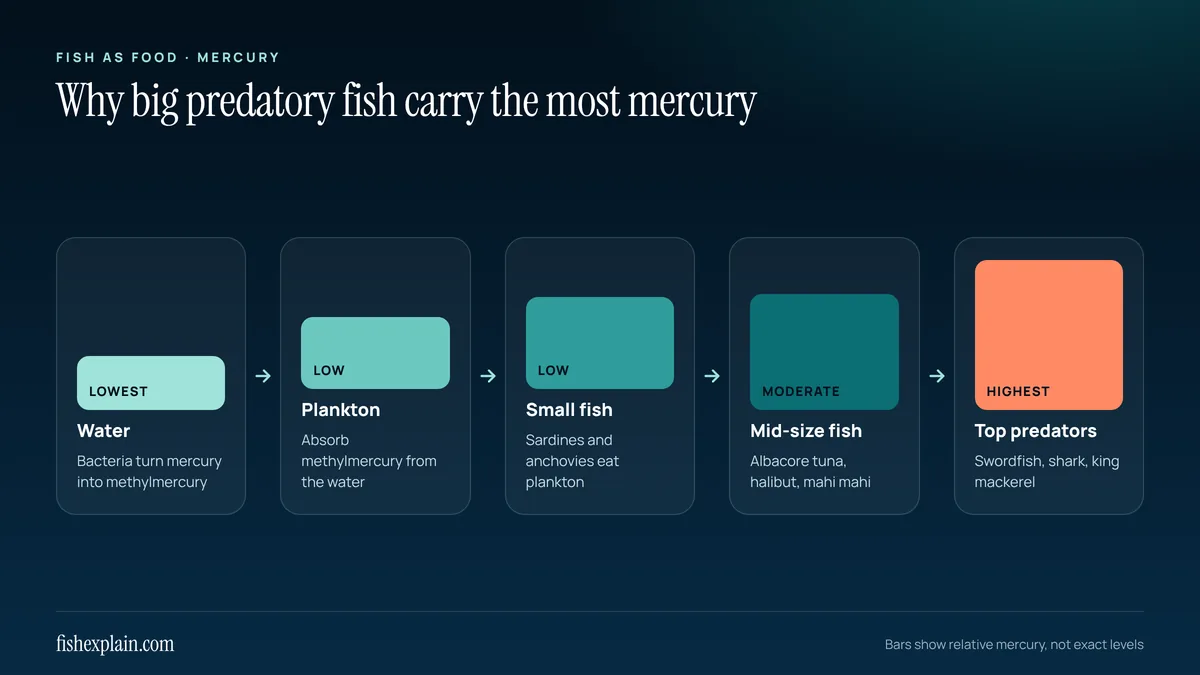
Mercury is released into the air by natural sources such as volcanoes and by human activity such as burning coal. It settles into lakes, rivers and oceans. There, bacteria change some of it into methylmercury, the form that builds up in living things.
Biomagnification up the food chain
Tiny plankton absorb methylmercury from the water. Small fish eat lots of plankton. Bigger fish eat lots of small fish. At each step, mercury becomes more concentrated, because the body holds on to it. This process is called biomagnification.
Why big, old fish have the most
Two things raise mercury levels in a fish: where it sits in the food chain and how long it lives. Large predators such as swordfish and sharks eat other fish for many years. They end up with far more mercury than a sardine, which eats plankton and lives only a few years.
Why mercury matters for people
Methylmercury can harm the developing brain and nervous system. That is why the advice is strictest for people who are pregnant or breastfeeding and for young children. For most adults, choosing lower mercury fish lets you enjoy the benefits of seafood with little risk.
The Lowest Mercury Fish List
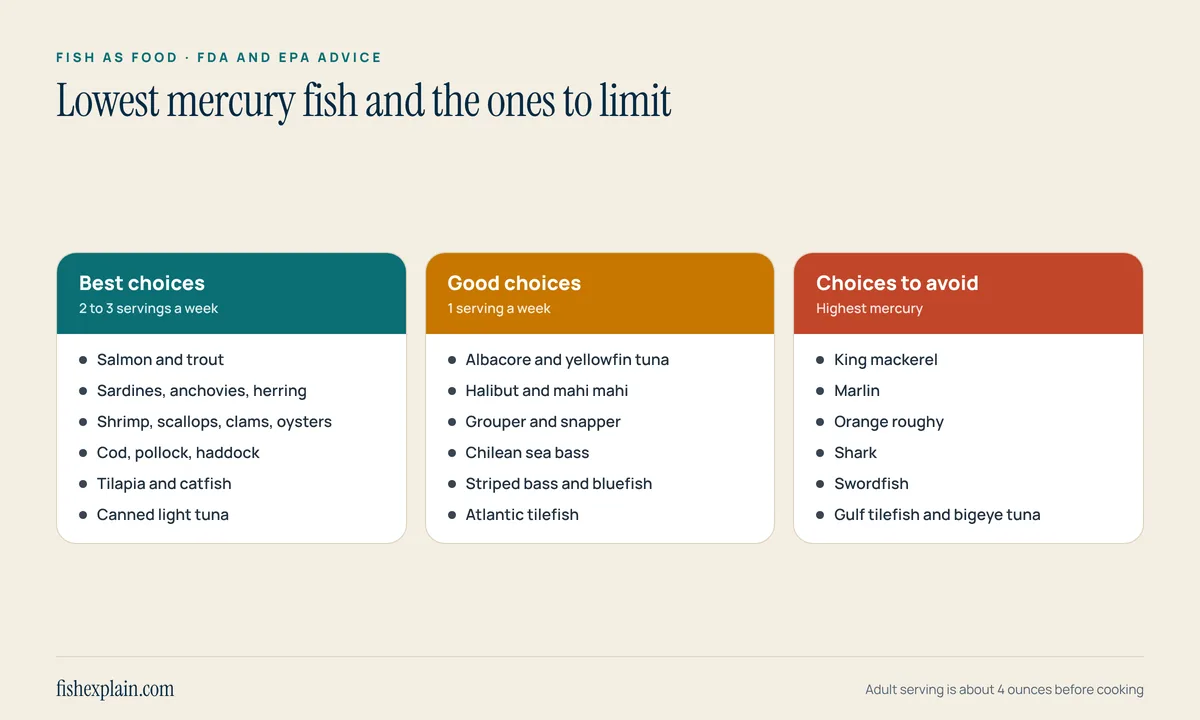
The U.S. Food and Drug Administration and the Environmental Protection Agency sort common seafood into three groups. The FDA and EPA advice about eating fish is the main source for the lists below.
Best choices: eat two to three servings a week
These fish and shellfish have the lowest mercury levels:
- Anchovy, herring, sardine and shad
- Salmon and freshwater trout
- Shrimp, scallops, clams, oysters, crab, crawfish and lobster
- Cod, haddock, hake, pollock and whiting
- Catfish and tilapia
- Flounder, plaice and sole
- Atlantic mackerel and Pacific chub mackerel
- Canned light tuna, including skipjack
- Squid, black sea bass, Atlantic croaker, perch, mullet and whitefish
Good choices: eat one serving a week
These fish have moderate mercury levels. They are fine in moderation:
- Albacore or white tuna, canned or fresh, and yellowfin tuna
- Halibut, mahi mahi and monkfish
- Grouper, snapper and rockfish
- Chilean sea bass and sablefish
- Bluefish, Spanish mackerel and striped bass
- Carp and Atlantic tilefish
Choices to avoid
These fish have the highest mercury levels. Pregnant and breastfeeding people and young children should not eat them, and other adults may want to keep them rare:
- King mackerel
- Marlin
- Orange roughy
- Shark
- Swordfish
- Tilefish from the Gulf of Mexico
- Bigeye tuna
The 8 Safest Fish to Eat Often
If you want simple picks, these fish combine low mercury with strong nutrition and wide availability.
1. Salmon
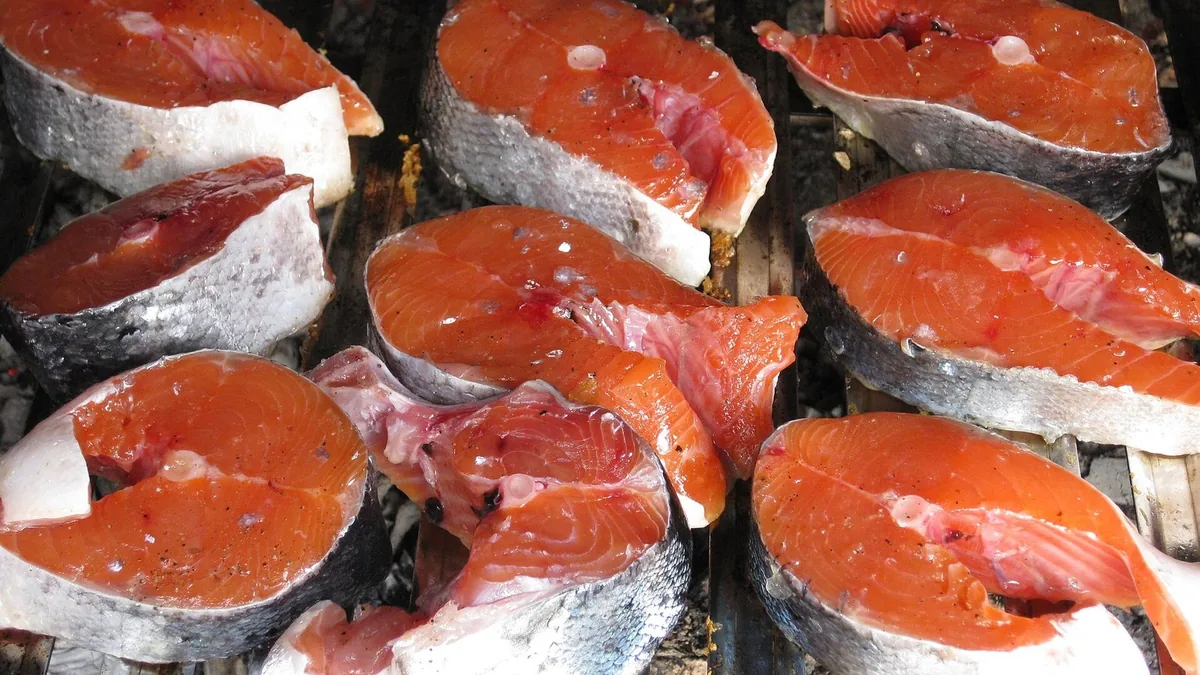
Salmon is low in mercury and one of the richest sources of omega-3 fats. Wild and farmed salmon are both Best Choices. Canned salmon is an affordable option with soft, edible bones that add calcium.
2. Sardines
Sardines are small, short-lived fish that eat plankton, so they carry very little mercury. They are also high in omega-3s, calcium and vitamin D. Canned sardines are easy to keep in the pantry.
3. Anchovies and herring
Like sardines, these small schooling fish are low in mercury and rich in healthy fats. Use anchovies in sauces and dressings, and try pickled or smoked herring.
4. Shrimp
Shrimp is the most popular seafood in the United States and among the lowest in mercury. It is lean and high in protein, though lower in omega-3s than oily fish.
5. Pollock and cod
These mild white fish are low in mercury and widely used in fish sticks, fish sandwiches and imitation crab. They are a good starting point for people new to fish.
6. Tilapia and catfish
Both are farmed on a large scale, grow quickly and are low in mercury. They are mild and budget-friendly, which makes them easy choices for family meals.
7. Oysters, clams and scallops
Shellfish such as oysters and clams are very low in mercury and rich in zinc, iron and vitamin B12. Always buy them from trusted sources and cook them well if you are pregnant or have a weak immune system. Shellfish are not true fish at all. Our article on whether fish are mammals explains what makes a fish a fish.
8. Canned light tuna
Canned light tuna is made mostly from skipjack, a smaller tuna. It is a Best Choice and far lower in mercury than albacore. It is a cheap, easy way to add fish to your week.
Fish to Limit or Avoid
Some fish are still healthy in small amounts, while others are best skipped by sensitive groups.
Tuna: know your type
Tuna causes the most confusion. Skipjack and canned light tuna are low. Albacore and yellowfin are moderate. Bigeye tuna, often used for sushi and steaks, is high. When eating sushi, ask which tuna is used if you are pregnant or feeding young children.
Swordfish and shark
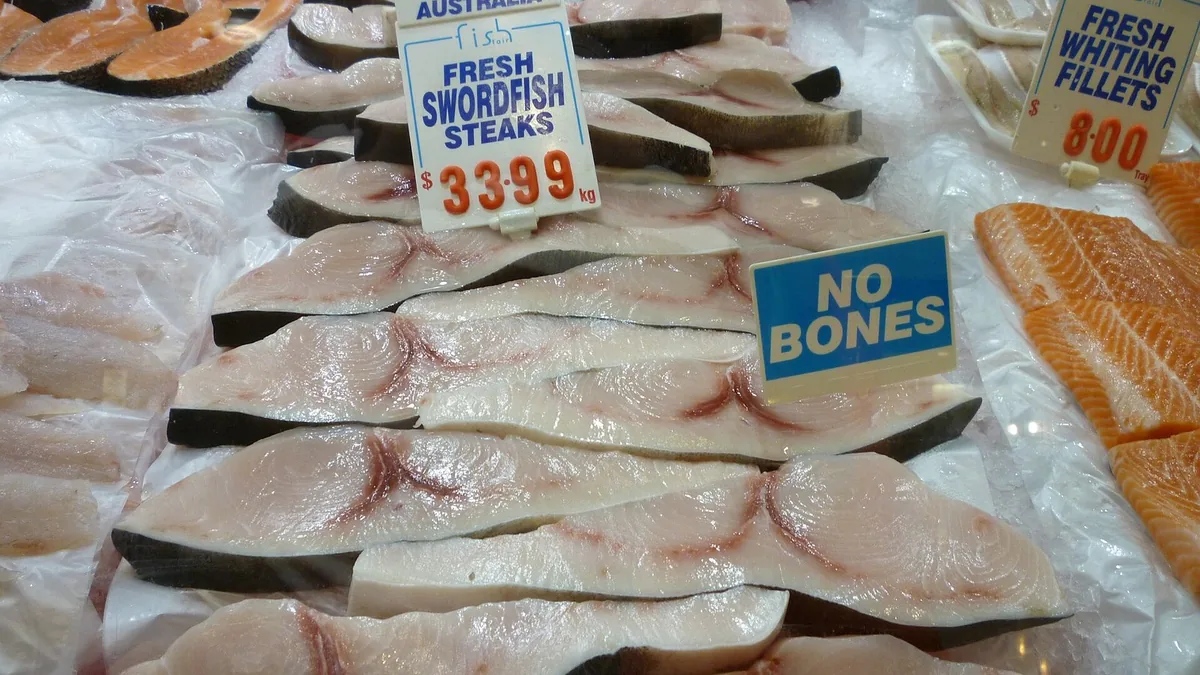
Swordfish and shark are among the highest mercury fish sold. Both are large, long-lived predators at the top of the ocean food chain. FDA testing has found average mercury levels in these fish many times higher than in salmon or sardines.
King mackerel versus other mackerel
Not all mackerel are the same. King mackerel is high in mercury and on the avoid list. Atlantic mackerel and Pacific chub mackerel are smaller and are Best Choices. Spanish mackerel falls in between.
Orange roughy, marlin and Gulf tilefish
Orange roughy can live for more than 100 years, so it builds up mercury slowly over a long life. Marlin is a large predator. Tilefish from the Gulf of Mexico has tested very high, while Atlantic tilefish is lower and listed as a Good Choice.
Who Needs to Be Most Careful
Mercury advice is the same for everyone in one way: choose lower mercury fish. Some groups need to be more careful about amounts.
Pregnant and breastfeeding people
Fish is good for a growing baby, so the advice is not to skip it. People who are pregnant or breastfeeding should eat 8 to 12 ounces of fish a week from the Best Choices list, or use one Good Choice serving in place of some of it. Avoid the high mercury list entirely. Talk to your doctor or midwife if you have questions about your diet.
Young children
Children can eat fish one to two times a week, chosen from the Best Choices list. Serving sizes grow with age. A rough guide is about 1 ounce for ages 1 to 3, 2 ounces for ages 4 to 7, 3 ounces for ages 8 to 10 and 4 ounces from age 11.
People who eat a lot of fish
If you eat fish almost every day, choose mainly from the Best Choices list and vary the types you eat. Mixing species spreads out any risk from a single source.
Anglers and their families
Fish from local lakes and rivers can have different mercury levels from store-bought fish. Check your state’s fish advisory before eating your catch. When no advisory exists, limit yourself to one serving of that fish per week and skip other fish that week.
Tips for Eating Fish Safely
A few simple habits make it easy to get the benefits of fish with very little mercury.
Aim for variety
Rotate between several Best Choice fish each week. Variety helps you get a wider range of nutrients and lowers your exposure to any one contaminant.
Favor small, oily fish
Sardines, anchovies, herring and Atlantic mackerel pack the most omega-3s for the least mercury. Salmon also gives you a strong omega-3 boost.
Remember that cooking does not remove mercury
Mercury is bound to the muscle of the fish. Grilling, frying, freezing or removing the skin does not lower it. Choosing the right fish is what matters.
Learn more about fish as food
Curious about how different fish live and what makes some of them so different from others? Our guide to what fish eat explains how diet shapes a fish, and our article on whether fish have teeth shows how predators like tuna and swordfish catch their prey.
Lowest Mercury Fish FAQs
What fish has the lowest mercury?
Some of the lowest mercury seafood includes scallops, shrimp, clams, oysters, salmon, sardines, anchovies, tilapia, pollock and catfish. These are all on the FDA and EPA Best Choices list. Small, short-lived fish and shellfish tend to have the least mercury.
Is canned tuna high in mercury?
It depends on the type. Canned light tuna, which is mostly skipjack, is on the Best Choices list. Canned albacore, or white tuna, has about three times as much mercury on average and is a Good Choice, so eat it once a week at most. Bigeye tuna is on the list of fish to avoid.
How much fish should I eat per week?
The FDA and EPA advise adults to eat at least 8 ounces of seafood a week, about two servings, chosen from lower mercury options. People who are pregnant or breastfeeding should aim for 8 to 12 ounces a week from the Best Choices list.
Which fish should pregnant women avoid?
People who are pregnant should avoid king mackerel, marlin, orange roughy, shark, swordfish, tilefish from the Gulf of Mexico and bigeye tuna. These fish have the highest mercury levels. Plenty of other fish are safe and helpful during pregnancy.
Is salmon low in mercury?
Yes. Salmon, both wild and farmed, is one of the lowest mercury fish and is on the Best Choices list. It is also rich in omega-3 fats, which makes it one of the best fish for most people to eat often.
Does cooking remove mercury from fish?
No. Mercury in fish is bound to the muscle, so cooking, freezing or trimming fat does not remove it. The only way to lower your intake is to choose lower mercury fish and watch how much you eat.
Is fish I catch myself safe to eat?
It depends on where it was caught. Many states issue fish advisories for local lakes and rivers. Check your state or local advisory before eating fish you catch. If there is no advice, the FDA suggests eating no more than one serving of that fish a week and no other fish that week.
Final Thoughts
Eat more fish, just choose wisely
Most of the fish people eat every day are low in mercury. Salmon, sardines, anchovies, shrimp, pollock, cod, tilapia, catfish, shellfish and canned light tuna are all among the lowest mercury fish. Save albacore, halibut and mahi mahi for once a week, and skip swordfish, shark, king mackerel, marlin, orange roughy, Gulf tilefish and bigeye tuna if you are pregnant or feeding young children. With these simple rules, you can enjoy fish two or three times a week and get all of its benefits.