Discus Tank Setup: The Short Answer
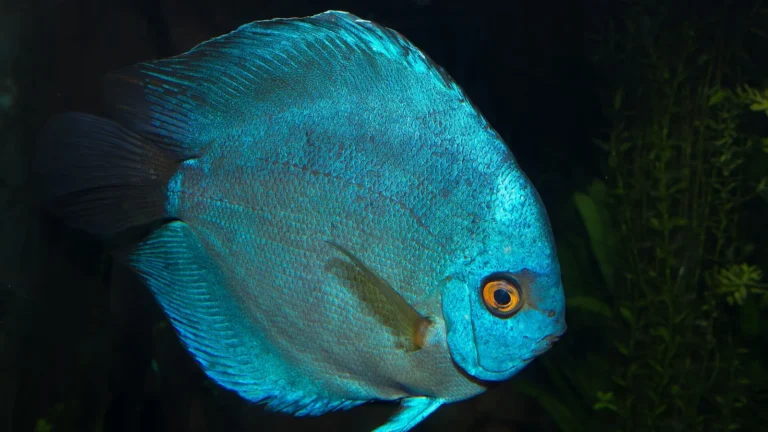
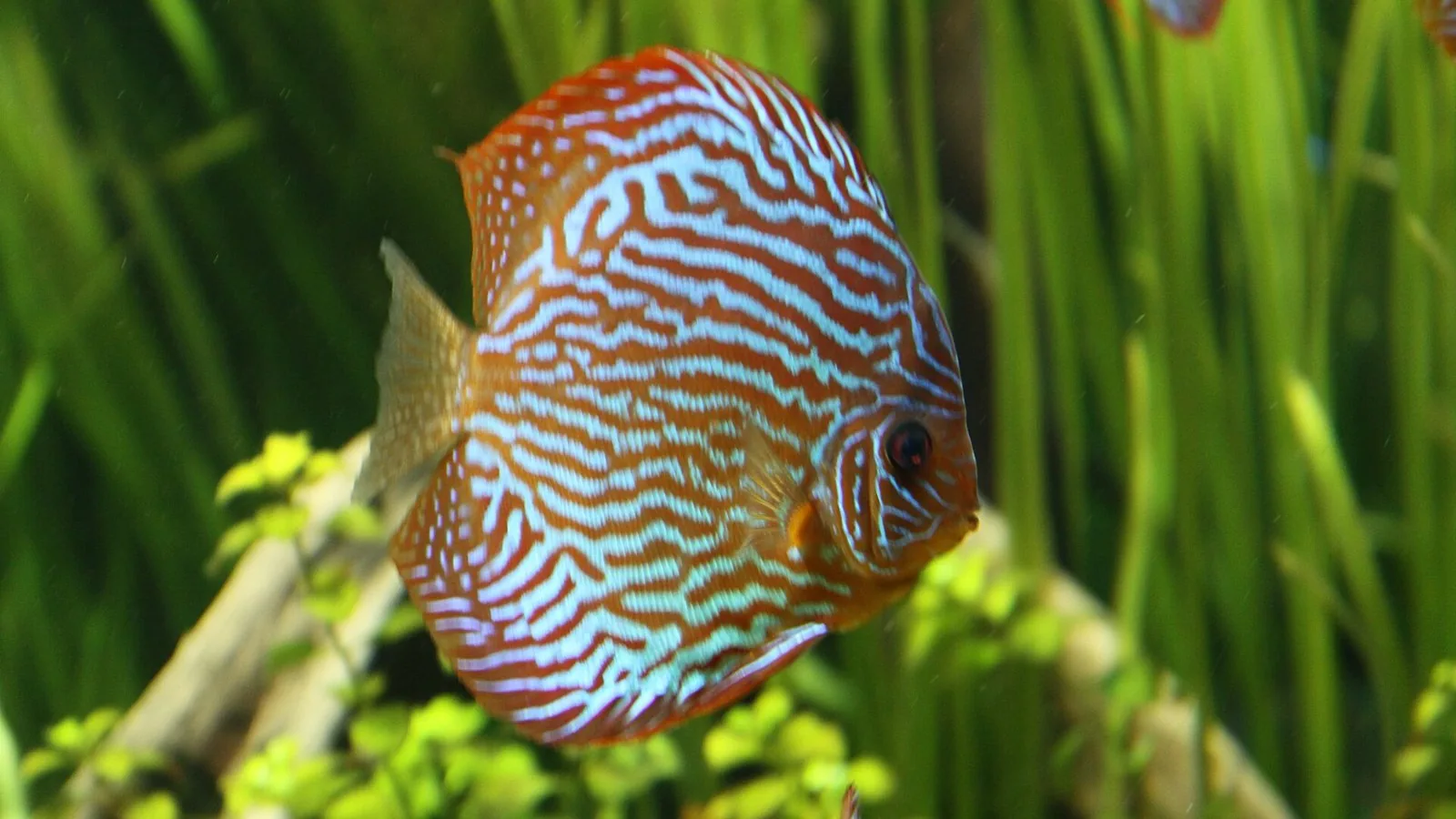
Discus are often called the kings of the aquarium. Their round bodies, bold patterns and calm manner make them one of the most striking freshwater fish you can keep. They also have a reputation for being hard to care for.
Most of that reputation comes down to setup. Discus are not fragile when their tank is right. They need warm, soft, very clean water, a calm environment and the company of other discus. This guide shows you how to build that tank step by step.
- Tank size: about 10 gallons per adult, 55 gallons minimum for a group.
- Temperature: 82 to 86°F.
- pH and hardness: 6.0 to 7.0, soft water.
- Group size: at least five or six discus.
- Maintenance: large, frequent water changes.
About Discus Fish
A little background helps explain why discus need such specific care.
Where discus live in the wild
Discus are cichlids from the Amazon basin in South America. They live in slow, warm water among flooded tree roots and fallen branches. Much of this water is very soft and acidic, and some of it is stained brown with tannins. Wild discus are shy and stay close to cover.
Wild versus tank-raised discus
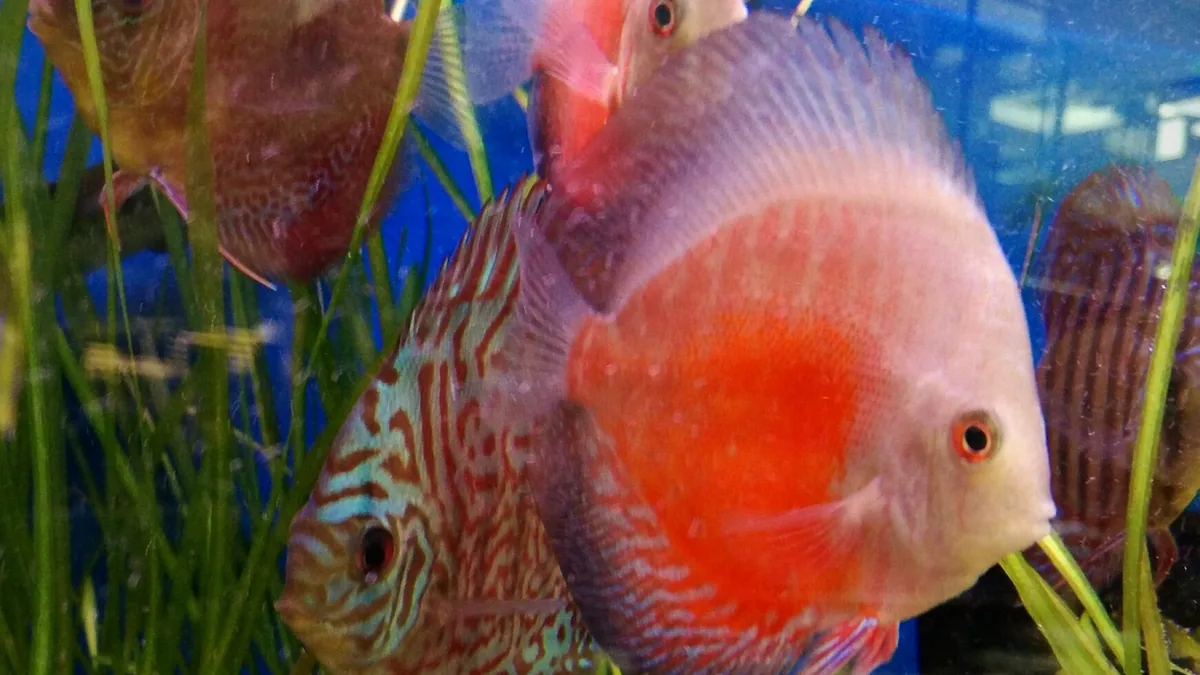
Almost all discus sold today are raised on fish farms in Asia, Europe and the United States. Tank-raised discus have adapted to a wider range of water conditions than wild fish. They still prefer warm, soft water, but they cope with tap water that has been carefully prepared. Wild-caught discus are more demanding and better left to experienced keepers.
Size and lifespan
Adult discus usually reach 5 to 7 inches across, and some grow a little larger. With good care, they often live 10 years or more. Their tall, round body shape is why tank height matters as much as length.
How Big a Tank Do Discus Need?
Tank size is the first big decision. Too small a tank leads to stress, bullying and poor water quality.
Plan for a group
Discus are social. In a group, the dominant fish spreads its attention over several tank mates instead of picking on one. Keep at least five or six. A pair kept alone can work for breeding, but a group is better for a display tank.
Gallons per discus
A good rule is about 10 gallons of water per adult discus. That means:
- 55 gallons: about 5 adult discus plus a few small tank mates.
- 75 gallons: about 6 to 7 adults.
- 90 to 125 gallons: 8 to 12 adults with a school of tetras.
Tank height and shape
Choose a tank at least 18 inches tall, and 20 to 24 inches is even better. Adult discus are tall, and they need room to swim without scraping their fins on the bottom or the surface. A standard 55 gallon tank is 21 inches tall, which works well.
Where to place the tank
Place the tank in a quiet room away from doors, heaters and direct sun. Discus startle easily. Heavy foot traffic and sudden movement can make them hide and lose color. A sturdy stand at eye level helps them feel secure.
Discus Water Parameters
Water quality is the heart of a discus tank. Get this right and most problems never start.
Temperature
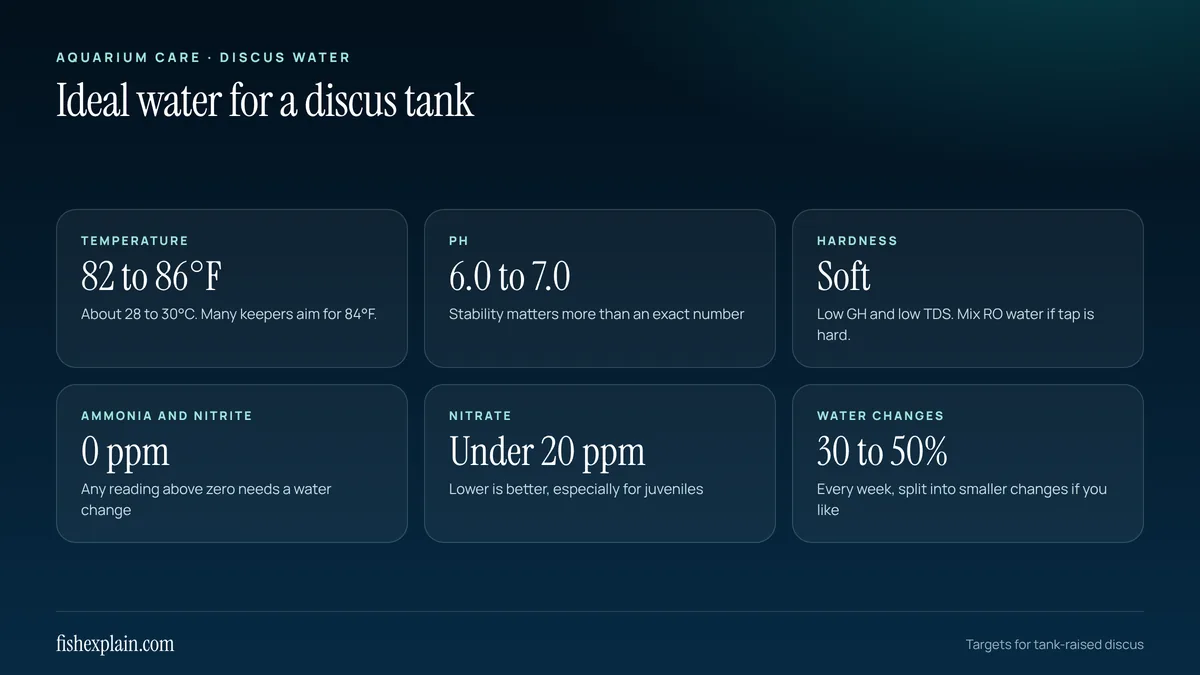
Keep the water at 82 to 86°F (28 to 30°C). Many keepers settle on 84°F. Use a reliable heater rated for your tank size, or two smaller heaters for backup. Check the temperature every day with a separate thermometer.
pH
Tank-raised discus usually do well between pH 6.0 and 7.0. Some keepers succeed at slightly higher pH as long as it stays steady. Sudden swings in pH stress discus more than a stable reading a little outside the ideal range.
Hardness and TDS
Discus prefer soft water, with low general hardness and low total dissolved solids. If your tap water is hard, many keepers mix it with reverse osmosis water to bring hardness down. Our article on spring and distilled water for fish tanks explains why pure water alone is not safe and must be remineralized.
Ammonia, nitrite and nitrate
Ammonia and nitrite must read zero. Keep nitrate as low as you can, ideally under 20 ppm and lower still for young fish. Discus are very sensitive to waste build-up, which is why water changes matter so much.
Filtration, Heating and Lighting
The right equipment keeps the water stable and the fish calm.
Filters
Discus come from slow water, so choose gentle flow. A canister filter with a spray bar, a large hang-on-back filter or several sponge filters all work. Many breeders rely only on sponge filters in bare-bottom tanks. Our guide to the best fish tank filters compares canister, hang-on-back and sponge options.
Heaters
Because discus need warmer water than most fish, the heater works hard. Use a quality adjustable heater and consider two heaters split across the tank. If one fails, the other keeps the water from cooling fast.
Lighting
Use moderate light. Very bright light can make discus nervous. Floating plants and driftwood soften the light and give the tank a natural look. Run the light for about 8 to 10 hours a day on a timer.
Testing kit
A liquid test kit for ammonia, nitrite, nitrate and pH is a must. A simple TDS meter is also useful if you mix tap and reverse osmosis water.
Substrate, Plants and Decor
You can build a discus tank in two main styles. Each has its own trade-offs.
Bare-bottom tanks
Many breeders and beginners use a bare bottom. It is easy to clean, and waste is easy to spot and siphon out. Bare tanks are ideal for raising young discus, which eat a lot and need extra clean water.
Sand and planted tanks
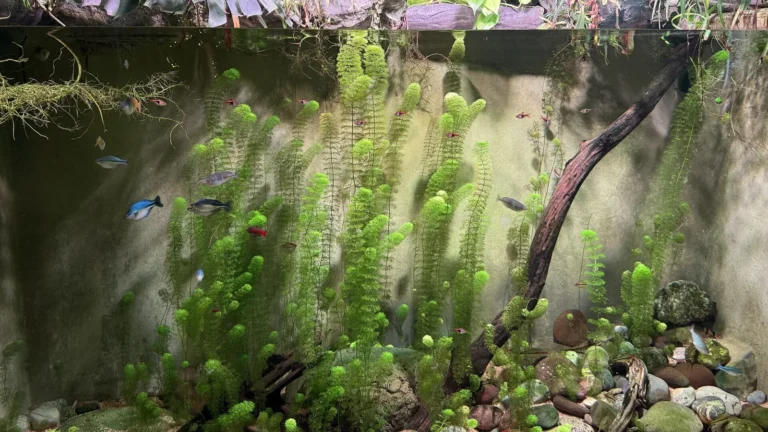
For a display tank, a thin layer of fine sand looks natural and lets you add plants. Choose plants that tolerate warm water:
- Amazon sword plants
- Java fern and Anubias tied to wood
- Some Cryptocoryne species
- Floating plants such as red root floaters or water lettuce
Driftwood and cover
Tall pieces of driftwood mimic the flooded roots discus live among in the wild. They give the fish places to retreat and break up sight lines. Driftwood can also release tannins that tint the water and lower pH slightly.
Best Tank Mates for Discus
Most tropical fish prefer cooler water than discus do. Good tank mates must handle 82°F or more, be peaceful and not compete hard for food.
Good choices
- Cardinal tetras: a classic pairing that likes warm, soft water.
- Rummy nose tetras: heat-tolerant schooling fish that also act as a water quality warning, since their red noses fade when conditions slip.
- Sterbai cory catfish: one of the few cory species that handles discus temperatures.
- Bristlenose plecos: small, peaceful algae eaters.
- German blue rams: small, warm-water cichlids that usually ignore discus.
- Hatchetfish: surface dwellers that stay out of the way.
Fish to avoid
Avoid fast, greedy feeders such as large barbs and most danios. Skip nippy fish like tiger barbs. Avoid aggressive cichlids. Large plecos can stress discus at night by grazing on their slime coat. Many keepers also avoid angelfish because of disease risk and competition.
Quarantine new fish
Discus are prone to diseases that other fish may carry without symptoms. Quarantine every new fish in a separate tank for several weeks before adding it. This single habit prevents many outbreaks.
Keeping discus with other cichlids
Some small South American cichlids can share a discus tank. Larger or more aggressive species usually cannot. Our list of cichlid fish types covers temperaments and sizes in more detail.
Water Changes and Feeding Routine
Discus thrive on routine. A steady schedule keeps the water clean and the fish relaxed.
Water changes
Change 30 to 50 percent of the water each week in a display tank. Many keepers split this into two or three smaller changes. Young discus raised for growth often get daily changes. Match the new water’s temperature and pH to the tank, and treat it with a dechlorinator.
Aging and preparing water
Some keepers store new water in a barrel with a heater and air stone for a day before use. This lets temperature and pH settle and makes large water changes safer.
What to feed discus
Offer a mix of high-quality discus pellets or flakes, frozen bloodworms, frozen brine shrimp and specially made discus foods. Many breeders use homemade beef heart mixes for fast growth, but these foul water quickly. Feed adults two or three times a day and juveniles three to five small meals. Remove leftovers within a few minutes.
Signs of a happy discus
Healthy discus show bright color, swim in the open, eat eagerly and hold their fins out. Dark color, hiding and clamped fins are early warning signs. Test the water first, then check our common fish diseases chart if symptoms continue.
Discus Tank Setup FAQs
What size tank do discus fish need?
Plan on roughly 10 gallons per adult discus and keep at least five or six together. A 55 gallon tank suits five adults, and 75 gallons or more gives a group of six to eight extra room. Choose a tank at least 18 inches tall, since discus are tall, round fish.
What temperature do discus need?
Most discus do best at 82 to 86°F (28 to 30°C). Many keepers aim for about 84°F. This is warmer than most tropical fish like, so choose tank mates that can live at the same temperature.
What pH do discus fish like?
Tank-raised discus usually do well at a pH of about 6.0 to 7.0, with soft water. Stability matters more than hitting an exact number. Avoid chasing pH with chemicals, which causes swings that stress the fish.
Can discus live with angelfish?
They can, but many experienced keepers advise against it. Angelfish can carry diseases that hit discus hard, and they often compete at feeding time. If you try it, quarantine all new fish and watch closely.
How often should you change water in a discus tank?
Most keepers change 30 to 50 percent of the water each week, and many do smaller changes several times a week. Young discus kept for growth often get daily water changes. Always match the temperature of the new water.
Can discus live in a planted tank?
Yes. Choose plants that tolerate warm water, such as Amazon swords, Java fern, Anubias and some Cryptocorynes. A planted tank takes more upkeep, so many beginners start with a bare or sand bottom and a few plants on wood.
Can a single discus live alone?
Discus are social fish that feel safest in a group. A single discus often hides, loses color and refuses food. Keep at least five or six so the group spreads out any bullying from the dominant fish.
Final Thoughts
Build the tank first, then add the fish
A good discus fish tank setup is mostly about stability. Choose a tall tank big enough for a group, keep the water warm, soft and very clean, and stick to a regular water change routine. Add peaceful, heat-tolerant tank mates and quarantine every newcomer. Get these basics right before you bring discus home, and you will enjoy one of the most rewarding fish in the hobby.