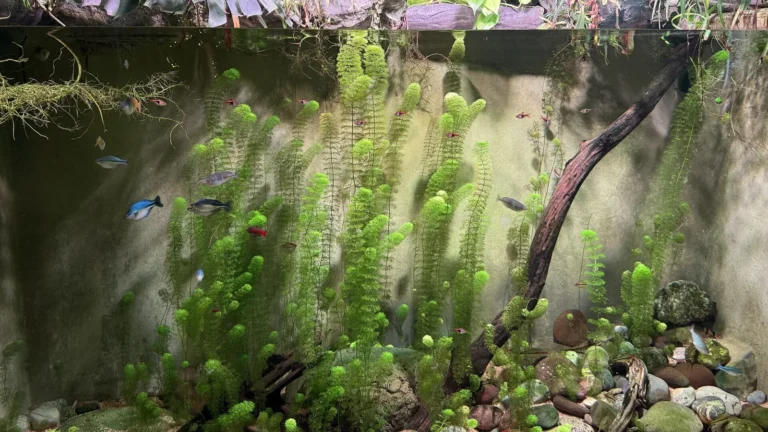
Cichlid Fish Types: The Short Answer
Cichlid fish types range from a 2 inch shell dweller to a 14 inch oscar. Some are gentle parents in planted tanks. Others will fight anything in sight. This guide sorts 25 popular species by origin and gives each one’s adult size, minimum tank, temperature, pH, hardness, temperament and diet. It then covers the care basics that keep cichlid tanks peaceful.
What Makes a Fish a Cichlid
Cichlids belong to the family Cichlidae. The FishBase family profile for Cichlidae lists about 1,800 species. Most live in fresh water in Africa and in Central and South America. Smaller numbers occur in Madagascar, the Middle East, southern India and Sri Lanka. Only one species is native to the United States, in Texas.
Three traits set cichlids apart in the aquarium:
- Parental care. Cichlids guard their eggs and young. Some lay eggs on rocks or wood, some carry them in the mouth, and some do both.
- Territory. Most species claim and defend a patch of the tank, especially when breeding. This is the root of most cichlid aggression.
- Intelligence and personality. Many keepers value cichlids because they recognize their owners, dig, rearrange decor and show complex behavior.
Because each group evolved in very different water, the first question is never “which fish is prettiest?” It is “which group suits my tap water and my tank?”
25 Cichlid Fish Types Compared
The table lists all 25 species. Sizes are typical adult lengths drawn from Seriously Fish profiles and FishBase. Published figures differ, so ranges cover both. Minimum tanks come from the recommended base dimensions in Seriously Fish profiles, converted to gallons. Pairs, groups and harems need the sizes shown or more.
| Species | Group | Adult size (in) | Min. tank (gal) | Temp (°F) | pH | GH (dGH) | Temperament | Diet |
|---|---|---|---|---|---|---|---|---|
| 1. Angelfish Pterophyllum scalare | South/Central American | Up to 6 | 55 (tall) | 75 to 86 | 6.0 to 7.4 | 0 to 15 | Semi-aggressive | Omnivore |
| 2. Discus Symphysodon aequifasciatus | South/Central American | 5 to 6 | 65 | 79 to 86 | 5.0 to 7.0 | 0 to 5 | Peaceful, shy | Carnivore |
| 3. Oscar Astronotus ocellatus | South/Central American | 10 to 14 | 140+ (one fish) | 68 to 82 | 6.0 to 7.5 | 5 to 20 | Predatory | Omnivore |
| 4. Convict cichlid Amatitlania nigrofasciata | South/Central American | 4 to 6 | 30 (pair) | 75 to 82 | 6.0 to 8.0 | 5 to 25 | Aggressive | Omnivore |
| 5. Firemouth cichlid Thorichthys meeki | South/Central American | 5 to 6 | 30 (pair) | 68 to 90 | 6.5 to 8.5 | 2 to 15 | Territorial when breeding | Omnivore |
| 6. Jack Dempsey Rocio octofasciata | South/Central American | 8 to 10 | 65 (pair) | 68 to 86 | 6.5 to 8.0 | 5 to 20 | Aggressive | Omnivore |
| 7. Green terror Andinoacara rivulatus | South/Central American | 8 to 12 | 80 | 68 to 75 | 6.5 to 8.0 | 5 to 25 | Aggressive | Omnivore |
| 8. Severum Heros efasciatus | South/Central American | 6 to 8 | 65 | 72 to 84 | 5.5 to 7.0 | 1 to 8 | Fairly peaceful | Omnivore |
| 9. Keyhole cichlid Cleithracara maronii | South/Central American | 3 to 4 | 20 | 70 to 82 | 4.0 to 7.5 | 2 to 15 | Peaceful, shy | Omnivore |
| 10. Cockatoo dwarf cichlid Apistogramma cacatuoides | Dwarf | 2 to 3 | 15 (pair) | 72 to 84 | 5.0 to 6.0 | 0 to 15 | Peaceful, territorial | Carnivore |
| 11. German blue ram Mikrogeophagus ramirezi | Dwarf | 1.5 to 2 | 15 (pair) | 81 to 86 | 4.0 to 7.0 | 1 to 10 | Peaceful, delicate | Omnivore |
| 12. Bolivian ram Mikrogeophagus altispinosus | Dwarf | 2 to 3 | 40 | 75 to 82 | 6.0 to 7.5 | 1 to 10 | Peaceful | Omnivore |
| 13. Kribensis Pelvicachromis pulcher | Dwarf | 3 to 4 | 20 (pair) | 75 to 81 | 5.0 to 7.5 | 0 to 12 | Peaceful, territorial when breeding | Omnivore |
| 14. Yellow lab Labidochromis caeruleus | Lake Malawi | 3 to 4 | 40 | 75 to 82 | 7.7 to 8.6 | 10 to 25 | Mild for an mbuna | Omnivore, plant-heavy |
| 15. Demasoni Pseudotropheus demasoni | Lake Malawi | 2.5 to 3 | 55 | 75 to 82 | 7.6 to 8.8 | 10 to 25 | Very aggressive | Omnivore, plant-heavy |
| 16. Red zebra Maylandia estherae | Lake Malawi | 3 to 5 | 40 | 75 to 82 | 7.6 to 8.8 | 10 to 25 | Robust | Omnivore, plant-heavy |
| 17. Grant’s peacock Aulonocara stuartgranti | Lake Malawi | About 5 | 65 | 73 to 84 | 7.5 to 9.0 | 10 to 25 | Fairly peaceful | Omnivore, sand sifter |
| 18. Electric blue hap Sciaenochromis fryeri | Lake Malawi | 6 to 8 | 80 | 75 to 82 | 7.6 to 8.8 | 10 to 25 | Robust | Carnivore |
| 19. Venustus Nimbochromis venustus | Lake Malawi | About 10 | 55 | 75 to 82 | 7.6 to 8.8 | 10 to 25 | Predatory | Carnivore |
| 20. Multies Neolamprologus multifasciatus | Lake Tanganyika | 1.5 to 2 | 10 (pair) | 75 to 81 | 7.5 to 9.0 | 8 to 25 | Territorial over shells | Carnivore |
| 21. Ocellated shell dweller Lamprologus ocellatus | Lake Tanganyika | 2 to 2.5 | 10 (pair) | 73 to 81 | 7.5 to 9.0 | 10 to 25 | Territorial over shells | Carnivore |
| 22. Frontosa Cyphotilapia frontosa | Lake Tanganyika | 10 to 13 | 230 (group) | 73 to 81 | 8.0 to 9.0 | 10 to 25 | Peaceful, eats small fish | Carnivore |
| 23. Marlier’s julie Julidochromis marlieri | Lake Tanganyika | 5 to 6 | 30 (pair) | 73 to 81 | 7.5 to 9.5 | 10 to 25 | Territorial | Omnivore |
| 24. Brichardi Neolamprologus pulcher | Lake Tanganyika | 3 to 3.5 | 30 | 73 to 81 | 8.0 to 9.0 | 9 to 25 | Territorial | Omnivore |
| 25. Nyererei Pundamilia nyererei | Lake Victoria | About 3 | 65 | 73 to 81 | 7.0 to 8.5 | 4 to 15 | Males aggressive | Omnivore |
Temperature and pH figures are tolerance ranges, not targets. Aim for the middle of each range and keep it steady. A stable reading matters more than an exact number, as our guide to spring, distilled and tap water for fish tanks explains.
Water Chemistry by Origin
Water chemistry is the main reason cichlid groups do not mix. The African Rift Lakes are hard and alkaline. Many South American rivers are soft and acidic. Central America sits in between.
- South American cichlids such as discus, rams and apistogramma prefer soft water with a pH around 5 to 7.
- Central American cichlids such as convicts and Jack Dempseys are adaptable, from about pH 6 to 8.5.
- Lake Malawi and Lake Tanganyika cichlids need hard, alkaline water, typically pH 7.5 to 9 and 10 dGH or more.
- Lake Victoria cichlids sit slightly lower, around pH 7 to 8.5.
Test your tap water for pH, GH and KH before you choose. Hard, alkaline tap water suits African cichlids with little effort. Soft tap water suits South Americans. Fighting your source water every week is possible, but it adds risk.

South and Central American Cichlids
This group includes the most famous aquarium cichlids. Sizes range from the small keyhole cichlid to the oscar, which needs a very large tank. Most South Americans prefer soft water. Most Central Americans are tougher and more aggressive.
1. Angelfish (Pterophyllum scalare)
Angelfish are tall, graceful cichlids with long fins. Their body reaches about 6 inches, and fins make them taller still, so they need a tall tank of at least 20 inches. Seriously Fish suggests base dimensions of about 39 by 16 inches. They are generally peaceful but squabble among themselves, so keep a small group. Angels will eat small fish such as neon tetras. Feed quality flakes or pellets plus live or frozen foods.
Quick facts: up to 6 in · 55 gal minimum (tall) · 75 to 86°F · pH 6.0 to 7.4 · 0 to 15 dGH · semi-aggressive · omnivore

2. Discus (Symphysodon aequifasciatus)
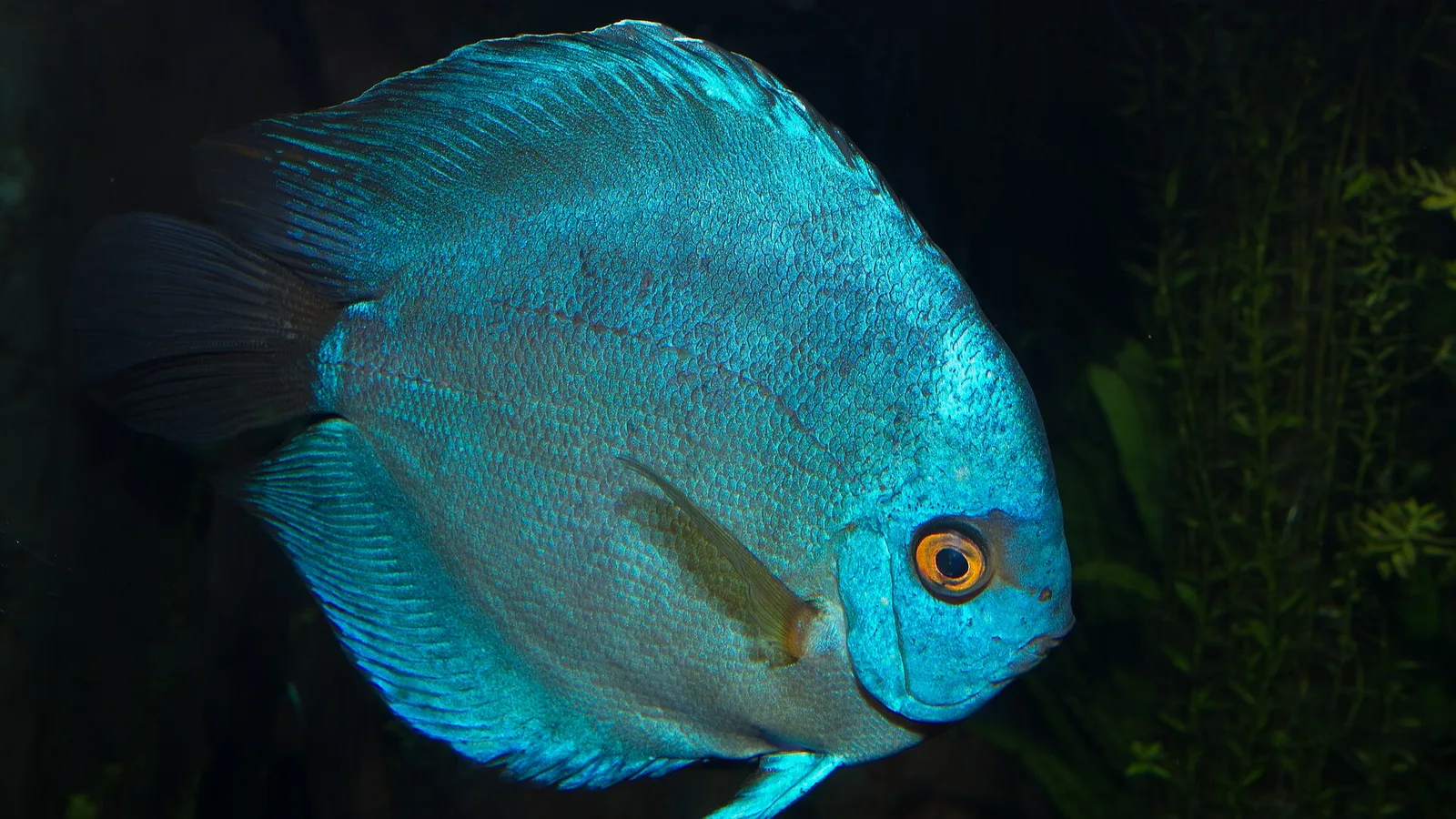
Discus are round, flat and brightly colored. They are also shy and skittish. Plenty of cover, such as plants and wood, helps them settle. They need warm, soft water around 79 to 86°F and very clean conditions. A tank of about 48 by 18 by 18 inches suits a few juveniles or a breeding pair. Discus are best for keepers with some experience.
Quick facts: 5 to 6 in · 65 gal minimum · 79 to 86°F · pH 5.0 to 7.0 · 0 to 5 dGH · peaceful, shy · carnivore
3. Oscar (Astronotus ocellatus)
The oscar is a large, intelligent predator that can reach over a foot long. It digs, moves decor and produces a lot of waste. Seriously Fish says base dimensions of 60 by 24 inches are just about enough for one adult. Oscars are not especially aggressive for their size, but they eat any fish small enough to swallow. Feed a varied diet with meaty foods and quality pellets.
Quick facts: 10 to 14 in · 140+ gal minimum (one fish) · 68 to 82°F · pH 6.0 to 7.5 · 5 to 20 dGH · predatory · omnivore

4. Convict cichlid (Amatitlania nigrofasciata)
Convict cichlids are striped, hardy and famously easy to breed. They are also aggressive and territorial, and they become violent when breeding. A pair can attack fish several times their size. Seriously Fish calls the convict a great beginner species in many ways but not a community fish. Keep a single pair in a tank of its own.
Quick facts: 4 to 6 in · 30 gal minimum (pair) · 75 to 82°F · pH 6.0 to 8.0 · 5 to 25 dGH · aggressive · omnivore
5. Firemouth cichlid (Thorichthys meeki)
The firemouth is named for the red color on its throat and chest. It is not especially aggressive outside breeding, though it may eat much smaller fish. Outside spawning, firemouths are fairly social and can live in groups in large tanks. Livebearers such as mollies and swordtails make suitable upper-level tank mates. Give a soft, sandy bottom, since firemouths sift sand for food.
Quick facts: 5 to 6 in · 30 gal minimum (pair) · 68 to 90°F · pH 6.5 to 8.5 · 2 to 15 dGH · territorial when breeding · omnivore
6. Jack Dempsey (Rocio octofasciata)
Named after the American boxer, the Jack Dempsey is a dark fish speckled with blue-green spots. Young fish can live together, but they grow aggressive as they mature. A pair usually stays peaceful with each other and hostile to other fish of similar shape. Keep tank mates too large to be eaten. Use sand, a few flat rocks and some driftwood.
Quick facts: 8 to 10 in · 65 gal minimum (pair) · 68 to 86°F · pH 6.5 to 8.0 · 5 to 20 dGH · aggressive · omnivore
7. Green terror (Andinoacara rivulatus)
The green terror is a striking green and blue fish, and its name fits. It is aggressive and territorial and is best kept alone or as a mated pair. Only very large tanks can hold it with other robust cichlids. Provide visual barriers, sand and flat stones. Feed a varied diet that includes vegetable matter.
Quick facts: 8 to 12 in · 80 gal minimum · 68 to 75°F · pH 6.5 to 8.0 · 5 to 25 dGH · aggressive · omnivore
8. Severum (Heros efasciatus)
The severum is one of the calmer large South American cichlids. Outside of spawning, it is mild-mannered, which makes it a good choice for a community of large, peaceful fish. Seriously Fish notes that a single fish can develop a nasty streak, and keeping several together helps prevent it. Include vegetable matter such as peas and spinach in the diet.
Quick facts: 6 to 8 in · 65 gal minimum · 72 to 84°F · pH 5.5 to 7.0 · 1 to 8 dGH · fairly peaceful · omnivore
9. Keyhole cichlid (Cleithracara maronii)
The keyhole cichlid is one of the gentlest cichlids in the hobby. It is not aggressive unless breeding and will not hunt fish bigger than a few millimeters. It is shy, so a group of calm schooling fish helps it feel safe. It rarely digs, so it suits most planted tanks. A 36 by 12 inch base is the smallest recommended.
Quick facts: 3 to 4 in · 20 gal minimum · 70 to 82°F · pH 4.0 to 7.5 · 2 to 15 dGH · peaceful, shy · omnivore
A Note on Blood Parrot Cichlids
Blood parrots are popular, but they are hybrids, not a wild species. India’s ICAR National Bureau of Fish Genetic Resources notes that they were first produced in Taiwan around 1986. Their parentage is unknown. The most commonly suggested crosses involve the midas and redhead cichlids, or the severum and red devil. Their narrow mouth makes them poor competitors for food, and males are generally infertile. If you keep them, pair them with calm fish and make sure each one gets enough to eat.
Dwarf Cichlids
Dwarf cichlids bring cichlid color and behavior to smaller tanks. Most stay under 4 inches. Many live peacefully with small schooling fish, which also help them feel secure. For stocking examples, see our guide to how many fish fit in a 20 gallon tank.
10. Cockatoo dwarf cichlid (Apistogramma cacatuoides)
The cockatoo dwarf cichlid is named for the tall, spiky dorsal fin of the male. Males reach about 3 inches, and females stay near 2. A 24 by 12 inch base suits one pair. Seriously Fish lists a soft, acidic pH of 5.0 to 6.0, while FishBase gives a wider 6.0 to 8.0. Captive-bred fish are the better choice for community tanks. Offer live and frozen foods, though most learn to take pellets.
Quick facts: 2 to 3 in · 15 gal minimum (pair) · 72 to 84°F · pH 5.0 to 6.0 · 0 to 15 dGH · peaceful, territorial · carnivore
11. German blue ram (Mikrogeophagus ramirezi)
The German blue ram is a jewel of a fish, with blue spangles, a black bar through the eye and red accents. It needs warm, soft, very clean water. Seriously Fish warns that it is a poor competitor and needs pristine water quality, so it is not a general community fish. Calm schooling fish make good companions because their presence helps rams feel safe.
Quick facts: 1.5 to 2 in · 15 gal minimum (pair) · 81 to 86°F · pH 4.0 to 7.0 · 1 to 10 dGH · peaceful, delicate · omnivore

12. Bolivian ram (Mikrogeophagus altispinosus)
The Bolivian ram is a larger, less flashy cousin of the German blue ram. It tolerates cooler water, around 75 to 82°F. Soft sand is essential, because it sifts mouthfuls of substrate to feed. Coarse gravel can damage its gills. Keep one fish or a bonded pair, and add peaceful schooling fish and corydoras as tank mates.
Quick facts: 2 to 3 in · 40 gal minimum · 75 to 82°F · pH 6.0 to 7.5 · 1 to 10 dGH · peaceful · omnivore
13. Kribensis (Pelvicachromis pulcher)
Kribensis are colorful West African dwarf cichlids. Seriously Fish recommends them for the general community tank. They become very territorial when guarding fry, though. Provide caves or clay pots and a sand or fine gravel bottom, since breeding pairs dig pits. Avoid large or boisterous tank mates.
Quick facts: 3 to 4 in · 20 gal minimum (pair) · 75 to 81°F · pH 5.0 to 7.5 · 0 to 12 dGH · peaceful, territorial when breeding · omnivore
Lake Malawi Cichlids
Lake Malawi cichlids are the classic “African cichlids.” They are colorful, active and mostly mouthbrooders. They need hard, alkaline water and rocky aquascapes. Three main groups are sold: mbuna, peacocks and haps.
Mbuna: Rock-Dwelling Grazers
Mbuna live among rocks and graze algae. In the aquarium, vegetable matter such as spirulina flakes should form a large part of their diet. Seriously Fish warns against beefheart and other red meat, which can upset their digestion. Mbuna are boisterous, so keepers often stock them densely with plenty of rockwork to spread out aggression.
14. Yellow lab (Labidochromis caeruleus)
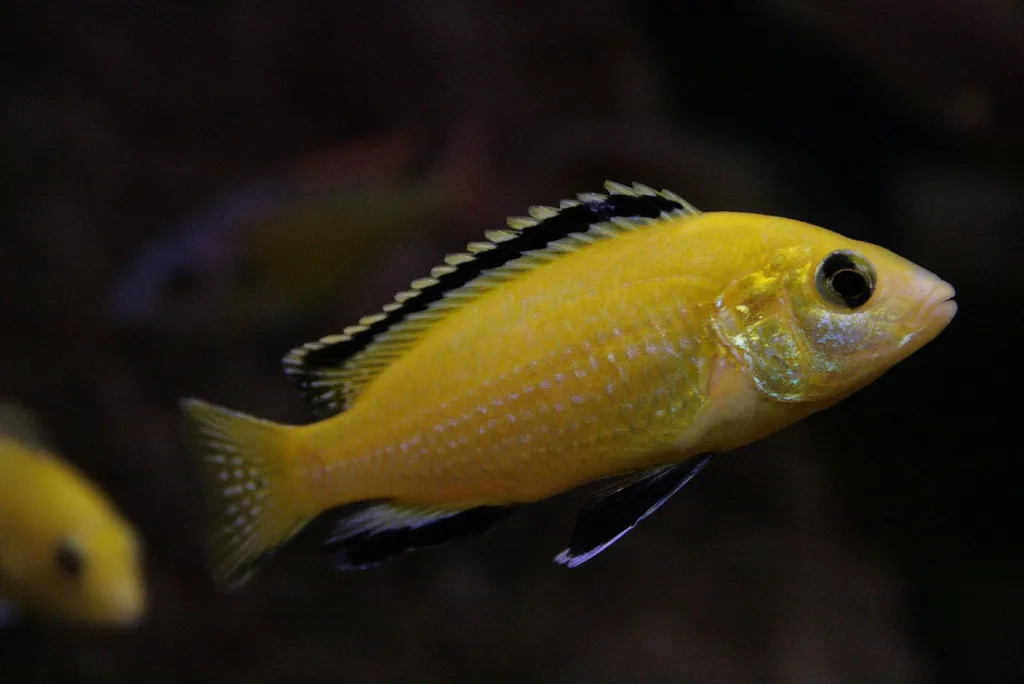
The yellow lab, also called the electric yellow, is bright lemon yellow with black fin edges. It is one of the more peaceful mbuna and can live with calm haps or other mbuna. Males chase females hard, so keep several females per male. It is a good first Lake Malawi cichlid.
Quick facts: 3 to 4 in · 40 gal minimum · 75 to 82°F · pH 7.7 to 8.6 · 10 to 25 dGH · mild for an mbuna · omnivore, plant-heavy
15. Demasoni (Pseudotropheus demasoni)
Demasoni are small, blue-and-black barred mbuna that reach only about 3 inches. Do not let the size fool you. The Seriously Fish profile of Pseudotropheus demasoni calls it one of the most aggressive and territorial mbuna. It attacks fish several times its size and is fierce toward its own kind. Keep it in a crowded mbuna tank, either in a large group or with robust mbuna of different patterns.
Quick facts: 2.5 to 3 in · 55 gal minimum · 75 to 82°F · pH 7.6 to 8.8 · 10 to 25 dGH · very aggressive · omnivore, plant-heavy
16. Red zebra (Maylandia estherae)
The red zebra is a robust mbuna that is not especially aggressive by mbuna standards. Keep several females per male, and only one male unless the tank is very large. Seriously Fish notes that this species is particularly prone to obesity, so feed small portions of vegetable-rich food.
Quick facts: 3 to 5 in · 40 gal minimum · 75 to 82°F · pH 7.6 to 8.8 · 10 to 25 dGH · robust · omnivore, plant-heavy
Peacocks and Haps: Open-Water Hunters
Peacocks and haps swim in the open over sand. Most are calmer than mbuna and should not be housed with them. Keep one male with 4 to 6 females, and avoid mixing similar species, because many can hybridize.
17. Grant’s peacock (Aulonocara stuartgranti)
Peacocks are prized for the electric colors of the males. They hover over the sand, detect tiny movements with enlarged sensory pores on the head, and then sift the sand for food. Fine sand is therefore essential. Grant’s peacock is relatively peaceful, but males attack fish with similar colors. Most mbuna are too boisterous to keep with peacocks.
Quick facts: about 5 in · 65 gal minimum · 73 to 84°F · pH 7.5 to 9.0 · 10 to 25 dGH · fairly peaceful · omnivore, sand sifter
18. Electric blue hap (Sciaenochromis fryeri)
The electric blue hap is a robust, predatory hap with brilliant blue males. It is not especially aggressive, but it should not live with mbuna. Calmer haps such as venustus make better tank mates. Feed a varied diet of live, frozen and dried foods, but no red meat.
Quick facts: 6 to 8 in · 80 gal minimum · 75 to 82°F · pH 7.6 to 8.8 · 10 to 25 dGH · robust · carnivore
19. Venustus (Nimbochromis venustus)
The venustus, or giraffe cichlid, is named for its blotched, giraffe-like pattern. In the wild it is a fish eater, and it will eat small mbuna and juveniles in a tank. It is generally peaceful with fish too big to swallow. Males fight each other, so keep one fish or one male with several females.
Quick facts: about 10 in · 55 gal minimum · 75 to 82°F · pH 7.6 to 8.8 · 10 to 25 dGH · predatory · carnivore
Lake Tanganyika Cichlids
Lake Tanganyika cichlids are often less flashy than Malawi species, but their behavior is fascinating. The lake holds both the tiny shell dwellers and the large frontosa. All need hard, alkaline water with a pH of 7.5 to 9 and very stable conditions.
20. Multies (Neolamprologus multifasciatus)
Multies are among the smallest cichlids, reaching about 1.5 to 2 inches. Each fish claims an empty snail shell and defends a small patch around it. A pair can live in an 18 by 12 inch tank. Provide more shells than fish and at least 2 inches of sand, because they dig. A colony forms naturally if you add more females than males.
Quick facts: 1.5 to 2 in · 10 gal minimum (pair) · 75 to 81°F · pH 7.5 to 9.0 · 8 to 25 dGH · territorial over shells · carnivore
21. Ocellated shell dweller (Lamprologus ocellatus)
Ocellated shell dwellers are slightly larger than multies and bolder about defending their shells. Keep a pair or one male with two or three females. They do best with fish that use other parts of the tank, such as open-water Cyprichromis.
Quick facts: 2 to 2.5 in · 10 gal minimum (pair) · 73 to 81°F · pH 7.5 to 9.0 · 10 to 25 dGH · territorial over shells · carnivore
22. Frontosa (Cyphotilapia frontosa)
The frontosa, or humphead cichlid, has bold black and white bars and a large hump on the forehead. It grows to around a foot and is a slow, stately fish. Seriously Fish recommends a group of at least five, ideally ten or more, in a tank of at least 96 by 24 by 24 inches. It will eat much smaller fish. Feed quality pellets plus frozen shrimp and similar foods.
Quick facts: 10 to 13 in · 230 gal minimum (group) · 73 to 81°F · pH 8.0 to 9.0 · 10 to 25 dGH · peaceful, eats small fish · carnivore

23. Marlier’s julie (Julidochromis marlieri)
Julies are slim rock dwellers that stay close to caves and rock faces. Marlier’s julie has a checkered black and white pattern. Adults are aggressive toward their own kind, so keep one pair unless the tank is very large. Fill much of the tank with rock caves, and offer live, frozen and dried foods with some vegetable matter.
Quick facts: 5 to 6 in · 30 gal minimum (pair) · 73 to 81°F · pH 7.5 to 9.5 · 10 to 25 dGH · territorial · omnivore
24. Brichardi (Neolamprologus pulcher)
This elegant fish with lyre-shaped fins is a cooperative breeder. Older young help protect new broods, so a colony grows over time. It is aggressively territorial, especially when guarding fry, so a species tank is usually best. In larger setups it can live with open-water species or shell dwellers.
Quick facts: 3 to 3.5 in · 30 gal minimum · 73 to 81°F · pH 8.0 to 9.0 · 9 to 25 dGH · territorial · omnivore
Lake Victoria Cichlids
Lake Victoria once held around 500 endemic cichlid species. A 2024 study of lake sediments reports that roughly 40% of them were lost by the 1980s. Introduced Nile perch, nutrient pollution and fishing are all suggested causes. Few Victorian cichlids reach the hobby, and many that do are bred by dedicated keepers.
25. Nyererei (Pundamilia nyererei)
Male nyererei glow red and yellow with dark bars. They are aggressive and can kill rival males if the tank lacks cover. Fill much of the tank with rockwork and keep several females per male. Avoid mixing different populations or other Pundamilia species. It can also live with many mbuna.
Quick facts: about 3 in · 65 gal minimum · 73 to 81°F · pH 7.0 to 8.5 · 4 to 15 dGH · males aggressive · omnivore
Cichlid Care Basics: Aggression, Territory and Stocking
Most cichlid problems come down to space, structure and stocking. Get these right and even feisty species settle down.
Aggression and Territory
Cichlids fight over territory, mates and food. Aggression rises sharply when a pair breeds. To keep it under control:
- Break up sightlines. Use rockwork, wood and plants so fish cannot see the whole tank at once.
- Give each fish a home. Provide more caves, shells or spawning sites than there are fish that need them.
- Avoid look-alikes. Males often attack fish with a similar color pattern or body shape.
- Add fish together. Introducing several at once, or rearranging rocks before adding new fish, resets territories.
Stocking Strategies
Different cichlid groups need different stocking plans. Pair-forming species usually do best as one pair. Harem species need one male with several females. Mbuna are often kept in crowded rock tanks. Shell dwellers live as colonies.

Water Quality and Filtration
Many cichlids are large, messy eaters. Use a filter rated well above your tank volume, and change water every week. Our guide to the best fish tank filters compares canister and hang-on-back options for heavy bioloads. Leftover food also clouds the water quickly. If that happens, our guide to a cloudy fish tank explains the fixes.
Diet
Match food to the group. Mbuna need plant-heavy diets. Predators such as oscars, haps and frontosa need meaty foods. Most dwarf cichlids thrive on small live and frozen foods plus quality pellets. Feed small amounts once or twice a day, and remove what is not eaten.
Quarantine and Health
Quarantine new cichlids for a few weeks before adding them to an established tank. This keeps parasites such as ich out of the main display. Stressed, bullied fish get sick more often, so watch for hiding, clamped fins and torn fins. Our chart of common fish diseases helps you match symptoms to causes.
Which Cichlid Should You Choose?
Start with your tank size and your tap water. Then pick one group and stay within it.
- 10 to 20 gallons: a pair of shell dwellers, a pair of German blue rams or cockatoo dwarf cichlids, or a pair of kribensis in 20 gallons.
- 20 to 40 gallons: keyhole cichlids with small schooling fish, a convict or firemouth pair, Bolivian rams, or a small yellow lab group.
- 55 to 80 gallons: angelfish, discus, severums, a Jack Dempsey pair, a green terror, an mbuna community or a peacock harem.
- 125 gallons and up: an adult oscar (about 140 gallons), a hap community or, in the largest tanks, a frontosa group.
Soft tap water points you toward South American and dwarf cichlids. Hard, alkaline tap water points you toward Rift Lake cichlids. Either way, research each species before you buy and plan for its adult size.
Cichlid FAQs
What is the most peaceful cichlid?
Among popular species, the keyhole cichlid, Bolivian ram and kribensis are some of the calmest. Each turns territorial only when breeding. Angelfish are peaceful with larger tank mates but will eat very small fish such as neon tetras.
What is the best cichlid for beginners?
Kribensis and Bolivian rams suit a beginner’s community tank. Yellow labs are a good first Lake Malawi cichlid because they are mild for an mbuna. Convict cichlids are hardy and easy to breed, but they are aggressive and need a tank of their own.
Can you mix African and South American cichlids?
It is not recommended. Most South American species want soft, neutral to acidic water, while Rift Lake cichlids need hard, alkaline water. Their behavior also differs, and boisterous mbuna will bully calmer South American fish. Choose one group per tank.
How many types of cichlids are there?
FishBase lists about 1,800 species in the cichlid family. Most live in Africa and in Central and South America, with smaller numbers in Madagascar, the Middle East and southern Asia. Only one species is native to the United States, in Texas.
What size tank do cichlids need?
It depends on the species. A pair of shell dwellers can live in about 10 gallons, and dwarf cichlids need 15 to 20 gallons or more. Most mbuna need a tank 36 to 48 inches long, an adult oscar needs around 140 gallons, and a frontosa group needs over 200.
Why are my cichlids fighting?
Common causes are breeding, too little space, too few hiding places and tank mates with similar colors. In harem species, too few females per male also leads to fights. Add rockwork to break sightlines, fix the stocking ratio, and rehome a bully if the damage continues.
Do cichlids need hard water?
Only some do. Lake Malawi and Lake Tanganyika cichlids need hard, alkaline water with a pH around 7.5 to 9. Discus, rams and most other South American species prefer soft water that is neutral or slightly acidic. Always check the needs of each species.
Is a blood parrot a real cichlid?
Yes, but it is a man-made hybrid, not a wild species. It was first produced in Taiwan around 1986, and its exact parent species are unknown. Its narrow mouth makes it a poor competitor at feeding time, so it does best with calm tank mates.