Fish Poop: The Short Answer
Few fish keepers enjoy talking about fish poop. Yet the waste your fish leave behind is one of the easiest health checks you can do. A quick look tells you whether your fish are eating well, digesting properly and staying free of internal problems.
This guide shows what normal fish waste looks like, what each warning sign means and how to keep your tank clean. You will also learn how fish poop affects water quality and why it matters for the whole aquarium.
- Normal: short, food-colored pieces that sink or break up.
- Watch closely: long trails, pale or clear poop.
- Act soon: white stringy poop with weight loss, red threads at the vent or bloody waste.
How Fish Digestion Works
Knowing how fish digest food makes it easier to read their waste.
From mouth to vent
Fish swallow food that passes through the stomach and intestine, where nutrients are absorbed. Waste leaves through the vent, a small opening on the belly just in front of the anal fin. Fish do not have a separate bladder for urine the way mammals do.
Plant eaters versus meat eaters
Plant-eating fish, such as many plecos and some cichlids, have long intestines to break down tough plant matter. Meat eaters, such as bettas, have shorter guts. That is why herbivores tend to poop more often and why their waste looks bulkier and greener.
Fish also excrete through their gills
Most of a fish’s nitrogen waste leaves as ammonia through the gills, not in its poop. Solid waste adds more ammonia as it breaks down. Together, they explain why a tank needs a working filter and regular water changes.
What Healthy Fish Poop Looks Like
Normal fish waste varies with diet and species, but healthy poop shares a few traits.
Color
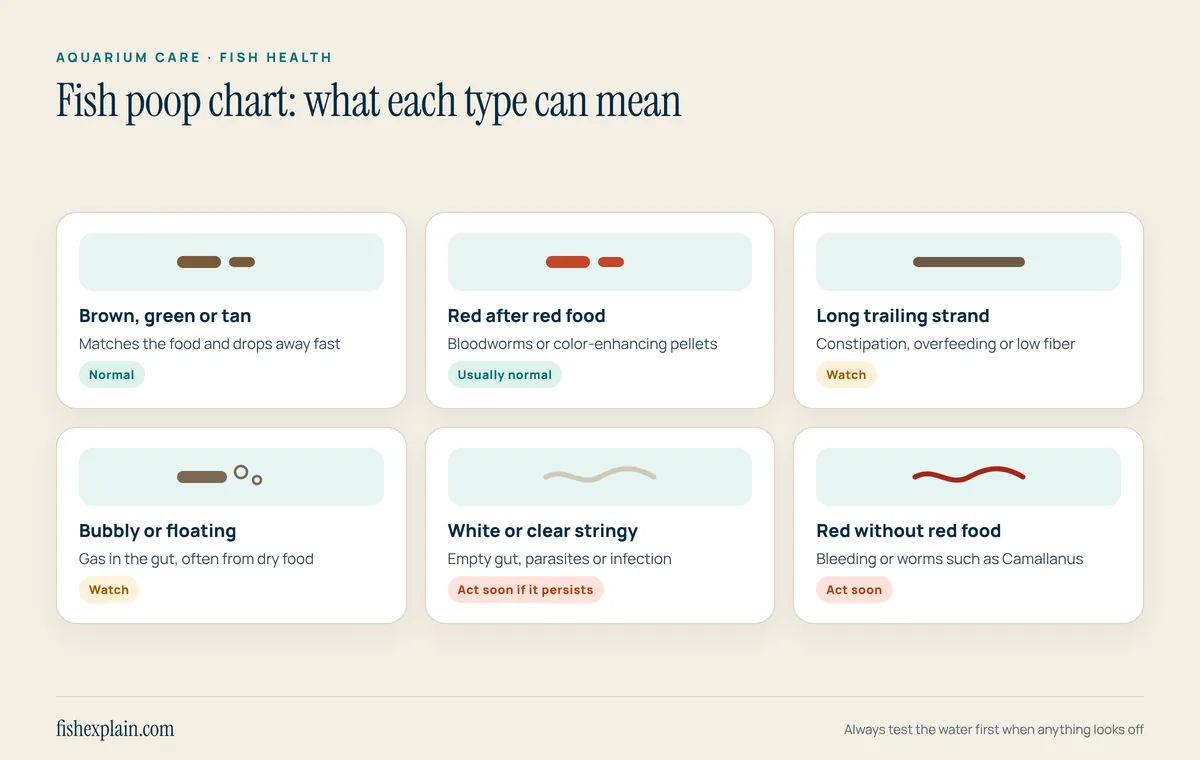
Healthy poop usually matches the food. Brown, tan or dark green are common for fish on flakes and pellets. Fish that graze on algae or eat spirulina may pass green waste. Fish fed bloodworms or red pellets may pass reddish waste for a day.
Shape and size
Normal poop is short and fairly solid. It may look like small pellets or short threads. It does not trail behind the fish for long. Goldfish are an exception and often leave longer strands because they eat so much.
How fast it drops away
Healthy waste falls away from the fish within moments. It sinks to the bottom or breaks apart in the current. Waste that hangs from the vent for a long time is worth watching.
How often fish poop
Most fish poop several times a day, especially after meals. A fish that has not pooped for a day or two and has a swollen belly may be constipated. A fish that poops very often and has loose, cloudy waste may have a digestive upset.
Unhealthy Fish Poop and What It Means
Changes in color, shape or texture can be early warnings. Here are the most common types and their likely causes.
White or clear stringy poop
White, pale or clear poop that looks like a thin string is the most common worry. Often it simply means the fish has not eaten for a while, so it passes mucus that lines the gut. It can also be a sign of internal parasites or bacterial infection, especially when the fish also loses weight, hides or refuses food.
Long trailing poop
Poop that hangs from the fish in a long strand can mean constipation, overfeeding or a diet low in fiber. It is common in goldfish and bettas fed only dry food. A day of fasting and some fiber-rich foods often fix it.
Red or bloody poop
Red poop after bloodworms or color-enhancing pellets is harmless. Red or bloody waste without red food is a concern. It may mean internal bleeding or a bacterial infection. Look closely at the vent. Tiny red threads poking out are a sign of Camallanus worms, a parasite that needs medicated treatment.
Bubbly or floating poop
Poop with air bubbles or poop that floats can point to gas in the gut. This sometimes happens with dry foods that swell after the fish eats them. Soaking pellets before feeding and offering more variety often help.
Very dark or black poop
Dark poop is often normal for fish on rich foods or certain pellets. If the fish also seems sluggish or bloated, check for other symptoms and review its diet.
Fixing Common Fish Poop Problems
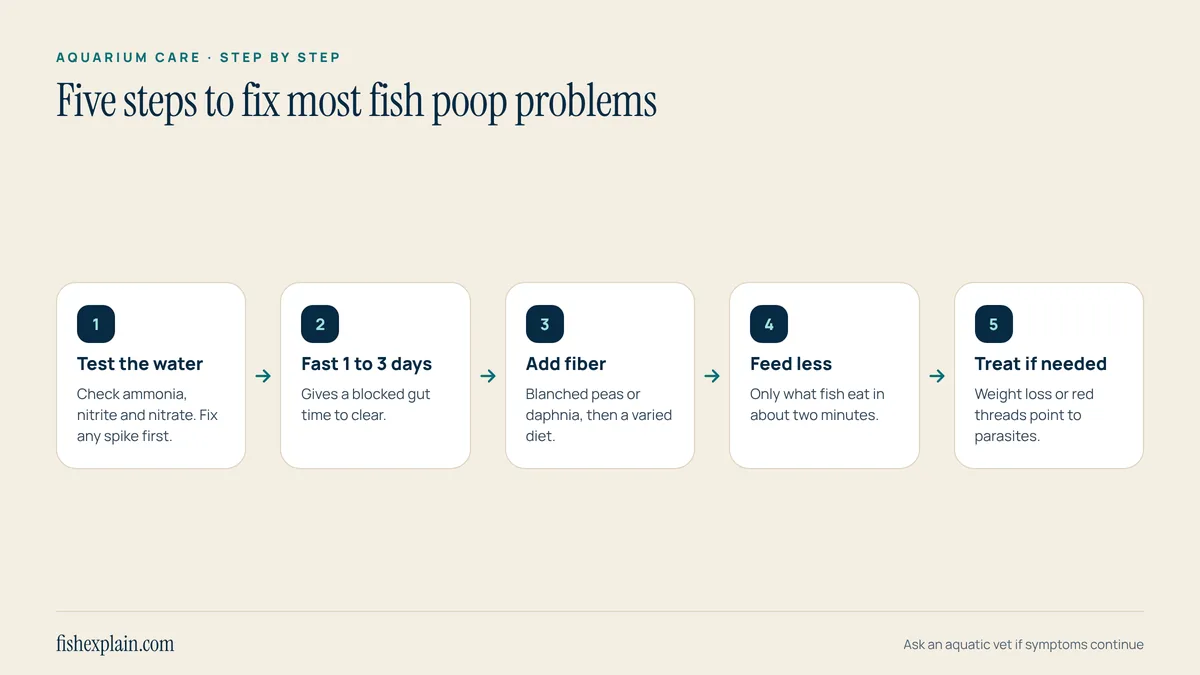
Most poop problems improve with simple changes to diet and care. Start with these steps before reaching for medication.
Step 1: Test the water
Poor water quality stresses fish and weakens their digestion. Test for ammonia, nitrite and nitrate. If ammonia or nitrite is above zero, do a partial water change right away.
Step 2: Fast the fish
For constipation or long trailing poop, skip feeding for one to three days. Healthy adult fish handle short fasts well. This gives the gut time to clear.
Step 3: Add fiber and variety
After fasting, offer foods with more fiber and moisture. Many keepers feed a small piece of blanched, shelled pea or live or frozen daphnia. Rotate between pellets, flakes and frozen foods instead of relying on one food. Our guide to what fish eat explains how diets differ by species.
Step 4: Feed smaller portions
Overfeeding is one of the main causes of digestive problems. Feed only what your fish eat in about two minutes, once or twice a day. Bettas need even less. See our article on how often to feed a betta fish for portion sizes.
Step 5: Treat parasites when needed
If white stringy poop comes with weight loss, a sunken belly or red threads at the vent, parasites are likely. Medicated foods and anti-parasite treatments are sold for aquarium fish. Follow the label closely, remove carbon from the filter during treatment and ask an aquatic vet if you are unsure.
Fish Poop and Water Quality
Fish waste does more than tell you about health. It also shapes the chemistry of your tank.
The nitrogen cycle
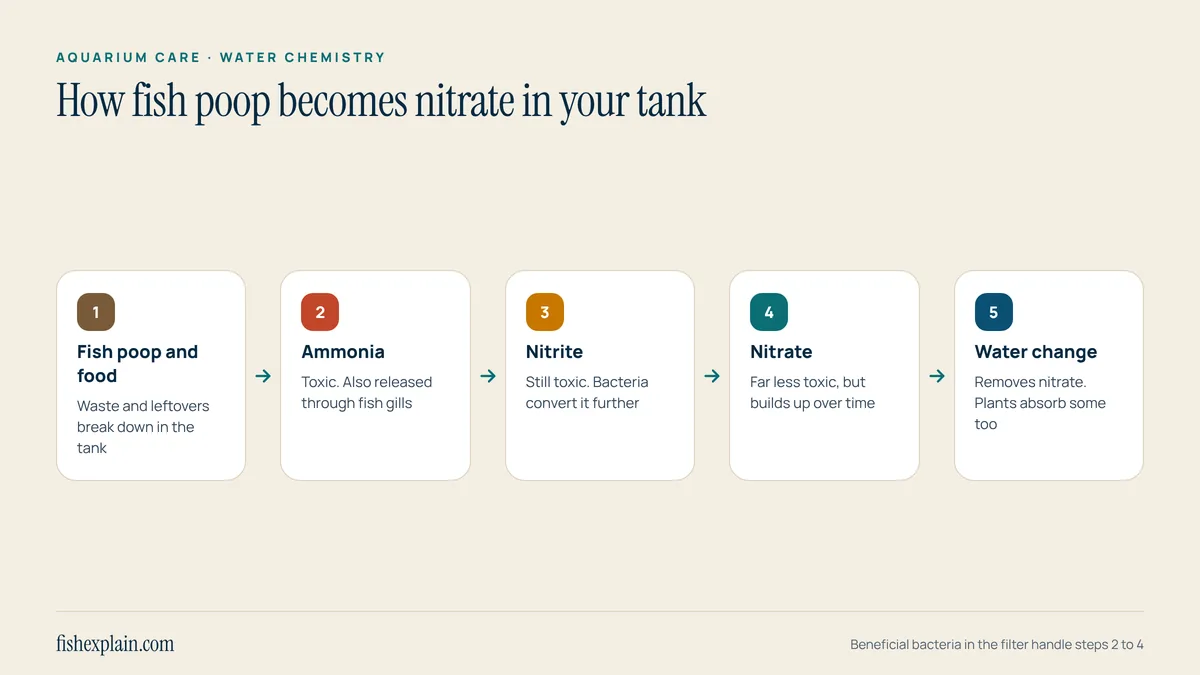
As poop and leftover food break down, they release ammonia. In a cycled tank, beneficial bacteria turn ammonia into nitrite and then into nitrate. Nitrate is much less toxic, but it builds up over time. Water changes remove it.
Too much waste causes problems
Overstocking and overfeeding lead to more waste than the filter can handle. The result can be ammonia spikes, high nitrate, algae and cloudy water. Our guide to a cloudy fish tank explains how excess waste feeds bacterial blooms.
Plants use fish waste
Live plants absorb nitrate and other nutrients that come from fish waste. That is why planted tanks often stay cleaner and why aquaponics systems use fish waste to grow vegetables. Plants help, but they do not replace water changes.
How to Clean Fish Poop From Your Tank
A clean tank starts with a simple weekly routine.
Use a gravel vacuum
A gravel vacuum, also called a siphon, pulls waste out of the substrate while you remove old water. Push the tube into the gravel, let the debris lift out, then move to the next spot. In sand, hover the tube just above the surface so you do not suck up the sand.
Change water every week
Remove 10 to 25 percent of the water each week for most tanks. Heavily stocked tanks or tanks with messy fish such as goldfish may need more. Treat new water with a dechlorinator and match the temperature.
Maintain the filter
Rinse filter sponges in old tank water, not tap water, when flow slows down. Tap water can kill the helpful bacteria that process waste. Do not clean the filter and the gravel on the same day if you can avoid it.
Do clean-up crews eat fish poop?
This is a common myth. Snails, shrimp and catfish eat leftover food, algae and some soft debris, but they do not eat fish poop as a main food. They add their own waste too. Clean-up crews help a tank, but they never replace siphoning and water changes.
Fish Poop by Species
Some fish are known for their waste habits. Knowing what is normal for your species helps you spot problems.
Goldfish
Goldfish are famous for producing a lot of waste. Long trails are common, especially with dry food. Feed soaked pellets, vegetables and frozen foods to keep them regular, and give them a large, well-filtered tank.
Bettas
Betta poop is usually small, brown and pellet-shaped. Because bettas are prone to bloating, watch their belly size. If a betta has not pooped for a couple of days and looks swollen, fast it and check our sick betta fish guide.
Plecos and cichlids
Plecos produce a lot of long, dark waste because they eat wood and plant matter. Plant-loving cichlids can also produce bulky waste. Strong filtration and regular siphoning keep these tanks healthy.
Fish Poop FAQs
What does healthy fish poop look like?
Healthy fish poop is usually short and solid, and its color matches what the fish eats, often brown, dark green or reddish. It drops away from the fish quickly and sinks or breaks up in the water. Small amounts several times a day are normal.
Why is my fish poop white and stringy?
White, stringy poop often means the fish has not eaten for a while, so it passes mostly mucus. It can also point to internal parasites or a bacterial infection, especially if the fish is losing weight or refusing food. Watch for other symptoms and treat early if they appear.
Is it normal for fish poop to hang from the fish?
Short trails are normal in some fish, especially goldfish, which eat a lot. Very long trails that hang for a long time can mean constipation or a diet low in fiber. Fasting for a day and adding more plant foods often helps.
Why is my fish poop red?
Red poop is usually caused by red food, such as bloodworms or pellets with color enhancers. If the fish has not eaten red food, red or bloody poop may mean internal bleeding or worms. Look closely at the vent for tiny red threads, which can be Camallanus worms.
How do I get rid of fish poop in my tank?
Use a gravel vacuum during weekly water changes to siphon waste from the substrate. Keep a filter rated for your tank size, avoid overfeeding and do not overstock. Snails and shrimp eat some leftovers, but they do not remove fish waste.
Does fish poop cause ammonia?
Yes. Fish poop and uneaten food break down into ammonia, which is toxic to fish. Fish also release ammonia through their gills. Beneficial bacteria in a cycled filter turn ammonia into nitrite and then nitrate, which water changes remove.
What is the best food for a constipated fish?
Fasting for one to three days is often the first step. After that, many keepers offer small amounts of fiber-rich foods such as blanched, shelled peas or daphnia. If the belly stays swollen or the fish stops eating, the cause may be more serious than constipation.
Final Thoughts
A simple daily health check
Fish poop may not be glamorous, but it is one of the clearest signs of how your fish are doing. Short, food-colored waste that drops away quickly means things are on track. Long, white, stringy or bloody waste is a cue to test the water, adjust the diet and watch for other symptoms. Pair a quick look at feeding time with weekly gravel vacuuming and water changes, and you will catch most problems early.


