Fish High in Omega-3: Best Choices and How Much to Eat
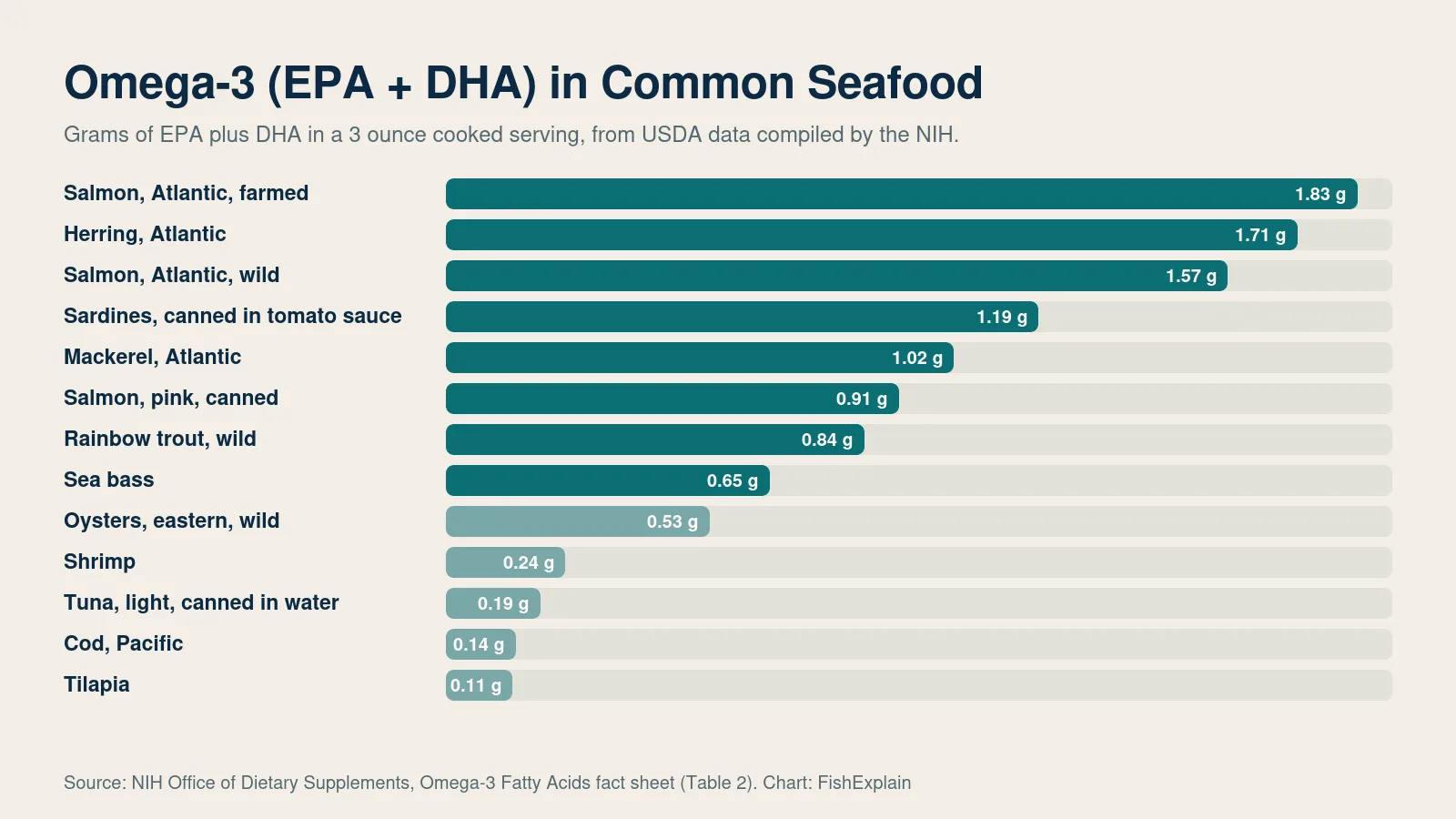
The fish highest in omega 3 fatty acids are oily fish such as salmon, herring, sardines, Atlantic mackerel, anchovies and rainbow trout. A 3 ounce cooked serving of Atlantic salmon has about 1.6 to 1.8 grams of EPA plus DHA, while lean fish like cod and tilapia have under 0.2 grams. US dietary guidance recommends at least 8 ounces of seafood a week for most adults, and the American Heart Association suggests two 3 ounce servings of fish a week, especially fatty fish.
Omega-3 fats are one of the main reasons doctors and dietitians recommend eating fish. But not all fish are equal. Some species are packed with omega-3s, while others contain only small amounts. Knowing which fish high in omega 3 to choose lets you get more benefit from every serving.
This guide lists the best fish for omega-3s with real figures from USDA data, explains how much to eat each week, and shows how to balance omega-3s with mercury. For a wider look at nutrition, see our guide to the healthiest fish to eat.
What Are Omega-3 Fatty Acids?
Omega-3s are a family of polyunsaturated fats. Your body cannot make enough of them on its own, so they must come from food.
EPA, DHA and ALA
The three main omega-3s are EPA (eicosapentaenoic acid), DHA (docosahexaenoic acid) and ALA (alpha-linolenic acid). EPA and DHA come mainly from fish and seafood. ALA comes from plant foods such as flaxseed, chia seeds and walnuts. The body converts only a small amount of ALA into EPA and DHA, which is why fish is the most direct source.
Why Fish Have Omega-3s
Fish do not make most of their omega-3s themselves. Tiny algae produce EPA and DHA, and the fats move up the food chain to the fish that eat them. Cold water oily fish store more fat in their flesh, so they carry the most omega-3s.
Fish Highest in Omega-3: The Numbers
The figures below come from the NIH Office of Dietary Supplements, which compiles them from the USDA food database. Each value is for a 3 ounce cooked serving.
| Fish or Seafood (3 oz) | DHA (g) | EPA (g) | Total EPA + DHA (g) |
|---|---|---|---|
| Salmon, Atlantic, farmed | 1.24 | 0.59 | 1.83 |
| Herring, Atlantic | 0.94 | 0.77 | 1.71 |
| Salmon, Atlantic, wild | 1.22 | 0.35 | 1.57 |
| Sardines, canned in tomato sauce | 0.74 | 0.45 | 1.19 |
| Mackerel, Atlantic | 0.59 | 0.43 | 1.02 |
| Salmon, pink, canned | 0.63 | 0.28 | 0.91 |
| Rainbow trout, wild | 0.44 | 0.40 | 0.84 |
| Sea bass | 0.47 | 0.18 | 0.65 |
| Oysters, eastern, wild | 0.23 | 0.30 | 0.53 |
| Shrimp | 0.12 | 0.12 | 0.24 |
| Tuna, light, canned in water | 0.17 | 0.02 | 0.19 |
| Cod, Pacific | 0.10 | 0.04 | 0.14 |
| Tilapia | 0.11 | 0 | 0.11 |
The 7 Best Fish for Omega-3
1. Salmon
Salmon is the most popular omega-3 fish in the US, and both farmed and wild Atlantic salmon provide about 1.6 to 1.8 grams of EPA plus DHA per 3 ounce serving. Canned pink salmon is a cheaper option with about 0.9 grams. Salmon is also on the FDA’s “Best Choices” list for low mercury.
2. Herring
Atlantic herring is one of the richest sources, with about 1.7 grams per serving. It is often sold pickled, smoked as kippers or canned. Check sodium on pickled and smoked products.
3. Sardines
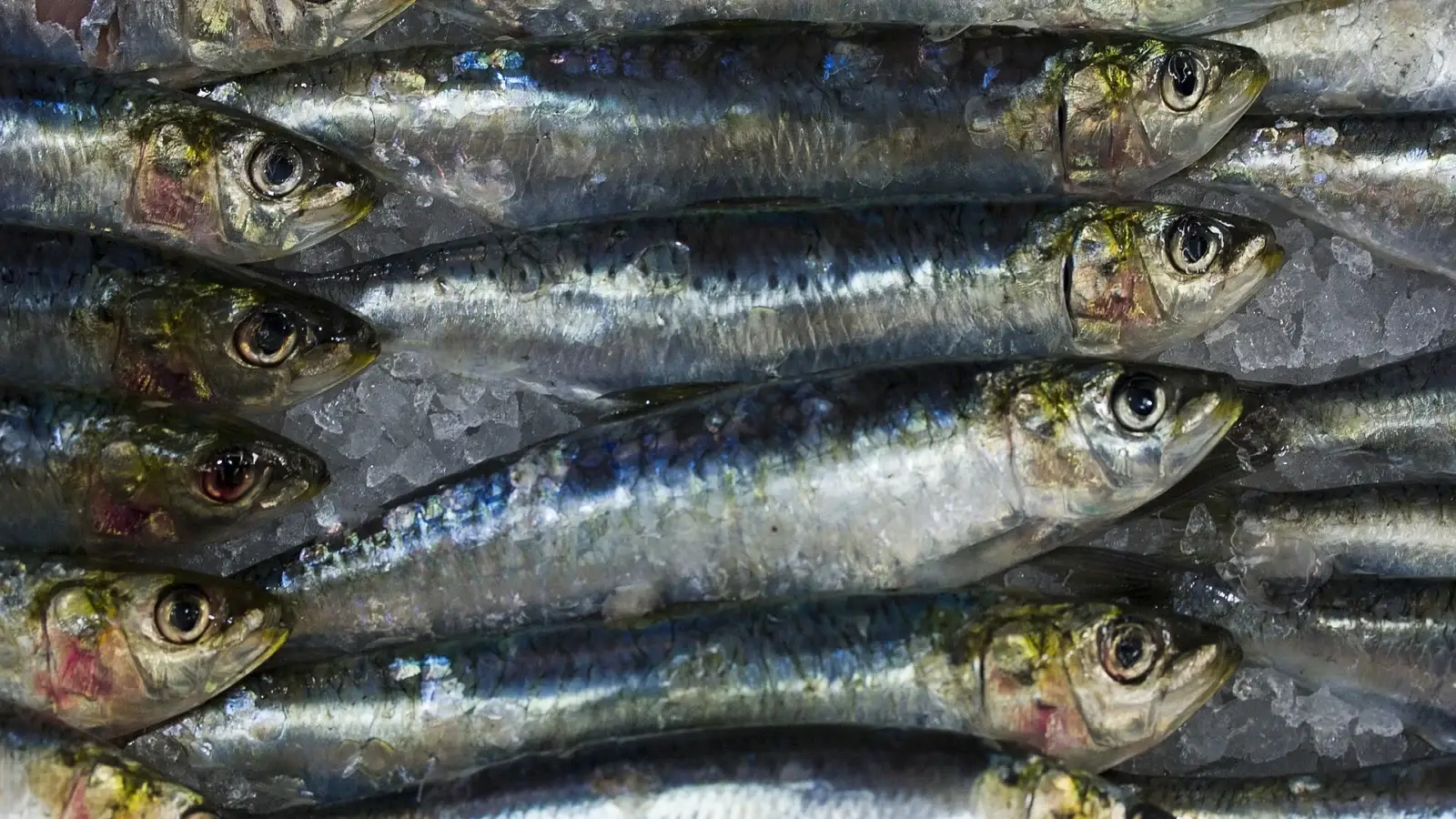
Sardines are small, inexpensive and sold canned almost everywhere. Canned sardines in tomato sauce provide about 1.2 grams of EPA plus DHA per 3 ounces. Because you eat the soft bones, they also supply calcium.
4. Atlantic Mackerel
Atlantic mackerel has about 1 gram per serving and a rich, strong flavor. Choose Atlantic or Pacific chub mackerel, which are low in mercury. King mackerel is a different fish that the FDA lists among the choices to avoid because of its high mercury.
5. Anchovies
Anchovies are tiny oily fish that the American Heart Association lists among the fatty fish high in omega-3s. They are usually eaten in small amounts, so they work best as a flavor boost in sauces, salads and pasta.
6. Rainbow Trout
Wild rainbow trout provides about 0.8 grams per serving with a mild taste that suits people who do not like strong fish flavors. Freshwater trout is on the FDA’s lowest mercury list. Trout also features in our guide to the best freshwater fish to eat.
7. Oysters and Mussels
Shellfish contain less omega-3 than oily fish, but oysters and mussels are still useful sources. Eastern oysters provide about 0.5 grams per 3 ounces, along with zinc and vitamin B12.
Fish Lower in Omega-3
Lean white fish are healthy sources of protein, but they contain much less omega-3. That does not make them bad choices. It simply means you need oily fish to reach higher omega-3 intakes.
Tilapia, Cod and Shrimp
Tilapia and Pacific cod each provide under 0.15 grams of EPA plus DHA per serving, and shrimp has about 0.24 grams. Mixing these lean options with oily fish during the week keeps meals varied.
Canned Tuna
Canned light tuna has about 0.19 grams per serving, far less than salmon or sardines. It is still a convenient, low mercury protein, but it should not be your main omega-3 source.
How Much Omega-3 Fish Should You Eat?
There is no official recommended daily amount for EPA and DHA. Instead, guidelines focus on how much seafood to eat each week.
Weekly Guidelines for Adults
The Dietary Guidelines for Americans recommend at least 8 ounces of seafood per week for adults on a 2,000 calorie diet. The American Heart Association recommends at least two servings of fish per week, especially fatty fish, with one serving equal to 3 ounces cooked.
Pregnancy, Breastfeeding and Children
The FDA and EPA advice about eating fish recommends 8 to 12 ounces per week from a variety of lower mercury fish for people who are pregnant or breastfeeding, which is 2 to 3 servings from the “Best Choices” list. Children should eat 2 servings a week from that list, with smaller portions: about 1 ounce at ages 1 to 3, 2 ounces at ages 4 to 7, 3 ounces at ages 8 to 10 and 4 ounces at age 11.
A Worked Example
If you eat 8 ounces of farmed Atlantic salmon in a week, you get about 4.9 grams of EPA plus DHA (1.83 grams per 3 ounces, multiplied by 8 and divided by 3). That averages about 0.7 grams per day. The same 8 ounces of tilapia would provide only about 0.3 grams for the whole week.
Balancing Omega-3s and Mercury
Some large predatory fish contain both omega-3s and high levels of mercury. The good news is that most of the best omega-3 fish are small or short lived, so they are low in mercury.
Fish That Are High in Omega-3 and Low in Mercury
- Salmon
- Sardines
- Herring
- Anchovies
- Atlantic mackerel and Pacific chub mackerel
- Freshwater trout
- Oysters
Fish to Avoid
The FDA lists king mackerel, marlin, orange roughy, shark, swordfish, tilefish from the Gulf of Mexico and bigeye tuna as choices to avoid because of their high mercury. Our guide to the lowest mercury fish has the full list.
Easy Ways to Eat More Omega-3 Fish
Buy Canned and Frozen
Canned salmon, sardines and mackerel are affordable, shelf stable and ready to eat. Frozen salmon and trout fillets cost less than fresh and are frozen soon after catch.
Choose Gentle Cooking Methods
Baking, broiling, grilling and poaching keep fish lean. Deep frying adds a lot of extra fat and calories, which can cancel out part of the benefit of choosing fish.
What About Fish Oil Supplements?
Fish oil can provide EPA and DHA, but supplements are not a replacement for a balanced diet. The FDA advises no more than 5 grams per day of EPA and DHA combined from supplements, and omega-3 supplements can interact with medicines such as blood thinners. Talk to a doctor or pharmacist before you start one.
Frequently Asked Questions
Which fish has the most omega-3?
Among common fish, farmed Atlantic salmon and Atlantic herring rank highest, with about 1.8 and 1.7 grams of EPA plus DHA per 3 ounce cooked serving. Wild Atlantic salmon, sardines and Atlantic mackerel follow closely.
Is canned fish a good source of omega-3?
Yes. Canned sardines provide about 1.2 grams and canned pink salmon about 0.9 grams of EPA plus DHA per 3 ounce serving. Canned light tuna is much lower, at about 0.2 grams.
How often should I eat fish for omega-3?
Most adults should eat at least 8 ounces of seafood a week. The American Heart Association recommends two 3 ounce servings of fish a week, ideally fatty fish such as salmon, sardines or mackerel.
Does tilapia have omega-3?
Tilapia has only about 0.11 grams of omega-3 (DHA) per 3 ounce serving. It is a lean, low mercury protein, but oily fish such as salmon or sardines provide far more omega-3.
Which freshwater fish is highest in omega-3?
Rainbow trout is one of the best freshwater choices, with about 0.84 grams of EPA plus DHA per 3 ounce serving of wild trout. It is also on the FDA’s lowest mercury list.
Keep exploring
 Fish as Food
Best Freshwater Fish to Eat: 12 Species Ranked by Taste
The best freshwater fish to eat, ranked by taste: walleye, perch, crappie, trout and more, with flavor notes, safety tips and easy…
 Fish as Food
Healthiest Fish to Eat: A Nutrition Guide to Choosing Seafood
The healthiest fish to eat ranked by omega-3 and mercury, with FDA serving advice, fish to avoid and simple ways to cook…
 Fish as Food
Wahoo (Ono) Fish: Facts, Taste and How It Is Caught
Wahoo, called ono in Hawaii, is one of the fastest fish in the ocean and one of the best tasting. Here are…